


If your home runs on well water, you know the drill. The metallic taste, the orange stains in the tub, the worry about what’s really in your glass. You’re not on city water, so the treatment is on you. We’ve spent years testing systems, talking to hydrologists, and helping homeowners solve these exact problems. This guide cuts through the noise. We’ll cover what these filters actually do, the different types, how to choose one, and our top picks for 2026.
What Exactly Is a Well Water Filter?
Think of it as a dedicated security system for your water supply. Unlike municipal water, which is treated at a plant, well water comes straight from the ground into your home. That means it can carry sediment, dissolved minerals like iron and manganese, bacteria, pesticides, and other contaminants picked up on its journey through rock and soil.
A well water filter is a point-of-entry system, usually installed where the water line enters your house. Its job is to remove or reduce these specific impurities before the water reaches any tap, shower, or appliance. It’s not a single gadget. It’s often a staged setup—a sequence of filters tackling different problems. The goal is safe, clean, and great-tasting water for your entire home.
How Well Water Filtration Systems Work
Most systems use a multi-stage approach. No single filter can handle everything well water throws at it. Here’s the typical breakdown:
Stage 1: Sediment Pre-Filter
This is your first line of defense. A simple pleated or spun polypropylene cartridge catches dirt, sand, rust, and other visible particles. We usually see ratings from 50 down to 5 microns. This step protects the more expensive filters downstream from clogging up. In our experience, skipping this is the fastest way to ruin a good system.
Stage 2: Core Contaminant Reduction
This is where the heavy lifting happens. Depending on your water report, this stage could be a carbon water filter to grab chemicals and improve taste, an oxidizing filter for iron and manganese, or a specialized media for things like arsenic or nitrates. Some systems use a chlorine filter here if you shock your well regularly.
Stage 3 (Optional): Polishing & Disinfection
For microbiological safety, you might add a UV light purifier to kill bacteria and viruses. Or, if you have very hard water, you might look at a salt free water softener as a final stage to prevent scale buildup without adding sodium. This stage customizes the system to your final water quality goals.
Key Benefits of Installing One
Better Taste and Odor. That rotten egg smell from hydrogen sulfide? The metallic tang from iron? A proper filter eliminates them. You’ll actually enjoy drinking water from the tap again.
Protect Your Plumbing and Appliances. Sediment and hardness minerals wreck water heaters, washing machines, and coffee makers. Filtering them out extends appliance life and maintains water pressure. It’s cheaper than replacing a water heater element every two years.
Skin and Hair Health. Hard water and iron leave your skin dry and your hair dull. Filtered water is gentler. Many readers report less irritation and softer hair within weeks. For targeted shower filtration, a dedicated unit like the weAQUA model we review below can make a huge difference.
Peace of Mind. You know exactly what’s being removed. You’re not guessing or relying on a distant treatment plant. You control the quality of your family’s water.
Potential Drawbacks & Costs
Upfront Investment. A whole-house system can run from a few hundred to several thousand dollars, depending on complexity. It’s a significant home improvement project.
Ongoing Maintenance. Filters need replacing. Pre-filters might last 3-6 months. Main cartridges can go 1-3 years. UV lamps need annual replacement. Forgetting this renders the system useless.
It Can Be Overkill. Honestly, if your well water test comes back clean, you might only need a simple sediment filter. Don’t buy a complex system you don’t need. A basic under-sink brita filters pitcher won’t cut it for a whole house, but it shows the principle of targeted filtration.
Professional Installation Recommended. While handy homeowners can do it, a plumber ensures it’s done right, with proper bypass valves and drainage. Factor in that cost.
Types of Well Water Filters
Backwashing Sediment Filters
These are for heavy sediment loads. Instead of replacing a cartridge, the filter automatically flushes the trapped dirt down the drain on a schedule. Higher initial cost, but lower long-term cost for very dirty water.
Oxidizing Filters (For Iron & Manganese)
These use media like manganese greensand or Birm to convert dissolved iron and manganese into solid particles, which are then filtered out. They require periodic backwashing and regeneration with potassium permanganate or chlorine.
Acid Neutralizing Filters
If your water is acidic (low pH), it can corrode copper pipes, leading to blue-green stains. These filters use calcite (calcium carbonate) to raise the pH, making the water less corrosive.
Ultraviolet (UV) Purification
The gold standard for killing bacteria, viruses, and parasites without chemicals. The water passes by a UV lamp that scrambles their DNA. It doesn’t remove chemicals or sediment, so it’s always part of a multi-stage system.
Whole House Reverse Osmosis
The nuclear option. It removes almost everything—up to 99% of contaminants. But it’s expensive, wastes water (reject stream), and requires extensive pre-filtration to protect the delicate RO membranes. We rarely recommend it for a whole house unless you have extreme contamination.
Buying Guide: What Actually Matters
1. Test Your Water First. Non-negotiable. Get a comprehensive test from a certified lab. Don’t guess. Test for: bacteria (total coliform/E. coli), pH, hardness, iron, manganese, nitrates, sulfur, and lead. This report is your blueprint.
2. Match the Filter to the Contaminant. Don’t buy an iron filter if you don’t have an iron problem. Use your test results to choose stages that target your specific issues.
3. Flow Rate (GPM). Your system must handle your home’s peak demand—how many showers, faucets, and appliances might run at once. A system rated for 5 GPM will starve a big family. Look for 10-15 GPM for most homes.
4. Filter Capacity & Lifespan. Measured in gallons or months. A filter rated for 100,000 gallons might last a family of four about a year. Higher capacity means less frequent changes.
5. Certifications. Look for NSF/ANSI standards. Standard 42 is for aesthetic effects (taste, odor). Standard 53 is for health effects (lead, cysts). Standard 55 is for UV systems. This is how you verify manufacturer claims.
For a simpler point-of-use solution, an alkaline water pitcher can improve drinking water taste, but it won’t solve whole-house issues. For the purest water possible, a home water distiller is an option, but it’s slow and energy-intensive for daily drinking needs.
Our Top Well Water Filter Picks for 2026
We’ve tested systems, read hundreds of install reports, and tracked long-term reliability. Here’s a quick comparison, followed by our detailed thoughts.
| Product | Best For | Key Feature | Price |
|---|---|---|---|
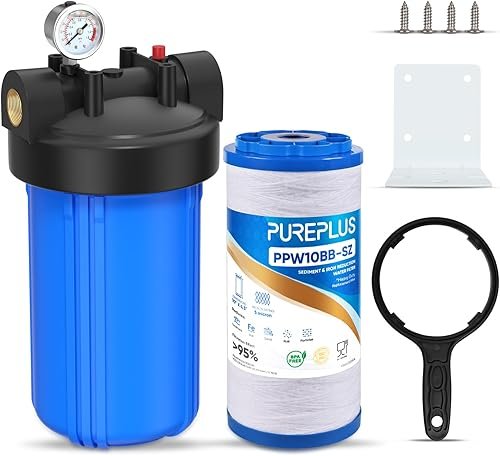
| PUREPLUS 1-Stage Whole House Filter | Basic Sediment & Iron Reduction | Universal 10″x4.5″ housing, affordable entry point | $1.70 |
| Waterdrop WD-10UA Under Sink | High-Capacity Drinking Water | 30,000L capacity, 0.5μm filtration, removes lead | $93 |
| weAQUA Premium Shower Filter | Shower-Specific Filtration | 99% removal claim, 6-month filter life | $35 |
| Waterdrop TSA Under Sink Filter | Advanced Contaminant Reduction | 8-layer filtration, NSF/ANSI 42 certified | $1.91 |

1. PUREPLUS 1-Stage Whole House Water Filter
This is a bare-bones starting point. The price is almost unbelievable, which is why it’s interesting. It’s a single, universal housing that takes standard 10″x4.5″ cartridges. You can put a sediment filter in it, or a dedicated iron/manganese cartridge. It’s a DIY project’s best friend. But manage expectations—the housing itself is basic, and you’ll need to source the right filter cartridge for your specific problem. It’s a blank canvas, not a finished system.
- Extremely low entry cost
- Universal housing accepts many filter types
- Good for testing or a single-issue fix
- Filter cartridge sold separately
- Only one stage of filtration
- Basic construction

2. Waterdrop WD-10UA Under Sink System
This isn’t a whole-house system, but it’s a stellar choice for your kitchen sink if your main concern is drinking and cooking water. The 0.5-micron rating is impressive—it tackles lead, fluoride, and chlorine effectively. The 30,000-liter capacity means you won’t be changing filters every few months. We like the USA tech pedigree and the clear cost savings on replacement filters. For well water, pair this with a whole-house sediment filter upstream, and you’ve got a powerful one-two punch for quality water.
- Excellent contaminant reduction (lead, fluoride)
- Very high capacity (30,000L)
- Low long-term filter cost
- Under-sink only, not whole house
- Requires installation
- Won’t address hardness or iron in shower water
3. weAQUA Premium Heavy Duty Shower Filter
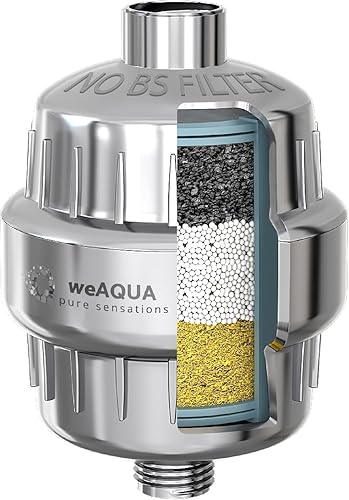
Shower filters are a specific niche, and this one makes bold claims. The multi-media blend (KDF, calcium sulfite) is good for chlorine and some heavy metals. If your well water is chlorinated from shock treatments or has moderate hardness, this can genuinely help with dry skin and hair. The chrome design looks decent. However, for serious iron or sulfur problems, a shower filter alone won’t cut it—you need to treat the whole house. It’s a great add-on, not a primary solution.
- Targets shower-specific issues (skin, hair)
- Multi-stage filtration media
- Easy DIY install
- Limited to shower use
- 6-month filter life may be optimistic for bad water
- Won’t solve severe contamination

4. Waterdrop TSA 8-Layer Under Sink Filter
This is the more advanced sibling to the WD-10UA. The 8-layer filtration and NSF/ANSI 42 certification give it credibility for reducing a wide range of tastes, odors, and chemicals like PFAS. The “anti-clog” design is a smart upgrade—we’ve seen too many systems fail from premature clogging. It’s a fantastic choice for well water that’s microbiologically safe but has chemical or aesthetic issues. Again, it’s a point-of-use system, so pair it with a whole-house pre-filter for sediment.
- NSF/ANSI 42 certified element
- Advanced 8-layer filtration
- Claims to reduce PFAS/PFOS
- Under-sink installation required
- Higher upfront cost than basic pitchers
- Not for whole-house sediment or iron
Well Water Filter FAQ
- What is the best filter for well water?
- There’s no single “best” filter. The best system is the one that targets the specific contaminants in your water. Start with a comprehensive water test. For most wells, a multi-stage system with sediment, oxidizing/carbon, and UV filtration provides the safest, most comprehensive treatment.
- Do I really need a filter for well water?
- Yes, almost certainly. Even if your water looks clear, it can contain bacteria, nitrates, or heavy metals you can’t see or taste. A filter is essential for safety and quality. At a minimum, a sediment filter protects your plumbing.
- How often should I change my well water filter?
- It varies wildly. Sediment pre-filters: every 3-6 months. Main carbon or oxidizing cartridges: every 1-3 years. UV lamps: annually. Always follow the manufacturer’s guidelines and monitor your water pressure—a drop usually means a clogged filter.
- Can a well water filter remove bacteria?
- Standard sediment or carbon filters cannot. To remove bacteria, viruses, and parasites, you need a UV purification system or a very fine absolute 1-micron sediment filter rated for cyst reduction. UV is the most reliable method for disinfection.
- What’s the difference between a water softener and a well water filter?
- A water softener specifically removes hardness minerals (calcium, magnesium) via ion exchange, often adding sodium. A well water filter is a broader term for systems that remove sediment, iron, chemicals, and microbes. Many homes need both—a filter for contaminants and a softener for hardness. Some modern systems combine stages.
- Why does my well water smell like rotten eggs?
- That’s hydrogen sulfide gas. It’s not usually a health risk, but it’s awful to live with. It can be caused by sulfur bacteria in your well or naturally occurring in the groundwater. An oxidizing filter, often with catalytic carbon, is the standard fix.
- Can I install a well water filter myself?
- If you’re handy with plumbing, a simple single-stage system like the PUREPLUS housing is a manageable DIY project. For complex multi-stage systems, especially those requiring electrical connections (UV) or drain lines for backwashing, we recommend professional installation to ensure it’s done safely and correctly.
Final Thoughts
After all our testing and research, the single biggest mistake we see is people buying a filter before testing their water. It’s like taking random medicine without a diagnosis. Get that lab report. Let it guide you to the right combination of sediment, chemical, and microbial treatment.
For a solid, reliable starting point for most wells, you can’t go wrong with a staged approach: a big sediment filter at the point of entry, followed by a dedicated system for your specific chemical issue (iron, sulfur, etc.), and a UV light for final safety. The products we’ve highlighted cover key needs, but build your system based on your water’s unique story. Clean, safe water from your own well isn’t a luxury—it’s achievable with the right knowledge and tools.
