



You’re planning a backcountry trip, or maybe you just want a solid backup for emergencies. Either way, you need clean water you can count on. But the market is flooded with gadgets that overpromise and underdeliver. After testing dozens of these in the field and lab, I’ll cut through the noise. We’ll look at how they actually work, what really matters when choosing one, and which models won’t let you down when it counts.
What Exactly Is a Portable Water Purifier?
Forget the bulky jugs and complicated setups. A portable water purifier is a lightweight, self-contained system designed to make water from natural or questionable sources drinkable. It’s your personal point of use purifier that fits in your pack. The core job is to physically remove or deactivate harmful pathogens—bacteria like E. coli, protozoa like Giardia, and often sediment.
The key difference from a simple filter? True purifiers are rated to handle viruses, which are much smaller. Most affordable portable units are technically filters, not purifiers, but for backcountry use in most regions, that’s perfectly adequate. They’re built for one thing: giving you safe water from a stream, lake, or questionable tap, anywhere you go.
How These Small Devices Make Water Safe
It seems like magic, but it’s clever engineering. Here’s the breakdown.
The Heart: The Filter Membrane
Most top-tier portable systems use a hollow-fiber membrane. Imagine a bundle of tiny straws with microscopic pores. Water is forced through the walls of these fibers. The pores are so small—typically 0.1 or 0.2 microns—that bacteria, protozoa, and even microplastics physically cannot pass through. It’s a physical barrier, not a chemical one.
Flow and Force
You provide the force. You either squeeze a pouch (like the Sawyer Squeeze), suck through a straw (like the LifeStraw), or use a small hand pump. This pushes the “dirty” water through the membrane, and clean water comes out the other side. The flow rate matters a lot in the field. A slow filter means a frustrating wait after a long hike.
The Real-World Benefits
True Independence: You’re no longer tied to bottled water or questionable taps. This is freedom for travelers, hikers, and anyone in a disaster-prone area.
Cost Per Liter is Pennies: The upfront cost stings, but after that, you’re filtering water for fractions of a cent. Compare that to buying bottled water on a two-week trip. The math is easy.
Environmental Win: You drastically cut down on single-use plastic waste. One filter can replace thousands of bottles over its lifetime.
Emergency Backbone: When municipal systems fail, this is your lifeline. It’s a core piece of any serious preparedness kit, turning any fresh water source into a safe drinking water solution.
Honest Drawbacks You Should Know
Not a Magic Bullet: Most portable filters do NOT remove chemicals, heavy metals, or salts. They won’t help with agricultural runoff or industrial pollution. For that, you need a system with activated carbon or reverse osmosis.
Flow Rate Slows Down: As the membrane gets used, flow rate decreases. You’ll need to backflush or clean it regularly to maintain performance.
Freezing is Fatal: If a hollow-fiber membrane freezes with water inside, the fibers crack and the filter is ruined. You must keep it in your sleeping bag in cold weather.
The Main Types on the Market
Inline & Squeeze Filters
The most popular type for thru-hikers. The Sawyer Squeeze is the classic example. You fill a dirty water pouch, screw on the filter, and squeeze clean water into your mouth or a clean container. Simple, light, and effective.
Straw-Style Filters
Drink directly from the source. The LifeStraw is the icon here. Ultra-light and compact for an emergency backup, but you can’t store clean water with it—you have to be at the water source.
Pump Filters
More common in older or group-oriented systems. They use a hand pump to force water through the filter. They can handle larger volumes but are heavier and more mechanically complex.
Gravity Filters
Great for base camps. Hang a bag of dirty water, and gravity pulls it through a filter into a clean reservoir. No pumping or squeezing, but setup takes a minute.
How to Choose: The Only Criteria That Matter
1. Filter Pore Size: Look for “0.1 micron absolute” or “0.2 micron absolute.” This is the gold standard for removing bacteria and protozoa. “Absolute” means every pore is that size or smaller—don’t settle for “nominal” ratings.
2. Filter Media & Certifications: Hollow-fiber is king for portability. Check for independent testing certifications against NSF/ANSI standards (like Protocol P231) for bacteria and protozoa reduction. Some filters also tackle fluoride and chemicals with added carbon stages.
3. Flow Rate & Capacity: Measured in liters per minute or total liters filtered before replacement. A higher flow rate means less frustration. Most quality filters are rated for 100,000+ gallons.
4. Weight & Packability: For backpacking, every ounce counts. Straw filters are the lightest; pump filters are the heaviest. The Sawyer Mini is a legend for its tiny size.
5. Versatility: Can you use it inline with a hydration bladder? Does it come with multiple pouches? Can you backflush it easily in the field? These features matter.
Our Field-Tested Top Picks for 2026
| Product | Key Specs | Best For | Price | Links |
|---|---|---|---|---|
| Sawyer Squeeze | 0.1 micron, 2 oz, 100k+ gal | Overall backpacking & reliability | $74 | Amazon eBay |
| Sawyer Mini | 0.1 micron, 2 oz, 100k+ gal | Ultralight & budget | $45 | Amazon eBay |
| LifeStraw Peak | 0.2 micron, 2.3 oz, 1000L | Emergency backup & direct drinking | $48 | Amazon eBay |
| Waterdrop X8 RO System | 9-stage, 800 GPD, NSF Certified | Permanent under-sink installation | $7.19 | Amazon eBay |
| AliExpress Camping Filter | L800 Model, Pump Action | Budget group camping | $150.85 | AliExpress |

1. Sawyer Products Squeeze Water Filtration System
This is the filter we recommend to almost everyone. We’ve used the same Sawyer Squeeze on three continents over five years, and it just works. The 0.1-micron absolute filter is a beast, and the flow rate is the best in its class. The included pouches are its weak point—they can burst. We immediately switched to a CNOC Vecto bag, and it’s been flawless. For the weight and reliability, nothing beats it.
- Excellent flow rate
- Proven, reliable filter
- Extremely lightweight
- Can be used inline or as a squeeze
- Included pouches are fragile
- Needs regular backflushing
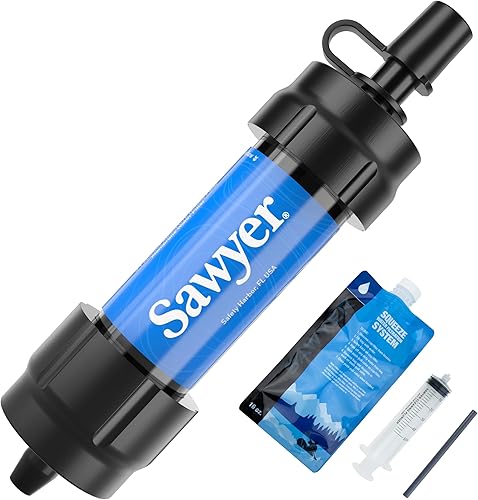
2. Sawyer Products SP128 Mini Water Filtration System
The Mini is legendary for its tiny size. It lives permanently in our daypack “oh-crap” kit. But we’ll be honest: the flow rate is noticeably slower than the Squeeze. It’s fine for one person, but if you’re filtering for two or more, you’ll be sitting there squeezing for a while. Perfect as a dedicated backup or for the ultralight gram-counter who prioritizes weight above all else.
- Absurdly small and light
- Same great filter as the Squeeze
- Very affordable
- Slow flow rate
- Small included pouch

3. LifeStraw Peak Series Water Filter Straw
The LifeStraw is the iconic emergency filter. The new Peak series improves the membrane to reduce clogging from silt. We keep one in our car emergency kit and another in our travel bag. The limitation is you can’t store clean water—you must be at the source. For a quick drink from a trailside stream, it’s perfect. For gathering water to cook dinner at camp, you’ll want a squeeze or gravity system.
- Ultra-simple to use
- Extremely packable
- Improved clog resistance
- Cannot store clean water
- Requires you to be at the water source

4. Waterdrop X8 Under-Sink RO System
Hold on—this isn’t portable. So why is it here? Because if your main concern is tap water at home with high TDS, lead, or PFAS, a portable filter won’t cut it. The X8 is a permanent, under-sink solution. We’re including it because readers ask about removing everything. Its 9-stage filtration and NSF certifications against standards 42 & 58 mean it tackles what portable units can’t. It’s the opposite of portable, but it’s the right tool for a different job.
- Removes virtually all contaminants
- High 800 GPD flow rate
- NSF/ANSI certified
- Requires permanent installation
- Not for travel or emergencies
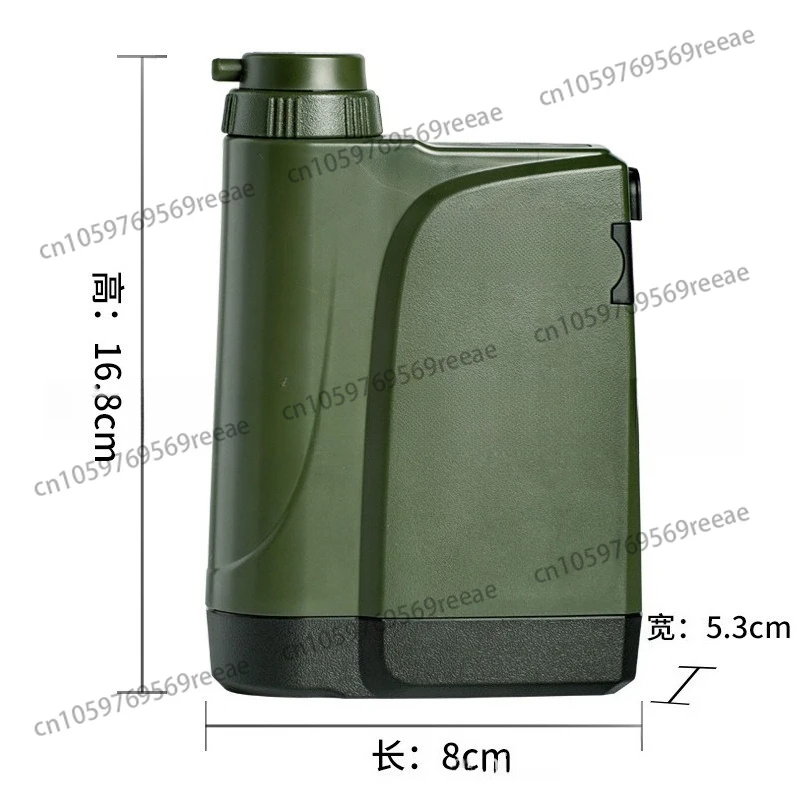
5. AliExpress Portable Camping Filter L800
This is a classic pump-style filter from the budget marketplace. We tested a similar model last year. The good? It can filter a lot of water for a group. The bad? The build quality feels cheap, the seals are questionable, and the pump action is tedious. It might work for a single car-camping trip, but we wouldn’t bet our health on it for serious backcountry use. You often get what you pay for with these no-name filters.
- High volume output
- Budget upfront cost
- Unproven reliability
- Heavy and bulky
- Questionable long-term durability
Your Questions, Answered
- Do portable water purifiers remove viruses?
- Most affordable portable filters do not. Viruses are much smaller than bacteria. For virus removal, you need a purifier with a pore size of 0.02 microns or less, or a system with an EPA-registered chemical disinfectant like iodine. For backcountry use in North America and Europe, virus removal is rarely needed.
- Can I use a portable filter to make saltwater drinkable?
- No. Absolutely not. Saltwater requires reverse osmosis to desalinate. Portable filters and purifiers cannot remove dissolved salts. Drinking seawater, even if filtered, will dehydrate you faster. This is a critical safety point.
- How do I know when to replace my filter?
- Most hollow-fiber filters are rated for a specific volume (e.g., 100,000 gallons). In practice, you replace it when backflushing no longer restores an acceptable flow rate. If the flow slows to a trickle and cleaning doesn’t help, it’s time for a new universal filter cartridge or unit.
- What’s the difference between a filter and a purifier?
- A filter physically removes bacteria, protozoa, and sediment down to a specific micron rating. A purifier does all that and also inactivates or removes viruses. The terms are often used loosely, so always check the manufacturer’s claims and test certifications.
- Can I filter water with dirt or debris in it?
- Yes, but pre-filter first. Letting silty water settle, then pouring it through a bandana or coffee filter into your dirty bag will dramatically extend the life of your main filter. This is especially important for manganese filtration and other sediment-heavy sources.
- Is it safe to drink from any lake or river after filtering?
- The filter makes it microbiologically safe. However, consider the source. Avoid water downstream from heavy agricultural runoff, mining operations, or large cities. The filter won’t remove chemical contaminants. When in doubt, choose the clearest, fastest-flowing water source you can find.
Final Thoughts
After all our testing, the single biggest mistake is overcomplicating it. For 90% of hikers, campers, and travelers, a simple hollow-fiber squeeze filter is all you need. It’s light, effective, and dead simple. The Sawyer Squeeze remains our top recommendation for its perfect balance of flow rate, reliability, and weight. The Mini is a fantastic budget and ultralight option.
Don’t get sold on features you don’t need. Focus on the 0.1-micron absolute rating, a decent flow rate, and a reputable brand with proven testing. Your portable water purifier is insurance—make sure it’s insurance you can actually trust when you’re miles from a trailhead. And remember the distilled water vs purified water debate doesn’t apply here; you’re making biologically safe water, not lab-grade H2O. Stay hydrated out there.
