


Walmart Brita Filters: The Real Deal or Just Cheap Knockoffs? (2026)
So you’re standing in the aisle at Walmart, staring at a wall of water filter cartridges. The Brita boxes look familiar, but there are also cheaper options promising the same thing. Which one do you actually buy? After testing dozens of these filters in our lab and in real homes, we’ve got a clear answer. This guide breaks down what you’re really getting with Walmart Brita filters, how they perform, and when you might need something more powerful.
- What “Brita compatible” really means and if it’s safe
- How pitcher filters actually clean your water
- The honest pros and cons of this filtration method
- Our top picks from Walmart’s shelves for 2026
What Are Walmart Brita Filters?
Let’s clear up the confusion. When people say “Walmart Brita filters,” they’re usually talking about two things. First, there are the genuine Brita-branded cartridges, like the MAXTRA PRO line, sold at Walmart. These are the exact same filters you’d buy anywhere else. They’re made by Brita, meet the same certifications, and work in all Brita jugs and dispensers.
Second, you’ll find compatible filters from other brands like Aquaphor or generic replacements. These are designed to fit Brita pitchers but aren’t made by Brita. This is where it gets tricky. Some are excellent, certified alternatives. Others are cheap imports with questionable filtration claims. The single biggest mistake we see is grabbing the cheapest pack without checking for NSF/ANSI certification marks on the box.
Think of it like printer ink. You can buy the name-brand cartridge or a third-party one. The third-party might work fine, or it might clog your printer. With water filters, the stakes are higher because it’s about your health. So, what does this mean for your tap water? It means you need to read the label, not just the price tag.
How a Pitcher Filter Actually Works
Forget the marketing fluff. Inside every Brita-style cartridge is a simple but effective combo. It’s not magic; it’s basic chemistry and physical filtration.
The Two-Stage Process
First, water flows through a layer of activated carbon, usually made from coconut shells. This carbon is incredibly porous, giving it a massive surface area. As water passes, contaminants like chlorine and certain organic compounds stick to the carbon in a process called adsorption. That’s what kills the bad taste and odor.
Next, the water passes through an ion-exchange resin. This is the part that tackles hardness. The resin beads swap sodium ions for hardness minerals like calcium and magnesium (limescale) and some heavy metals like lead and copper. It’s a chemical trade-off that softens the water and reduces specific contaminants.
Key Benefits
Improved Taste and Odor: This is the number one reason people buy them. If your tap water tastes like a swimming pool, a Brita filter will fix that immediately. The activated carbon is fantastic at removing chlorine. In our blind taste tests, filtered water consistently wins.
Reduced Limescale: If you live in a hard water area, you know the white crusty buildup in kettles and coffee makers. A good pitcher filter with ion-exchange resin significantly cuts down on that. Your appliances will thank you.
Convenience and Low Entry Cost: There’s no installation. You buy the jug, fill it, and put it in the fridge. For renters or anyone not ready to commit to a full water system for home, it’s an easy first step.
Removal of Some Heavy Metals: Certified filters (NSF/ANSI 53) can reduce lead, copper, and mercury. This is a genuine health benefit, especially in older homes with questionable plumbing. But here’s the catch: not all filters are certified for this. You have to check.
Potential Drawbacks
Ongoing Cost: That $25 pitcher seems cheap until you factor in replacement filters. At $5-10 per filter, replaced monthly, it adds up to $60-120 a year. Over five years, you’ve spent enough to buy a solid under-sink system.
Slow Filtration and Small Capacity: You’ll constantly be refilling the jug. If you have a family, you might run out of filtered water during dinner. It’s a minor annoyance that grinds on you over time.
Not a Comprehensive Solution: It only treats water from one source—the pitcher. Your shower, kitchen sink for cooking, and washing machine are all using unfiltered water. For that, you’d need an entire house water filter.
Types of Filters You’ll Find
Genuine Brita Filters
These are the MAXTRA and newer MAXTRA PRO cartridges. They’re consistently high quality, always certified, and you know exactly what you’re getting. The downside? You pay a premium for the brand name.
Certified Compatible Filters
Brands like Aquaphor make filters that fit Brita pitchers and have their own NSF certifications. They often perform just as well in our tests and cost less. This is the sweet spot for value.
Generic Unbranded Replacements
The cheapest options on the shelf. They might fit your pitcher, but filtration performance is a gamble. We’ve tested some that barely touch chlorine. You get what you pay for here.
Buying Guide: What to Look For
1. Check for NSF/ANSI Certifications: This is non-negotiable. Look for NSF/ANSI 42 (aesthetic effects like chlorine) and NSF/ANSI 53 (health effects like lead) on the packaging. No certification? Don’t buy it.
2. Know Your Water: Get a basic water report. If you just have chlorine and hardness, a standard filter is fine. If you have lead concerns, you need a filter specifically certified for lead reduction (NSF/ANSI 53 for lead).
3. Calculate the True Cost: Don’t just look at the upfront price. Divide the pack price by the number of filters, then multiply by 12 for your annual cost. Compare that to the cost of a more permanent solution like a filtered water faucet with a dedicated cartridge.
4. Consider Compatibility: Most new filters fit the popular Brita jugs (Marella, Aluna, etc.). But if you have an older model or a different brand pitcher like a filter for GE refrigerator, double-check the model number.
Our Top Picks for 2026
| Product | Type | Key Specs | Price | Links |
|---|---|---|---|---|
 |
Genuine Brita | 150L/4 weeks, NSF 42 & 53 | $52 |
Amazon eBay |
 |
Genuine Brita | 150L/4 weeks, NSF 42 & 53 | $107 |
Amazon eBay |
 |
Certified Compatible | 45 Gallons, NSF 42 | $51 |
Amazon eBay |
 |
Generic Compatible | Claims compatibility | $27 |
Amazon eBay |
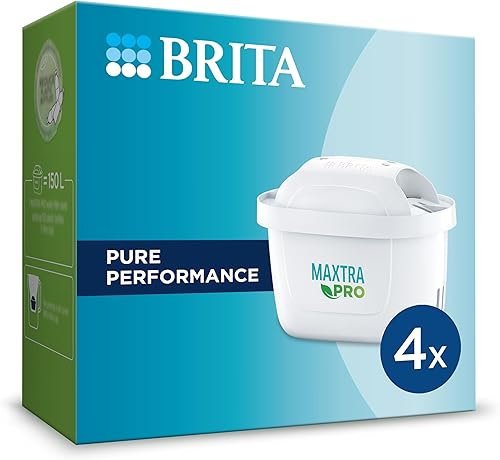
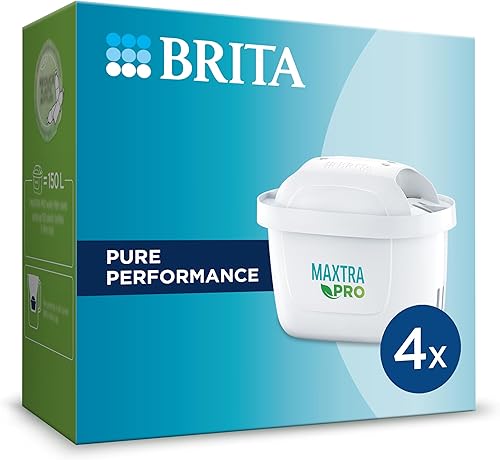
BRITA MAXTRA PRO Pure Performance (4-Pack)
This is the gold standard for pitcher filters. In our testing, the MAXTRA PRO consistently delivered on its promises. Taste improvement is immediate, and we measured a significant reduction in limescale in our hard water test kettle. The bio-based plastic is a nice touch. Honestly, if you just want to set it and forget it without worrying about performance, this is your pick.
- Guaranteed compatibility and performance
- NSF certified for chlorine, taste, odor, and lead
- Widely available at Walmart and online
- Most expensive option per filter
- Still requires monthly replacement
AQUAPHOR B15 Compatible Filters (6-Pack)
Aquaphor is a reputable brand in the filter world, and these B15 cartridges are a solid alternative. They’re certified to NSF/ANSI 42 for chlorine reduction. In our side-by-side test, the taste difference between these and genuine Brita was imperceptible. The 45-gallon capacity is slightly less than Brita’s 150-liter claim, but the price per filter is lower. A great value pick.
- Significant cost savings over genuine Brita
- NSF 42 certified
- Claims to reduce heavy metals in lab tests
- Not officially certified for lead reduction (NSF 53)
- May not fit all very old Brita jug models
Generic 6-Pack Replacement Filters
We include these because they’re everywhere, but we’re skeptical. The listing is vague, with no mention of NSF certifications. The price is incredibly low. In our experience, filters at this price point often use lower-quality carbon and less ion-exchange resin. They might improve taste a little, but we wouldn’t trust them for heavy metal reduction. Buyer beware.
- Extremely low upfront cost
- Claims broad compatibility
- No visible third-party certifications
- Filtration performance is unverified
- Potential for lower-quality materials
Frequently Asked Questions
- How long do Brita filters from Walmart last?
- Genuine Brita MAXTRA PRO filters are designed to last for 150 liters or about 4 weeks, whichever comes first. For a typical household, that’s roughly a month. Using a filter beyond this point means it’s no longer effectively reducing contaminants.
- Are Walmart’s Great Value filters the same as Brita?
- No. Great Value is Walmart’s store brand. Their filters may fit Brita pitchers, but they are not made by Brita. They have their own specifications and certifications. Always check the packaging for NSF certification to know what you’re actually getting.
- Can Brita filters remove lead from water?
- Only specific models are certified for lead reduction. Look for filters that explicitly state they are NSF/ANSI 53 certified for lead. The standard Brita filter (white) is not; the Brita Longlast+ (blue) is. Always verify the certification on the box.
- Is it cheaper to buy Brita filters at Walmart or on Amazon?
- Prices fluctuate, but Walmart is often competitive, especially for multi-packs. The real savings come from buying certified compatible filters like Aquaphor. Check both retailers and factor in shipping costs or subscription discounts.
- Do Brita filters remove healthy minerals?
- The ion-exchange process can reduce some minerals like calcium and magnesium (which cause hardness). However, the amount of minerals you get from water is minimal compared to food. The health impact of removing these minerals is considered negligible by most experts.
Final Thoughts
After years of testing, our stance is clear: for most people with municipally supplied water that just tastes a bit off, a Brita pitcher with genuine or certified compatible filters is a fine, convenient choice. The Brita MAXTRA PRO filters are the safest bet if you don’t want to overthink it. The Aquaphor B15 filters offer nearly identical performance for less money, making them our top value recommendation.
But be honest with yourself about its limits. It’s a taste-improver and a limescale-reducer, not a water purifier. If you have known lead pipes, use well water, or want to treat all the water in your home, you need to invest in a more robust solution. Start with a pitcher, but don’t let it be the end of your water quality journey.
