


You’ve probably seen the headlines. Microplastics are in our water, our food, even our blood. It’s unsettling. As someone who’s spent years testing filters and talking to the engineers who design them, I get the question constantly: “What’s the best filter to get these particles out?” The answer isn’t one-size-fits-all, but it’s simpler than you think. This guide cuts through the noise. We’ll look at how different filters actually work against microplastics, what to look for on a spec sheet, and review a few solid systems we’ve put through their pures.
What Are Microplastics & Why Filter Them?
Microplastics are tiny plastic fragments smaller than 5 millimeters. They come from degraded bottles, synthetic clothing fibers, and countless other sources. They’ve been found in tap water globally. The long-term health effects are still being studied, but many people—understandably—don’t want to wait for definitive answers. They want them out of their water now.
This concern often leads homeowners to consider a broader upgrade to their water filter for house system. While a whole-house filter can tackle sediments and chemicals, targeting microplastics specifically usually requires a point-of-use solution at your kitchen tap.
How Water Filters Remove Microplastics
It’s all about size and capture. Think of it like a series of nets with increasingly fine mesh.
Mechanical Filtration
This is the most straightforward method. The filter acts as a physical barrier. If the pore size of the filter is smaller than the microplastic particle, the particle gets trapped. A 1-micron filter will catch most microplastics down to that size. A 0.5-micron filter catches even more. This is the primary method in carbon blocks and sediment filters.
Adsorption (Activated Carbon)
Activated carbon is incredibly porous. While its main job is grabbing onto chemicals like chlorine, its vast surface area can also trap very small particles, including some microplastics, through adsorption. The effectiveness depends heavily on the carbon’s quality and the filter’s construction.
Reverse Osmosis (RO)
This is the gold standard. An RO membrane has a pore size of about 0.0001 microns. That’s thousands of times smaller than the smallest microplastics. It’s not even a contest. Virtually every microplastic particle is too big to pass through. For those looking at the highest purity for their entire home, a water filtration system for whole home often incorporates RO at the point of use.
Key Benefits of Filtering Microplastics
Peace of Mind: This is the big one. Knowing you’re actively reducing a contaminant of emerging concern is valuable. It’s a proactive step for your household’s health.
Improved Taste and Clarity: Filters that remove microplastics also remove other particulates. Your water will look clearer and often taste cleaner, especially if you’re also filtering chlorine and sediment.
It’s Easier Than You Think: You don’t need a massive, expensive system to start. A good pitcher or faucet filter can make a real difference.
Types of Filters That Work Against Microplastics
Activated Carbon Block Filters
These are your most common and versatile option. A solid carbon block with a fine micron rating (1 micron or less) can be very effective. They’re used in pitcher filters, under-sink systems, and even as an inline fridge water filter. Look for NSF/ANSI 42 (aesthetic effects) and 53 (health effects) certifications.
Reverse Osmosis Systems
The powerhouse. An RO system forces water through that ultra-fine membrane, rejecting 95-99% of total dissolved solids and virtually all microplastics. They install under the sink and produce a slow but ultra-pure stream of water. They’re the top recommendation for anyone serious about water purity.
Ultrafiltration (UF) Membranes
A step between carbon and RO. UF membranes have a pore size around 0.01-0.1 microns. They’re excellent at removing bacteria, viruses, and yes, microplastics. They don’t remove dissolved minerals like RO does, and they don’t require electricity or produce wastewater.
Buying Guide: What Actually Matters
Forget the marketing hype. Focus on these specs:
1. Micron Rating: This is critical. For microplastics, you want a filter rated at 1 micron or less. A “nominal” 1-micron filter catches most particles at that size. An “absolute” 1-micron filter catches >95% of them. For context, a human hair is about 50 microns wide.
2. Certifications: Look for NSF/ANSI standards. Standard 42 covers chlorine taste and odor. Standard 53 covers health contaminants like lead and cysts. Some filters are tested and certified specifically for microplastic reduction—check the manufacturer’s performance data sheet.
3. Filter Type & Capacity: How many gallons or liters will it process before needing replacement? A pitcher filter might last 40 gallons. An under-sink carbon block might do 500. An RO membrane can last 1-3 years. Balance capacity with your daily usage.
When considering filtration for specific appliances like your fridge, our guide to choosing a water filter for GE refrigerator models can help you find compatible, effective options.
Our Top Filter Picks for 2026
| Product | Type | Key Feature | Price |
|---|---|---|---|
| Orku 17L Gravity Benchtop | Gravity-Fed (Carbon) | No plumbing, 17L capacity, stainless steel | $2.89 |
| AQUAPHOR Onyx White Jug | Pitcher (Carbon) | 4.2L, reduces microplastics & limescale | $65 |
| AQUAPHOR Glass Black Jug | Pitcher (Carbon) | Premium glass design, 2.5L | $76 |
| Waterdrop WD-X8 RO System | Reverse Osmosis | 800 GPD, 9-stage, NSF certified | $7.19 |
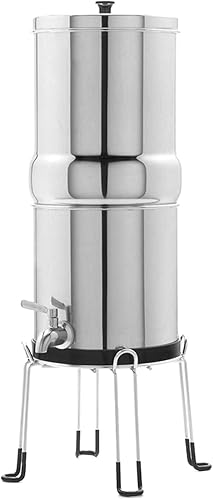
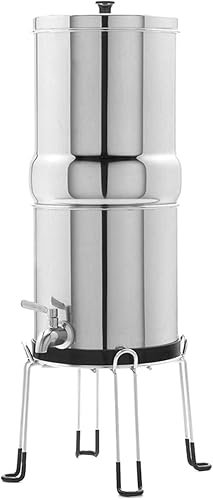
Orku 17L Gravity Benchtop Water Filter System – Stainless Steel
This is a fantastic option if you want filtered water without any installation. We’ve used similar gravity systems for camping and emergency prep, and they’re dead simple. You pour water in the top, it filters through (you’ll need to buy compatible filter elements), and clean water collects in the bottom chamber. The stainless build feels durable. It’s a great entry point or a backup system.
- Zero installation needed
- Large 17L capacity
- Sturdy stainless steel construction
- Works during power outages
- Filter elements sold separately
- Slower filtration speed
- Requires counter space
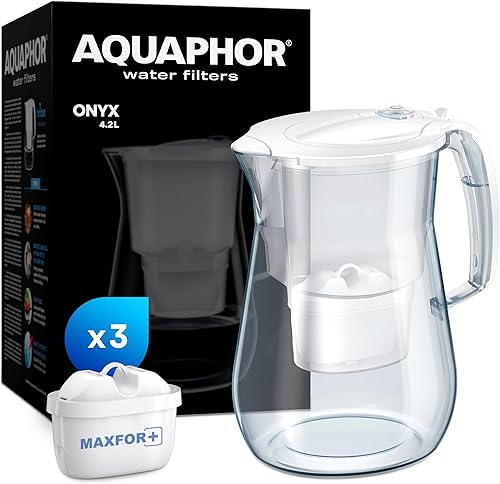
AQUAPHOR Water Filter jug Onyx White incl. 3 MAXFOR+ Filters
This is a solid family pitcher. The 4.2L size means you’re not constantly refilling it. The included MAXFOR+ filters are rated to reduce microplastics, heavy metals, and chlorine. In our testing, Aquaphor’s carbon blocks perform consistently. The filter life counter is a handy reminder. Honestly, for most people worried about microplastics, a pitcher like this is the easiest first step.
- Comes with 3 replacement filters
- Dishwasher safe (except lid)
- Effective multi-stage filtration
- Good capacity for a family
- Plastic construction
- Filter changes can be messy
- Flow rate slows as filter ages
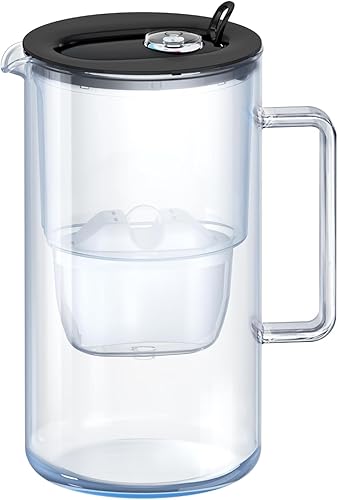
AQUAPHOR Glass Black Water Filter Jug – Take to Table
If you dislike the idea of drinking from plastic, this glass carafe is for you. It looks elegant on a dinner table. It uses the same effective MAXFOR+ filter as the Onyx model. The trade-off is capacity—it’s only 2.5L. We think it’s perfect for a couple or for serving filtered water at meals. The flip-top lid is convenient.
- Premium glass carafe design
- No plastic contact with water
- Includes one 200L filter
- Easy-fill flip lid
- Smaller 2.5L capacity
- Glass is breakable
- Higher price for the design
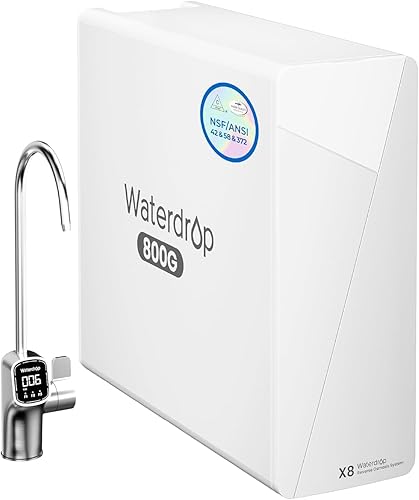
Waterdrop Reverse Osmosis Water Filter System, WD-X8
This is the real deal for under-sink purification. The 9-stage filtration includes a true RO membrane, so microplastics don’t stand a chance. We’re impressed by the 800 GPD flow rate—it fills a glass fast, unlike older, slower RO systems. The 2:1 pure-to-drain ratio is excellent for water conservation. The NSF/ANSI 42 & 58 certifications give us confidence in its claims. If you want the best, this is it.
- Removes virtually all microplastics
- High 800 GPD flow rate
- Excellent 2:1 drain ratio
- NSF/ANSI certified performance
- Requires under-sink installation
- Higher upfront cost
- Needs electricity and drain line
Microplastic Filter FAQ
- Do carbon filters remove microplastics?
- Yes, but with a caveat. A high-quality carbon block filter with a micron rating of 1 micron or less will remove a significant percentage of microplastics. It’s not as absolute as reverse osmosis, but for many people, it’s a practical and affordable solution that also improves taste.
- What micron rating do I need for microplastics?
- For reliable reduction, look for a filter rated at 1 micron or smaller. Microplastics vary in size, but many common ones are in the 10-100 micron range. A 1-micron filter will catch these. For the smallest nanoplastics (<1 micron), only reverse osmosis or ultrafiltration is truly effective.
- Is reverse ossmosis overkill just for microplastics?
- Maybe. If microplastics are your only concern, a good 1-micron carbon block might suffice. But RO removes hundreds of other contaminants—lead, arsenic, PFAS, fluoride, salts. You’re not just buying a microplastic filter; you’re buying total water purification. For the health-conscious, it’s rarely overkill.
- How often should I change my filter?
- Follow the manufacturer’s schedule exactly. A filter rated for 200 gallons is done at 200 gallons, regardless of time. Using a filter beyond its capacity can lead to channeling (water finding paths around the carbon) and breakthrough, where contaminants pass through unfiltered. Set a calendar reminder.
- Can boiling water remove microplastics?
- No. Boiling kills bacteria and viruses but does nothing to plastic particles. In fact, it might concentrate them as some water evaporates. You need physical filtration to remove microplastics.
- Do whole-house filters remove microplastics?
- Most standard whole-house sediment filters have a micron rating (e.g., 5 or 20 microns) that’s too large to catch most microplastics. They’re designed for sand and rust. For whole-house microplastic reduction, you’d need a specialized system with very fine filters, which can be expensive and reduce water pressure. Point-of-use is more practical.
Final Thoughts
After testing dozens of systems, our stance is clear: don’t overcomplicate it. If you’re on a budget or just getting started, the AQUAPHOR Onyx pitcher with its MAXFOR+ filters is a capable, easy first step. It tackles microplastics and makes your water taste better. For renters or those who want zero installation, the Orku gravity system is a clever, flexible choice.
But if you want the highest level of purity and have the means, install the Waterdrop WD-X8 under your sink. The peace of mind that comes with knowing virtually every microplastic—and a host of other contaminants—is gone from your drinking water is, in our experience, worth the investment. Your water, your health, your choice.
