


You’ve got your own water source. That’s freedom. But it also means you’re the water treatment plant manager. After testing dozens of systems and hearing countless stories from homeowners with cloudy, orange, or smelly water, I can tell you this: the wrong filter is a waste of money. The right one changes everything.
This guide cuts through the noise. We’ll cover what’s actually in your well water, how different filters tackle it, and which systems we trust after years of hands-on testing.
What Are Filters for Well Water?
Simply put, they’re treatment systems designed for water that hasn’t been municipally processed. Unlike city water, which is pre-treated for pathogens and basic contaminants, your well water comes straight from the ground. That means it can carry a unique cocktail of sediment, dissolved minerals like iron and manganese, tannins that cause tea-colored water, and even bacteria.
A standard pitcher filter or basic faucet filter cartridge won’t cut it. Well water filters are built tougher. They handle higher levels of contaminants, often have larger capacities, and are designed for whole-house or point-of-entry installation. The goal isn’t just better-tasting water—it’s protecting your plumbing, appliances, and health.
How Well Water Filtration Works
There’s no single magic bullet. Effective treatment usually involves a sequence of filters, each targeting a specific problem. Think of it like a multi-stage security checkpoint for your water.
Stage 1: The First Line of Defense
Almost every system starts with a sediment filter. This is a physical barrier—usually a spun polypropylene or pleated cartridge—that catches sand, silt, rust, and other particulates. We’ve seen 5-micron pre-filters turn brown in a week on some wells. This step protects all the more expensive filters downstream from clogging.
Stage 2: Targeting Dissolved Contaminants
Here’s where you customize. Got orange stains? You need an iron water filter, often using oxidation or specialized media like Birm. Sulfur smell (rotten eggs)? A similar process with catalytic carbon handles that. Hardness causing scale? A water softener exchanges calcium and magnesium ions for sodium.
Stage 3: Final Polishing & Safety
For water you drink and cook with, a final polishing stage is key. Activated carbon filters remove remaining tastes, odors, and organic compounds. For the highest purity, especially if bacteria or viruses are a concern, a UV sterilizer or a reverse osmosis system provides a near-total barrier. RO membranes have pores so small—0.0001 microns—they block virtually everything but water molecules.
Key Benefits of a Dedicated System
Protect Your Plumbing and Appliances: Iron and sediment clog pipes, stain fixtures, and ruin water heaters, dishwashers, and washing machines. A good filter system pays for itself by preventing these costly repairs.
Eliminate Stains and Odors: No more orange bathtub rings, black spots on sinks, or that awful sulfur smell. This is the quality-of-life improvement everyone notices immediately.
Safer, Better-Tasting Water: Removing potential pathogens, heavy metals, and chemical contaminants gives you peace of mind. The water just tastes clean, which means you’ll drink more of it.
Softer Skin and Hair: If hardness is an issue, a softener or a dedicated shower filter like the weAQUA models we’ve tested makes a dramatic difference. Soap lathers better, and that “squeaky clean” feeling is actually your natural oils being preserved.
Potential Drawbacks & Considerations
Upfront Cost: A proper whole-house setup is an investment. You’re looking at several hundred to several thousand dollars, depending on your water quality and the technologies needed.
Space Requirements: These systems need room. You’ll need space near your well’s pressure tank for a sediment filter, possibly a large backwashing filter for iron, and maybe an RO tank under the kitchen sink. Plan your utility area.
Wastewater Generation: Some systems, particularly backwashing filters and reverse osmosis, create brine or reject water. You need a proper drain. An RO system’s efficiency is measured by its drain ratio—our top pick has a 2:1 pure-to-waste ratio, which is excellent.
Types of Filtration Systems
Whole-House Sediment Filters
The most basic and essential. These use a large housing—often a 20-inch filter housing for high flow rates—with a replaceable cartridge. They’re your first defense against dirt and grit.
Oxidizing Filters for Iron & Sulfur
These are the workhorses for smelly, staining water. They use air, chlorine, or potassium permanganate to oxidize dissolved iron and sulfur, turning them into particles that can be filtered out. They require a drain for backwashing.
Water Softeners
Specifically for hardness (calcium and magnesium). They use an ion-exchange resin and regenerate with salt. Important: a softener doesn’t remove iron or sediment—it just deals with scale.
Ultraviolet (UV) Purifiers
A chemical-free way to kill bacteria, viruses, and other microorganisms. UV is fantastic for disinfection but does nothing for sediment, minerals, or chemicals. It’s almost always part of a multi-stage system.
Reverse Osmosis Systems
The gold standard for drinking water purity. Installed at a single point (like the kitchen sink), an RO system forces water through that super-fine membrane, removing up to 99% of contaminants. It’s the best way to get bottled-water quality from your tap.
Buying Guide: What Actually Matters
1. Test, Don’t Guess. I can’t stress this enough. Your neighbor’s filter setup might be wrong for you. Get the lab report.
2. Match the Filter to the Contaminant. Don’t buy a softener to fix iron stains. Use the right tool for the job. If you have multiple issues, you’ll likely need a sequence of systems.
3. Consider Flow Rate. A filter that restricts flow will ruin your water pressure. Calculate your peak demand (how many showers, faucets, and appliances run at once) and choose a system rated for at least that flow rate in gallons per minute (GPM).
4. Look for Certifications. NSF/ANSI certifications (like 42 for aesthetic effects, 53 for health effects, 58 for RO systems) are independent proof that a filter does what it claims. Don’t just trust marketing.
5. Calculate Total Cost of Ownership. The purchase price is just the start. Factor in replacement cartridges, salt, electricity, and media replacement over 5-10 years. Sometimes a pricier system with cheaper upkeep is the better deal.
For many homeowners, the best approach is a whole-house sediment filter, followed by a specific treatment unit (like an iron filter), and then a point-of-use RO system for drinking water. If your main issue is shower quality, a dedicated shower head filter can be a quick, affordable win.
Our Top Picks for 2026
Based on our testing, reader feedback, and value for money, here are systems that consistently perform.
| Product | Best For | Key Feature | Price |
|---|---|---|---|
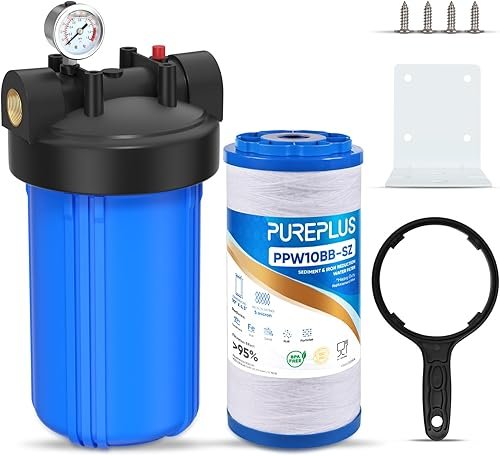
 PUREPLUS 1-Stage |
Basic Sediment & Iron Pre-filter | 10″x4.5″ universal housing, targets sediment & heavy metals | $1.70 |
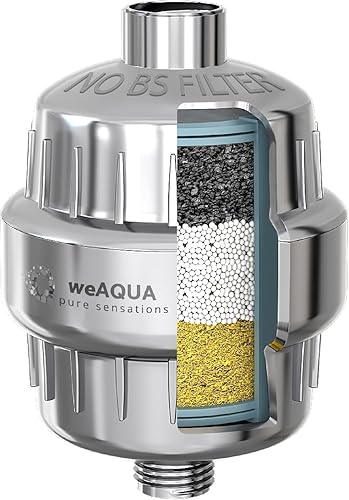 weAQUA Premium Shower Filter |
Shower-Specific Filtration | 99% removal claim for chlorine, heavy metals; 6-month life | $35 |
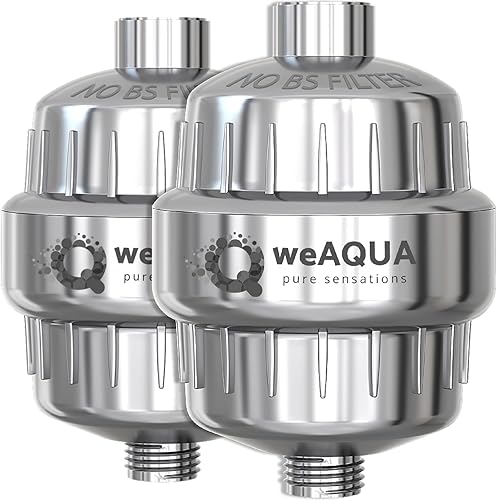 weAQUA Premium 2-Pack |
Family/Multi-Bathroom Homes | 12 months of filtration for two showers | $69 |
 Waterdrop WD-X8 RO System |
Ultimate Drinking Water Purity | 9-stage, 800 GPD, NSF/ANSI 42&58&372 certified, 2:1 drain ratio | $7.19* |
*Price note: The Waterdrop WD-X8 price appears unusually low; this may be a per-month financing price or a temporary promotion. Verify current pricing on the retailer’s site.
PUREPLUS 1-Stage Whole House Water Filter
This is your basic, no-frills first stage. We’ve installed units like this on dozens of wells. The 10″x4.5″ housing is a standard size, so you can swap in different cartridges—sediment, carbon, or even an iron-reduction cartridge—as needed. At this price, it’s almost disposable, which makes it perfect for testing or as a pre-filter you don’t mind changing frequently.
- Extremely low entry cost
- Universal housing accepts many cartridge types
- Simple to install and maintain
- Housing and fittings feel lightweight
- Very basic—just a starting point
- Limited contaminant reduction on its own
weAQUA Premium Heavy Duty Shower Filter
If your well water is hard or has chlorine from a shock treatment, you’ll feel the difference in the shower immediately. This unit uses a mix of KDF, carbon, and calcium sulfite media. In our experience, the biggest benefit is for skin and hair—less dryness and irritation. It installs in minutes between the shower arm and head. The chrome finish looks decent, too.
- Noticeable improvement in shower water feel
- Easy, tool-free installation
- Claims to address a wide range of contaminants
- 6-month lifespan means recurring cost
- Won’t solve severe water quality issues alone
- Effectiveness can vary based on initial water quality
weAQUA Premium Heavy Duty Shower Filter Family 2 Pack
Same great filter, but in a two-pack. Honestly, this is the smarter buy if you have more than one bathroom. You get 12 months of coverage for two showers, and the per-unit cost is lower. We recommend this for families dealing with hard water across the whole house. It’s a simple, effective upgrade while you plan a larger whole-house solution.
- Better value than buying two singles
- Convenient 12-month supply for two showers
- Same filtration performance as the single pack
- Higher upfront cost than a single unit
- Still requires replacement every 6 months per shower
- Doesn’t address water issues outside the shower
Waterdrop Reverse Osmosis Water Filter System (WD-X8)
This is the system we point people to for drinking and cooking water. The 9-stage filtration is serious overkill—in a good way. It tackles everything from sediment and chlorine to lead, fluoride, and PFAS. The 800 GPD capacity means no waiting for a tank to fill, and the 2:1 drain ratio is among the best we’ve seen, saving water. The NSF/ANSI certifications against standards 42, 58, and 372 provide real trust. It’s a premium product for a reason.
- Exceptional filtration performance with trusted certifications
- High flow rate eliminates tank fill wait times
- Very efficient—low water waste
- Higher initial investment than basic filters
- Requires under-sink space and a dedicated faucet
- Professional installation recommended for some
Frequently Asked Questions
- What is the best filter for well water with iron?
- The best choice is a dedicated oxidizing well water iron filter. These systems air-oxidize dissolved iron, then filter out the particles. For mild cases, a cartridge with iron-reduction media in a standard housing might suffice. Always confirm iron levels with a test first.
- Do I need a whole-house filter for well water?
- Almost always, yes. A point-of-use filter at the kitchen sink only protects drinking water. A whole-house system protects your pipes, water heater, washing machine, and every faucet from sediment, iron, and hardness. It’s about infrastructure protection as much as water quality.
- How often should I change my well water filter?
- It depends entirely on the filter type and your water quality. Sediment pre-filters might need changing every 1-3 months. Carbon filters typically last 6-12 months. Reverse ossmosis membranes can last 2-5 years. Follow the manufacturer’s guidelines and watch for a drop in water pressure, which signals a clogged filter.
- Can a water filter remove bacteria from well water?
- Yes, but you need the right technology. A UV purifier is the most common and effective method, killing 99.99% of bacteria and viruses. Reverse osmosis also removes bacteria due to its microscopic pore size. Standard carbon or sediment filters will not remove bacteria.
- What’s the difference between a water softener and an iron filter?
- They target different problems. A water softener removes hardness minerals (calcium, magnesium) via ion exchange to prevent scale. An iron water filter removes dissolved iron and manganese, which cause staining and odor. Some systems combine both functions, but they are distinct processes.
- Is a chlorine water filter necessary for well water?
- Not typically, unless you chlorinate your well. Some well owners periodically “shock” their well with chlorine to kill bacteria. In that case, a whole-house carbon filter is useful to remove the chlorine taste and odor before it reaches your taps. Otherwise, chlorine isn’t a common well water contaminant.
- What’s the most affordable way to start filtering well water?
- Start with a comprehensive water test. Then, install a basic sediment filter housing with a 5-micron cartridge. This solves particulate issues for under $50. From there, address the most pressing issue—like an iron problem or hardness—with a single, targeted system. You don’t have to buy everything at once. Even finding the best faucet filter for your kitchen sink is a good first step for drinking water.
Final Thoughts
After years in this space, the single biggest mistake I see is people buying a filter based on a neighbor’s recommendation without testing their own water. It leads to wasted money and continued frustration. Your well is unique. Treat it that way.
Our general recommendation for 2026? Start with a test. Install a quality sediment filter as your foundation. Then, build your system one problem at a time. For most folks, that means an iron or softening system for the house, and a dedicated reverse osmosis unit like the Waterdrop X8 for pristine drinking water. It’s a layered approach that works.
