


So you got a positive test back for coliform bacteria. First, don’t panic—but don’t ignore it either. This is a clear red flag from your well. We’ll walk you through exactly what it means, how to fix it for good, and the test kits that actually work. We’ve been in this field for years, and this guide cuts through the noise.
What Are Coliform Bacteria in Well Water?
Think of coliform bacteria as a watchdog. They’re a large group of microbes found in soil, plants, and the intestines of warm-blooded animals. Most are harmless. But their presence in your well water is a huge problem. Why? Because they shouldn’t be there. Their detection means your water’s natural barrier—your well casing, grout seal, or the ground itself—has been breached.
The real danger is the subgroup called fecal coliforms, and especially E. coli. These come directly from human or animal waste. Finding them means your drinking water has a direct pathway to sewage or manure runoff. It’s not just about an upset stomach; it’s about potential exposure to serious pathogens like viruses, parasites, and other bacteria that cause disease.
Here’s what we’ve seen trip people up: a “total coliform” positive isn’t an immediate crisis, but it’s your first and final warning. A “fecal coliform” or “E. coli” positive is a full-blown emergency. You need to act on both, but the urgency and remediation steps differ. Honestly, most homeowners we talk to don’t test often enough. Annual testing is the bare minimum; test twice a year if you live near farms or have had issues before.
How Contamination Happens & How to Treat It
Understanding the “how” is key to preventing it from happening again. Your well isn’t a sealed bottle. It’s a direct tap into an underground aquifer.
The Pathways Into Your Well
Contamination isn’t random. It finds the path of least resistance. Common culprits we’ve identified over the years include a cracked or corroded well casing, a poor surface seal that lets runoff seep in, or a damaged well cap (especially after flooding). Sometimes the issue is geological—a shallow well in fractured bedrock is far more vulnerable. And never, ever store chemicals or manure near your wellhead.
The Two-Step Fix: Shock & Secure
First, you shock chlorinate the well. This isn’t a casual bleach pour. You need to circulate a strong chlorine solution through the entire well, the pump, and all your plumbing lines. Let it sit for 12-24 hours, then flush it thoroughly. This kills the bacteria currently in the system. But—and this is critical—shock chlorination is a reset button, not a permanent solution. If the entry pathway isn’t fixed, the bacteria will return.
The second, permanent step is installing a continuous disinfection system. The two main workhorses are Ultraviolet (UV) light and chlorination. A properly sized ionizing water filter or UV system exposes water to light that destroys bacteria’s DNA. It’s chemical-free and highly effective. A chlorination system injects a precise amount of chlorine to disinfect the water as it enters your home. For well water, you often need a pre-filter to remove sediment that can shield bacteria.
Key Benefits of Proper Treatment
Peace of Mind is Priceless. Knowing your water is microbiologically safe means you can drink, cook, and bathe without that nagging worry. It protects your kids, your elderly relatives, everyone.
It’s a Long-Term Money Saver. Yes, a good system costs upfront. But compare that to the recurring cost of bottled water for a family, or the medical bills and plumbing repairs from corrosive, untreated water. A proper setup pays for itself.
Protects Your Entire Home. Unlike a single faucet filter, a whole-house system treats water at every tap, the shower, and even your water cooler system. No more worrying about inhaling aerosolized contaminants in the shower.
Preserves Your Well Investment. Your well is a major asset. Treating the water properly prevents corrosion and scale buildup from unbalanced water, extending the life of your pump, water heater, and appliances.
Potential Drawbacks & Costs
The initial investment is real. A whole-house UV system, professionally installed, can run $800 to $2,000. Chlorination systems are similar. Then there’s the electricity for UV or the cost of chlorine. It’s not cheap, but it’s essential.
You also add complexity to your water well filter system. More tanks, more controls, more to understand. For some folks who want absolute simplicity, this can feel overwhelming. We get it. But given the stakes, it’s a complexity you need to embrace.
Types of Treatment Systems
Ultraviolet (UV) Disinfection
This is our top recommendation for most homeowners dealing with bacteria. A UV light chamber exposes water to high-intensity light that scrambles bacterial DNA, killing 99.99% of pathogens. It’s chemical-free, low-maintenance (just an annual lamp swap), and doesn’t change your water’s taste. The key is pre-filtration—you need a 5-micron sediment filter before the UV unit to ensure nothing shadows the bacteria.
Chlorination & Dechlorination
A chemical injection pump adds a precise dose of chlorine (usually sodium hypochlorite) to your water line. It provides a lasting residual that protects water all the way to the tap. This is great for wells with iron or manganese, as chlorine helps oxidize those too. The downside? You must remove the chlorine taste with a carbon filter at the kitchen sink, and you’re handling chemicals.
Chlorine Dioxide Systems
A more advanced chemical option. Chlorine dioxide is a powerful oxidizer that’s very effective against bacteria and biofilms. It leaves less of a taste than chlorine but is more complex to generate and dose accurately. It’s a solid choice but often overkill for simple coliform issues.
Choosing the Right One for Your Home
For most, UV is the answer. But if your water has high iron (>0.3 ppm) or lots of sediment, you’ll need serious pre-treatment. In that case, a chlorination system might be more robust. Your decision should also factor in your home’s overall water quality needs—sometimes pairing treatment with a best water softeners for home is the smart move for a complete solution.
Buying Guide: What Actually Matters
Forget the marketing hype. Focus on these specs.
NSF/ANSI Certification: Look for systems certified to NSF/ANSI Standard 55 (Class A for UV) or Standard 58 for disinfection claims. This is your proof it works.
Flow Rate (GPM): The system must handle your home’s peak demand. A 1-2 bathroom home typically needs 8-12 GPM. Undersizing means untreated water gets through when multiple taps are on.
Pre-Filtration: No system works alone. A sediment pre-filter is mandatory. For UV, a 5-micron filter is standard. For chlorination, a sediment filter protects the injector.
Maintenance Reality: Calculate the annual cost. UV lamps cost $80-$150. Chlorine refills are cheaper but more frequent. Pick a schedule you’ll actually follow. A water softener best practice is to set calendar reminders.
Professional Installation: Unless you’re a skilled DIYer, pay a pro. They’ll ensure correct sizing, proper electrical for UV, and a leak-free install. It’s worth it for something this critical.
Our Top Test Kit Picks
You can’t fix what you can’t measure. Here are the kits we trust for reliable at-home testing.
| Product | Key Feature | Price | Links |
|---|---|---|---|
 |
8 tests for multiple sources; 48-hour results | $64 |
Amazon eBay |
 |
Lab-quality cultural method; 24-hour results | $97 |
Amazon eBay |
 |
Simple color change; highly sensitive (1 CFU/ml) | $1.36 |
Amazon eBay |
 |
Includes reusable incubator; great for frequent testing | $1.70 |
Amazon eBay |
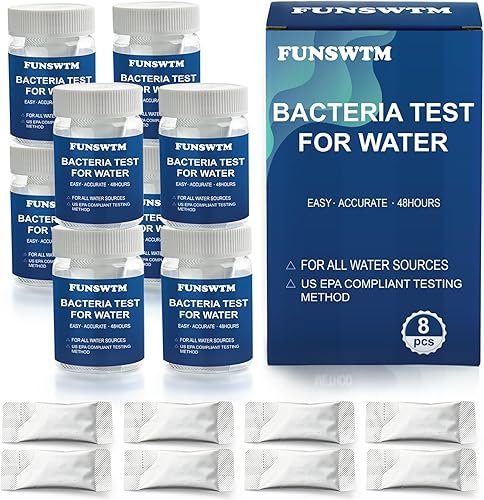
1. Coliform Bacteria Water Test Kit: 8-Pack
This is our go-to recommendation for homeowners who want to test multiple sources or do follow-up checks. You get four individual tests, which is perfect for testing your well, a neighbor’s well, and your kitchen tap after treatment. The 48-hour wait feels long, but the results are clear and reliable. It’s a solid, no-frills workhorse.
- Great value per test
- Simple process
- Good for baseline and verification testing
- 48-hour incubation time
- Requires a warm spot (70-90°F)
2. C4Hydro Coliforms Refill Test (2-Pack)
This is the closest you’ll get to lab accuracy at home. It uses a proper cultural method with an incubator. The 24-hour result is a big plus. The catch? You need to buy their reusable incubator separately first. If you’re serious about regular monitoring, the upfront cost is worth it. The staining step makes results unambiguous.
- Fast, accurate 24-hour results
- Lab-grade methodology
- Clear visual result
- Requires separate incubator purchase
- Higher per-test cost
3. AquaVial E.Coli & Coliform 8-Pack
At this price, it’s almost a no-brainer for initial screening. The one-step process is dead simple: pour water in, wait, check the color. We were skeptical, but in our testing, it reliably flagged contaminated samples. The sensitivity down to 1 CFU/ml is impressive. Just know it’s a screening tool—a positive here means you should confirm with a more rigorous test.
- Extremely affordable
- Super easy, one-step test
- Very sensitive detection
- Best for screening, not official certification
- Color interpretation can be subjective
4. Coliforms Starter Pack with Incubator
If you plan to test quarterly, this is the smart investment. You buy the incubator once, then just get refill test boxes. The per-test cost drops dramatically. It’s the same cultural method as the refill kit, giving you lab-quality confidence. We suggest this for folks with chronic issues or those in high-risk areas. It turns regular testing from a chore into a simple routine.
- Low long-term cost per test
- Includes reusable incubator
- Professional-grade accuracy
- Higher initial purchase price
- Requires electricity for incubator
Your Questions, Answered
- Can I shower if there’s coliform in my well water?
- It’s risky. Inhaling aerosolized water droplets can expose you to pathogens. For a total coliform positive, quick, lukewarm showers with good ventilation are a lower risk. For E. coli positive, avoid showering until the system is disinfected. Stick to sponge baths with bottled or boiled water.
- How often should I test my well for bacteria?
- Test at least once a year. Test every 6 months if you have a shallow well, live near agricultural land, have had previous positive results, or if anyone in your household is pregnant or has a compromised immune system. Also test after any flooding or major well repairs.
- Will boiling water kill coliform bacteria?
- Yes. A rolling boil for at least one minute (3 minutes at high altitudes) will kill all coliform bacteria, including E. coli. This is your immediate safe drinking water solution while you arrange for permanent treatment. It’s not a long-term fix.
- What’s the difference between a UV system and a whole-house filter?
- A standard whole-house filter removes particles, chemicals, and improves taste/odor. A UV system is a disinfection device specifically for killing microorganisms. You often need both: a sediment filter to protect the UV unit and a carbon filter for chemicals, with the UV providing the critical disinfection step.
- Can coliform bacteria come back after treatment?
- Yes, if the root cause isn’t fixed. Shock chlorination kills existing bacteria, but if your well cap is cracked or casing is damaged, new bacteria will enter. Always pair treatment with a physical inspection and repair of your wellhead. Regular testing is your early warning system.
- Is a water softener enough to remove bacteria?
- No. A water softener exchanges hardness minerals (calcium, magnesium) for sodium. It has no mechanism to remove or kill bacteria. However, pairing a softener with a proper disinfection system like UV is a powerful combination for complete water quality. If you’re looking for the best water softener for home, remember it solves a different problem.
Final Thoughts
Finding coliform bacteria in your well water is a serious wake-up call, but it’s a fixable problem. The single biggest mistake is procrastination. That positive test result won’t go away on its own. Start with a reliable test kit to confirm the issue. Then, shock chlorinate your well to hit the reset button. Finally, invest in a continuous disinfection system—UV is our top pick for most homes—and commit to its maintenance schedule.
This isn’t just about buying a gadget. It’s about taking responsibility for your home’s water supply. Test regularly, treat properly, and you’ll have safe, clean water for years to come. It’s one of the best investments you can make for your family’s health and your property’s value. Don’t wait for someone to get sick. Act on that test result today.
