


Choosing the right alkaline filtration system can feel overwhelming with so many options on the market. Whether you want a simple countertop jug or a full reverse osmosis system with alkaline remineralization, understanding how these systems work and what to look for will save you time, money, and disappointment.
In this guide, we cover the science behind alkaline water filtration, weigh the genuine benefits against the hype, walk through every system type available, and recommend five top-rated products for 2025.
What Is an Alkaline Filtration System?
An alkaline filtration system is a water treatment device that both purifies your water and raises its pH to a mildly alkaline level, typically between 8.0 and 9.5. Unlike standard filters that only remove contaminants, alkaline systems add a remineralization stage that introduces or concentrates beneficial minerals such as calcium, magnesium, and potassium.
The result is water that tastes smoother, contains essential minerals, and has a higher pH than standard tap water. These systems range from affordable filter jugs to sophisticated multi-stage undersink units with reverse osmosis membranes.
How Alkaline Filtration Works
Most alkaline filtration systems follow a multi-stage process. The number of stages varies by product, but the core principles are consistent:
Stage 1: Sediment Pre-Filtration
A sediment filter (typically 5 micron) removes large particles including dust, rust, sand, and debris. This protects the more delicate filters downstream and extends the life of the entire system.
Stage 2: Activated Carbon Filtration
Water passes through an activated carbon block or granular activated carbon (GAC) filter. This stage removes chlorine, volatile organic compounds (VOCs), unpleasant tastes, and odours. High-quality carbon blocks with a 0.5 micron rating can also reduce lead and cysts.
Stage 3: Advanced Purification (Optional)
In reverse osmosis (RO) systems, water is forced through a semipermeable membrane that removes up to 99% of dissolved solids, heavy metals, fluoride, nitrates, and microplastics. KDF (Kinetic Degradation Fluxion) media may also be used to remove chlorine and heavy metals through an electrochemical process.
Stage 4: Alkaline Remineralization
This is the defining stage. Water passes through mineral media — commonly calcite, corosex, tourmaline, or alkaline ceramic balls — that dissolve trace amounts of calcium, magnesium, and potassium into the water. This raises the pH to between 8.0 and 9.5 while improving taste and adding nutritional value.
Stage 5: Post-Filtration (Optional)
Some systems include a final polishing filter, often an inline carbon filter, that removes any remaining taste or odour before the water reaches your glass. This ensures the cleanest possible output.
Key Benefits of Alkaline Filtration Systems
Here are the well-established advantages of using an alkaline filtration system:
- Comprehensive Contaminant Removal: Multi-stage systems remove chlorine, sediment, heavy metals, VOCs, and depending on the system, fluoride, nitrates, and microplastics. This is the single most important benefit — clean water.
- Essential Mineral Addition: The remineralization stage adds back calcium, magnesium, and potassium. The World Health Organization notes that consuming demineralized water long-term may have negative health effects, making remineralization an important step after RO treatment.
- Improved Taste: Alkaline mineral water consistently tastes smoother and more refreshing than standard tap water. The minerals add a subtle sweetness that many users prefer over the flat taste of pure RO water.
- Cost Effective Over Time: A quality alkaline filtration system costs between 2 and 5 cents per litre to operate, compared to $2 to $4 per bottle for commercial alkaline water. Even factoring in filter replacements, the savings are substantial.
- Environmental Impact: Replacing bottled alkaline water with a home filtration system eliminates hundreds of plastic bottles per household per year.
- Potential Health Benefits: While research is still developing, some peer-reviewed studies suggest alkaline water may support hydration, reduce acid reflux symptoms, and provide antioxidant benefits through dissolved hydrogen in electric ionizers.
Potential Drawbacks
It is important to have realistic expectations before investing in an alkaline filtration system:
- Upfront Cost Varies Widely: Alkaline filter jugs start around $50, while multi-stage undersink RO-alkaline systems range from $200 to $500+. Electric ionizers can cost $1,000 to $4,000+. Choose based on your budget and needs.
- Ongoing Filter Replacement: Sediment and carbon filters need replacing every 6 to 12 months, and RO membranes every 2 to 3 years. Budget $50 to $150 annually for filter replacements depending on the system.
- Exaggerated Health Claims: Some manufacturers make bold claims about curing diseases or “detoxifying” the body. Mainstream medical organisations note that large-scale clinical evidence for most alkaline water health claims is lacking. Your body has robust pH regulation systems — alkaline water cannot significantly alter your blood pH.
- Installation Requirements: Undersink systems require basic plumbing skills or professional installation. RO systems also need a drain connection and adequate water pressure (typically 40 to 80 psi).
- Water Waste (RO Systems): Traditional reverse osmosis systems produce 3 to 4 litres of wastewater for every litre of purified water. Newer tankless models have improved this to a 2:1 or even 1:1 ratio, but it remains a consideration.
- Not All Systems Are Equal: Budget alkaline filters may only marginally raise pH and offer limited contaminant removal. Always check independent certifications (NSF, WaterMark, SGS) rather than relying on manufacturer claims alone.
Types of Alkaline Filtration Systems
Understanding the different system types will help you choose the right one for your situation:
1. Alkaline Water Filter Jugs
The most affordable and portable option. These pitcher-style filters use mineral cartridges to raise pH while removing basic contaminants like chlorine. They typically produce pH 8.0 to 8.5 water with a capacity of 1.5 to 3.5 litres. Best for individuals or couples, renters, or anyone wanting a no-installation option.
2. Gravity-Fed Bench Top Systems
These larger countertop units use gravity to push water through multiple filter stages including sediment, activated carbon, KDF media, and alkaline mineral stones. They offer 8 to 16+ litre capacities and require no plumbing or electricity. An excellent choice for families who want comprehensive filtration without installation.
3. Multi-Stage Undersink Alkaline Systems
Installed beneath the kitchen sink with a dedicated faucet, these typically offer 2 to 3 filtration stages plus alkaline remineralization. They provide on-demand filtered alkaline water at good flow rates. WaterMark-certified models meet plumbing standards. Great for homeowners wanting a permanent, space-saving solution.
4. Reverse Osmosis with Alkaline Remineralization
The most thorough purification option. These 5 to 7 stage systems combine sediment, carbon, and RO membrane filtration with an alkaline remineralization post-filter. They remove up to 99% of contaminants including fluoride, heavy metals, and microplastics. The alkaline stage adds minerals back after RO purification. Best for households with challenging source water or those wanting maximum contaminant removal.
5. Electric Water Ionizers
These premium devices use electrolysis to separate water into alkaline and acidic streams. They offer adjustable pH levels, produce molecular hydrogen, and include built-in filtration. Countertop or under-counter installation options exist. Highest cost but greatest control and performance.
What to Look For: Buying Guide
When evaluating alkaline filtration systems, prioritize these criteria:
- Filtration Quality First: The filtration matters more than the alkalinity. Look for multi-stage systems that remove chlorine, heavy metals, and sediment at minimum. For maximum protection, choose systems with RO membranes that also remove fluoride, nitrates, and microplastics.
- Target pH Range: For daily drinking, pH 8.0 to 9.0 is ideal. Most mineral-based systems achieve this naturally. Avoid systems claiming extremely high pH levels (10+) for drinking water — moderate alkalinity is preferred.
- Certifications: Look for independent testing — NSF/ANSI standards (especially 42, 53, and 58), WaterMark certification for plumbing compliance, and SGS testing. These verify that the system actually performs as claimed.
- Flow Rate: Undersink systems typically deliver 0.5 to 3 litres per minute. Tankless RO systems offer faster flow than traditional tank-based models. Consider your household size and water consumption.
- Filter Lifespan and Cost: Calculate the annual filter replacement cost, not just the upfront price. A cheaper system with expensive or frequently replaced filters may cost more over 3 to 5 years than a premium system with longer-lasting filters.
- Installation Type: Match the system to your living situation. Renters should consider jugs or benchtop units. Homeowners can invest in undersink or RO systems for maximum performance.
- Warranty and Support: Quality manufacturers offer 1 to 3 year warranties on undersink systems and longer on premium ionizers. Local support and readily available replacement filters are important for long-term satisfaction.
- Water Waste Ratio (RO Systems): Modern tankless RO systems achieve 2:1 or better pure-to-drain ratios, compared to 1:3 or 1:4 for older tank-based models. This significantly reduces water waste.
Top 5 Recommended Alkaline Filtration Systems
We have selected five products across different price points and installation types. Each offers genuine alkaline filtration backed by quality construction and positive user feedback.
| Product | Type | Key Feature | Price | Links |
|---|---|---|---|---|
 |
6-Stage RO + Alkaline | 75 GPD, NSF certified components | $239.69 | Buy on AmazonBuy on eBay |
 |
3-Stage Undersink | WaterMark certified, quick-change | $139.50 | Buy on AmazonBuy on eBay |
 |
7-Stage Tankless RO + Alkaline | 450 GPD, 2:1 waste ratio, NSF 58 | $309.99 | Buy on AmazonBuy on eBay |
 |
5-Stage RO + Alkaline | 150 GPD, quick-change cartridges | $295.95 | Buy on AmazonBuy on eBay |
 |
Gravity-Fed Bench Top | 16L capacity, 8-stage filtration, SGS certified | $190.00 | Buy on AmazonBuy on eBay |
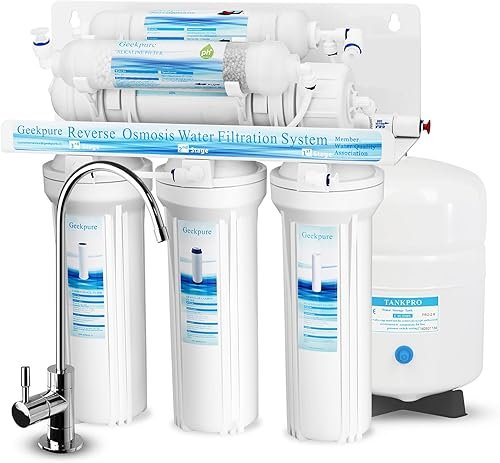
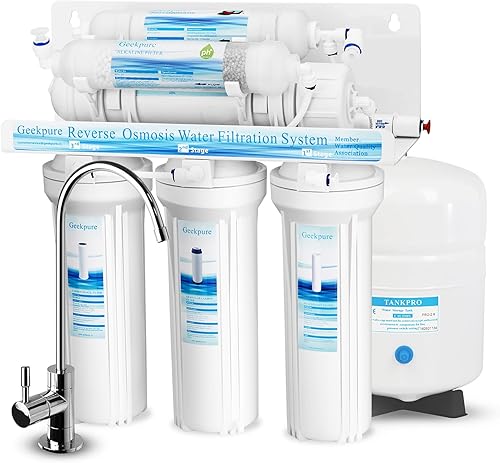
1. Geekpure 6-Stage Reverse Osmosis with Alkaline Remineralization
The Geekpure 6-Stage system delivers comprehensive purification through sediment, GAC, carbon block, 75 GPD RO membrane, and alkaline remineralization stages. All tubes, quick-push fittings, storage tank, and RO membrane are NSF certified. The included lead-free deluxe kitchen faucet adds a final layer of safety. This is an excellent all-round system for households wanting thorough contaminant removal with the benefits of alkaline remineralization.
- NSF certified components throughout
- 6-stage filtration with RO membrane
- Lead-free faucet included
- Traditional tank design uses undersink space
- 75 GPD flow rate is moderate
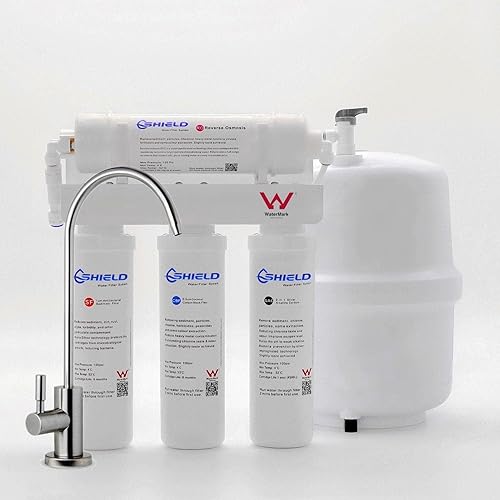
2. Shield Triple Undersink Alkaline Water Filter System
The Shield Triple is a WaterMark-certified 3-stage undersink system that combines sediment removal, carbon filtration, and alkaline pH balancing. It removes 99% of chlorine and comes bundled with 12 months of extra replacement cartridges, making it outstanding value. The quick-change cartridge design means filter swaps take seconds with no tools needed, and the premium SUS304 stainless steel lead-free tap ensures safe water delivery.
- WaterMark certified for plumbing compliance
- 12 months extra filters included
- Tool-free quick-change cartridges
- No RO membrane for heavy metal removal
- Limited pH adjustment range
3. ROWF 7-Stage Tankless Alkaline Reverse Osmosis System
This premium tankless system delivers 450 GPD flow with an efficient 2:1 pure-to-drain ratio, dramatically reducing water waste compared to traditional RO systems. The 7-stage filtration includes NSF/ANSI 58 certified RO membrane plus alkaline remineralization. The tankless design saves significant undersink space, and the manual date-logging dial on each filter makes tracking replacement schedules effortless. Requires a power outlet for the booster pump.
- 450 GPD high flow rate
- NSF/ANSI 58 certified
- Space-saving tankless design
- Requires power outlet near sink
- Higher price point at $309.99
4. 5-Stage Alkaline Reverse Osmosis System 150G
This 5-stage system combines antibacterial sediment filtration, carbon block, a 150 GPD RO membrane, and weak alkaline remineralization in a compact quick-change design. Operating between 350 and 550 kPa feed pressure, it suits most municipal water supplies. The quick-change cartridge system simplifies maintenance, and the 150 GPD membrane provides faster refill times than standard 75 GPD models while maintaining thorough purification.
- 150 GPD for faster water production
- Quick-change cartridge system
- Weak alkaline output for gentle pH boost
- Requires adequate water pressure (350+ kPa)
- Tank-based design
5. Aimex 16 Litre Bench Top Alkaline Purifying System
For households wanting comprehensive alkaline filtration without any plumbing, the Aimex 16L bench top system is a standout. It uses gravity-fed 8-stage filtration including KDF media, activated charcoal, ceramic plates, and alkaline mineral stones to purify and remineralise water. The 16-litre capacity serves families well, and the BPA-free food-grade construction ensures nothing unwanted leaches into your water. SGS third-party tested for quality assurance.
- No installation or plumbing required
- 16L capacity suits families
- 8-stage filtration with SGS certification
- Gravity-fed means slower filtration
- Takes up countertop space
Frequently Asked Questions
- What is the difference between an alkaline filter and a regular water filter?
- A regular water filter removes contaminants like chlorine and sediment. An alkaline filtration system does this too, but adds a remineralization stage that introduces calcium, magnesium, and potassium to raise the water’s pH to an alkaline level (8.0 to 9.5). The result is mineral-rich water with improved taste.
- Do I need a reverse osmosis system, or is a standard alkaline filter enough?
- It depends on your source water quality. If your tap water is municipally treated and reasonably clean, a multi-stage undersink alkaline filter (like the Shield Triple) will handle chlorine, sediment, and basic contaminants while adding alkalinity. If your water has elevated levels of heavy metals, fluoride, nitrates, or you want maximum purification, an RO-based alkaline system is the better choice.
- How often do I need to replace the filters?
- Sediment and carbon filters typically last 6 to 12 months. Alkaline remineralization cartridges last 6 to 12 months depending on usage. RO membranes last 2 to 3 years. Always follow the manufacturer’s schedule and replace sooner if you notice reduced flow or taste changes.
- Is alkaline water safe for everyone?
- Mildly alkaline water (pH 8.0 to 9.0) is generally safe for most people. However, those with kidney disease, on dialysis, or taking certain medications that affect mineral balance should consult a healthcare provider before regularly drinking alkaline water. Avoid very high pH water (above 10.0) for daily consumption.
- Can I install an undersink alkaline system myself?
- Most modern undersink systems are designed for DIY installation with detailed instructions, quick-connect fittings, and all necessary hardware included. Basic plumbing comfort is helpful. If your kitchen setup is non-standard or you are unsure, professional installation typically costs $100 to $200 and ensures a leak-free setup.
- How much water does an RO alkaline system waste?
- Traditional tank-based RO systems waste 3 to 4 litres per litre of purified water. Newer tankless models like the ROWF 7-Stage have improved this to a 2:1 ratio (2 litres waste per 1 litre pure). Some premium models now achieve 1:1 ratios. The wastewater can be collected and used for plants or cleaning.
- Do alkaline filtration systems remove fluoride?
- Only RO-based alkaline systems effectively remove fluoride (up to 95%). Standard carbon and mineral alkaline filters do not significantly reduce fluoride levels. If fluoride removal is a priority, choose a system with a reverse osmosis membrane.
Final Thoughts
An alkaline filtration system is a worthwhile investment for any household that values clean, mineral-rich drinking water. The key is choosing the right system type for your specific needs and budget rather than being swayed by marketing claims alone.
For most households, the Shield Triple Undersink System at $139.50 offers the best balance of performance, convenience, and value — it is WaterMark certified, includes a year of extra filters, and installs easily. If you want maximum purification with fluoride and heavy metal removal, the Geekpure 6-Stage RO Alkaline at $239.69 delivers comprehensive multi-stage filtration at a competitive price. And for those who want zero installation, the Aimex 16L Bench Top provides impressive 8-stage filtration with genuine alkaline remineralization.
