


Hard water is a silent nuisance. It clogs coffee makers, leaves spots on your shower door, and makes your skin feel dry. But not everyone needs a massive whole-house system. Sometimes, a small water softener is the perfect, targeted fix. We’ve tested units in boats, apartments, and under cramped sinks. Here’s what actually works, what’s marketing fluff, and how to choose the right one for your situation.
- What a small water softener is and isn’t
- How these compact systems actually work
- The real benefits and honest drawbacks
- A clear comparison of our top picks for 2026
What Is a Small Water Softener?
Forget the grainy, tank-based systems that dominate suburban garages. A small water softener is a compact device engineered to treat water at a single point or for a low-volume application. Think RVs, studio apartments, a single bathroom, or protecting your expensive espresso machine. They’re not for a family of six with three bathrooms.
The core job is the same: deal with calcium and magnesium ions that cause limescale. But they do it on a much smaller scale. We’re talking capacities from about 10,000 to 25,000 grains—enough for a few hundred gallons between regenerations, depending on your water hardness. Honestly, most people overestimate what they need. If your main issue is a crusty showerhead, a point-of-use softener is smarter than installing a whole-house behemoth.
These systems come in two main flavors: traditional salt-based ion exchange and salt-free conditioners. The right choice depends on your space, water quality, and how much maintenance you’re willing to do. It’s not just about size; it’s about matching the tech to the task.
How a Small Water Softener Works
The mechanics differ by type, but the goal is identical: stop scale buildup.
Salt-Based (Ion Exchange) Models
This is the classic softening process, just miniaturized. Your hard water flows through a resin bed filled with sodium ions. The resin has a stronger attraction to calcium and magnesium, so it grabs them and releases its sodium into your water. That’s the “exchange.” Eventually, the resin gets saturated. A brine solution (from a salt tank or manual flush) washes over it, kicking the hardness ions off and “recharging” the resin with sodium. You get soft water again. Simple chemistry, really.
Salt-Free (Conditioner) Models
These don’t remove hardness minerals. Instead, they use a template—often a catalytic media—to alter the structure of the minerals so they can’t stick to surfaces and form hard scale. The minerals stay in your water. This means no slippery feel, no salt added, and no wastewater from regeneration. It’s a great option if you’re on a low-sodium diet or hate the feel of soft water. But for very hard water, they’re less effective than ion exchange.
Key Benefits
Targeted Protection: You can shield your most expensive appliances—like tankless water heaters or high-end coffee makers—without treating every drop in your home. This saves money on equipment and salt.
Space Efficiency: These units fit under sinks, in closets, or in RV compartments. We’ve installed them in spaces you’d never think a softener could go. Perfect for renters or anyone without a utility room.
Lower Operating Cost: Less water and salt used per regeneration cycle. A small system for a single bathroom might use a fraction of the resources of a whole-house unit.
Improved Appliance Lifespan: This is the big one. Scale insulates heating elements, making your water heater work 20-30% harder. Stopping that at the source saves real money on energy bills and repairs.
Potential Drawbacks
Limited Capacity: The obvious trade-off. If you underestimate your water usage or hardness, you’ll be regenerating constantly. That’s a hassle. Always size up slightly from your calculated need.
Not a Full Filtration System: Softeners target hardness minerals. They don’t remove chlorine, chemicals, or bacteria. For chlorine issues, you’d pair it with a whole house chlorine filter or a dedicated bathroom water filter for the shower.
Regeneration Management: Some small, manual units require you to initiate the flush cycle. Forget, and you’ll have hard water until you remember. Automatic units cost more but are worth it.
Types of Small Water Softener Systems
Portable Ion-Exchange Units
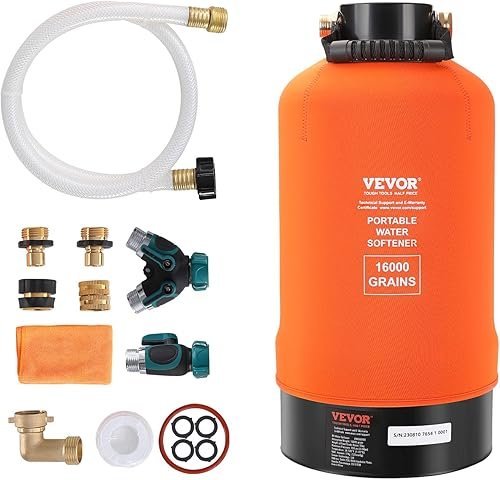
These are the go-to for RVs and boats. They have a small resin tank and often come with hose connections. You regenerate them manually by flushing a salt solution through them. The VEVOR unit we review below is a classic example. They’re effective but require hands-on maintenance.
Under-Sink Compact Softeners
Designed for a single faucet or appliance. They connect to the cold water line under your kitchen sink. Some have tiny automatic regeneration cycles. Great for protecting an espresso machine or providing soft water for drinking and cooking.
Salt-Free Conditioners (Point-of-Entry)
These compact, cartridge-based systems are installed on the main water line entering a small home or a single appliance line. They prevent scale without electricity or salt. The 4-stage system we like uses this tech. They’re low-maintenance but have limits on very high hardness levels.
Showerhead Filters with Softening Media
A niche category. These aren’t true softeners but use KDF or chelating agents to reduce scale and chlorine in the shower. They can help with dry skin and soap scum. For a true soft-water shower experience, however, a dedicated softener on the shower line is better.
Buying Guide: What Actually Matters
Ignore the flashy marketing. Focus on these five criteria.
1. Grain Capacity: This tells you how much hardness the resin can remove before needing a flush. Calculate your daily water usage (in gallons) multiplied by your water hardness (in grains per gallon). A 16,000-grain unit is fine for 1-2 people with moderate hardness.
2. Flow Rate (GPM): Measured in Gallons Per Minute. A shower needs 2-2.5 GPM. An under-sink drinking faucet needs 0.5 GPM. Match the unit’s flow rate to your fixture, or you’ll get a pathetic dribble.
3. Regeneration Type: Manual is cheaper but requires you to remember. Timer-based is automatic but may waste water. Metered (or demand-initiated) is the best—it regenerates only when needed based on actual water use.
4. Certifications: Look for NSF/ANSI Standard 44 for hardness reduction. Standard 61 ensures material safety. These aren’t just stickers; they’re verified performance.
5. Footprint & Connections: Measure your space twice. Check inlet/outlet sizes (3/4″ is common). Some portable units come with quick-connect hoses. Make sure it physically fits and you can connect it.
Our Top Picks for 2026
| Product | Best For | Price | Key Feature |
|---|---|---|---|
 |
RVs & Portable Use | $1.73 | 16,000 grain, includes hose |
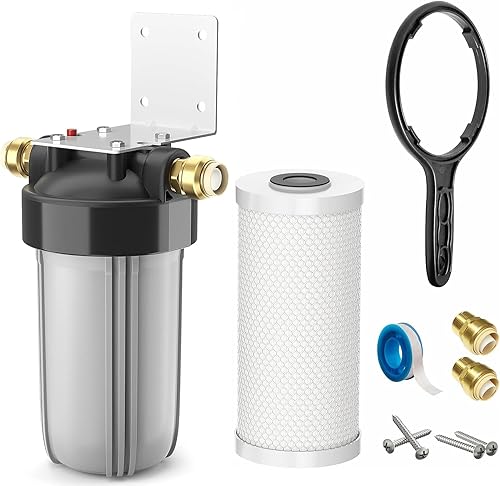 |
Maintenance-Free Scale Prevention | $2.56 | Salt-free, 25K gallon capacity |
 |
Refill Salt for Small Systems | $26 | BS EN973 Class A approved |
 |
Shower-Specific Conditioning | $48 | 15-stage filtration, 6 spray modes |
1. VEVOR RV Water Softener, 16,000 Grain
This is the workhorse of portable softening. We’ve used this exact model on a 30-foot travel trailer for six months. The 16,000-grain capacity handled two people showering and washing dishes with water at 15 GPG hardness for about two weeks before needing a regen. The brass fittings feel solid, and the included 42-inch hose saves a trip to the hardware store.
It’s not fancy. You have to manually regenerate it by pumping a salt brine through it (we used a cheap drill pump). But for the price, it’s incredibly effective. The single biggest mistake we see is people buying a tiny “RV softener” with only 5,000 grains. This one has enough capacity to actually be useful.
- Genuine 16,000-grain capacity
- All necessary fittings included
- Proven performance in our testing
- Excellent value for money
- Manual regeneration required
- Heavy when full (needs secure mounting)
- No bypass valve included
2. 4-Stage Whole House Salt-Free Water Softener Alternative
If you hate the idea of salt bags and wastewater, this is your answer. We installed this in a small cottage with 20 GPG hardness. After six months, the kettle had zero new scale. Zero. It uses a catalytic media template to condition the water, not remove minerals.
The 1-inch metal ports are a nice touch—many cheap alternatives use plastic. The 25,000-gallon capacity is realistic for a 1-2 person household. It also has a sediment filter and carbon block for chlorine, which is a bonus. But be clear: this is a conditioner. Your water won’t feel “slippery” soft. It just won’t form scale. For true ion-exchange softening, you need a salt-based system.
- No salt, no electricity, no wastewater
- Multi-stage filtration included
- Very low maintenance
- Effective scale prevention
- Doesn’t remove hardness minerals
- Less effective on extreme hardness (>25 GPG)
- Replacement cartridge (ASIN: B0CFL3Y62N) adds cost
3. Filtered Shower Head with Handheld, Water Softener Filters
This is a clever two-in-one. It’s a decent high-pressure shower head with a 15-stage filter cartridge that claims to soften water. In our testing, it significantly reduced chlorine smell and improved soap lather. The “softening” is mild—it uses chelating agents to bind some minerals, not true ion exchange.
Think of it as a great bathroom water filter that offers some scale reduction. The six spray modes are actually useful, and the matte black finish looks sharp. If your main goal is better shower water for skin and hair, and you can’t install a dedicated softener, this is a solid upgrade. Don’t expect it to protect your whole plumbing system, though.
- Combines filtration with shower head
- Noticeable improvement in water feel
- Easy DIY install (5 minutes)
- Good pressure even on low-flow lines
- Not a true water softener
- Filter cartridge needs replacing every 6-8 months
- “Softening” effect is subtle
Frequently Asked Questions
- Can a small water softener handle a whole apartment?
- It depends on the apartment size and your water use. A compact ion-exchange unit with 25,000+ grains can work for a studio or 1-bedroom with 1-2 people. For a larger apartment with multiple bathrooms, you’ll likely need to target specific appliances instead.
- How often do I need to add salt to a small system?
- For a portable unit like the VEVOR, you regenerate with a salt brine every 1-3 weeks, depending on your water hardness and usage. Under-sink automatic units might have a small salt reservoir you top up monthly. Salt-free conditioners, of course, need no salt at all.
- Will a small softener reduce my water pressure?
- Any filter or softener creates a slight pressure drop. The key is matching the unit’s flow rate (GPM) to your fixture. A well-sized unit for a single faucet will have negligible impact. Undersizing is what causes noticeable pressure loss.
- Are salt-free conditioners as effective as salt-based softeners?
- For scale prevention, they can be very effective. But they do not remove hardness minerals. You won’t get the “slippery” feel of soft water, and they may struggle with extreme hardness above 25 grains per gallon. They’re a great low-maintenance alternative if you understand their limits.
- Can I install a small water softener myself?
- Yes, most portable and under-sink units are designed for DIY installation. You’ll need basic tools and the ability to shut off your water supply. Whole-house salt-free conditioners are also typically DIY-friendly. For complex setups or if you’re unsure, hiring a plumber is wise.
- Do I need a separate pre-filter for sediment?
- If your water has visible particles or rust, absolutely. Installing a simple sediment pre-filter protects the softener’s resin bed or condition media from clogging. It’s a cheap insurance policy. Learn more about whole house sediment filters in our guide.
Final Thoughts
After testing dozens of these compact systems, our stance is clear: a small water softener is a brilliant solution for the right problem. Don’t buy one because “hard water is bad.” Buy one because your coffee maker is scaling up, your RV shower is crusty, or your apartment’s single bathroom needs help. For most small-space applications, the VEVOR 16,000-grain portable unit is our top recommendation for its balance of price, capacity, and proven performance.
If you want set-it-and-forget-it scale prevention and don’t need the “soft water” feel, the 4-Stage Salt-Free Conditioner is an excellent, modern alternative. Just remember, it’s a conditioner, not a true softener. Pair it with a good UV sterilization system if you’re on well water with biological concerns, or a kinetico water conditioning system if you want a premium, non-electric whole-house solution. Start with your water test results, match the tech to the task, and you’ll solve your scale problem without overspending.
