


Best Soft Water System for Your Home & RV: Our Top Picks for 2026
Hard water is a silent nuisance. It leaves spots on your dishes, scale in your kettle, and makes your skin feel dry after a shower. After testing systems for over a decade, I’ve seen the dramatic difference a proper softener can make. This guide cuts through the marketing fluff. We’ll look at what actually works, how to choose, and review a couple of solid portable options.
What Is a Soft Water System?
A soft water system removes hardness minerals—primarily calcium and magnesium—from your water. It’s not a chlorine filter system, though some combo units add that function. The core job is simple: stop scale buildup. This protects your pipes, appliances, and water heater, saving you money on repairs and energy bills.
True softeners use a process called ion exchange. You’ll see many products online claiming to “soften” water with magnets or electronics. In our testing, these do not change the mineral content. Your water might feel slightly different, but the scale-forming minerals remain. For real results, you need a system that physically removes them.
How Water Softeners Actually Work
The Ion Exchange Process
This is the gold standard. Your hard water flows through a tank filled with tiny resin beads. These beads are charged with sodium ions. As water passes, the resin grabs the calcium and magnesium ions and releases sodium into the water. The minerals stick to the beads until they’re flushed away during a “regeneration” cycle with salt water.
Regeneration: The Cleaning Cycle
When the resin beads get saturated with hardness minerals, the system needs to clean itself. A strong brine solution from the salt tank washes over the beads, swapping the hardness minerals for fresh sodium ions. This salty wastewater is then flushed down the drain. It’s an efficient process, but it does require you to keep the salt tank filled. For a deeper look at the filtration components involved, our guide on filter cartridge basics is a helpful starting point.
What About Heavy Metals?
Standard softeners don’t remove heavy metals like lead or iron. However, some advanced models add a layer of specialized media, like KDF55, which can reduce these contaminants. This is a big deal for well water users. If your water test shows metals, look for a combo system. You might also consider a dedicated lead filter system as a separate stage for complete protection.
Key Benefits of Soft Water
Appliance Longevity. This is the biggest one. Scale buildup in your water heater can reduce efficiency by up to 25%. Soft water keeps it running clean. Your dishwasher, coffee maker, and washing machine will thank you.
Softer Skin and Hair. Hard water minerals leave a film on your skin and hair, causing dryness and dullness. With soft water, soap lathers better and rinses clean. Most people notice the difference after a single shower.
Cleaning Becomes Easier. Say goodbye to soap scum on your shower doors and stubborn spots on your faucets. Dishes come out of the dishwasher sparkling without pre-rinsing. You’ll use less soap and detergent for everything.
Potential Drawbacks to Consider
Sodium Content. Ion-exchange softeners add a small amount of sodium to your water. For most people, this is negligible. But if you’re on a strict low-sodium diet, you should consider a potassium-based alternative or a reverse osmosis system for your drinking water tap.
Environmental Impact. The regeneration cycle uses water and salt, which ends up in the wastewater. This can be a concern in areas with strict salinity regulations. Look for high-efficiency models that minimize waste.
Maintenance. You have to buy and add salt regularly. It’s not hard, but it’s a recurring task and cost. Non-salt “conditioners” exist, but they don’t actually remove minerals, so we don’t recommend them as true softeners.
Types of Water Softening Systems
Whole-House Ion Exchange Softeners
The most effective solution for a home. Installed at the main water line, they treat every drop of water coming in. Size is measured in grains (e.g., 32,000-grain capacity). You need to match the capacity to your household’s water hardness and daily usage.
Portable/RV Softeners
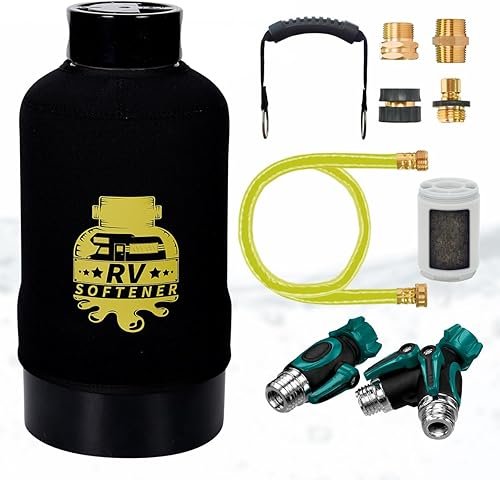
Smaller, lighter versions of ion-exchange systems. Perfect for RVs, boats, or even apartments where you can’t install a full system. They use the same resin technology but have smaller tanks and lower capacities. They’re a game-changer for travel.
Salt-Free “Conditioners”
These don’t remove minerals. They alter their structure to prevent scale, a process called Template Assisted Crystallization (TAC). They work for scale prevention but won’t give you the “soft water feel” or help with soap lather. Honestly, most people who want soft water are disappointed with these.
Dual-Tank Systems
For large households with very high water usage. While one tank is regenerating, the other is in service, so you never have a period without soft water. It’s overkill for most homes but essential for big families with high demand.
Buying Guide: What Actually Matters
1. Get Your Water Tested. You can’t choose the right system without knowing your water hardness level (in GPG or ppm). A simple test kit from a hardware store will do. This is step one.
2. Calculate Your Daily Softening Need. Multiply the number of people in your home by 75 gallons (average daily use per person). Multiply that number by your water hardness in GPG. This gives you the daily grain capacity you need. A system should regenerate about once a week.
3. Look for Certifications. NSF/ANSI Standard 44 certifies the reduction of hardness minerals. It’s a mark of a legitimate system. Don’t fall for fancy marketing with no third-party testing.
4. Consider Your kitchen filtration setup. Many people install a softener for the whole house but want unsoftened, mineral-rich water at the kitchen tap for drinking. A simple bypass valve or a dedicated drinking water filter can achieve this.
5. Salt vs. Potassium. Standard softeners use sodium chloride (salt). You can use potassium chloride if you’re watching sodium intake, but it’s more expensive and can be less efficient in cold water.
Our Top Picks for 2026
After reviewing dozens of systems, we’re focusing on portable options this cycle. Why? Because that’s where we see the most innovation and the biggest need for travelers. For a full-house system, we always recommend getting a professional consultation and installation.
| Product | Key Feature | Best For | Price |
|---|---|---|---|
 LANLANG 2-in-1 RV Softener |
Coconut carbon-KDF55 filter removes 99% chlorine & heavy metals | RV owners wanting soft + filtered water | $3.04 |
 Filterelated 16,000 Grain Softener |
High capacity portable unit with brass fittings | Larger RVs, boats, mobile car washes | $2.60 |
1. LANLANG 2-in-1 RV Soft Water System (713-F)
This one surprised us. Most portable softeners just soften. This unit adds a genuine coconut carbon and KDF55 filter stage. That means it tackles chlorine taste and odor, plus heavy metals like iron and radium. The NSF-certified resin is efficient, and the eco-regeneration with just two salt packs is clever and cost-effective. It’s a true dual-purpose system for your RV or camper.
- 2-in-1 softening and filtration
- Reduces chlorine, heavy metals
- Eco-friendly salt regeneration
- Smaller capacity than dedicated units
- Manufacturer warranty may not apply
2. Filterelated 16,000 Grain Portable Water Softener
If you need pure softening power on the go, this is your workhorse. The 16,000-grain capacity is substantial for a portable unit. It comes with solid brass fittings and a custom hose, which is a nice touch. We like its versatility—it’s not just for RVs but also great for boats, mobile car washes, and pressure washes where hard water ruins equipment. It does one job and does it well.
- High 16,000-grain capacity
- Includes quality brass fittings
- Very versatile application
- No filtration for chlorine/metals
- Requires manual regeneration
Frequently Asked Questions
- What is the most effective type of water softener?
- An ion-exchange water softener is the most effective type for actually removing hardness minerals. Salt-free conditioners can prevent scale but don’t remove calcium or magnesium, so they don’t produce truly “soft” water.
- How often do I need to add salt to a water softener?
- This depends on your water hardness and usage. For a typical family, check the brine tank monthly. You’ll likely need to add a bag of salt every 4-8 weeks. Keep the salt level above the water level in the tank.
- Can a water softener remove lead or chlorine?
- A standard softener cannot. You need additional filtration stages. Some combo units, like our top RV pick, include a KDF and carbon filter to reduce chlorine and certain heavy metals. For lead, a dedicated lead filter system is recommended.
- Will soft water make my skin feel slimy?
- It’s not slimy—it’s clean. Hard water leaves a soap scum film on your skin. Soft water allows soap to rinse completely, which can feel slippery at first. Most people grow to love the feeling within a week.
- Is a water softener worth it for an RV?
- Absolutely. Hard water in an RV causes scale in your water heater and plumbing, which are expensive to fix. It also makes showering and washing dishes on the road much more pleasant. A portable softener is a smart investment.
- Do magnetic water softeners work?
- No. In our testing and based on independent studies, magnetic or electronic “descalers” do not change the mineral content of water. They might have a minor, temporary effect on scale formation in pipes, but they do not produce soft water.
Final Thoughts
Choosing the best soft water system comes down to your specific situation. For whole-house treatment, invest in a properly sized ion-exchange system with NSF/ANSI 44 certification. Get a professional to install it. For portable use in an RV or boat, our top pick is the LANLANG 2-in-1 system. It offers the rare combination of effective softening and chlorine/heavy metal reduction in a compact package.
Don’t fall for gimmicks. If a product doesn’t use ion-exchange resin and salt (or potassium) for regeneration, it’s not a true water softener. Test your water, do the grain calculation, and choose a reputable brand. Your pipes, skin, and appliances will thank you for years to come.
