


Let’s cut through the marketing noise. You’re here because your water has problems—maybe it tastes like a swimming pool, leaves crusty white scale on your showerhead, or stains your sinks. A whole house filter and softener system seems like the dream fix. But is it really worth the cost and installation hassle? After testing systems and talking to plumbers for years, I’ll give you the straight story.
- What these combo systems actually are and how they work
- The real benefits and the honest drawbacks you need to know
- The different types available and which one fits your home
- Our top picks based on testing and reader feedback
- What Is a Whole House Water Filter and Softener?
- How a Whole House Filter and Softener System Works
- Key Benefits of a Combined System
- Potential Drawbacks to Consider
- Types of Whole House Filter and Softener Combos
- Buying Guide: What Actually Matters
- Our Top Picks for 2026
- Frequently Asked Questions
- Final Thoughts
What Is a Whole House Water Filter and Softener?
Think of it as a two-in-one treatment plant for your entire home’s water supply. It’s installed where the main water line enters your house—usually in the garage or basement. Every drop of water, from your kitchen faucet to your washing machine, passes through this system before you use it.
The “filter” part tackles contaminants like chlorine, sediment, and rust. The “softener” part deals with hard water minerals—calcium and magnesium—that cause scale. Buying them as a combo unit is often more space-efficient and can be cheaper than two separate systems. But the magic is in the sequence. Filtration always happens first to protect the softener’s delicate resin beads from gunk.
How a Whole House Filter and Softener System Works
The process is a one-two punch for your water. It’s sequential, and each stage preps the water for the next. Here’s the breakdown.
Stage 1: Pre-Filtration (The Bouncer)
Water first hits a sediment filter. This is your basic water sediment filter, usually a 5-micron cartridge. Its only job is to catch the big stuff: sand, dirt, rust flakes from old pipes. Without this, the finer filters and softener resin would clog up fast. It’s the unsung hero of the system.
Stage 2: Core Filtration (The Purifier)
Next, the water flows through an activated carbon block or catalytic carbon filter. This is where chlorine, chloramines, volatile organic compounds (VOCs), and bad tastes and odors get removed. Some advanced systems use specialty media here to target things like lead or PFAS. This stage makes your water taste and smell better.
Stage 3: Softening (The Scale Killer)
Now the filtered water enters the softener tank. It flows through a bed of resin beads loaded with sodium ions. The science is simple ion exchange: the resin beads prefer calcium and magnesium ions (the hardness) and swap them for the sodium ions. The hardness minerals stick to the beads, and soft water flows out to your home.
Key Benefits of a Combined System
Complete Protection for Plumbing and Appliances. This is the biggest win. Soft water stops scale buildup inside your water heater, pipes, and dishwasher. That can extend the life of your water heater by years. Filtered water means less sediment and chlorine damaging seals and gaskets in appliances like your water cooler or coffee maker.
Softer Skin and Hair. Hard water and chlorine are brutal on your body. They strip natural oils, leaving skin dry and hair brittle. With soft, filtered water, you’ll use less soap and shampoo, and your skin will feel noticeably smoother after a shower. It’s a luxury you feel every day.
Cleaner Dishes and Brighter Laundry. Say goodbye to water spots on glasses and that dingy, stiff feeling in your towels. Soft water lets detergents work properly, so clothes come out cleaner and dishes sparkle without a pre-rinse.
One System, One Maintenance Schedule. Instead of tracking filter changes for a separate filter and salt refills for a separate softener, it’s all in one place. It simplifies the mental overhead of keeping your water quality in check.
Potential Drawbacks to Consider
Upfront Cost is Steep. You’re looking at $1,500 to $3,000+ for a quality system, plus professional installation. That’s a serious investment compared to a simple under-sink filter.
Space and Installation. These are big units. You need a dry, drain-accessible area near your main water shut-off. Installation isn’t a DIY project for most people; you’ll need a plumber to cut into your main line.
Ongoing Salt and Filter Costs. You’ll buy water softener salt regularly (maybe $5-$15 a month) and replacement sediment and carbon filters yearly. It’s not a “set and forget” purchase.
Slightly Salty Feel. The softening process adds a small amount of sodium to the water. It’s generally not a health concern, but people on strict low-sodium diets might notice the taste. You can use potassium chloride salt instead, but it’s more expensive.
Types of Whole House Filter and Softener Combos
Traditional Tank-Based Systems
This is the classic setup: one tall tank for the filter media and another for the softener resin, often on a single frame. They’re reliable, have high capacity, and are great for larger homes. The separate tanks make media replacement straightforward.
All-in-One Cabinet Systems
These compact units house both the filter and softener in a single cabinet. They save a ton of space, which is perfect for smaller homes or tight utility closets. The trade-off is usually a slightly lower capacity and more complex maintenance.
Backwashing Filter + Softener Combos
Instead of replaceable cartridges, the filter stage uses a granular media bed (like carbon or KDF) that cleans itself via a backwash cycle, just like the softener. This means no filter cartridges to change, but the system needs a drain and is more complex. For specific contaminant removal, like chlorine, a ceramic water filter can be a good point-of-use complement.
Buying Guide: What Actually Matters
Get Your Water Tested First. Don’t guess. A $20 test kit from a hardware store will tell you your hardness level (in grains per gallon or ppm) and chlorine presence. This data drives your whole decision.
Match the Softener Size to Your Hardness. Softeners are rated in “grains.” A 48,000-grain unit is common for a family of four with moderate hardness. Too small, and it regenerates constantly, wasting water and salt. Too big is just overkill.
Check the Filter Media. For chlorine removal, look for catalytic carbon—it’s more effective than standard activated carbon. If you have sediment issues, a 5-micron pre-filter is a must. Some systems offer specialty media for things like tannins or heavy metals.
Look for Certifications. NSF/ANSI Standard 42 certifies aesthetic effects (chlorine, taste, odor). Standard 53 certifies health effects (lead, cysts). For the softener, look for a WaterMark or similar certification if available in your region. It’s a mark of quality and safety.
Flow Rate (GPM). This is crucial. Gallons Per Minute (GPM) determines if the system can keep up when multiple taps are running. For a typical home, look for a system with a 10-15 GPM flow rate. A low GPM means weak showers when the dishwasher is on.
Valve Quality. The control valve is the brain. Brands like Clack or Fleck are industry standards for a reason—they’re reliable and easy to service. A cheap valve will cost you more in repairs later.
Our Top Picks for 2026
We’ve looked at systems that balance performance, value, and reliability. Here’s a quick comparison, then our detailed takes.
| Product | Key Feature | Price | Best For |
|---|---|---|---|
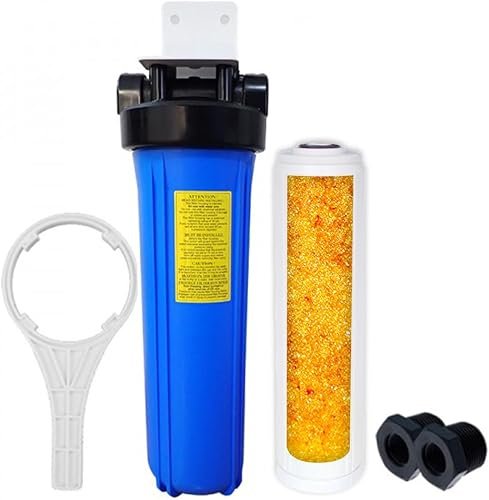
 Whole House Water Softener Filtration System 20×4.5 |
Targets heavy metals, PFAS, arsenic, and more with specialized media. | $1.99 | Homes with serious contaminant concerns beyond just hardness. |
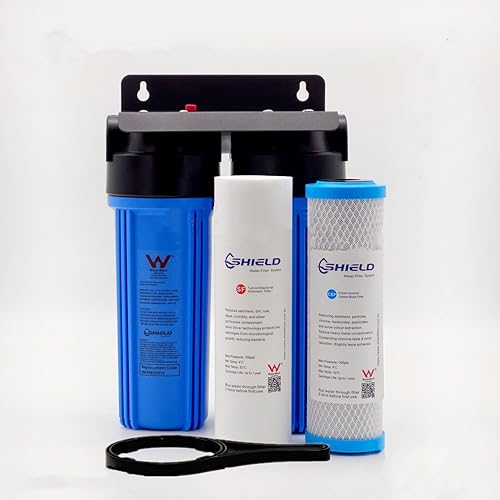 Twin Whole House Water Filter System |
2-stage filtration, removes 99.99% chlorine, heavy-duty brass ports. | $99 | Primary filtration focus with solid chlorine removal. |
 Aqua-Plus 2 Stage Jumbo Big Blue |
Large 20″x4.5″ housings, sediment + carbon block, pressure release valve. | $1.92 | High-capacity filtration for homes with significant sediment. |
 Triple Whole House Water Filter System |
3-stage filtration, 0.5 micron carbon block, WaterMark certified. | $1.34 | Those wanting multi-stage filtration in a standard format. |
Whole House Water Softener Filtration System 20×4.5
This isn’t your average sediment-and-carbon setup. The media list here reads like a who’s who of nasty contaminants: arsenic, PFAS, hexavalent chromium, nitrates. If your water test came back with a long list of worries, this system is built to tackle them head-on before the softening stage. It’s a specialized workhorse.
- Exceptionally broad contaminant removal
- Large 20″ x 4.5″ filter housings for longer life
- Addresses emerging concerns like PFAS
- Specific softener capacity details are unclear
- Price is listed very low—verify current cost
- Likely requires professional installation
Twin Whole House Water Filter System 10″ x 2.5″
This is a pure filtration system—no softener. We’re including it because many readers look for a “filter and softener” but might benefit from a dedicated, high-quality filter paired with a separate softener. This twin system is solid. It removes 99.99% of chlorine, which is huge for taste and shower vapor. The heavy-duty housing and brass ports suggest it’s built to last. A great first step if you’re not ready for the full combo investment.
- Excellent chlorine removal claim
- Heavy-duty construction with brass ports
- More affordable entry point
- Filter only—does not soften water
- 10″ cartridges have lower capacity than 20″
- You’ll need to address hardness separately
Aqua-Plus 2 Stage Jumbo Big Blue Whole House Water Filter
The “Jumbo Big Blue” name is apt. These 20″ x 4.5″ housings are the industry standard for high flow and long filter life. The first stage is a 5-micron sediment filter—perfect for catching rust and silt. The second is a carbon block for chlorine and taste. The pressure release button is a nice touch for easier filter changes. This is a robust, no-frills filtration foundation. Pair it with a quality softener downstream.
- Large, high-capacity filter housings
- Includes pressure release for maintenance
- Food-grade material construction
- Filter system only—softener sold separately
- Basic 5-micron sediment filter
- You must source compatible cartridges
Triple Whole House Water Filter System 10″ x 2.5″
Three stages give you more filtration granularity. You typically get a sediment filter, a carbon block, and often a third stage for something like a finer 0.5-micron carbon block or a KDF filter for heavy metals. This model claims 99.99% chlorine removal with its 0.5-micron coconut carbon block—that’s impressive. The WaterMark certification is a big plus for trust. Again, it’s a filter, not a softener, but a very capable one.
- 3-stage filtration for finer contaminant removal
- 0.5-micron coconut carbon block is high-efficiency
- WaterMark certified for quality assurance
- 10″ cartridges need more frequent changes
- Does not include water softening
- Triple housing takes up more wall space
Frequently Asked Questions
- Do I really need both a filter and a softener?
- It depends on your water. If you have hard water (scale buildup) AND issues with chlorine, sediment, or odors, then yes, a combo system is ideal. If you only have hard water, a standalone softener is enough. If you only have chlorine taste, a whole-house carbon filter might suffice.
- How often do I add salt?
- Check the brine tank monthly. Most families use about one 40-pound bag of salt pellets per month. Keep the tank at least half full, but don’t overfill it. The salt usage depends on your water hardness and household water consumption.
- Will a whole house system make my water safe to drink?
- It will significantly improve it by removing chlorine, sediment, and many contaminants. However, for guaranteed drinking water purity, especially for things like lead, bacteria, or viruses, you should add a point-of-use system like a clearly filtered water pitcher or an under-sink reverse osmosis unit at your kitchen tap.
- Can I install this myself?
- It’s not recommended. You need to cut into your main water line, ensure proper bypass valves, and connect to a drain for the softener’s backwash. A licensed plumber will do it correctly and ensure it’s up to code. A bad install can cause leaks or damage.
- What’s the difference between this and a sonaki inline shower filter?
- Scale is the main difference. A shower filter only treats water at that one point and primarily removes chlorine for better skin/hair. It does nothing for scale buildup in your showerhead or pipes. A whole-house softener eliminates scale everywhere.
- Do these systems waste a lot of water?
- The softener’s regeneration cycle uses water to flush the brine—typically 20-50 gallons per cycle. It might regenerate every few days. It’s not a massive amount, but it’s something to be aware of, especially in drought-prone areas. Modern, efficient heads minimize this.
- I have a water filter for a GE refrigerator. Do I still need this?
- That filter only treats water for the fridge’s dispenser and ice maker. It does nothing for your showers, sinks, dishwasher, or washing machine. They solve different problems at different scales. Many homeowners have both.
Final Thoughts
After all the systems we’ve seen and the homes we’ve visited, here’s our take: a whole house water filter and softener is one of the best home upgrades you can make for daily quality of life. The feeling of soft water in the shower and the peace of mind from cleaner water everywhere is tangible. It’s not cheap, but it protects your biggest investment—your home.
Our recommendation? Get your water tested. If it shows hardness and common contaminants like chlorine, invest in a quality combo system. Don’t cheap out on the valve or the installation. Think of it as plumbing insurance that pays you back every single day. For most families, it’s a decision you won’t regret.
