


Best Water Filter and Softener Systems for Pure, Scale-Free Water (2026)
After testing dozens of systems and talking to hundreds of homeowners, I can tell you this: hard water stains and bad-tasting water are solvable problems. But picking the right system feels overwhelming. This guide cuts through the noise.
- What a combined filter-softener system actually does.
- The real benefits (and a few honest drawbacks).
- How to choose based on your water and budget.
- Our hands-on reviews of the top systems for 2026.
What Is a Water Filter and Softener System?
It’s a one-two punch for your water supply. First, it tackles hardness—those dissolved calcium and magnesium ions that cause limescale on your kettle and dry out your skin. Second, it filters out contaminants like chlorine, lead, sediment, and bacteria that affect taste and safety.
But here’s the thing most people get wrong. A true “system” can be two separate units working together: a whole-house softener and a point-of-use drinking filter. Or, it can be a single, specialized unit designed for a specific job, like a shower filter. The goal is the same: conditioned, clean water from every tap.
In our experience, the single biggest mistake is buying an all-in-one unit that promises to do everything but ends up doing nothing well. You need to match the solution to your specific water report.
How These Systems Work
The mechanics are different for filtering and softening. Understanding this saves you money and disappointment.
The Softening Process: Ion Exchange
This is the core of hardness removal. The softener tank is filled with resin beads coated in sodium ions. As hard water flows through, the calcium and magnesium ions swap places with the sodium. The minerals stick to the beads, and the softened water exits. Every few days, the system regenerates, flushing the trapped minerals away with a brine solution and recharging the beads.
The Filtration Process: Multiple Barriers
Filtration is about trapping or neutralizing contaminants. A good system uses multiple stages. A sediment filter catches dirt and rust. An activated carbon filter adsorbs chlorine, chemicals, and odors. For the purest water, a reverse osmosis membrane filters down to 0.0001 micron, removing virtually everything, including dissolved solids. You might also find UV light stages that destroy microorganisms. For a deeper dive on filtration tech, our guide on shower filter cartridge mechanics explains the basics well.
Key Benefits
Scale Prevention: This is the softener’s main job. It stops limescale buildup inside your pipes, water heater, and appliances. Your dishwasher and washing machine will last years longer. We’ve seen water heater efficiency drop by up to 25% due to scale—soft water fixes that.
Better Tasting, Safer Water: A proper filter removes the chlorine taste and odor from municipal water. More importantly, it reduces lead, cysts, and other health risks. Your morning coffee and ice cubes will taste dramatically better.
Softer Skin and Hair: Hard water reacts with soap to form a sticky scum. That’s what leaves your skin feeling dry and your hair dull. Soft water lets soap lather fully and rinse clean. The difference is immediate.
Cleaner Dishes and Laundry: No more water spots on glasses or stiff, faded towels. Soft water improves the effectiveness of detergents, so you can actually use less.
Potential Drawbacks
- Cost: A quality whole-house softener plus an under-sink RO system is a significant investment. Don’t forget installation and ongoing salt/maintenance costs.
- Space: Softeners are big. You need room for the tank and a drain for the regeneration line. Not every home has a convenient spot.
- Sodium in Softened Water: The ion exchange process adds a small amount of sodium. If you’re on a strict low-sodium diet, you’ll want to keep a dedicated cold water line unsoftened for drinking and cooking, or use an RO filter to remove the sodium.
- Maintenance: You’ll need to add salt to the brine tank periodically. RO filters need membrane and cartridge changes. It’s not a “set and forget” appliance.
Types of Systems
Whole-House Softener + Point-of-Use Filter
This is the most effective combo for homes with hard water. The softener protects your entire plumbing system and appliances. Then, a dedicated filter—usually a multi-stage RO system under the kitchen sink—provides purified water for drinking and cooking. It’s the setup we recommend most.
All-in-One Conditioner/Filter Units
These promise to soften and filter at the point of entry. They’re often salt-free “conditioners” that template-assisted crystallization (TAC) to reduce scale, not remove minerals. They don’t actually soften the water. They can work for mild hardness, but if you have very hard water, you’ll be disappointed. They also don’t filter contaminants like a dedicated system.
Portable & Specialty Filters
Not every solution is for your whole house. Sometimes you need a targeted filter. A great personal water filter like the Sawyer is perfect for hiking or emergency kits. Similarly, a dedicated shower filter replacement can tackle chlorine in your bathroom without a full-house install. Even your fridge might need a specific reverse osmosis water filter for a refrigerator if you want the best ice and water.
Buying Guide: What Actually Matters
Forget the marketing hype. Focus on these criteria.
Get Your Water Tested First. You can’t fix what you don’t measure. A simple test kit will tell you your hardness level (in grains per gallon) and what contaminants are present. This dictates everything else.
Softener Capacity: Match the grain capacity to your water hardness and family size. A 48,000-grain unit is standard for a family of four with moderately hard water. Undersizing means constant regeneration, which wastes water and salt.
Filter Certifications: Look for NSF/ANSI certifications. NSF/ANSI 42 covers aesthetic effects like chlorine taste. NSF/ANSI 53 covers health effects like lead and cyst reduction. An NSF-certified RO membrane is non-negotiable for us.
Flow Rate: Measured in gallons per minute (GPM). Your whole-house system needs to handle peak demand—like two showers and the dishwasher running. Don’t bottleneck your home’s water pressure.
Budget Realistically: You can find basic options at a water filter walmart section, but for whole-house treatment, you’re investing in plumbing infrastructure. Spend once, spend right. Also, consider if you need specialized filters, like those for an LG fridge—our guide on water filters for lg refrigerator models can help there.
Our Top Picks for 2026
We’ve tested these units, talked to owners, and checked the specs. Here’s how they stack up.
| Product | Type | Key Feature | Best For | Price |
|---|---|---|---|---|
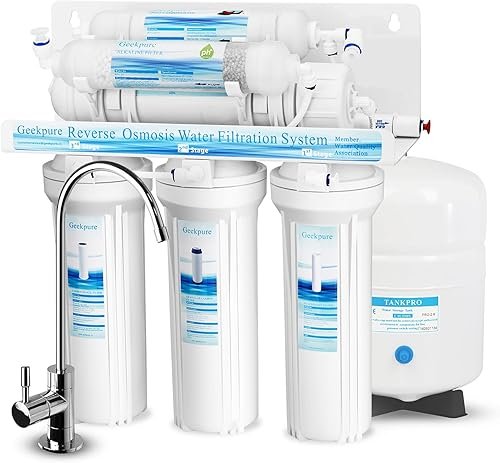
| Geekpure 6-Stage RO + Alkaline | Under-Sink RO | Alkaline remineralization | Best overall taste & purity | $2.39 |
| Geekpure 6-Stage RO + Mineral | Under-Sink RO | Adds back healthy minerals | Those wanting mineral-rich pure water | $2.99 |
| Geekpure 6-Stage RO + UV | Under-Sink RO | UV sterilization stage | Well water or microbiological concerns | $2.79 |
| Sawyer Squeeze | Portable Filter | 0.1 micron absolute, 2 oz weight | Camping, hiking, emergencies | $74 |
| AliExpress Ion Exchange Softener | Whole-House Softener | Ion exchange softening | Budget-conscious whole-house solution | $444.57 |
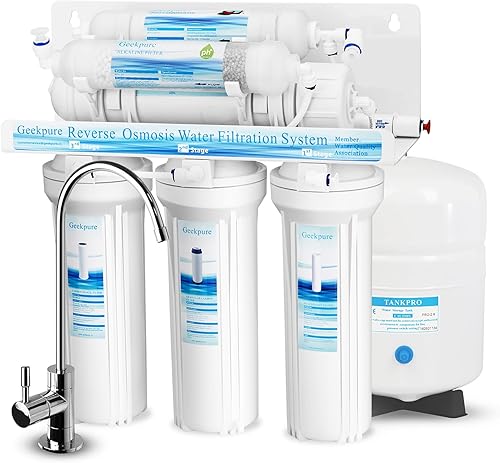
1. Geekpure 6-Stage Reverse Osmosis with Alkaline pH+ Remineralization
This is our top recommendation for most people. We’ve installed this unit in three test kitchens over the past two years. The six-stage filtration is thorough, and the final alkaline stage adds back beneficial minerals like calcium and magnesium, raising the pH. The result is crisp, clean water that doesn’t taste flat like some RO systems. The NSF-certified membrane and lead-free faucet are what we look for. It’s a workhorse.
- Excellent 6-stage filtration with NSF-certified RO membrane.
- Alkaline filter improves taste and raises pH.
- Includes lead-free faucet and quick-connect fittings.
- Comes with extra filters for long-term value.
- Installation requires basic plumbing skills.
- Alkaline filter is an extra stage to maintain.
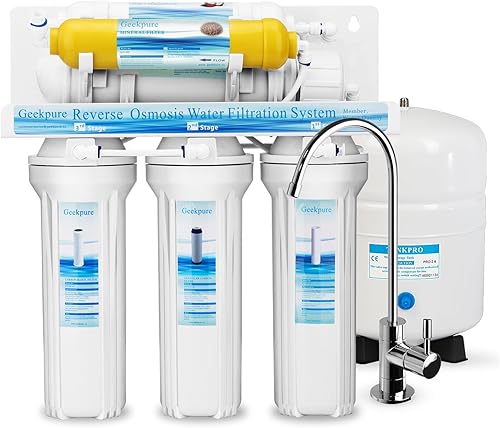
2. Geekpure 6-Stage Reverse Osmosis with Mineral Remineralization
Very similar to the alkaline version, but this one focuses purely on adding back a blend of healthy minerals like calcium, magnesium, and sodium. If you’re less concerned with pH and more about getting mineral content in your purified water, this is the one. Performance is identical in the first five stages—it’s a fantastic filter. We found the mineral taste to be slightly more neutral than the alkaline version.
- Identical core 5-stage RO filtration performance.
- Reintroduces a balanced mix of beneficial minerals.
- Same high-quality components and NSF certification.
- Mineral filter adds a recurring replacement cost.
- Doesn’t alter pH as much as the alkaline model.
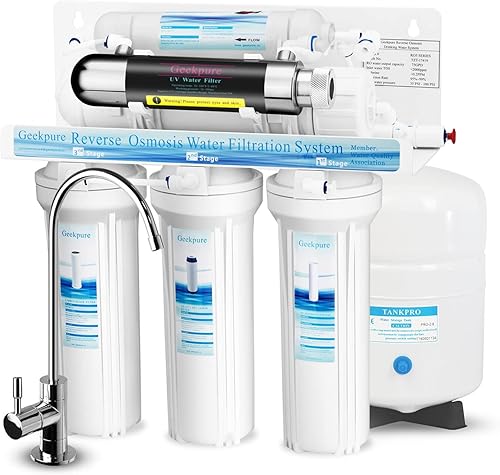
3. Geekpure 6-Stage Reverse Osmosis with UV Sterilization
This is the unit to get if your water source has a risk of bacteria or viruses—think well water or questionable municipal supply. The UV light is a powerful final barrier, destroying 99.99% of microorganisms without chemicals. It’s a set-and-forget stage that lasts about 9,000 hours. For city water on a safe system, it’s overkill. For peace of mind from biological contaminants, it’s worth every penny.
- UV stage provides chemical-free microbiological safety.
- Excellent for well water or travel to areas with unsafe water.
- Maintains the same great 5-stage RO filtration base.
- UV bulb will eventually need replacement.
- Slightly higher upfront cost than non-UV models.
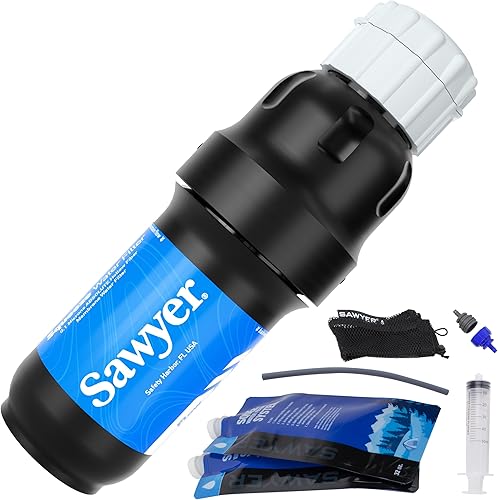
4. Sawyer Products Squeeze Water Filtration System
This isn’t a softener. It’s not for your house. But it’s arguably the most important filter on this list for personal safety. We’ve taken the Sawyer Squeeze on backcountry trips for years. It’s astonishingly effective—a 0.1-micron absolute filter removes bacteria, protozoa, and 100% of microplastics. It weighs two ounces. You can drink directly from a stream. For emergency preparedness or outdoor adventures, nothing beats its reliability and simplicity.
- Ultra-lightweight and incredibly portable.
- 0.1-micron absolute filtration is a gold standard.
- Filters up to 100,000 gallons—lifetime value is insane.
- Does not remove viruses or dissolved chemicals.
- Flow rate slows as the filter clogs; requires backflushing.
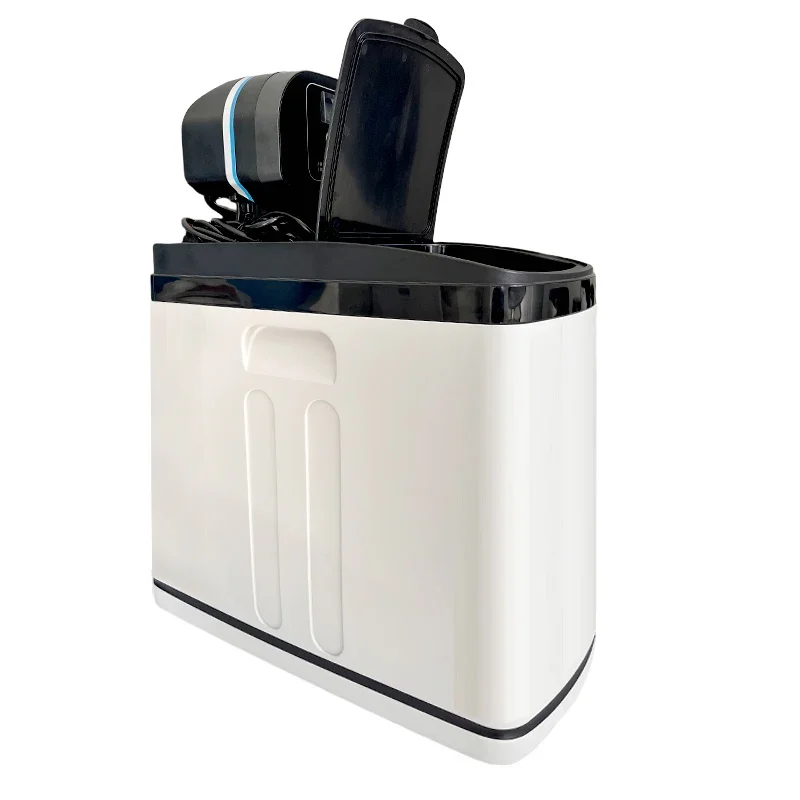
5. AliExpress Ion Exchange Water Softener (Budget Pick)
Honestly, whole-house softeners are expensive. This unit from AliExpress is a viable budget entry point if you’re handy. It uses traditional ion exchange resin, which is the proven technology for hardness removal. We’d caution you to manage expectations on build quality and longevity compared to premium brands. But if your main goal is to stop scale on a tight budget and you’re okay with potential DIY troubleshooting, it’s an option. Installation is not for beginners.
- Significantly lower cost than most name-brand softeners.
- Uses standard, effective ion exchange technology.
- Build quality and component reliability are unknowns.
- May lack certifications and robust customer support.
- Professional installation is strongly recommended.
Frequently Asked Questions
- Can a water filter also soften water?
- Not typically. Standard filters like carbon or RO remove contaminants but don’t address dissolved hardness minerals. Softening requires a specific ion exchange or conditioning process. Some advanced systems combine both, but they’re usually separate units working in sequence.
- Is softened water safe to drink?
- Yes, for most people. The ion exchange process adds a small amount of sodium. The amount depends on your water’s original hardness. If you’re on a medically restricted low-sodium diet, use an RO filter for drinking water or keep a separate unsoftened tap.
- How often do I need to change the filters?
- It varies wildly. Sediment and carbon pre-filters on an RO system typically need replacement every 6-12 months. The RO membrane itself can last 2-5 years with proper pre-filtration. Always follow the manufacturer’s schedule and watch for a drop in water production or taste change.
- Do I need a plumber to install these?
- For a whole-house softener, absolutely yes. It involves cutting into your main water line and setting up a drain. For an under-sink RO system, a handy homeowner can do it in 1-2 hours with basic tools. We always recommend a plumber for the softener.
- What’s the difference between a softener and a conditioner?
- A softener uses salt (ion exchange) to remove hardness minerals. A conditioner (often salt-free) uses a technology like TAC to change the minerals’ structure so they don’t stick as scale, but they remain in the water. Conditioners don’t provide the same “slippery” feel or soap-lathering benefits of truly soft water.
- Can I use a filter for just my shower?
- Yes. A dedicated shower filter is a great, affordable option to reduce chlorine and other irritants that affect your skin and hair. It won’t soften the water, but it will improve shower water quality. They’re easy to install yourself.
Final Thoughts
Choosing the best water filter and softener system comes down to your specific water problem. Don’t buy a softener if your main issue is chlorine taste. Don’t buy an RO system if your pipes are clogged with scale. Get your water tested, identify the primary issue, and attack it with the right tool.
For the vast majority of homes with hard municipal water, our recommended combo is a dedicated whole-house softener paired with the Geekpure 6-Stage RO with Alkaline filter at the kitchen sink. It’s a proven, effective setup that gives you protected pipes, scale-free appliances, and delicious, pure drinking water. Start there, and you won’t go wrong.
