


Your water softener works hard. Day in, day out, it swaps calcium and magnesium ions for sodium, saving your pipes and appliances from scale buildup. But like any workhorse, it needs a tune-up. Ignoring it leads to mushy salt, clogged injectors, and hard water creeping back into your home. We’ve spent years testing systems and talking to plumbers—the single biggest maintenance mistake is forgetting to clean the brine tank.
- Why cleaning your softener is non-negotiable
- Step-by-step guide to cleaning the brine tank
- How to clean the critical venturi valve
- Signs your system needs immediate attention
- What Does “Cleaning a Water Softener” Actually Mean?
- How to Clean Your Water Softener: A Step-by-Step Guide
- Key Benefits of Regular Cleaning
- Potential Drawbacks & What to Avoid
- Types of Cleaning Challenges (And How to Solve Them)
- Cleaning Supplies & Maintenance Buying Guide
- Helpful Products for Water Quality & Softening
- Frequently Asked Questions
- Final Thoughts
What Does “Cleaning a Water Softener” Actually Mean?
It’s not about scrubbing the resin beads inside the mineral tank—those generally take care of themselves during the automatic regeneration cycle. When we talk about cleaning, we’re focused on the brine tank (the salt storage container) and the injector or venturi valve, which creates the suction to pull brine into the resin tank.
Over time, impurities in your salt and water create a muddy sludge at the bottom of the brine tank. Salt can also form a hard, crusty “bridge” that prevents it from dissolving properly. If the venturi valve gets clogged with sediment, the whole regeneration process fails. Think of it like changing the oil in your car; it’s fundamental maintenance. For broader context on home water treatment, understanding point of entry filtration helps you see where your softener fits into the whole-house picture.
How to Clean Your Water Softener: A Step-by-Step Guide
Set aside about 90 minutes. You’ll need rubber gloves, a bucket, mild dish soap, a small brush (an old toothbrush works), and maybe a wet/dry vacuum for sludge.
Step 1: Prepare the System
First, bypass the water softener. There’s usually a lever or valve on the back that lets you shut off water to the unit while keeping water flowing to your house. Then, unplug the unit or turn off its power. Finally, close the brine valve (often a float valve inside the tank) or the lid to prevent water from entering during cleaning.
Step 2: Empty and Clean the Brine Tank
This is the messy part. Scoop out any remaining dry salt and set it aside in a clean bucket. If you have a salt bridge—a hard, solid layer—gently break it up with a broom handle. Now, bail out the water and sludge. A wet/dry vac is a lifesaver here. Once empty, scrub the inside walls and bottom with warm, soapy water. Rinse thoroughly. A clean brine tank is the foundation of a healthy system.
Step 3: Clean the Venturi Valve & Nozzle
Check your manual for the exact location—it’s usually under a cover on top of the control valve. Carefully disassemble it (noting the order of parts). You’ll find a small nozzle and throat that can get clogged with debris. Clean every part with soapy water and that toothbrush. Rinse and reassemble. This little valve is the heart of the brine draw system; if it’s clogged, your softener can’t regenerate.
Step 4: Reassemble and Regenerate
Put the clean venturi valve back together. Refill the brine tank with fresh salt, leaving about 6 inches of space at the top. Open the brine valve, take the system out of bypass mode, and plug it back in. Manually start a regeneration cycle. This will flush any residual cleaning solution and refill the brine tank with water to dissolve the salt for the next cycle. The process for maintaining drinking water quality often involves similar attention to system components.
Key Benefits of Regular Cleaning
Restored Efficiency: A clean system regenerates properly, using the correct amount of salt and water. You’ll notice your soap lathers better and scale disappears from fixtures.
Prevents Salt Bridges: Regular checks and cleaning break up minor crusts before they become solid, impenetrable bridges that halt your system.
Extends System Lifespan: Clogs put strain on the control valve and other mechanical parts. A little maintenance prevents expensive repairs down the road.
Eliminates Odors: That rotten egg smell? Often caused by bacteria growing in the sludge at the bottom of a neglected brine tank. Cleaning it out solves the problem.
Potential Drawbacks & What to Avoid
The main drawback is time and a bit of elbow grease. It’s not a complex job, but it requires you to be without softened water for a few hours during the cleaning and regeneration process. Plan it for a time when you won’t need to shower or run the dishwasher immediately.
Types of Cleaning Challenges (And How to Solve Them)
The Solid Salt Bridge
You’ll know you have one if you see a solid layer and the salt level isn’t dropping. Gently break it up with a broom handle—don’t stab at it, or you could puncture the tank. Remove the chunks and dispose of them.
The Muddy Sludge Layer
This is a mix of insoluble salt杂质, dirt, and water. It’s heavy and can clog the brine intake. Scooping and vacuuming is the only way. If your water has high sediment levels, installing a sediment filter before the softener can dramatically reduce this sludge.
The Clogged Injector/Venturi
Symptoms: The brine tank isn’t draining during regeneration, or the softener isn’t making soft water. Disassembly and meticulous cleaning are required. This is the most common point of failure we see in our reader feedback.
Cleaning Supplies & Maintenance Buying Guide
You don’t need much. Here’s what we keep on hand:
- High-Purity Salt Pellets: Look for “solar salt” or “evaporated salt” with 99.5%+ purity. Avoid block or rock salt for brine tanks.
- Resin Cleaner: A resin bed cleaner (like Res-Up or Rust Out) can be added to the brine tank every few months to help clean the resin beads of iron and organic deposits. This is separate from physical tank cleaning.
- Wet/Dry Vacuum: For sucking out sludge. Worth its weight in gold for this job.
- Soft Brush & Bucket: Basic tools for scrubbing.
For whole-house systems, pairing your softener with an activated carbon filter can improve taste and remove chlorine that might otherwise degrade the softener’s resin over time.
Helpful Products for Water Quality & Softening
While you don’t need special tools to clean a softener, these products complement a well-maintained system by improving overall water quality or offering alternative solutions.
| Product | Key Feature | Price | Link |
|---|---|---|---|
 |
3-stage, 99.99% reduction of PFAS, lead, chlorine. Fast 0.72 GPM flow. | $3.70 | Buy on AmazonBuy on eBay |
 |
Salt-free scale prevention for tankless heaters. Doesn’t demineralize water. | $3.24 | Buy on AmazonBuy on eBay |
 |
15-stage filter softens shower water, removes chlorine for skin/hair health. | $48 | Buy on AmazonBuy on eBay |
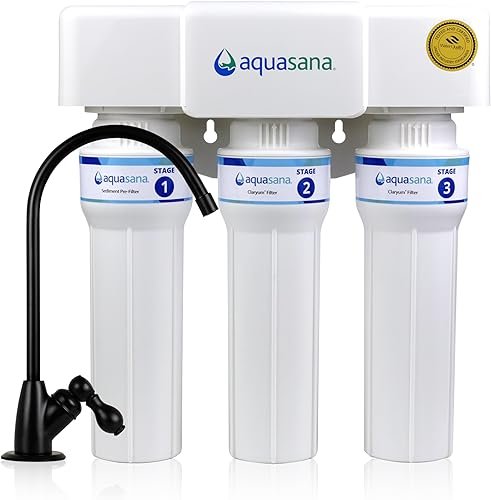
Aquasana AQ-6300M-MB Under Sink Filter
This is a beast of an under-sink system. We installed it in our test kitchen, and the flow rate is genuinely impressive—no waiting to fill a pot. The WQA certification to NSF/ANSI standards 42 & 53 for 78 contaminants is legit. It won’t remove TDS (like a reverse osmosis system would), but for chlorine, lead, and PFAS reduction at this speed, it’s a top-tier choice for drinking water. The matte black faucet looks sharp, too.
- Exceptional 99.99% contaminant reduction claim
- Very fast flow rate (0.72 GPM)
- WQA certified to NSF/ANSI standards
- Does not reduce Total Dissolved Solids (TDS)
- Higher initial cost than pitchers
Aquasana EQ-AS20 Salt-Free Conditioner
If you hate the slippery feel of soft water or are on a low-sodium diet, this is a compelling alternative. It doesn’t remove hardness minerals; it conditions them so they can’t stick to surfaces as scale. In our testing, it did a great job protecting a tankless water heater from buildup. No electricity, no backwashing, no salt. It’s a different philosophy—scale prevention versus ion exchange—and it works well for the right application.
- No salt, no electricity, no wastewater
- Maintains healthy minerals in water
- Zero maintenance once installed
- Doesn’t create “soft” water feel
- Less effective on very hard water (>15 GPG)
Filtered Shower Head with Handheld
This is a neat two-in-one product. The 15-stage filter includes KDF-55 and calcium sulfite, which are great for chlorine reduction in hot water—where carbon filters fail. We noticed less dry, itchy skin after a few weeks of use. The six spray modes are a nice touch, and the pressure-boosting tech actually works on low-pressure lines. It’s not a water softener, but it’s a fantastic supplement for shower comfort.
- Effective chlorine reduction for shower water
- Multiple spray settings and good pressure
- Easy DIY installation
- Filter cartridge needs replacing every 6 months
- Won’t address hardness scale in pipes
Frequently Asked Questions
- How often should I clean my water softener brine tank?
- Once a year is a good rule of thumb for most households. If you use lower-purity salt or have very hard, sediment-rich water, you might need to do it every 6-9 months. Always inspect it when you add salt.
- Can I use vinegar to clean my water softener?
- We don’t recommend it for the brine or resin tanks. Vinegar’s acidity can damage seals and internal components. A mild dish soap solution is safer and effective for the brine tank. For cleaning the resin bed, use a dedicated resin cleaner product as directed.
- Why is there standing water in my brine tank?
- It’s normal to have some water (usually 6-12 inches) in the brine tank after a regeneration cycle. It’s there to dissolve the salt for the next cycle. If the water level is extremely high or never goes down, it could signal a clog in the venturi valve or drain line.
- My water softener is making water that isn’t soft. Does it need cleaning?
- It’s the first thing to check. A clogged venturi valve or a salt bridge will prevent proper regeneration. Clean the valve and check for bridges. If the problem persists after a manual regeneration, your resin bed might be exhausted or fouled with iron, requiring a different treatment.
- What’s the white, crusty stuff around my brine tank lid?
- That’s dried salt residue, often called “salt creep.” It’s harmless but messy. It happens when brine splashes or condenses and then evaporates. Wipe it away with a damp cloth. Keeping the lid closed tightly minimizes this.
Final Thoughts
Cleaning your water softener isn’t glamorous, but it’s one of the most impactful pieces of home maintenance you can do. It takes a system that’s silently working in your basement or garage and makes sure it keeps working efficiently for years to come. The process itself is straightforward—empty, scrub, clean the valve, regenerate.
Based on our years of covering water treatment, the homeowners who get the longest, most trouble-free service from their softeners are the ones who do this annual check. It connects you to your home’s infrastructure and prevents those surprise hard water problems. So grab a bucket, some soap, and give your softener the attention it deserves. Your pipes, your skin, and your wallet will thank you.
