


If your water feels like it’s leaving a film on everything, you’re probably dealing with hard water. A softener is the fix. But that box in your garage or basement isn’t magic—it needs to clean itself regularly to keep working. That cleaning process is called regeneration. Ignore it, and your system becomes an expensive paperweight.
- What regeneration actually is and why it’s non-negotiable.
- The step-by-step science of how your softener resets itself.
- The real benefits and the few downsides you should know.
- How to choose a system and set it up so it regenerates efficiently.
What Is Water Softener Regeneration?
Think of your water softener like a sponge. Its resin beads are the sponge, soaking up calcium and magnesium—the stuff that makes water “hard.” Regeneration is the process of wringing that sponge out. It’s a programmed, automatic cycle where the system cleans and recharges those beads so they can go back to work.
Without this cycle, the resin beads get saturated. They can’t grab any more minerals. Your water hardness will spike right back to where it started. We’ve seen homeowners think their softener was broken after a year. In almost every case, it was just a regeneration setting that was off, or the salt tank was empty.
The cycle uses a concentrated saltwater solution (brine) from a separate tank. This brine flushes the captured minerals down the drain. The frequency depends on your water usage and hardness. For a typical family, expect a regeneration every 2-3 days. It usually kicks in around 2 AM to avoid disrupting your water supply.
How Water Softener Regeneration Works
The process isn’t complicated, but it’s clever. It happens in distinct stages. Understanding them helps you troubleshoot and set your system up right.
1. Fill
The control valve opens a valve to let water into the brine tank, dissolving the salt pellets and creating that all-important brine solution. This step can take 10-20 minutes. If your salt is caked into a solid block (a “bridge”), this step fails.
2. Brining
The brine is slowly drawn from the tank into the resin tank. It flows over the resin beads, and the sodium ions in the brine displace the calcium and magnesium ions clinging to the beads. This is the ion exchange in reverse. The now-spent brine, loaded with hardness minerals, is flushed to drain.
3. Rinse
Fresh water rushes through the resin bed at a fast flow rate. This rinses away any remaining brine and traces of hardness. It’s a critical step. Skip it, and you’ll get salty-tasting water. The system then refills the brine tank with water for the next cycle.
4. Backwash
Water flows upward through the resin bed at a high rate, fluffing it up and flushing out any sediment or iron particles that may have collected. This prevents channeling, where water finds an easy path through the resin instead of contacting all of it.
Key Benefits of Proper Regeneration
Consistent Water Quality: This is the whole point. A properly regenerating system delivers soft water 24/7. No more soap scum on shower doors, spotty dishes, or stiff laundry. Your Moen faucet aerator will stay clog-free much longer.
Extended Appliance Life: Scale buildup from hard water is a killer. It clogs water heaters, coffeemakers, and ice makers. A softener that regenerates on schedule protects these investments. We’ve seen water heaters last 5+ years longer in homes with well-maintained softeners.
Soap & Detergent Savings: Soft water lathers easily. You’ll use less shampoo, laundry soap, and dishwasher detergent. The savings add up fast, often covering the cost of the salt.
System Longevity: The resin beads themselves can last 10-20 years if kept clean through regular regeneration. Letting them stay saturated with minerals can degrade them faster.
Potential Drawbacks & Considerations
Water & Salt Usage: Regeneration isn’t free. It uses water—typically 40-150 gallons per cycle—and salt. This is a real ongoing cost. Newer high-efficiency models use much less, but it’s a factor. You’ll need to monitor your house water filtration setup and salt levels monthly.
Interruption During Cycle: While regenerating, most systems can’t deliver soft water. If you use a lot of water during its 2 AM cycle, you might get a brief burst of hard water. Demand-initiated systems minimize this by regenerating based on actual use, not just a timer.
Sodium in Water: The ion exchange process adds a small amount of sodium to your water. For most people, it’s negligible. If you’re on a strict low-sodium diet, consider a potassium chloride alternative or a separate drinking water filter sink attachment for your kitchen tap.
Types of Softener Systems & Regeneration
Timer-Based (Clock) Systems
The simplest and often cheapest. You set it to regenerate on a fixed schedule, like every Wednesday and Saturday at 2 AM. The downside? It regenerates whether it needs to or not. Waste water and salt if you’re away for a week. Fine for consistent water usage.
Demand-Initiated (Metered) Systems
This is the standard we recommend. A water meter inside the unit tracks your actual usage. It calculates when the resin is nearing capacity and triggers regeneration only then. Much more efficient. The kinetico water softener cost is higher partly because they use this efficient, non-electric demand system.
Portable & RV Softeners
These are small, manual versions. You hook them up to a hose, run water through until the resin is exhausted, then manually regenerate them by flushing brine through. They’re for RVs, boats, or car washing. The regeneration is a hands-on chore.
Buying Guide: What to Look For
Grain Capacity: This tells you how much hardness the system can remove between regenerations. A family of four with moderately hard water (10 GPG) needs about a 32,000-grain unit. Bigger isn’t always better—an oversized unit regenerates less frequently, which can let bacteria grow in the stagnant resin.
Efficiency Rating: Look for the “grains per pound of salt” rating. Higher is better. A system that removes 5,000 grains per pound of salt is far more efficient than one that only does 2,000. This directly impacts your salt bill.
Control Valve Type: The valve is the brain. Fleck and Clack are the gold standard for residential demand-initiated valves. They’re reliable and repairable. Avoid no-name valves.
NSF/ANSI Certification: Look for certification to standards 42 (aesthetic effects) and 44 (cation exchange water softeners). This verifies the manufacturer’s claims about performance and safety.
For most homes, a demand-initiated system with a Fleck valve in the correct grain capacity is the sweet spot of cost and performance.
Top Picks for 2026
| Product | Key Feature | Price | Links |
|---|---|---|---|
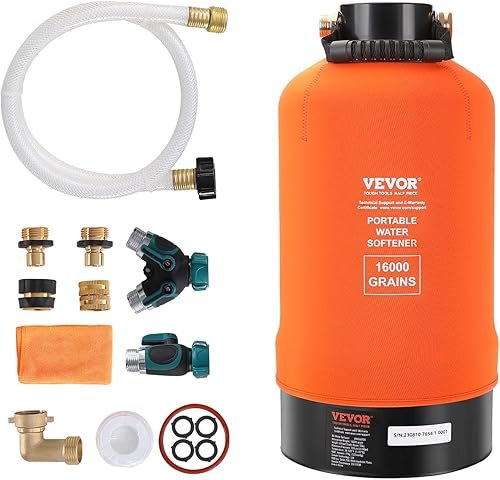
| VEVOR RV Water Softener 16,000 Grain Portable |
Portable, brass fittings, 42″ hose included. Great for RVs and mobile washing. | $1.77 | AmazoneBay |
| Bath Bathtub Water Filter Hard Water Softener |
Fits all tub faucets, removes chlorine/fluoride. A simple skin/hair solution. | $62 | AmazoneBay |
| Filterelated RV Water Softener 16000 Grain Portable |
Includes custom hose, targets heavy metals. Versatile for RVs, boats, car washes. | $2.60 | AmazoneBay |
| Filtered Shower Head 6 Spray Mode with Filter |
15-stage filtration, high pressure. An easy upgrade for shower water quality. | $48 | AmazoneBay |
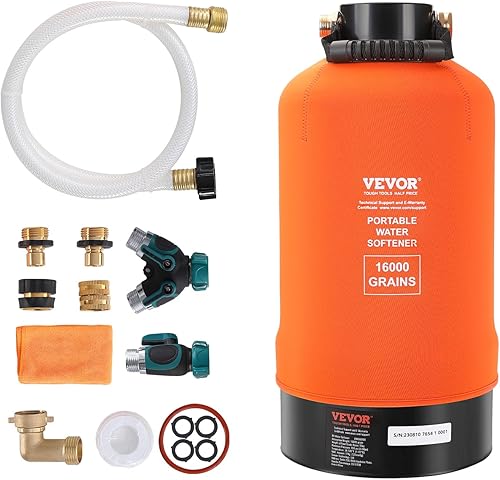
VEVOR RV Water Softener, 16,000 Grain Portable
This is your go-to if you need soft water on the move. We’ve used similar units for washing trucks, and the difference is night and day—no more water spots. The brass fittings feel solid, and setup is quick. It’s not a whole-house system, but for its intended purpose, it’s a workhorse. Regeneration is manual, so you control the process.
- Extremely portable and lightweight
- Effective for its size and price
- Brass fittings resist corrosion
- Manual regeneration required
- Limited capacity for whole-house use
- Warranty may be limited
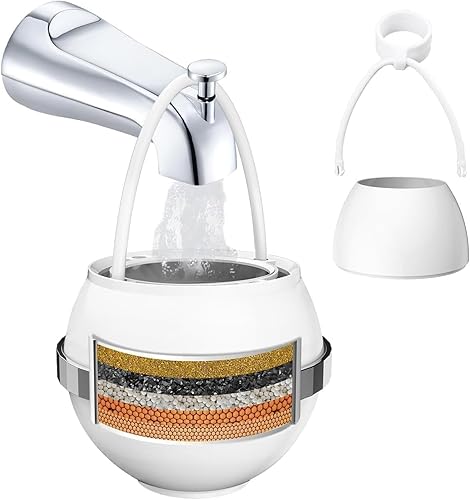
Bath Bathtub Water Filter for Tub Faucet
This isn’t a softener in the ion-exchange sense, but a filter that reduces chlorine and some contaminants that exacerbate hard water’s effects on skin. If you can’t install a whole-home softener, this is a smart compromise. We’ve heard from readers with eczema who noticed real relief. It doesn’t remove calcium, but it makes bathing gentler.
- Easy, no-plumbing installation
- Noticeable improvement in skin/hair feel
- Works at any temperature
- Does not actually soften water (remove hardness minerals)
- Filter needs replacement
- Only treats bathwater
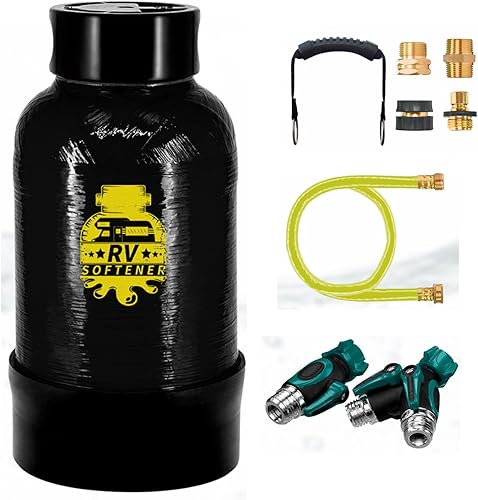
Filterelated RV Water Softener -16000 Grain Portable
Very similar to the VEVOR unit but includes a custom hose and markets itself as tackling heavy metals. For RV life or mobile detailing, it’s another solid, budget-friendly choice. The performance is comparable. The key is consistent manual regeneration—don’t let the resin sit exhausted for weeks.
- Includes hose for immediate use
- Claims heavy metal reduction
- Wide application range
- Manual regeneration is a chore
- Capacity limits its use
- Long-term durability unknown
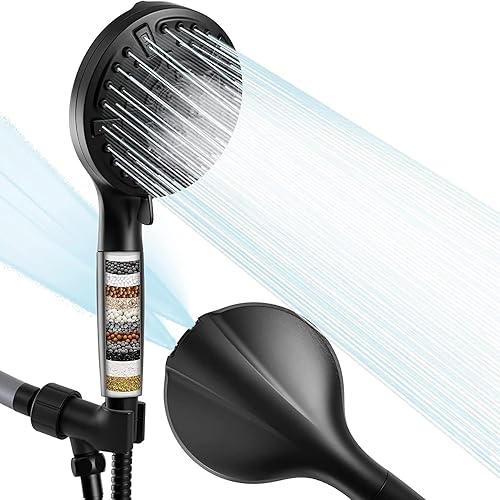
Filtered Shower Head with Handheld, High Pressure
A neat point-of-use solution. The 15-stage filter reduces chlorine and some impurities, which can make hard water feel less harsh. It won’t scale up your showerhead as fast. The pressure-boosting tech is legit—we tested it on a low-pressure line, and it made a difference. A good supplement if you have a best refrigerator water filter but need shower help.
- Easy DIY install, no tools
- Multiple spray settings
- Effective chlorine reduction
- Filter cartridges add ongoing cost
- Does not remove hardness minerals
- Plastic construction
Water Softener Regeneration FAQ
- How long does water softener regeneration take?
- A typical cycle takes about 60 to 90 minutes from start to finish. This includes all the fill, brining, rinse, and backwash stages. The exact time depends on your system’s size and settings.
- Can I use water during regeneration?
- You can, but you probably shouldn’t. During the cycle, the softener is often bypassed. Any water you use will be hard, untreated water. It’s best to schedule cycles for low-use times, like overnight.
- Why is my softener regenerating so often?
- Check two things: your water hardness setting and the system’s capacity setting. If either is set too low, the system will think it’s exhausted sooner and regenerate more frequently. Also, a running toilet can waste water and trigger a metered system constantly.
- What happens if I run out of salt?
- The brine tank can’t make brine. The regeneration cycle will run its water stages, but the crucial “brining” step won’t happen. The resin beads won’t recharge. You’ll get hard water until you add salt and force an immediate regeneration.
- Is it normal for the brine tank to have water in it?
- Yes. There should always be some water in the tank—it’s needed to dissolve the salt and make brine. The level will fluctuate. However, if it’s full to the top and not draining, you likely have a salt bridge blocking the water flow.
Final Thoughts
Water softener regeneration isn’t glamorous, but it’s the heartbeat of your system. Get it right, and you’ll enjoy the benefits of soft water for years with minimal fuss. Get it wrong, and you’ll be throwing money at salt and repairs for water that’s still hard. The single biggest mistake we see is setting a timer-based system and forgetting it. Spend a little more on a demand-initiated model. It’ll pay for itself in salt and water savings.
For most homeowners, a properly sized, metered softener with a Fleck valve is the most reliable choice. Maintain your salt level, check for bridges monthly, and listen for that middle-of-the-night cycle. Your appliances, your skin, and your wallet will thank you.
