


You just spent a good chunk of change on a water softener. The last thing you want is for it to fail prematurely because of crud in your water line. I’ve seen it happen too many times. The fix is simpler and cheaper than you think: proper filtration before the softener.
- Why filtering first saves your softener (and your wallet)
- The specific contaminants that cause the most damage
- How to choose the right pre-filter for your water
- Our top product picks for 2026, from budget to best
- What Is Water Filtration Prior to a Water Softener?
- How Pre-Filtration Works With Your Softener
- Key Benefits of a Pre-Filter System
- Potential Drawbacks & Considerations
- Types of Pre-Filtration Systems
- Buying Guide: What Actually Matters
- Top Pre-Filter Picks for 2026
- Frequently Asked Questions
- Final Thoughts
What Is Water Filtration Prior to a Water Softener?
Think of it as a bodyguard for your water softener. It’s a separate filtration stage installed on the main water line before the water enters your softening unit. Its job isn’t to soften water—that’s the resin tank’s task. Its job is to remove the physical and chemical contaminants that can choke, foul, or damage that expensive softener.
From our years of testing and talking to plumbers, the single biggest mistake homeowners make is assuming their softener handles everything. It doesn’t. A softener swaps hardness ions (calcium, magnesium) for sodium ions. It does nothing for sand, silt, rust flakes, or chlorine. Those are the job of a pre-filter. This layered approach is fundamental to good home filtered water, creating a system where each component does one job well.
How Pre-Filtration Works With Your Softener
The process is straightforward. Water from your main supply enters the pre-filter first. Here, it’s scrubbed of larger particles and certain chemicals. Then, this cleaner water flows into the softener’s resin tank, where the ion exchange process happens efficiently and without interference.
The Sediment Problem
Sand, dirt, and rust particles are abrasive. Over time, they act like sandpaper on the softener’s moving parts—control valves, seals, and pistons. Worse, they can physically clog the resin bed, creating channels where water bypasses the resin entirely. You get hard water spots even though your system is “working.” We’ve pulled resin from failed units that looked like it was mixed with fine gravel.
The Chlorine Problem
This one surprises people. Municipal water is treated with chlorine or chloramine to kill bacteria. That’s great for safety, but terrible for softener resin. Chlorine oxidizes and breaks down the polystyrene beads of the resin bed. Over a year or two, this turns the resin into a mushy, ineffective mess. A good carbon-based pre-filter removes this threat, which is a key part of understanding overall drinking water quality.
Key Benefits of a Pre-Filter System
Protects Your Investment: A water softener is a major purchase. A $50-$200 pre-filter can extend its lifespan by years, preventing costly repairs or early replacement of the resin bed.
Improves Softener Efficiency: Clean resin works better. It can fully exchange ions, meaning you’ll use less salt and get more consistent soft water between regeneration cycles. Your system simply runs better.
Cleaner Water Everywhere: By removing sediment at the point of entry, you protect every downstream appliance and fixture. Your washing machine, dishwasher, water heater, and even your inline fridge water filter will last longer and perform better with less gunk flowing through them.
Better-Tasting, Clearer Water: Sediment causes cloudiness. Chlorine causes taste and odor issues. A pre-filter tackles both, giving you a noticeable improvement in water quality right from every tap.
Potential Drawbacks & Considerations
The main drawback is the extra step in your plumbing and your maintenance routine. You’ll need to shut off water, relieve pressure, and swap cartridges. It’s not hard, but it’s another thing to remember. Some people also worry about pressure drop. A properly sized system for your home’s flow rate will have a negligible effect—we’re talking less than 1 PSI in most cases.
Types of Pre-Filtration Systems
Your choice depends entirely on what’s in your water. Getting a basic water test is the best first step.
Sediment Filters
The most common and affordable pre-filter. These use a pleated cartridge, spun polypropylene, or wound string to physically catch particles. They’re rated in microns—5-micron filters catch finer grit than 20-micron ones. For most homes on municipal water, a 5-micron sediment filter is a perfect starting point. These are the core of any good filter housing system.
Carbon Filters
These are for chemical reduction, primarily chlorine and volatile organic compounds (VOCs). They use activated carbon (either granular or a solid block) to adsorb chemicals. A carbon block filter can also catch some sediment down to a specific micron rating. If your water smells or tastes like a swimming pool, you need carbon.
Multi-Stage Cartridges
Some cartridges combine sediment and carbon filtration in one. These are convenient but often mean you’re replacing a still-good sediment filter because the carbon is exhausted, or vice-versa. For a dedicated pre-filter role, we generally recommend separate stages for easier, more cost-effective maintenance.
Buying Guide: What Actually Matters
Forget fancy marketing. Focus on these four things:
1. Your Water Report: Get your municipal report or test your well water. Is your main issue sediment, chlorine, iron, or something else? This dictates your filter type.
2. Flow Rate (GPM): Your pre-filter housing must handle your home’s peak demand. A 1-bedroom condo needs less than a 4-bathroom house. Undersizing causes pressure drops. Look for a rating of at least 10-15 GPM for most homes.
3. Micron Rating & Filter Type: For sediment, 5-micron is a great balance of filtration and flow. For chlorine, look for coconut shell carbon blocks certified to NSF/ANSI 42.
4. Housing Size: Standard “big blue” 10-inch or 20-inch housings are industry standard. They offer a huge variety of cheap, effective replacement cartridges from many brands. Don’t buy a proprietary system that locks you into expensive filters.
Top Pre-Filter Picks for 2026
While a whole-house water filter for house system is ideal, we’ve also included some excellent point-of-use options for showers, which can benefit from filtration before a softener if you have skin or hair concerns.
| Product | Type | Key Feature | Price | Best For |
|---|---|---|---|---|
 |
Shower Pre-Filter | 3-stage, 50,000L capacity, reduces chlorine 99% | $43 | Shower-only protection |
 |
Shower Pre-Filter | Large capacity, suits hot/cold, NSF-certified KDF | $61 | High-use showers |
 |
Shower Pre-Filter | NSF 177 certified KDF, anti-scald material | $45 | Aesthetic & performance |
 |
Shower Head + Filter | 15-stage filtration, high pressure, 6 spray modes | $48 | All-in-one upgrade |
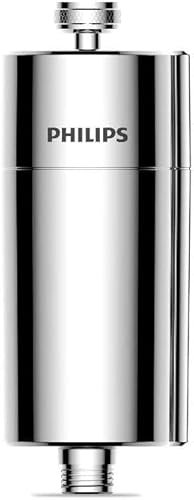
Philips Water In-Line Shower Filter
This is a solid, no-fuss inline filter that installs between your shower arm and hose. We like the 50,000-liter capacity—it’ll last most households 4-6 months easily. The 3-stage filtration with KDF material does a great job stripping out chlorine, which is the main culprit for dry skin and brittle hair. It won’t soften water, but it will make your shower feel noticeably better, especially if you’re on heavily chlorinated city water.
- Easy 5-minute install
- High filtration capacity
- Effectively reduces chlorine
- Does not reduce TDS
- Filter replacement can be fiddly
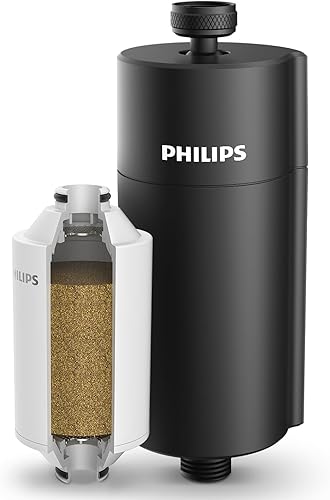
Philips Shower Filter 3-Stage Water Softener
Despite the “water softener” in the name, this is a filter, not a softener—a common point of confusion. It uses the same effective KDF and mesh filtration as the inline model but in a sleeker, integrated design. The large 13,208-gallon capacity means fewer changes. It handles both hot and cold water well, thanks to anti-scald materials. For households with multiple daily showers, this is a reliable workhorse.
- Very large filtration capacity
- Handles hot water safely
- NSF-certified materials
- Marketing can be misleading (not a softener)
- Slightly higher upfront cost
Filtered Shower Head with Handheld, High Pressure
This one’s for people who want an upgrade, not just an add-on. It replaces your entire shower head with a handheld unit that has a built-in 15-stage filter. The filtration is more extensive than the Philips models, tackling heavy metals and sediments in addition to chlorine. The pressure-boosting tech is legit—it works surprisingly well on low-pressure lines. If your shower head is old anyway, this is a smart two-birds-one-stone purchase.
- Comprehensive 15-stage filtration
- Excellent water pressure
- Multiple spray settings
- More complex installation
- Filter life may be shorter than advertised
Frequently Asked Questions
- Do I really need a filter before my water softener?
- If your water has any visible particles, rust, or chlorine (most city water does), then yes. It’s cheap insurance. We’ve seen softeners fail in under 3 years from sediment abrasion and chlorine damage that a simple pre-filter would have prevented.
- What’s the best type of pre-filter for city water?
- A 5-micron sediment filter followed by a carbon block filter is the gold standard for municipal water. The sediment filter catches physical particles, and the carbon removes chlorine that destroys softener resin. This two-stage setup covers 95% of city water issues.
- Will a pre-filter reduce my water pressure?
- A properly sized system will not cause a noticeable drop. The key is matching the filter housing and cartridge to your home’s flow rate. A 10-inch “big blue” housing is suitable for most homes up to 3-4 bathrooms. Avoid tiny, under-sink style filters for whole-house use.
- How often should I change the pre-filter?
- Check it monthly at first. For sediment filters, change when you see discoloration or a noticeable drop in water pressure—typically every 3-6 months. Carbon filters should be replaced every 6-12 months, as they can become breeding grounds for bacteria once exhausted.
- Can I install a pre-filter myself?
- If you’re handy with basic plumbing and have main water shut-off access, yes. The standard “big blue” housings require cutting into the main line. If you’re not comfortable, a plumber can install it in an hour or two. Shower filters are universally a simple DIY job.
- Does a pre-filter make a water softener unnecessary?
- No. They do completely different jobs. A pre-filter removes particles and chemicals. A softener removes dissolved minerals (calcium, magnesium) that cause scale. You often need both for the best water quality and to protect your plumbing and appliances.
Final Thoughts
After testing systems for years, the pattern is clear: homes that pre-filter before softening have fewer service calls, longer-lasting equipment, and happier owners. It’s not a glamorous upgrade. It’s a practical one that pays for itself in prevented headaches and extended appliance life.
Start with a simple sediment filter if you’re unsure. It’s the most common need and the easiest to install. From there, add carbon if you have chlorine issues. Your softener—and your skin, hair, and appliances—will thank you. It’s one of those rare home improvements where the right move is also the straightforward one.
