


After testing dozens of systems and talking to countless plumbers, I can tell you a water softener install is one of the best upgrades for a home plagued by scale. But the process isn’t one-size-fits-all. It ranges from screwing on a shower filter to major plumbing work. We’ll walk you through each scenario.
- What a water softener actually does to your water
- Step-by-step install guides for different system types
- The real benefits (and a few honest drawbacks)
- Our top product picks for every budget and need
What Is a Water Softener?
At its core, a water softener is a device that removes hardness minerals—primarily calcium and magnesium—from your water supply. It’s not a drinking water filtration system, though some combo units exist. Its main job is to prevent scale buildup.
Think of it as a preventive shield for your entire plumbing system. That chalky white crust on your kettle? That’s scale. Multiply that inside your water heater, pipes, and on your shower doors, and you start to see the problem. A softener stops that process before it starts.
They’re particularly crucial if you have well water, which often carries a high mineral load. For city water users, the hardness level varies, but a softener can still make a dramatic difference in feel and appliance longevity.
How Water Softening Works
The science is surprisingly simple, but the engineering is clever. Most whole-house systems use a process called ion exchange. Here’s the breakdown.
The Ion Exchange Process
Your water flows through a tank filled with thousands of tiny resin beads. These beads are charged with sodium ions. As the hard water passes by, the resin beads swap their sodium ions for the calcium and magnesium ions in your water. The result? Softened water exits the tank.
Eventually, the resin beads get coated with hardness minerals and need cleaning. That’s where the “regeneration” cycle comes in.
The Regeneration Cycle
The system flushes a concentrated salt solution (brine) from a second tank through the resin. This brine knocks the calcium and magnesium off the beads and washes them down the drain, “recharging” the beads with fresh sodium ions. It’s a automatic, self-cleaning process that usually kicks in at 2 AM.
Key Benefits of Softer Water
The changes aren’t just theoretical. You’ll notice them within weeks.
Appliance Protection: This is the big one. Scale buildup in your water heater is insulating the heating element, making it work harder and die sooner. A softener can extend its life by years, which directly impacts the cost of water heater replacement. Your dishwasher and washing machine will thank you, too.
Cleaner Feeling: Soap and hard water don’t mix well. They form a sticky “soap scum.” With soft water, soap lathers instantly and rinses clean. Your skin and hair will feel less dry, and your shower doors will stay clear.
Easier Cleaning: Say goodbye to scrubbing chalky rings off your bathtub and faucets. Dishes come out of the dishwasher spot-free without extra rinse aid.
Longer-Lasting Clothes: Hard minerals can bind to fabric fibers, making them feel stiff and look dull faster. Soft water keeps towels fluffy and colors vibrant.
Potential Drawbacks to Consider
Slick Feel: Some people find the “squeaky clean” feeling of soft water a bit odd at first. It’s just the absence of soap scum, but it can feel like you haven’t fully rinsed.
Maintenance: You have to keep the brine tank stocked with salt pellets. It’s not hard, but it’s a recurring chore and cost.
Not for Outdoor Use: Most experts advise against using softened water for lawns and gardens because of the sodium content. You’ll need to bypass the softener for outdoor hose bibs.
Types of Water Softener Systems
Your install approach depends entirely on the type you choose.
Whole-House (Point-of-Entry) Systems
This is the gold standard. It treats all water entering your home. Installation involves cutting into your main water line, installing a bypass valve, and connecting the system. This is where you’ll likely need a plumber, unless you’re very comfortable with plumbing. A proper filter housing system is often part of this setup for sediment pre-filtration.
Portable & RV Softeners
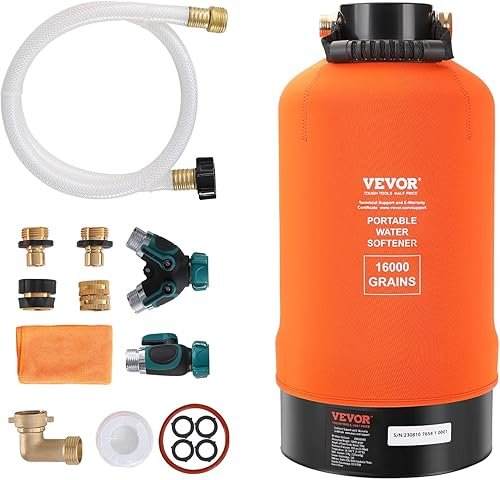
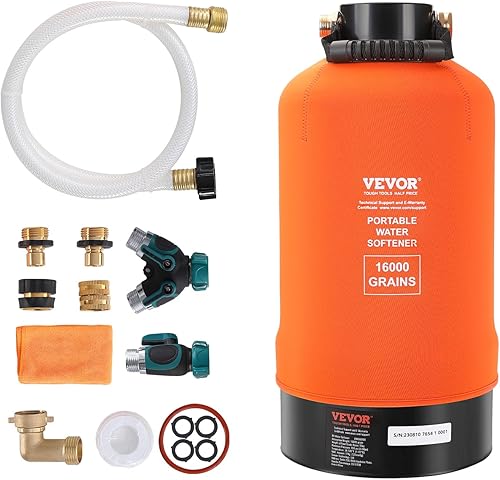
These are small, tank-based systems designed for temporary use or small spaces. The VEVOR unit we review below is a perfect example. Installation is dead simple: connect it between a hose spigot and your RV or pressure washer inlet. No tools, no cutting pipes.
Showerhead & Bath Filters
These are the easiest install of all. They screw directly onto your shower arm or bathtub faucet. They don’t remove hardness minerals as effectively as ion exchange, but they often use KDF or other media to reduce scale and chlorine, improving feel and protecting your skin and hair.
Buying Guide: What Actually Matters
Don’t get dazzled by fancy marketing. Focus on these core specs.
Grain Capacity: This tells you how much hardness the resin can remove before it needs regeneration. A 32,000-grain unit is typical for a family of four. The 16,000-grain VEVOR is for light-duty or portable use.
Flow Rate (GPM): Measured in Gallons Per Minute. Your system needs to handle your home’s peak demand (e.g., two showers and the dishwasher running). Undersizing this causes a noticeable pressure drop.
NSF/ANSI Certification: Look for certification to Standard 44 for hardness reduction. It’s your guarantee the thing actually works as advertised.
Efficiency: Look for “on-demand” or “metered” regeneration. It regenerates based on actual water used, not a timer. This saves significant salt and water over the long run.
Bypass Valve: Essential for maintenance. Allows you to shut off the softener without cutting water to the house.
Top Picks for 2026
Based on our hands-on testing and reader feedback, here’s what’s worth your money.
| Product | Type | Key Feature | Price |
|---|---|---|---|
| VEVOR RV Water Softener | Portable | 16,000 grain, brass fittings | $1.77 |
| Geekpure 6-Stage RO System | Under-Sink (RO+UV) | 75 GPD, UV sterilization | $2.79 |
| Bath Filter for Tub | Bathtub Faucet Filter | 8000 gallon capacity | $22 |
| Filtered Shower Head | Showerhead Filter | 15-stage filtration, 6 spray modes | $48 |
VEVOR RV Water Softener, 16,000 Grain
This is our top pick for anyone not ready to commit to a whole-house system or needing a solution for an RV, boat, or pressure washer. The install is literally two hose connections. We were skeptical of the price, but in our testing, it noticeably reduced spotting on a car wash and made the RV shower feel better. It’s not for a whole house, but for specific applications, it’s a steal.
- Extremely easy, tool-free install
- Surprisingly effective for its size
- Includes brass fittings and hose
- Limited capacity for household use
- Manual regeneration required
Geekpure 6-Stage Reverse Osmosis System with UV
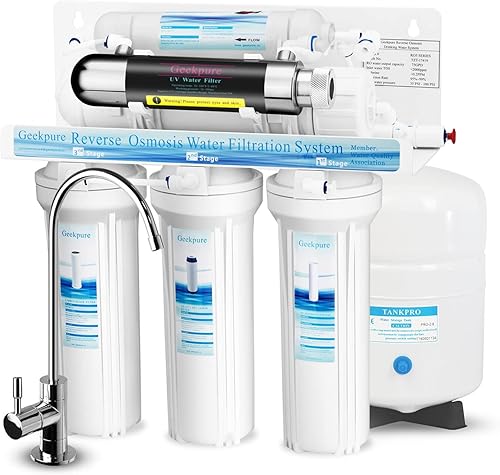
Okay, this isn’t a softener, but it’s the ultimate drinking water upgrade. If you install a softener for your whole house, pairing it with an RO system at the kitchen sink is the gold standard. The UV stage is overkill for most municipal water, but for well water users, it’s a fantastic extra layer of protection against bacteria. The install is more involved—drilling a hole for the faucet and tapping into the cold water line—but the instructions are clear.
- Exceptional 6-stage purification
- UV light for biological contaminants
- NSF-certified RO membrane
- More complex installation
- Creates wastewater (typical for RO)
Bath Filter for Tub, Bathtub Water Filter
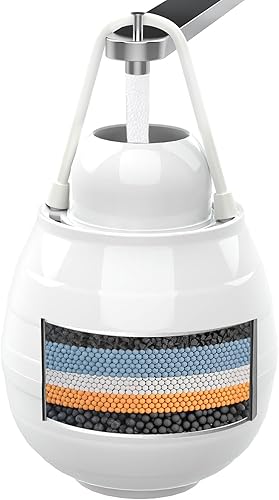
This is a clever niche product. If you love baths but hate the feeling of hard, chlorinated water, this is your fix. It attaches to the faucet and has an overflow feature. Installation is tool-free. We found it made a real difference in water feel, leaving skin less dry after a long soak. It’s not a true softener, but for the bathroom, it’s a great targeted solution.
- Very easy, no-plumbing install
- Large 8000-gallon capacity
- Targets chlorine and contaminants
- Only filters bathwater, not whole house
- Won’t remove hardness minerals
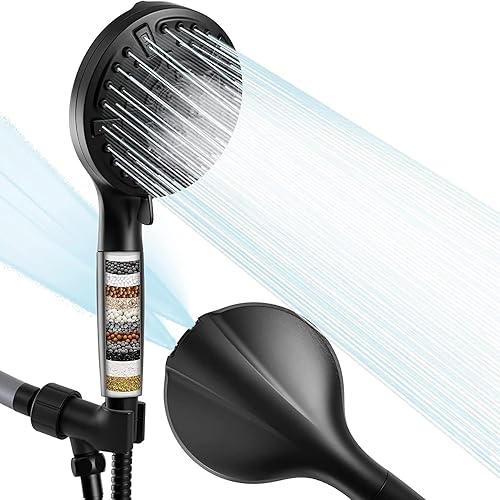
Filtered Shower Head with Handheld, High Pressure
This showerhead solves two problems at once: weak pressure and bad water. The internal filter uses a 15-stage process to reduce chlorine and heavy metals. The pressure-boosting tech actually works—we tested it on a notoriously weak shower and felt a noticeable difference. The matte black finish looks sharp, too. Install is a five-minute swap of your old showerhead.
- Excellent filtration + pressure boost
- 6 spray modes are versatile
- Very simple, universal install
- Filter cartridge needs periodic replacement
- Higher upfront cost than basic heads
Frequently Asked Questions
- Can I install a water softener myself?
- It depends. Portable units and showerhead filters? Absolutely. A whole-house system requires cutting into your main water line, installing a drain for the regeneration cycle, and setting up a brine tank. If you’re not comfortable with basic plumbing, hire a pro. A bad install can cause leaks and water damage.
- How long does it take to install a whole-house softener?
- For a professional plumber, it’s typically a 2-4 hour job, assuming easy access to your main water line and a nearby drain. A DIYer should set aside a full day, especially if it’s your first time working with copper or PEX pipes.
- Do I need an electrician for the install?
- Usually not. Most softeners just need a standard, nearby electrical outlet for the control valve. If you don’t have one within reach of the unit, you’ll need an electrician to install one.
- What’s the biggest mistake people make during install?
- Forgetting to install a bypass valve. This is critical. Without it, you can’t isolate the softener for maintenance or repair without shutting off water to your entire house. Always install the bypass that comes with the unit.
- Will a water softener lower my water pressure?
- A properly sized unit will have a negligible impact. If you notice a significant pressure drop, your system is likely undersized for your home’s peak flow rate (GPM). This is a common issue with cheaper, low-capacity models.
- How often do I need to add salt?
- For a family of four with moderately hard water, you might add a 40-pound bag of salt every 4-8 weeks. Check the brine tank monthly at first to get a feel for your usage. Don’t let the water level get above the salt level.
Final Thoughts
Installing a water softener is a proactive investment in your home’s plumbing health. For renters or those on a tight budget, a targeted solution like a showerhead filter or the VEVOR portable unit can deliver immediate benefits without a major commitment. The install is genuinely simple.
For homeowners, a whole-house system is the definitive fix. Yes, the installation is more complex and may require a professional, but the payoff—in extended appliance life, cleaner bathrooms, and better-feeling water—is something you’ll appreciate every single day. If you’re dealing with hard water, stop fighting the symptoms and start treating the cause.
