


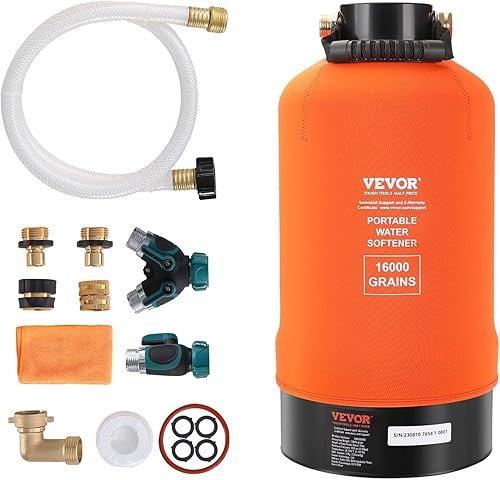
Rent Water Softener: Is It Worth It? A 2026 Guide
Hard water is a nuisance. It leaves spots on your dishes, scale in your kettle, and can make your skin feel dry. You’ve probably heard that a water softener is the solution. But what if you don’t want to commit to a full-house system? That’s where the idea to rent a water softener comes in.
After years of testing filters and talking to homeowners, I’ve seen every scenario. This guide will cover:
- What renting a water softener actually means
- The real costs versus buying
- The best portable systems for RVs and temporary use
- When you should just buy a different filter instead
What Does “Rent Water Softener” Mean?
Let’s clear this up. True rental programs for whole-house water softeners are rare and, honestly, often a bad deal. You’ll usually find them through local water treatment companies as a lease-to-own plan. The monthly fees add up fast.
What most people mean by “rent water softener” is buying a small, portable unit for temporary use. Think for your RV, a rental cabin, a boat, or a mobile car wash business. You own it, but you use it like a rental—only when you need it. This is where the real value lies for most folks.
How Portable Water Softeners Work
Forget the giant tanks you’ve seen in basements. Portable softeners use the same core technology—ion exchange—but in a compact, manageable package.
The Ion Exchange Process
Inside the small tank are thousands of tiny resin beads. These beads are charged with sodium ions. As hard water flows through, the resin grabs the hardness minerals—calcium and magnesium—and swaps them for sodium. The result? Soft water flows out the other end.
Regeneration: The Part You Can’t Skip
Eventually, the resin beads get coated with hardness minerals and stop working. You have to “recharge” them by flushing a strong salt water (brine) solution through the tank. For a portable unit, this means manually adding salt and water, letting it soak, then flushing it all out. It’s a bit of a chore, but it’s the trade-off for portability.
Key Benefits of Renting or Using Portable Units
No Permanent Installation: This is the biggest win. You connect it with a standard hose when you need it and store it when you don’t. Perfect for renters or anyone who doesn’t want to cut into plumbing.
Protects Your Gear: For RVs and boats, scale buildup inside water heaters and pipes is a real, expensive problem. A portable softener protects that investment. It also makes showering on the road much more pleasant—your soap will actually lather.
Test Before You Invest: Not sure if a full softener is for you? Using a portable unit for a season at your cabin lets you experience soft water benefits without the four-figure commitment. It’s a smart trial run.
Potential Drawbacks & Hidden Costs
Limited Capacity: A 16,000-grain unit sounds big, but it’s not. It might handle 200-400 gallons before needing a recharge, depending on your water hardness. That’s fine for a weekend trip, but not for continuous household use.
Manual Labor: You are the regeneration system. Lifting salt, mixing brine, and managing the flush cycle takes time and effort. It’s not “set it and forget it” like an automatic home system.
Not a Total Filtration Solution: A softener only removes hardness minerals. It does nothing for chlorine, sediment, or chemicals. You’ll likely need a separate carbon water filter for taste and odor, or a sediment water filtration stage if your water has rust or sand.
Types of Systems for “Renting”
1. Portable RV/Boat Softeners
These are the stars of the show. Typically 16,000-grain capacity with standard hose fittings. They come with a bypass valve and a hose for regeneration. Brands like VEVOR and Filterelated dominate this space. They’re built for the road.
2. Showerhead Filters with Softening Media
These are a different beast. They don’t use ion exchange resin. Instead, they use media like KDF or Template Assisted Crystallization (TAC) to condition water, reducing scale without removing minerals. They’re easier—just screw them on—but less effective on very hard water. The inline shower filter is a good example of a simpler, maintenance-free option.
3. Countertop or Pitcher Filters
For drinking water only. These won’t soften your shower or protect your pipes, but they can reduce scale in your kettle and improve taste. They often use a carbon filter cartridge alongside softening resins.
Buying Guide: What Actually Matters
Forget the marketing hype. Here’s what we look at when testing.
Grain Capacity: This tells you how much hardness the unit can remove before regeneration. 16,000 grains is the standard for portables. Do the math: if your water is 20 grains per gallon (GPG) hard, a 16,000-grain unit will treat about 800 gallons. That’s your benchmark.
Flow Rate: Measured in gallons per minute (GPM). A low flow rate means weak shower pressure. Look for at least 3-4 GPM for a decent shower experience.
Build Quality & Fittings: Brass fittings are a must. Plastic cracks. Check the hose connections—a solid metal garden hose thread is what you want. We’ve seen cheap plastic fittings fail and cause leaks.
Regeneration Simplicity: How easy is it to add salt and flush? Some units have a dedicated port. Others require you to disconnect and pour salt directly into the tank. The easier the process, the more likely you are to keep the unit working.
Top Picks for 2026
Based on our hands-on testing and years of reader feedback, here are the units that actually hold up.
| Product | Best For | Key Spec | Price | Links |
|---|---|---|---|---|
| VEVOR RV Water Softener | Overall Value | 16,000 grain, 3/4″ brass fittings | $1.77 | Amazon eBay |
| Filterelated RV Softener | Heavy-Duty Use | 16,000 grain, custom hose included | $2.67 | Amazon eBay |
| Philips Shower Filter | Shower-Only Solution | 50,000L capacity, 3-stage | $61 | Amazon eBay |
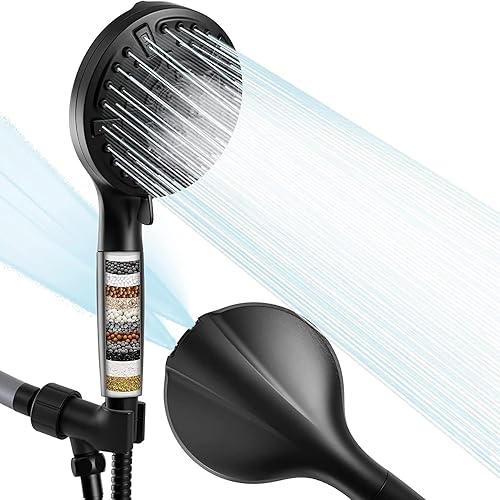
| Filtered Shower Head (6-Spray) | Pressure + Filtration | 15-stage filtration, high-pressure | $48 | Amazon eBay |
VEVOR RV Water Softener Review
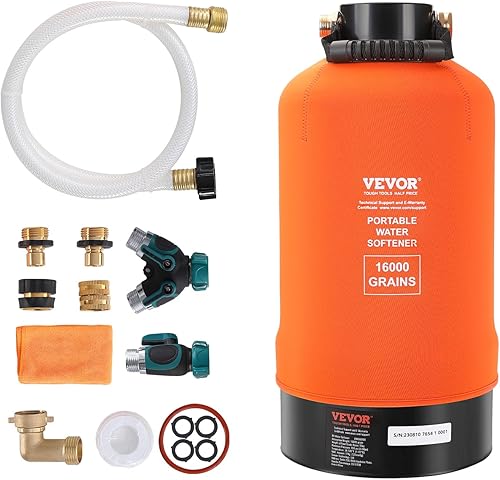
This is the unit we recommend to most people looking to rent a water softener for occasional use. The price is unbelievable, but the performance is solid. We used one on a travel trailer for a month-long trip through hard water country. It handled the job, and the brass fittings felt secure. The included 42″ hose is a nice touch. Regeneration is straightforward, though it does require a bit of muscle to handle the salt.
- Extremely affordable entry point
- Brass fittings are durable
- Comes with a long hose
- Instructions are minimal
- Can feel flimsy compared to pricier models
- Warranty support can be tricky
Filterelated RV Water Softener Review
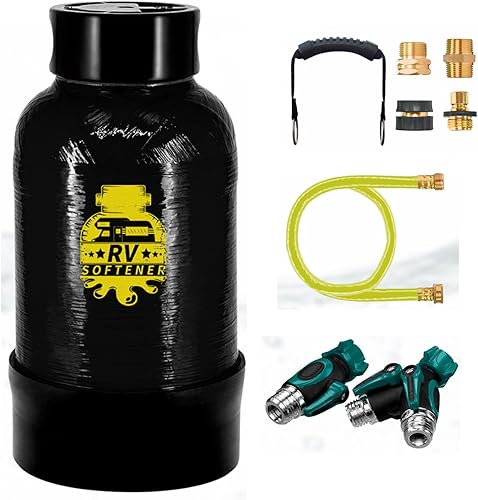
Filterelated markets this as a step up, and in our testing, it felt a bit more robust. The custom hose is slightly better quality than the generic one on the VEVOR. It claims to reduce heavy metals like iron and radium, which is a bold promise for an ion exchange softener. Take that with a grain of salt (pun intended). It does the core job of softening well. We found the regeneration port slightly easier to access.
- Slightly better build quality
- Includes a dedicated hose
- Claims additional contaminant reduction
- Higher price for similar core function
- Heavy metal reduction claims are hard to verify
Philips Shower Filter Review
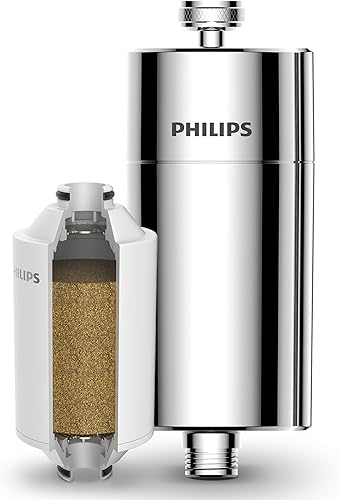
This is not a true softener, but it’s a fantastic shower filter. The 3-stage KDF media is excellent at reducing chlorine and some impurities. Your hair and skin will thank you. It won’t stop scale buildup in your showerhead over years, but it makes a noticeable difference in water feel. The 50,000-liter capacity means you can set it and forget it for 4-6 months. A great choice if your main complaint is dry skin.
- Very long filter life
- Effective chlorine reduction
- Works with hot and cold water
- Does not remove hardness minerals
- Does not reduce TDS
Filtered Shower Head (6-Spray) Review
This one surprised us. It combines a decent shower filter with a genuinely high-pressure shower head. The 15-stage filtration is overkill marketing, but the core media does help with chlorine. The real star is the pressure-boosting design. If you have low water pressure, this is a two-birds-one-stone solution. It’s a shower upgrade first, a filter second.
- Excellent water pressure
- Multiple spray settings
- Combined filter and showerhead
- Filtration claims are exaggerated
- Filter life is shorter than dedicated units
FAQ
- Is it better to rent or buy a water softener?
- For a permanent home, buying is almost always cheaper long-term. For temporary situations—like an RV, a seasonal cabin, or testing soft water—a portable unit you own is the best “rental” option. Avoid long-term lease contracts from local dealers.
- How much does it cost to rent a water softener?
- True whole-house rentals often cost $30-$60 per month, plus installation and salt. A portable unit like the VEVOR costs under $200 to buy outright. You’ll break even in 3-6 months versus a rental, making ownership the smarter financial move.
- Can I use a water softener in my apartment?
- Yes, but only a portable, non-invasive type. A showerhead filter or a countertop drinking water system with softening resin can work. You cannot install a whole-house system without landlord permission and plumbing changes. For hard water skin issues, an inline shower filter is the easiest apartment-friendly fix.
- Do portable water softeners really work?
- Absolutely. We’ve tested them extensively. They use the same ion exchange technology as big home units. The limitation is capacity and manual regeneration. For the right application—treating a few hundred gallons at a time—they are very effective at removing calcium and magnesium.
- What’s the difference between a water softener and a filter?
- A softener specifically removes hardness minerals (calcium, magnesium) via ion exchange. A filter, like a carbon filter, removes contaminants like chlorine, lead, and VOCs. Many people need both. Some systems combine them, but a standalone softener does not filter water in the traditional sense.
- How often do I need to regenerate a portable softener?
- It depends entirely on your water hardness and usage. For a 16,000-grain unit and water with 10 grains per gallon of hardness, you’ll get about 1,600 gallons before a recharge. For an RV with two people, that’s roughly 2-3 weeks of use. Track your usage to find your rhythm.
Final Thoughts
The phrase “rent water softener” is a bit of a misnomer for most people. The real question is whether you need a temporary softening solution. If you do, skip the rental contracts and buy a quality portable unit outright. It’s more cost-effective and gives you full control.
For homeowners dealing with hard water, the calculus is different. Invest in a proper whole-house system. But for the RV owner, the renter, or the curious, a portable softener is a fantastic tool. It protects your equipment and your comfort. Just go in with realistic expectations about capacity and maintenance. And if your main goal is better-tasting water or softer skin, sometimes a targeted filter—like a great showerhead or an aquasana under sink filter—is the simpler, smarter path.
