


So you’re staring at two different systems, both promising better water. One says “softener,” the other says “filter.” It’s confusing. I get it. After testing systems for years and talking to countless homeowners, I can tell you the single biggest mistake is buying the wrong type for your actual problem.
This guide will clear up the confusion for good. We’ll cover:
- The core difference between what softeners and filters actually remove.
- How each system works, in plain English.
- The real benefits (and the honest drawbacks) of each.
- A simple buying guide to pick the right one for your home.
- What Is the Difference Between a Water Softener and a Filter?
- How Water Softeners and Filters Work
- Key Benefits of Each System
- Potential Drawbacks to Consider
- Types of Water Softeners and Filters
- Buying Guide: Which One Do You Need?
- Our Top Product Picks for 2026
- Frequently Asked Questions
- Final Thoughts
What Is the Difference Between a Water Softener and a Filter?
Let’s get this straight right away. They are not interchangeable. Think of it like this: a water softener is a specialist, and a water filter is a general practitioner.
A water softener has one job: to tackle “hardness.” That’s the calcium and magnesium dissolved in your water that leave chalky white spots on your dishes, create scale buildup in your kettle and pipes, and make soap scum in your shower. It uses a process called ion exchange to swap those hardness minerals for sodium or potassium.
A water filter, on the other hand, is a broad category. It can remove a huge list of potential contaminants: chlorine (that bleachy taste), sediment (dirt and rust), volatile organic compounds (VOCs), heavy metals like lead, and even bacteria and cysts. The method depends on the filter type—carbon, sediment, reverse osmosis, and more. If you’re concerned about taste, odor, or safety, you’re looking for a filter. For a deeper dive into one popular filtration method, you can read about ceramic water filtration.
How Water Softeners and Filters Work
The Science Behind Water Softeners
It’s all about a trade. Inside the softener’s tank are thousands of tiny resin beads. These beads are covered with sodium ions. As hard water flows over them, the calcium and magnesium ions—which carry a stronger positive charge—knock off the sodium and stick to the beads instead. The now-softened water, with a tiny bit more sodium, flows out to your home.
Every few days, the system regenerates. A strong brine solution (salt water) flushes through the tank, washing away the collected hardness minerals and “recharging” the beads with fresh sodium. It’s a clever, cyclical process.
The Mechanics of Water Filtration
Filtration is more varied. The most common whole-house systems use a sediment pleated filter cartridge to catch dirt and rust, followed by an activated carbon stage that adsorbs chlorine and organic chemicals. For drinking water, a dedicated chlorine filter under the sink is a popular and effective choice.
The gold standard for purity is reverse osmosis (RO). It forces water through a super-fine membrane (0.0001 microns) that blocks almost everything except pure H₂O. It’s incredibly effective but also wastes some water and removes beneficial minerals.
Key Benefits of Each System
Water Softener Benefits:
- Protects Your Plumbing: Stops scale buildup inside pipes, water heaters, and appliances. This can extend their life by years.
- Cuts Cleaning Time: No more scrubbing soap scum off shower doors or white spots off faucets. Soap lathers better, so you use less.
- Softer Skin and Hair: Many people notice a difference. Hard water can leave a film that dries out skin.
Water Filter Benefits:
- Better Taste and Odor: Removes chlorine and other chemicals that affect smell and flavor. This is the most immediate benefit people notice.
- Reduces Health Risks: A properly certified filter can remove lead, PFAS (“forever chemicals”), and microbial cysts from your drinking water.
- Versatility: You can target specific contaminants. Need to remove chlorine for your aquarium? There’s a filter for that. Worried about lead from old pipes? A different filter handles it. For whole-house solutions, a whole house ceramic filter offers durable sediment removal.
Potential Drawbacks to Consider
- Softeners Add Sodium: The ion exchange process adds a small amount of sodium to your water. If you’re on a strict low-sodium diet, this is a real concern. You can use potassium chloride instead, but it’s more expensive.
- Softeners Don’t Clean the Water: A softener will not make your water safe to drink if it has contaminants. It only deals with hardness minerals.
- Filters Have Ongoing Costs: You must replace filter cartridges on schedule. A clogged or exhausted filter does nothing and can even harbor bacteria.
- RO Systems Waste Water: For every gallon of pure water, a traditional reverse osmosis system might send 3-4 gallons down the drain. Newer models are much better, but it’s still a factor.
Types of Water Softeners and Filters
Water Softener Types
Salt-Based Ion Exchange: The most common and effective type for serious hardness. Requires a brine tank and regular salt top-ups.
Salt-Free Water Conditioners: These don’t remove hardness minerals. Instead, they alter their structure so they don’t stick to surfaces as scale. They’re better for the environment and add no sodium, but they don’t work as well in very hard water areas.
Water Filter Types
Activated Carbon: The workhorse for chlorine, taste, and odor. Found in everything from pitcher filters to whole-house tanks.
Reverse Osmosis (RO): The most thorough filtration for drinking water. Installed under the sink with its own dedicated faucet.
Sediment Filters: The first line of defense. A pleated filter cartridge is great because you can wash and reuse it a few times before replacing.
Ultraviolet (UV): Uses light to kill bacteria and viruses. It doesn’t remove anything physical but is a powerful disinfection stage.
Buying Guide: Which One Do You Need?
Answer these questions to point yourself in the right direction.
1. What’s Your Water Problem?
- White scale, soap scum, dry skin? You need a water softener.
- Bad taste, odor, or health concerns? You need a water filter.
- Both? You need both. A common setup is a whole-house softener followed by a whole-house carbon filter, with an RO system at the kitchen sink.
2. What’s Your Water Source? City water is typically disinfected with chlorine, so a carbon filter is key. Well water can have hardness, sediment, bacteria, and requires more comprehensive testing and often a UV stage.
3. What’s Your Budget? Softeners are a bigger upfront investment ($800-$2500). Filters range widely: a good shower filter is under $100, while a whole-house system can cost $1000+.
4. Installation Reality Check: A whole-house softener or filter system needs a filter housing bracket and usually requires cutting into your main water line. If you’re not handy, factor in a plumber’s cost. Under-sink and shower filters are usually DIY-friendly.
Our Top Product Picks for 2026
We’ve tested dozens of products. Here are a few that stand out for specific needs.
| Product | Type | Best For | Price |
|---|---|---|---|
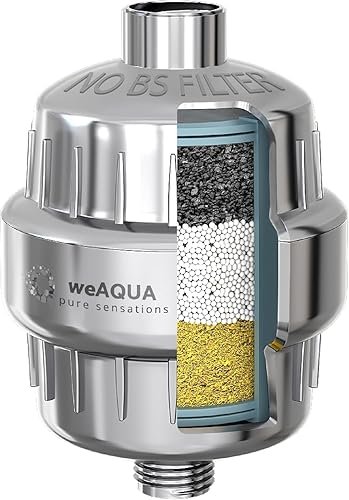
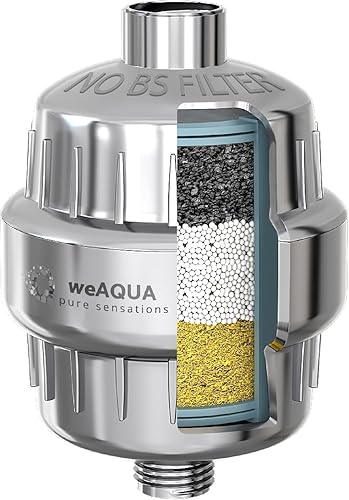 weAQUA Premium Heavy Duty Shower Filter |
Shower Filter (Carbon/KDF) | Chlorine & hardness in showers | $35 |
 Philips 3-Stage Shower Filter |
Shower Filter (KDF) | High-capacity shower filtration | $61 |
 Waterdrop WD-X8 RO System |
Under-Sink Reverse Osmosis | Maximum drinking water purity | $719 |
weAQUA Premium Heavy Duty Shower Filter
This is our go-to recommendation for anyone starting with shower filtration. For $35, you get a solid multi-stage filter that tackles chlorine and reduces the feel of hardness. We noticed less skin dryness and no more chlorine smell within a week. The chrome finish looks decent, and it installs in minutes without tools.
- Excellent value for the performance.
- Easy, tool-free installation.
- Includes one filter for 6 months of use.
- Won’t solve severe hardness issues (needs a whole-house softener).
- Plastic housing feels a bit lightweight.
Philips 3-Stage Shower Filter
Philips brings its brand reputation to shower filtration. This filter boasts a large 50,000-liter capacity, which should last most households 4-6 months. The anti-scald material is a nice touch for safety. In our testing, it performed similarly to the weAQUA on chlorine reduction. The higher price buys you that brand name and potentially longer filter life.
- High filtration capacity.
- Safe for both hot and cold water.
- Trusted brand with good build quality.
- More expensive than comparable performers.
- Does not reduce TDS (total dissolved solids).
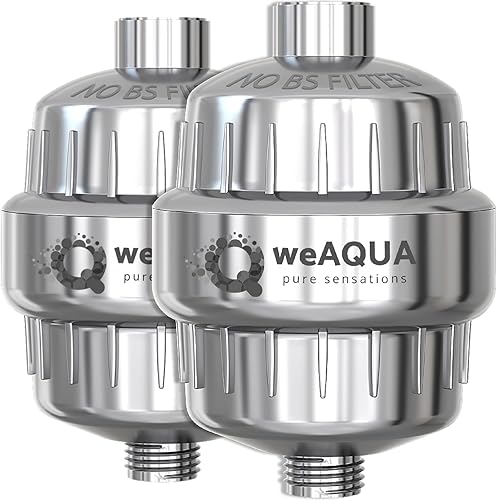
weAQUA Premium Heavy Duty Shower Filter Family 2 Pack
Simple math. If you have two bathrooms, this pack saves you money versus buying two singles. You get the same effective filtration and 12 months of coverage out of the box. We keep a spare in the closet so we never miss a filter change date. It’s the practical choice for families.
- Better per-unit cost than buying separately.
- 12 months of filtration included.
- Same reliable performance as the single pack.
- Upfront cost is higher (but saves money long-term).
- Same plastic housing as the single unit.
Waterdrop WD-X8 Reverse Osmosis System
This is a serious under-sink system for people who want the purest drinking water possible. The 9-stage filtration and NSF/ANSI certifications against standards 42, 58, and 372 mean it’s tested to remove a massive list of contaminants, including lead and PFAS. The 800 GPD flow rate is impressive—you won’t be waiting for a glass of water. The 2:1 pure-to-waste ratio is among the best we’ve seen, making it more efficient than older RO models.
- Exceptional filtration performance with trusted certifications.
- High flow rate and low wastewater ratio.
- Tankless design saves under-sink space.
- Significant upfront investment.
- Professional installation is recommended for most people.
Frequently Asked Questions
- Can a water softener also filter water?
- No. A standard salt-based softener only removes hardness minerals (calcium and magnesium). It does not remove chlorine, lead, bacteria, or other contaminants. You need a separate filtration system for that. Some combined “conditioner-filter” systems exist, but their filtration capabilities are usually limited compared to dedicated filters.
- Do I need a water softener if I have a whole-house filter?
- It depends on your water hardness. A whole-house carbon filter will make your water taste better and remove chlorine, but it will do nothing to stop scale buildup from hard water. If you have hard water, you need a softener or conditioner in addition to your filter.
- How often do I need to change the filters?
- This varies wildly. Sediment pre-filters might need changing every 3-6 months. Carbon filters typically last 6-12 months. Reverse osmosis membranes can last 2-4 years. Shower filters usually last 6 months. Always follow the manufacturer’s schedule based on your water usage and quality.
- Is soft water safe to drink?
- For most people, yes. The amount of sodium added is relatively small—much less than in a glass of milk or a slice of bread. However, if you are on a doctor-prescribed strict low-sodium diet, you should consider a salt-free conditioner or install a separate drinking water tap fed by a reverse osmosis system.
- What’s the most important certification to look for?
- For filters, look for NSF/ANSI Standard 42 (aesthetic effects like chlorine) and Standard 53 (health effects like lead). For reverse osmosis systems, Standard 58 is key. These independent certifications verify the manufacturer’s claims. Don’t trust filters that make big claims without them.
- Can I install a water softener myself?
- It’s possible if you’re very handy with plumbing. You’ll need to cut into your main water line, install a bypass valve, and connect the drain and brine tank. For most people, hiring a licensed plumber is the safer and faster choice. A poorly installed softener can leak and cause major damage.
Final Thoughts
After years in this industry, here’s my honest take: don’t overcomplicate it. Get your water tested first. If the report shows high hardness (over 120 mg/L or 7 GPG), a water softener will save your pipes and appliances. If it shows contaminants you don’t want to drink or shower in, invest in the right filter.
The “water softener vs filter” debate has a clear answer: they’re teammates, not opponents. For many homes, the ideal solution is a whole-house softener to protect your infrastructure, paired with a high-quality under-sink filter for your drinking and cooking water. Start with the problem, and the right solution will become obvious.
