


Hard water is a silent home wrecker. It leaves scale in your pipes, spots on your dishes, and makes your skin feel like sandpaper. If you’re tired of it, you’ve probably looked at water softeners. And if you’ve done any serious research, the name Clack WS1 keeps popping up. There’s a good reason for that. We’ve installed, repaired, and tested systems with this valve for years. It’s the workhorse the pros trust. This article breaks down everything you need to know.
We’ll cover:
- What the Clack WS1 valve actually is and why it matters.
- How the ion exchange process works inside your tank.
- The real-world pros and cons based on our experience.
- Essential maintenance parts and where to get them.
What Is the Clack WS1 Water Softener?
First, a crucial distinction: Clack Corporation doesn’t sell complete water softener systems directly to homeowners. They manufacture the heart of the system—the control valve. The WS1 is their flagship residential valve. Think of it like the engine in a car. Different companies (like Soft Water Supply or various local dealers) build the rest of the “car” around this trusted engine.
This valve sits on top of the mineral tank. It’s the brain, controlling when the system cleans (regenerates) itself based on your actual water usage. Its popularity isn’t hype. It’s earned through decades of reliable service in homes worldwide. Plumbers love it because it’s straightforward to install and fix. Homeowners love it because it just works, quietly in the background. For a deeper understanding of what’s in your water before treatment, a proper water quality testing kit is your best first step.
How a Clack WS1 System Works
The magic happens through a process called ion exchange. It’s simpler than it sounds.
The Softening Cycle
Your water flows into a tank filled with thousands of tiny resin beads. These beads are negatively charged and covered in sodium ions. The hardness minerals in your water—calcium and magnesium—have a stronger positive charge. They swap places with the sodium, sticking to the resin. The now-soft water, with its trace of sodium, flows out to your home.
The Regeneration Cycle
Eventually, the resin beads get coated in hardness minerals. The WS1 valve, using a water meter, detects this. It triggers a cleaning cycle, usually at 2 AM. A strong brine solution (salt water) from the separate brine tank flushes through the resin. The sodium in the brime knocks the calcium and magnesium off the beads and down the drain. The resin is refreshed and ready to soften again. This on-demand regeneration is far more efficient than old timer-based systems.
Key Benefits of the WS1 Valve
Proven Reliability. This isn’t flashy tech. It’s robust mechanical engineering. We’ve seen WS1 valves operate for 15+ years with only basic maintenance. The design is simple, which means fewer failure points.
Easy DIY Maintenance. This is the single biggest advantage for us. Common repairs—like replacing the seal pack or piston—can be done in 20 minutes with a service wrench. You don’t need to call a plumber for a $200 service call for a $30 part. That’s a game-changer for long-term cost of ownership.
Efficient Metered Regeneration. It regenerates based on gallons used, not a fixed schedule. If you’re on vacation, it doesn’t waste water and salt cleaning itself. This can save you 30-50% on salt compared to a timer model.
Wide Parts Availability. Because it’s an industry standard, genuine OEM parts are easy to find online. You’re not locked into a single proprietary supplier. This is a huge deal for a system meant to last a decade or more.
Potential Drawbacks to Consider
It’s Not a Plug-and-Play Appliance. You’re typically buying a system from a dealer or assembling it yourself. This requires some research and comfort with basic plumbing. If you want a branded box delivered from a big-box store, this isn’t it.
Initial Setup Complexity. Programming the valve for your specific water hardness and household size is critical. The manual can be dense for a first-timer. We always recommend getting a local water test first. For simpler point-of-use options, you might look at a sink with water filter for drinking water.
Salt-Based System. It adds a small amount of sodium to your water. If you’re on a strict low-sodium diet, you’ll need to consider a separate reverse osmosis drinking water system. It also requires periodic salt refills.
Types of Systems Using the WS1
Standard Upflow vs. Downflow
Most residential WS1 valves are set up for downflow regeneration. The brine enters from the top. Some commercial or specific residential setups use upflow (counter-current), which can be slightly more efficient but is less common. For 95% of homes, a standard downflow system is perfect.
Different Tank Sizes
The WS1 valve can be paired with different sized mineral tanks (like 9×48, 10×54, etc.). The right size depends on your household’s water hardness and daily usage. A plumber or reputable dealer will size this for you. Bigger isn’t always better; an oversized tank can lead to channeling where water bypasses the resin.
Buying Guide: What to Look For
Since you’re buying the system and valve separately, here’s what matters:
1. The Resin Quality. Look for a system with 8% or 10% crosslink resin. It lasts longer and handles chlorine in city water better than cheaper 8% resin. This is a key differentiator between budget and quality kits.
2. The Brine Tank. Get one with a safety float to prevent overfilling. A grid at the bottom helps keep the salt from bridging and clogging.
3. Bypass Valve. A sturdy, easy-to-use bypass valve is essential for maintenance. The Clack one-inch plastic male NPT quick connect assembly is a solid, standard choice.
4. Warranty & Support. Buy from a dealer who offers technical support. The valve itself often has a 5-year warranty, but the system builder’s support is what you’ll actually use.
Top Maintenance Picks & Parts
Here are the essential parts we keep on hand for WS1 maintenance, plus a complementary system for purified drinking water.
| Product | Key Details | Price | Links |
|---|---|---|---|
 |
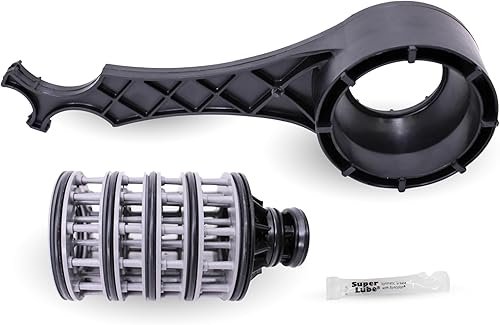
Clack WS1 Service Wrench & Seal Kit Genuine OEM V3193 wrench & V3005-02 seal stack. The absolute must-have for any DIY repair. |
$1.11 | Buy on Amazon Buy on eBay |
 |
Clack WS1 1″ Quick Connect Fittings IPW Industries plastic male NPT assembly. Makes installation and valve removal much easier. |
$57 | Buy on Amazon Buy on eBay |
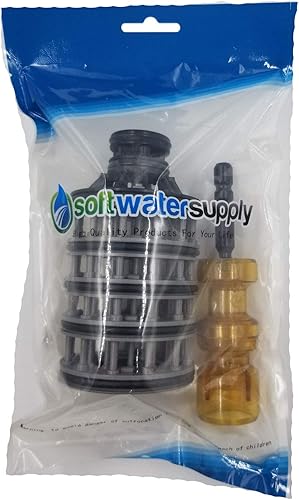 |
Clack WS1 Interior Parts Kit Includes seal pack, downflow piston, and brine piston. The full rebuild kit for major servicing. |
$1.18 | Buy on Amazon Buy on eBay |
 |
Waterdrop WD-X8 RO System 9-stage, 800 GPD under-sink filter. NSF 42&58 certified. Perfect for removing sodium and other contaminants from softened water. |
$7.19 | Buy on Amazon Buy on eBay |
Clack WS1 Service Wrench & Seal Kit
This is the first thing you should buy with your system. Seriously. The V3193 wrench is the only tool you need to open the valve body. The V3005-02 seal stack is the most common part to wear out. Having this on hand means a leaky valve is a 30-minute fix, not a week-long headache waiting for parts. It’s genuine OEM, so the fit is perfect.
- Essential for DIY maintenance
- Genuine Clack OEM parts
- Incredibly low cost for peace of mind
- Doesn’t include other wear parts like pistons
Clack WS1 Interior Parts Kit
Think of this as the “full rebuild” kit. If your valve is older than 7-8 years, or if you’re buying a used system, replace these parts proactively. It includes the seal pack, the main downflow piston, and the brine piston. In our testing, swapping these three parts restores like-new performance and stops the most common internal leaks. It’s cheap insurance.
- Comprehensive rebuild for major servicing
- Stops most internal leak paths
- Extends valve life significantly
- Requires opening the valve body (need the service wrench)
Waterdrop WD-X8 RO System (For Drinking Water)
A water softener removes hardness, not other contaminants. And it adds a bit of sodium. For pure drinking water, pair it with a reverse osmosis system under your sink. The Waterdrop X8 is a standout. It’s certified to NSF/ANSI 42 & 58, has a high 800 GPD flow rate, and a fantastic 2:1 pure-to-drain ratio. It removes the sodium, lead, PFAS, and everything else. This combination—soft water for the house, pure RO water for the tap—is what we recommend in almost every home.
- Removes sodium from softened water
- High flow rate, no waiting
- Very low wastewater ratio
- Excellent certifications
- Requires under-sink installation
- Has a higher upfront cost
Clack WS1 Water Softener FAQ
- How long does a Clack WS1 valve last?
- With basic maintenance—replacing seals and pistons every 5-8 years—the valve body itself can easily last 15 to 20 years. It’s one of the most durable residential valves on the market. The electronics (if metered) are also very reliable.
- Can I install a Clack WS1 system myself?
- Yes, if you’re comfortable with basic plumbing (soldering or using SharkBite fittings) and electrical work for the control head. Many homeowners do. The programming is the trickiest part. We recommend watching installation videos specific to your system builder’s kit.
- Why is my Clack WS1 leaking from the top?
- The most common cause is a worn seal stack (the V3005-02 part). This is a straightforward DIY fix with the service wrench and a new seal kit. It’s a 20-minute job. Don’t ignore it, as the leak can damage the circuit board.
- Does the Clack WS1 remove iron?
- Standard softener resin can remove small amounts of clear-water ferrous iron (less than 2-3 ppm). For higher iron levels or red-water iron, you need a dedicated iron filter before the softener. The WS1 valve can be used on some specialized iron-filter systems as well.
- What’s the difference between Clack WS1 and Fleck 5600?
- Both are excellent, reliable valves. The Fleck 5600 is also an industry standard. The main difference is in repair philosophy. The Clack WS1 is designed for incredibly easy, tool-minimal DIY repairs. The Fleck often requires more disassembly. For homeowners who like to maintain their own gear, the Clack wins on ease of service.
- How often should I add salt?
- Check the brine tank monthly. Keep it at least half full. Most families use one 40-pound bag of salt every 4-8 weeks. The metered WS1 valve is efficient, so your salt usage will be lower than with an old timer-based system.
Final Thoughts
The Clack WS1 water softener valve isn’t glamorous. It doesn’t have Wi-Fi or a fancy app. What it has is a decades-long track record of being dead reliable and incredibly easy to maintain. That’s what actually matters for a system that’s supposed to protect your entire home’s plumbing. The single biggest mistake we see is people buying a proprietary system that locks them into expensive professional service calls for simple repairs.
If you’re a hands-on homeowner, or you just value long-term reliability and low cost of ownership, a system built around the Clack WS1 is our top recommendation. Pair it with a quality everpure water filter system or a crystal quest water filter for specific contaminant concerns, and you’ll have exceptional water throughout your home. For softer laundry and spot-free dishes, it’s hard to beat. Just remember to do your water quality testing first to size it correctly.
