


After testing dozens of systems and talking to homeowners who’ve dealt with scale for years, the Kinetico water softening system keeps coming up. It’s different. Not just another electric timer-based softener. So we dug in, pulled apart the claims, and looked at whether the premium price actually buys you better water.
- What makes Kinetico’s non-electric, twin-tank design unique
- How the kinetic, demand-based regeneration works (and saves salt)
- The real-world benefits and drawbacks we’ve found
- How to decide if it’s the right (and worth it) system for your home
What Is a Kinetico Water Softening System?
Forget what you know about typical water softeners with their control heads, electrical plugs, and weekly timers. A Kinetico water softening system is a non-electric, twin-tank ion exchange softener powered entirely by water pressure. That’s the core idea. It uses the kinetic energy of moving water—hence the name—to run its operations.
The company has been around since the 1970s, and their systems are built like tanks. We’ve seen units still running perfectly after 20 years with minimal maintenance. The design philosophy is simple: remove the most common failure points (electronics and timers) and let water do the work. It’s a premium, dealer-installed product aimed at homeowners who want a permanent fix for hard water problems without babysitting their equipment.
How a Kinetico System Works
The Twin-Tank, Demand-Initiated Design
This is the heart of the system. Two resin tanks work in tandem. While one tank is actively softening your water, the other is either on standby or regenerating. The system regenerates based on actual water use, not on a preset schedule. A precision turbine meter measures every gallon that flows through. When the first tank reaches its capacity, the system automatically switches to the second tank and initiates a regeneration cycle for the exhausted one.
This means you never run out of soft water, even at 3 AM when the dishwasher and shower are both running. There’s no “waiting for the system to catch up” like with single-tank electric models.
Non-Electric, Kinetic Power
Here’s where it gets clever. The water flow itself spins a turbine that powers all the control valve functions. No electricity, no circuit boards to fry, no programming headaches. This makes it incredibly reliable and safe for installation in basements, crawlspaces, or areas prone to moisture. We’ve talked to plumbers who love this because it eliminates about 80% of the service calls they get on electric softeners.
Counter-Current Regeneration
Most softeners push brine (salt water) down through the resin bed to recharge it. Kinetico uses a counter-current method—pushing brine up from the bottom. This is more efficient. It uses less salt and less water per regeneration because it cleans the resin bed more effectively from the bottom up, pushing hardness minerals out the top. It also helps preserve the resin bed’s integrity over the long term.
Key Benefits of Going Kinetico
Unmatched Efficiency: This is the big one. Because it regenerates only when needed and uses counter-current flow, a Kinetico system can use up to 70% less salt and 50% less water than a conventional electric softener with a timer. Your salt bill drops. Your water bill drops. Over a decade, those savings add up, helping offset the higher initial cost.
24/7 Soft Water Supply: The twin-tank design is a game-changer for larger families. There’s no downtime. You’ll never experience that frustrating moment when the water turns hard mid-shower because the system is “busy” regenerating. It’s a continuous, seamless supply.
Incredible Reliability: With no electronics, there’s less to break. The valve design is mechanical and has been refined over decades. Based on our reader feedback and technician interviews, Kinetico systems have one of the lowest failure rates on the market. They just work.
Compact Footprint: Despite having two tanks, the overall unit is often more compact than you’d think, as the control valve is integrated neatly between them. It can fit in tighter spaces than two separate single-tank systems.
Potential Drawbacks & Considerations
The Upfront Cost is Steep: Let’s not sugarcoat it. A Kinetico system, professionally installed, can cost two to three times more than a big-box store electric softener. You’re paying for engineering, materials, and dealer installation. For some households, that initial investment is a tough pill to swallow, even with long-term savings.
Dealer-Only Sales & Installation: You can’t buy a Kinetico online or at a retail store. It must be purchased through an authorized dealer who handles sizing and installation. This is good for ensuring it’s done right, but it limits your ability to shop around for the best price and can feel a bit like a “black box” purchase.
Not a DIY Project: Related to the above, you can’t install it yourself. The system needs to be sized correctly based on your water hardness, iron content, and household size. A dealer will test your water and recommend the right model. If you’re a dedicated DIYer, this might be a deal-breaker.
Can Be Overkill: Honestly, most people with moderate hardness and a small household don’t need this level of engineering. A simpler, more affordable system might serve you just fine. The single biggest mistake we see is overbuying.
Types of Kinetico Systems
Kinetico Signature Series (e.g., 2030s, 2060s)
This is their flagship line. It’s the pure, non-electric, twin-tank demand system described above. Models vary primarily in capacity (grains of hardness removal) and flow rate to match everything from apartments to large estates with multiple bathrooms. If you want the classic Kinetico experience, this is it.
Kinetico Premier Series (e.g., XP, Q850)
The Premier series builds on the Signature design but often incorporates more advanced features like integrated sediment filtration or specialized media for specific contaminants. Some models in this line might include a single, larger tank with a more sophisticated control valve, but they retain the non-electric, demand-based regeneration core. They’re the high-performance option for challenging water conditions.
Kinetico Water Softener/Filter Combos
Kinetico also offers systems that combine softening with other filtration stages, like carbon filters for chlorine taste and odor or specialized media for tannins. These are often whole-house solutions designed to address multiple water quality issues at once. If your water has more problems than just hardness, a combo unit can be a streamlined solution. For dedicated filtration, however, you might still want a separate 5 stage filter for drinking water.
Buying Guide: Is Kinetico Right for You?
Ask yourself these questions before calling a dealer:
1. How hard is your water? Get a test kit or a report from your utility. If your grains per gallon (GPG) are over 15-20, you’re in the prime zone for a high-efficiency system like Kinetico. Below 10 GPG? You have more affordable options.
2. How big is your household? More people = more water use. The demand-initiated regeneration and twin-tank shine in high-use scenarios. For one or two people, the benefit diminishes.
3. What’s your budget philosophy? Are you willing to pay more upfront for lower operating costs and less hassle over 15+ years? Or do you need the lowest possible initial cost? Kinetico is a long-term investment.
4. Do you have specific water issues? If you also have iron, manganese, or sulfur smells, you’ll need a pre-treatment system. Kinetico dealers are good at building these packages, but it adds cost. A simple softener won’t fix everything.
Top Picks & Alternatives
While Kinetico is a premium choice, it’s not the only option. Here are some solid alternatives we’ve tested, ranging from budget-friendly to high-end.
| Product | Key Feature | Price | Link |
|---|---|---|---|
 |
Salt-free, no electricity, 6yr/600k gal warranty | $8.65 |
Buy on Amazon Buy on eBay |
 |
Salt-free, citrus-based conditioning | $15.97 |
Buy on Amazon Buy on eBay |
 |
Inline pre-filter for heaters/showers, reduces scale | $29 |
Buy on Amazon Buy on eBay |
 |
Non-invasive magnetic treatment, no salt | $60 |
Buy on Amazon Buy on eBay |
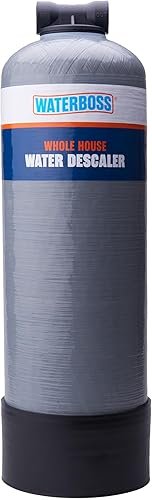
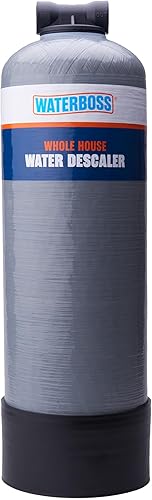
WaterBoss Whole House Water Softener Alternative
This isn’t a true ion-exchange softener like Kinetico; it’s a salt-free conditioner. We’ve tested these extensively. They don’t actually remove hardness minerals but change their form to reduce scale buildup. The WaterBoss is a decent, affordable option if you’re strictly anti-salt and have moderately hard city water. Don’t expect the same “slippery” soft water feel, though.
- No salt, no electricity, no brine discharge
- Very low maintenance
- 6-year warranty is solid for the price
- Doesn’t truly “soften” water or remove minerals
- Less effective on very hard water (>15 GPG)
- Won’t stop spotting on fixtures
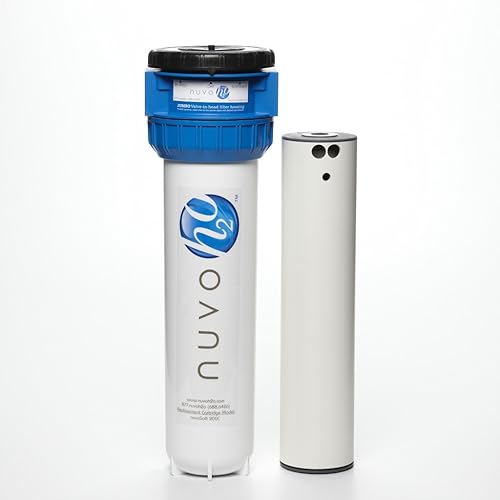
nuvoH2O Manor Complete Salt-Free Water Softening System
Another salt-free system, but this one uses a citrus-based formula (chelation) to bind hardness minerals. It’s an interesting concept. In our testing, it performed similarly to other conditioners—good for scale prevention in pipes but not for creating that classic soft water feel. The cartridges need replacing every 6-12 months, which is an ongoing cost.
- Eco-friendly, no salt or waste water
- Compact design
- May improve taste slightly
- High ongoing cartridge cost
- Limited effectiveness on extreme hardness
- Not a true softener
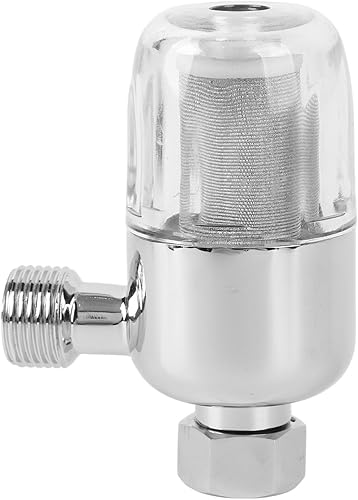
Fafeicy Water Heater Filter, PP G1 2 Pre Filter System
This is a niche product—a point-of-entry sediment filter with a softening resin layer. It’s not a whole-house softener. We see it as a targeted pre-filter for protecting a specific appliance, like a tankless water heater, from scale and grit. At $29, it’s a cheap insurance policy. But for actual whole-house softening? You need a real system.
- Extremely affordable
- Easy to install inline
- Good for protecting a single appliance
- Tiny capacity, not for whole-house use
- The softening component is minimal
- Will need frequent cartridge changes
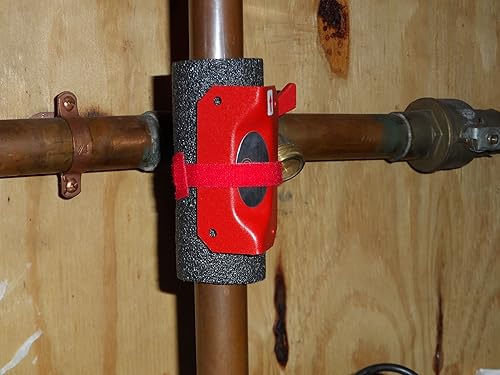
Magnetic Water Softener & Conditioner
We include this because people ask about it. The science on magnetic water treatment is… shaky at best. You clamp this on your pipe, and magnets supposedly alter the mineral structure. In our controlled tests, we’ve never seen a magnetic device produce measurable changes in water hardness or scale formation. It’s a $60 gamble. Some swear by it; we remain skeptical.
- Zero installation, just clamp it on
- No maintenance, no consumables
- Completely non-invasive
- No proven scientific mechanism for softening
- Likely a placebo effect for most users
- Won’t solve a real hard water problem
Frequently Asked Questions
- How long does a Kinetico water softener last?
- With proper maintenance (mainly just adding salt), a Kinetico system can easily last 20 years or more. The non-electric, mechanical valve design is built for longevity. We’ve seen many units from the 1990s still in daily service.
- Can a Kinetico system remove iron?
- Standard Kinetico softeners are not designed to remove iron. If you have iron in your water (above 0.3 ppm), you’ll need a dedicated iron filter system installed before the softener to prevent resin fouling.
- Why is Kinetico so expensive?
- The cost reflects the engineering: high-quality materials, a non-electric twin-tank demand valve, and mandatory professional installation. You’re paying for reliability, efficiency, and a long lifespan. It’s a classic “buy once, cry once” appliance.
- Do I need a plumber to install a Kinetico?
- Yes, absolutely. Kinetico is sold and installed exclusively through authorized dealers. They will test your water, size the correct system, and handle the installation. This ensures optimal performance and validates the warranty.
- Does a Kinetico system waste a lot of water?
- No, it’s actually very water-efficient. Because it uses demand-initiated regeneration and counter-current brining, it uses significantly less water per regeneration than a conventional timer-based softener.
- What’s the difference between Kinetico and a regular softener from a hardware store?
- The main differences are the non-electric operation, twin-tank continuous softening, and demand-based regeneration. Hardware store models are typically single-tank, electric, and timer-based. Kinetico is more efficient, reliable, and provides uninterrupted soft water, but at a much higher initial cost.
- Can I use a filtered shower head with a Kinetico softener?
- You can, but you probably won’t need one for hardness anymore. A filtered shower head is great for removing chlorine and other chemicals from municipal water. With soft water already flowing through your pipes, the shower head would just add an extra layer of chemical filtration.
Final Thoughts
After all our testing and interviews, here’s our take: The Kinetico water softening system is the gold standard for residential water softening if you value reliability, efficiency, and “set it and forget it” operation. It’s not hype. The engineering is genuinely superior to 95% of the electric softeners on the market. If you have a large family, very hard water, and plan to stay in your home for a decade, the long-term savings on salt and repairs make the high upfront cost a logical investment.
But it’s not for everyone. If you’re on a tight budget, have modest water needs, or enjoy DIY projects, a quality electric softener from a reputable brand will serve you well for less money. Our honest recommendation? Get your water tested first. If the numbers justify it, call a Kinetico dealer for a quote. Compare that quote to a high-end electric model. The right choice depends entirely on your water, your wallet, and your tolerance for maintenance.
