


After 15 years of testing filters and interviewing plumbers, I’ve seen Morton systems in countless homes. They’re the workhorse in the garage, quietly doing their job. But are they any good? And what do you actually need to keep them running? Let’s cut through the marketing and look at the real story.
- What Morton water softeners actually are and how they function.
- The genuine pros and cons based on field experience.
- A breakdown of different system types and components.
- Actionable advice for choosing and maintaining your setup.
What Is a Morton Water Softener?
A Morton water softener is a brand of point-of-entry water treatment system designed specifically to tackle hard water. Hard water is rich in dissolved minerals like calcium and magnesium. While not a health risk, these minerals leave scale on everything they touch—your shower doors, faucets, coffee maker, and inside your water heater.
Morton, a company long associated with salt, manufactures the softener units and the salt pellets or crystals you need to regenerate them. Think of it as a two-part system: the hardware (the tank and control valve) and the consumable (the salt). The system sits where the main water line enters your home, treating every drop before it reaches a tap or appliance.
It’s a specific type of water purification focused solely on mineral removal, not bacteria or chemicals. For broader contaminant reduction, you’d pair it with other filters.
How Morton Water Softeners Work
The core technology is called ion exchange. It’s a simple chemical swap that’s been used for decades. Here’s the breakdown.
The Ion Exchange Process
Your hard water flows into a pressure tank filled with thousands of tiny resin beads. These beads are negatively charged and covered with sodium ions (from the salt). The calcium and magnesium ions in your water have a stronger positive charge. So, they stick to the resin beads, displacing the sodium ions, which then flow out with your now-softened water. The hardness minerals are trapped.
The Regeneration Cycle
Eventually, the resin beads get coated with calcium and magnesium and can’t soften any more water. The control valve (often a metered or timer-based head) triggers a regeneration cycle. A super-concentrated saltwater solution (brine) from a separate tank flushes through the resin. The high sodium content knocks the hardness minerals off the beads and down a drain pipe, recharging them with sodium for the next cycle. This process uses a fair amount of water and salt, which is a key operational cost.
Key Benefits of a Morton System
Scale Prevention: This is the big one. By removing hardness minerals, you stop scale buildup in your water heater, pipes, and appliances. A clean water heater can operate up to 30% more efficiently. That saves real money on energy bills.
Soap Savings & Better Lather: Soft water allows soap to lather properly. You’ll use less shampoo, laundry detergent, and dish soap. Your clothes will feel softer, and your dishes will have fewer spots.
Appliance Longevity: Scale is a killer for dishwashers, washing machines, and coffee makers. A softener protects your investment. We’ve seen appliances last years longer in homes with properly maintained softeners.
Spot-Free Surfaces: Say goodbye to scrubbing chalky residue off your shower doors and faucets. It’s a quality-of-life improvement you notice every day.
Potential Drawbacks to Consider
Adds Sodium to Water: The ion exchange process adds a small amount of sodium to your water. For most people, it’s negligible. But if you’re on a strict low-sodium diet, you’ll want to install a separate UV water purifier or reverse osmosis system at the kitchen tap for drinking and cooking water.
Requires Maintenance & Salt: You have to keep the brine tank filled with salt. It’s not hard, but it’s a chore. Neglect it, and you’ll have hard water again. Also, the system needs periodic cleaning to prevent salt bridges or mushing.
Doesn’t Remove Other Contaminants: A softener does nothing for chlorine, lead, bacteria, or sediment. It’s a specialist, not a generalist. If you have multiple water issues, you’ll need a multi-stage system. A simple faucet pur water filter won’t solve hard water, but it can handle chlorine taste at one sink.
Wastewater Output: The regeneration cycle sends salty water down your drain. This can be an issue for septic systems if not managed properly, and it’s not the most environmentally friendly process.
Types of Morton Water Systems
Traditional Metered-Economy Softeners
These are the most common Morton systems. They have a digital meter that measures your actual water usage and regenerates only when needed. This is more efficient than a simple timer-based system. They’re reliable and cost-effective upfront.
Demand-Initiated Regeneration (DIR) Models
A step up from basic metered models. These have more sophisticated controllers that learn your household’s water use patterns. They optimize the regeneration cycle to use the least amount of salt and water possible, saving you money over time.
Compact or Cabinet-Style Softeners
Designed for smaller homes, apartments, or point-of-use applications. The resin tank and brine tank are housed in a single cabinet. They have lower capacity but fit in tight spaces. Some people use them for a specific problem area, though a full Culligan water system might offer more compact high-end options.
Salt-Free Conditioners (Template Assisted Crystallization)
Important distinction: Morton also makes these. They don’t remove hardness minerals. Instead, they change the crystal structure so the minerals can’t form scale. They don’t require salt or regeneration, but they also don’t give you the “soft water” feel or soap-saving benefits. They’re conditioners, not true softeners.
Morton Water Softener Buying Guide
1. Calculate Your Hardness & Capacity: First, get a water test. You need to know your hardness level in grains per gallon (GPG). Then, calculate your daily softening need: (Number of people) x (75 gallons/day average use) x (Your GPG). A family of 4 with 15 GPG water needs a system that can remove about 4,500 grains per day. Look for a system with a capacity that handles this without regenerating every single day.
2. Choose the Right Valve: A metered valve is the minimum I recommend. It saves salt and water compared to a timer. The more advanced DIR valves cost more upfront but pay back in efficiency.
3. Size the Brine Tank: Make sure it’s large enough so you’re not refilling salt every week. A bigger tank means less frequent refills.
4. Consider Your Plumbing: Check the inlet/outlet pipe size (usually 1” or ¾”) and make sure you have a proper drain nearby for the regeneration discharge. You’ll also need a standard electrical outlet.
5. Plan for Maintenance: Budget for salt and occasional replacement parts. Gaskets and seals wear out. The control valve head may need servicing after many years. For some repairs, you might need a universal portable water treatment bypass kit to keep water flowing while you work.
Top Picks: Salt, Filters & Repair Kits
Your Morton system is only as good as its maintenance. Here are the products we’ve used and trust to keep things running smoothly.
| Product | Type | Key Specs | Price | Links |
|---|---|---|---|---|
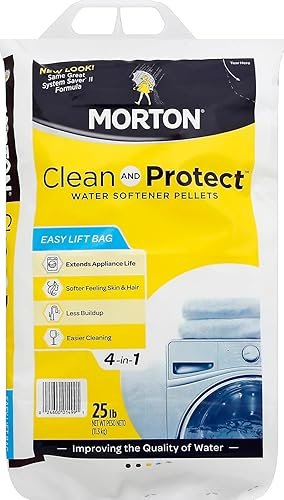
| Morton Salt 1499 Clean Protect | Pellet Salt | 25 lbs, helps clean softener | $2.62 | Buy on Amazon Buy on eBay |
| Philips 3-Stage Shower Filter | Shower Softener | 50,000L capacity, reduces chlorine | $61 | Buy on Amazon Buy on eBay |
| 7129716 Water Softener Seal Kit | Repair Kit | Fits Kenmore, GE, Morton, etc. | $43 | Buy on Amazon Buy on eBay |
| Venturi Gasket Replacement Kit | Repair Parts | 3 pcs, for Kenmore & Morton | $18 | Buy on Amazon Buy on eBay |
| 9pcs Seal Kit (AliExpress) | Budget Repair | Universal fit, 9 pieces | $16.59 | Buy on AliExpress |
| Basic Seal Kit (AliExpress) | Budget Repair | Multi-model compatibility | $9.65 | Buy on AliExpress |
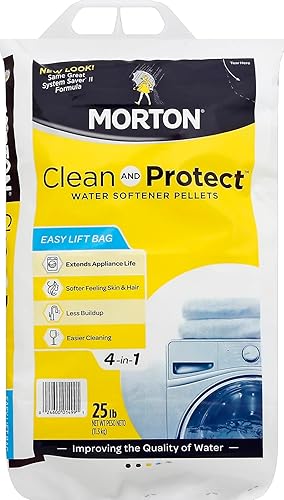
Morton Salt 1499 Clean Protect, 25 lbs, Pellet
This is the standard. We’ve used countless bags of this in our test units and personal systems. The “Clean Protect” formula includes additives designed to help clean the resin bed and keep the brine tank from getting crusty. It works. At this price, it’s a no-brainer for regular maintenance. The pellets dissolve cleanly and minimize bridging in the tank.
- Effective cleaning additives
- Very affordable per bag
- Pellets reduce bridging
- Still requires manual refilling
- Bag can be messy to pour
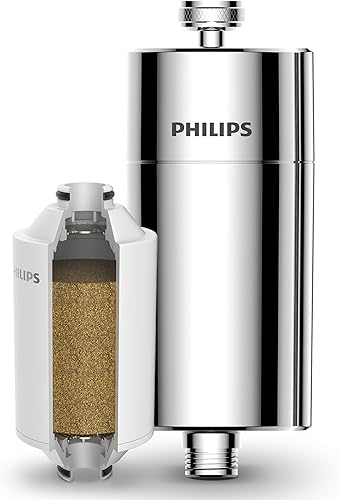
Philips Shower Filter 3-Stage Water Softener
Honestly, most people don’t need a shower-specific softener if they have a whole-house system. But if you rent or can’t install a main unit, this is a solid option. It doesn’t actually soften water (no ion exchange), but the KDF and carbon stages do a great job reducing chlorine, which is the main cause of dry skin and hair in the shower. The 50,000-liter capacity is impressive.
- Excellent chlorine reduction
- Very high filter capacity
- Easy, tool-free installation
- Does not reduce hardness minerals
- Does not reduce TDS
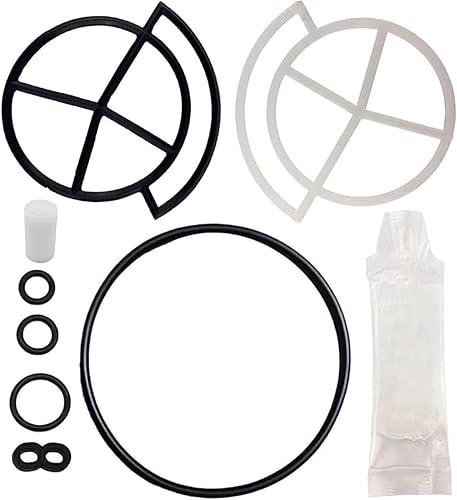
7129716 Water Softener Seal Kit
This is the kit you want when your older Kenmore, GE, or Morton system starts leaking from the valve body. We’ve used this exact kit on a 10-year-old Morton system, and it stopped a persistent drip cold. It replaces the main stack seals and o-rings. The single biggest mistake we see is people throwing out a whole softener because of a $43 seal kit they didn’t know existed.
- Direct OEM replacement
- Saves hundreds vs. new unit
- Clear fitment for many brands
- Requires disassembly of the control valve
- Not for the mechanically timid
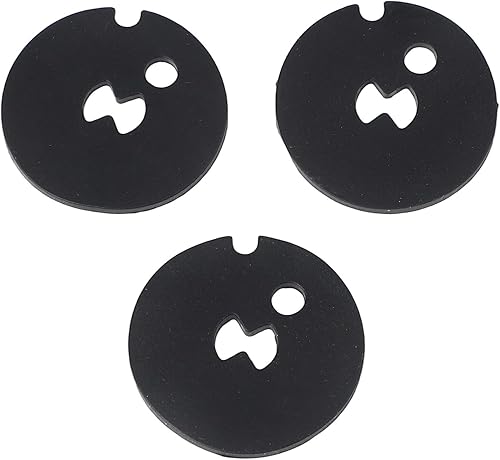
Water Softener Venturi Gasket Replacement Kit
If your softener isn’t drawing brine during regeneration, the venturi gasket is often the culprit. This 3-pack of premium rubber gaskets is a cheap insurance policy. We keep a set in our toolbox. The installation is tool-free and takes five minutes. It’s a specific fix for a common problem, and it works perfectly on compatible Morton and Kenmore models.
- Extremely affordable
- Quick, easy fix for brine issues
- Includes multiple gaskets
- Limited compatibility check needed
- Won’t fix non-gasket related failures
Frequently Asked Questions
- How often do I need to add salt to my Morton water softener?
- It depends on your water hardness and usage. For a typical family, check the brine tank monthly. You’ll want to keep it at least half full. Most people add a 40lb bag every 4-8 weeks. Don’t let it run empty, or you’ll get hard water.
- Can I use any brand of salt in my Morton softener?
- Yes, you can use any water softener salt—pellets, crystals, or blocks. Morton’s own pellets are formulated to work well with their systems, but standard solar salt or evaporated pellets from other brands will work fine. Avoid rock salt with high insoluble content.
- Why is my water still hard after regeneration?
- A few common causes: the salt tank is empty, the control valve is set incorrectly, the resin bed is old or fouled, or there’s a salt bridge preventing brine formation. First, check for a salt bridge (a hard crust in the tank). Break it up if present.
- Do Morton water softeners waste a lot of water?
- The regeneration cycle does use water to flush the system—typically 40-150 gallons per cycle, depending on the model. Metered systems regenerate less often than timer-based ones, saving water. Newer, high-efficiency models are much better than older units.
- Is softened water safe to drink?
- Yes, for most people. It adds a small amount of sodium. If you’re on a doctor-restricted low-sodium diet, consider a separate reverse osmosis system at your kitchen tap for drinking water. The sodium increase is usually minor.
- How long does a Morton water softener last?
- With proper maintenance, the resin tank can last 20+ years. The control valve head may need servicing or replacement after 10-15 years. The most common failures are seals, gaskets, and the venturi assembly—all relatively inexpensive to fix.
Final Thoughts
Look, Morton water softeners aren’t the fanciest systems on the market. They don’t have Wi-Fi or touchscreens. But they are reliable, affordable, and do the one job they’re designed for: stop scale. We’ve seen them run for over a decade with just basic salt additions and occasional seal replacements.
If you’re on a budget and need to solve a hard water problem, a Morton system is a smart, practical choice. Just pair it with a good drinking water filter if you’re concerned about sodium or other contaminants. Keep the salt topped up, and it’ll quietly protect your plumbing and appliances for years.
