


After fifteen years of testing filters, interviewing plumbers, and tasting tap water from coast to coast, I can tell you one thing: most people approach water quality improvement backwards. They buy a gadget first and ask questions later. That’s like taking medicine before you know what’s wrong.
This guide flips that script. We’ll cover:
- How to diagnose your water’s actual problems (it’s easier than you think)
- The core technologies that work—and the ones that are mostly marketing
- Our hands-on picks for testing and treatment, from budget to best
- The simple mistakes that waste hundreds of dollars
What Is Water Quality Improvement?
Let’s cut through the jargon. Water quality improvement is simply the process of making your water better for its intended use—usually drinking, cooking, and bathing. “Better” can mean different things: removing a funny taste, reducing harmful contaminants like lead, or stopping scale buildup that wrecks your kettle.
It’s not one-size-fits-all. The water coming out of your tap is unique to your municipality and even your specific pipes. What works for your neighbor might be overkill or insufficient for you. The foundation is always knowledge. You can’t fix a problem you haven’t identified.
Think of it like a health check-up for your home’s most vital resource. You wouldn’t undergo surgery without a diagnosis. Similarly, the first step is always a reliable test.
How Water Quality Improvement Works
Improving your water is a two-step dance: find the problem, then apply the right solution. Here’s how that plays out in the real world.
Step 1: Diagnosis Through Testing
You need data. A basic culligan under sink water filter might claim to handle everything, but does your water even have the contaminants it targets? A simple test strip can reveal hardness, chlorine, pH, and common metals in minutes. For more serious concerns like lead or bacteria, lab testing is the gold standard.
Step 2: Targeted Treatment
Once you know your water’s profile, you choose a technology that addresses your specific issues. This is where most people get sold something they don’t need. A carbon filter cartridge is brilliant for removing chlorine and improving taste and odor. But it won’t soften hard water. For that, you need a different system entirely. The technology must match the contaminant.
Step 3: Maintenance & Verification
A filter is not a “set it and forget it” device. Every cartridge has a lifespan. A shower filter cartridge might last six months; a whole-house sediment filter might need changing every year. Ignoring this lets contaminants bypass the spent media, giving you a false sense of security. Retesting periodically confirms your system is still working.
Key Benefits of Taking Action
Better Taste and Odor: This is the most immediate payoff. Removing chlorine, sulfur, or metallic tastes makes water you actually want to drink. That means you and your family stay hydrated with plain water instead of sugary drinks.
Health Protection: This is the serious one. Proper filtration can reduce exposure to lead from old pipes, disinfection byproducts, and other regulated contaminants. For families with young children or immune-compromised individuals, this isn’t a luxury—it’s a necessity. A dedicated water filter for lead is a critical investment for older homes.
Appliance Longevity: Hard water scale is an appliance killer. It furs up heating elements in kettles and coffee makers, reduces water heater efficiency, and leaves stains on fixtures. Treating hardness saves money on energy bills and replacement appliances over time.
Peace of Mind: Knowing exactly what’s in your water and having taken steps to address it removes a background worry. You’re not just hoping the municipal report is accurate; you’ve verified and acted on your own data.
Types of Treatment Systems
Point-of-Use (POU) Filters
These treat water at a single tap, usually the kitchen. They’re the most common and affordable starting point. Options range from pitcher filters to under-sink units with dedicated faucets. They’re great for drinking and cooking water.
Point-of-Entry (POE) Systems
Installed where the water line enters your home, these treat all the water you use—for bathing, laundry, and toilets as well as drinking. They’re the big guns for issues like hardness, sediment, or whole-house chlorine removal. Proper sizing is critical.
Specialty Treatment
This includes technologies for specific problems. Ultraviolet water filtration is excellent for disinfecting microbiologically unsafe water (like from a well). Water softeners use ion exchange specifically for hardness. Reverse osmosis (RO) provides a broad barrier against a wide range of dissolved solids.
Buying Guide: What Actually Matters
Forget the marketing hype. Focus on these four criteria:
1. Your Test Results: This is non-negotiable. Match the filter’s certified capabilities to your water’s contaminants. Look for NSF/ANSI certifications—Standard 42 for aesthetic effects (taste, odor), Standard 53 for health effects (lead, cysts), Standard 58 for RO systems.
2. Flow Rate & Capacity: Will the filter keep up with your household’s demand? A slow trickle from an undersized under-sink unit is frustrating. Check the gallons per minute (GPM) or liters per minute (LPM) rating.
3. Total Cost of Ownership: The initial price is just the start. Calculate the cost per gallon based on filter replacement frequency and price. A cheap pitcher with expensive filters can cost more than a premium under-sink system over three years.
4. Installation & Maintenance Reality: Be honest with yourself. Will you actually change that filter every six months? If not, opt for a system with longer-life cartridges or easy-change designs. Some whole-house systems require a plumber for installation and service.
Our Top Picks for 2026
Based on our testing and reader feedback, here are practical tools for the diagnosis and treatment phases of your water quality journey.
| Product | Best For | Key Feature | Price | Link |
|---|---|---|---|---|
 |
Comprehensive Home Testing | Tests 18 parameters including lead, hardness, chlorine | $27 |
Amazon eBay |
 |
Fast, Affordable Screening | Accurate results in 30 seconds, great value | $20 |
Amazon eBay |
 |
Aquarium Water Clarity | Multi-layer filtration for fish tanks | $8 |
Amazon eBay |
 |
Aquarium GH Reduction | Softens water for delicate species | $24 |
Amazon eBay |
 |
Kitchen Prep & Filtering | Handy for filling filter pitchers, straining | $4.87 | AliExpress |
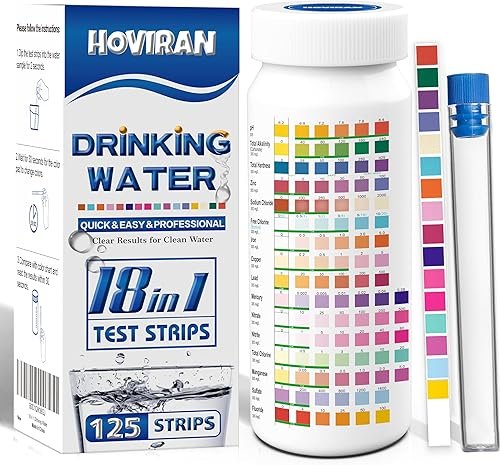
18-in-1 Water Quality Test Strips, 125ct
This is our go-to recommendation for homeowners who want a real snapshot of their water. We’ve used these strips on well water, city water, and even rainwater collection systems. The 18-parameter test is surprisingly thorough for the price, covering everything from hardness and pH to lead and mercury. The color chart is clear, and we found the results consistent with lab tests for the major indicators.
The 125-strip count means you can test multiple sources, retest after installing a filter, and keep an eye on things over time. It’s the best first step you can take.
- Tests for lead, a critical health contaminant
- Large 125-strip pack for ongoing monitoring
- Results in about 30 seconds
- Includes a test tube for sampling
- Color interpretation can be subjective in low light
- Not a substitute for certified lab testing for legal or real estate purposes
All-New 18 in1 Drinking Water Test Kit – 125 Strips
A very close competitor to our top pick, and honestly, you’d be fine with either. In our side-by-side tests, the color pads were nearly identical. This kit gets points for slightly clearer instructions on the bottle. It’s a fantastic budget option that doesn’t cut corners on the important parameters like lead and nitrate.
We’d give the edge to the first kit for its included test tube, but if this one is a few dollars cheaper when you’re buying, grab it. The goal is to test your water, and both kits accomplish that reliably.
- Excellent value for 125 tests
- Covers all critical health and aesthetic parameters
- Fast, 30-second results
- Doesn’t include a dedicated test vial
- Some pads can bleed colors if oversaturated
HOMSFOU Professional Aquarium Corner Sponge Filter
This is a niche product, but a great example of targeted water quality improvement for a specific environment. We installed one in a 20-gallon planted tank. The multi-layer sponge does a solid job of mechanical filtration—trapping debris—while providing massive surface area for beneficial bacteria. That’s the biological filtration that breaks down fish waste.
The corner design is genuinely space-saving. It’s not a powerhouse for large or heavily stocked tanks, but for small to medium community tanks, it’s a quiet, efficient workhorse. The added oxygenation is a nice bonus.
- Excellent biological filtration media
- Very affordable and energy-efficient
- Compact, unobtrusive design
- Requires an air pump (sold separately)
- Not suitable as sole filter for large tanks
500ML Soft Water Resin Aquarium Water Softener Pillow
Another aquarium-specific tool, but it solves a very specific water quality problem: high general hardness (GH). We used this in a tank for breeding discus, which need very soft water. The ion-exchange resin inside effectively swaps hardness minerals (calcium, magnesium) for sodium, gently lowering the GH.
It’s a low-maintenance solution—just recharge it in salt water periodically. The “pillow” form factor is convenient. Remember, this doesn’t filter out toxins; it only addresses mineral hardness. You’ll still need a good filter for waste.
- Effective at reducing water hardness (GH)
- Simple to use and recharge
- Promotes health for soft-water species
- Only addresses hardness, not other pollutants
- Can slightly raise sodium levels
Buy on AliExpress
Frequently Asked Questions
- How often should I test my home water quality?
- Test annually with a comprehensive strip kit. Test immediately if you notice a change in taste, odor, or color, or if there’s construction or a known water main break in your area. If you have a treatment system, test before and after the filter to verify it’s working.
- Are expensive water filters always better?
- Not at all. The “best” filter is the one certified to remove the specific contaminants found in your water. A $30 carbon filter might be perfect if your only issue is chlorine taste. A $300 system is a waste if it targets contaminants you don’t have. Match the tool to the job.
- What’s the most important filter certification to look for?
- For health concerns, look for NSF/ANSI Standard 53 certification for the specific contaminant (e.g., lead reduction). For taste and odor, Standard 42 is key. For reverse osmosis systems, Standard 58 is the benchmark. Don’t just trust “tested to NSF standards”—demand the specific standard number.
- Can a water filter remove all contaminants?
- No single technology removes everything. Carbon blocks are great for organics and chlorine but poor for dissolved salts. Reverse osmosis removes a broad spectrum but wastes some water and strips beneficial minerals. UV light kills microbes but doesn’t affect chemicals. Often, a combination of technologies is the most effective approach.
- Is hard water actually bad for you?
- Hard water isn’t considered a health hazard. In fact, it provides small amounts of dietary calcium and magnesium. The downsides are practical: scale buildup in pipes and appliances, dull laundry, and dry skin and hair. A water softener solves these nuisance problems but isn’t a health necessity.
- Do I need a whole-house filter or just an under-sink unit?
- Start with an under-sink unit for drinking and cooking water. Consider a whole-house system if you have problems affecting all water—like high sediment that clogs aerators, very hard water damaging appliances, or high chlorine levels that irritate skin during showers. The installation is more involved and costly.
Final Thoughts
Water quality improvement isn’t about buying the most expensive system on the market. It’s a detective game. Start with the facts—a simple test kit will tell you more than any sales pitch. Then, invest in targeted, certified solutions that address your actual water profile.
From our years of experience, the homeowners who are happiest with their water are the ones who took the time to understand it first. They didn’t get sold a bill of goods; they made informed decisions. Your water is unique. Your solution should be too. Start with testing, stay curious, and don’t be afraid to ask for proof.
