


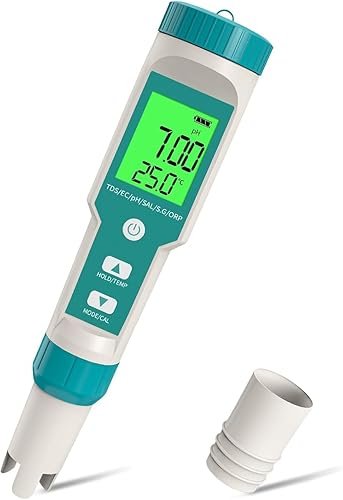
So you’ve bought a filter. You’ve installed it. But is it actually working? The only way to know for sure is to test your water before and after. That’s where a good water quality meter comes in. We’ve tested dozens of these gadgets over the years, from simple strips to lab-grade analyzers. This guide cuts through the noise. We’ll show you what each type does, which ones are worth your money, and the common mistakes to avoid.
What Is a Water Quality Meter?
A water quality meter is a tool that gives you a number. That number represents a specific property of your water. It’s not magic. It’s science translated into a reading you can understand. Think of it like a thermometer for your water’s health.
These meters don’t test for “everything.” That’s the biggest misconception we see. A TDS meter won’t tell you about lead. A pH meter won’t reveal bacteria. You choose a meter based on the one or two things you really need to know. For most homeowners, that’s either total dissolved solids (TDS) or pH.
They’re used everywhere. Homeowners use them to check distilled water purity or filter output. Pool owners monitor chlorine and pH. Aquarium hobbyists are obsessive about ammonia and nitrates. The point is control. You stop guessing and start knowing.
How a Water Quality Meter Works
The tech inside depends entirely on what it’s measuring. But most common home meters use one of two principles.
Electrochemical Measurement (pH, ORP)
This type uses a probe with a special glass tip or electrode. It measures the voltage between two points in the water. That voltage changes based on the concentration of hydrogen ions (for pH) or the water’s oxidation potential (for ORP). The meter’s circuit converts that tiny voltage into a number on the screen. Simple in theory, but the probes are delicate.
Conductivity Measurement (TDS, EC, Salinity)
This is how your typical TDS meter works. It sends a small electrical current between two metal pins. Pure water is a terrible conductor. The more dissolved “stuff”—salts, minerals, metals—the better it conducts. The meter measures that conductivity and uses a formula to convert it to parts per million (ppm) for TDS. It’s an indirect measure, but for tracking filter performance, it’s perfect.
Key Benefits of Using a Meter
Verify Your Filter is Working. This is reason number one. Test your tap water. Test the water from your filter. If the TDS number doesn’t drop significantly, your filter cartridge is spent. No more guessing based on taste alone.
Solve Specific Problems. Got scale buildup? A simple water hardness chart and a hardness test kit can confirm it. Stains on your fixtures? Test for iron. A meter turns a vague complaint (“my water tastes weird”) into a specific, solvable issue.
Save Money Long-Term. Instead of sending samples to a lab for every concern, you can do initial screenings at home. You’ll know when it’s time to replace a whole house filter cartridge or if you need to call in a pro.
Potential Drawbacks & Limitations
They Can Be Confusing. A TDS reading of 150 ppm means nothing without context. Is that good? Bad? You need to know your starting point (your tap water) and your goal (e.g., under 50 ppm for purified water). The number alone isn’t the answer; the change in the number is.
Not All Contaminants Are Measurable. If you’re on well water and worried about bacteria, a standard meter won’t help. You need specific test strips or a lab kit. The same goes for many heavy metals and chemicals. For issues like iron, a dedicated iron filtration system often requires its own testing protocol.
Types of Water Quality Meters
1. TDS (Total Dissolved Solids) Meters
The workhorse. Cheap, fast, and incredibly useful for one thing: checking if your reverse osmosis system or filter is reducing impurities. A must-have for any RO owner. Most are pen-style and give a reading in seconds.
2. pH Meters
Important for pool/spa owners, aquarium enthusiasts, and people with acidic well water that can corrode pipes. Good ones require calibration and careful storage of the probe. Don’t let the probe dry out.
3. Multi-Parameter Meters
These combine several sensors—often TDS, EC, pH, and temperature—into one device. They cost more but save space. The 7-in-1 and 8-in-1 models we’ve tested add salinity and ORP, which are niche but great for saltwater tanks.
4. Test Strips
Not a meter per se, but a vital comparison. Strips use colorimetric change. You dip, wait, and compare a color to a chart. They’re fantastic for broad screening—testing for hardness, iron, nitrates, chlorine all at once. They’re less precise but cover more ground. If you have well water, starting with a strip kit is smart before buying an iron filter.
Buying Guide: What Actually Matters
1. Define Your Need First. Don’t buy an 8-in-1 if you only care about TDS. You’ll pay for sensors you’ll never use. Start with the specific question: “Is my RO filter working?” Then buy a TDS meter.
2. Accuracy & Calibration. For pH, look for ±0.1 accuracy. For TDS, ±2% is fine. If the meter can be calibrated, that’s a huge plus. It means you can maintain its accuracy over time.
3. Build Quality. Is it waterproof? Will it survive a drop in the sink? The cheap ones often have flimsy battery compartments. Read reviews focusing on longevity.
4. Readability. A backlit screen is non-negotiable if you’ll be testing in dim areas under a sink. Big, clear numbers matter more than you think.
Our Top Picks for 2026
Based on our hands-on testing and years of reader feedback, here’s what we recommend.
| Product | Key Specs | Best For | Price |
|---|---|---|---|
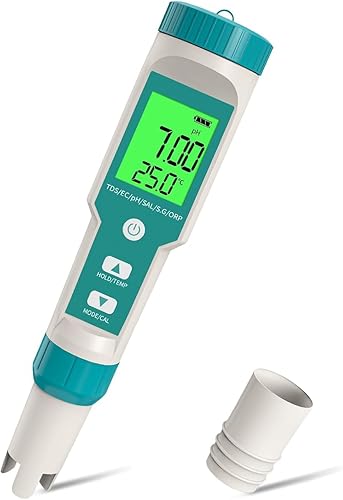 |
7-in-1: pH/TDS/EC/ORP/S.G/Salt/Temp | Serious hobbyists, pool/spa owners | $39 |
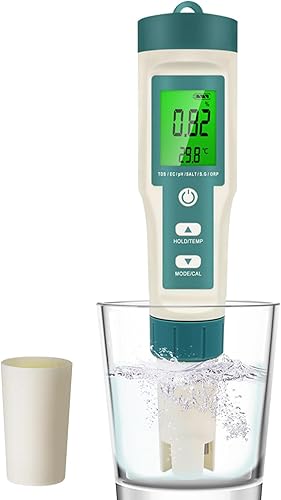 |
8-in-1: S.G/PH/TDS/EC/ORP/H2/SALT/TEMP | Aquarium pros, detailed analysis | $36 |
 |
4-in-1: TDS, EC, Temp (°C/°F) | Most homeowners, RO filter checks | $19 |
 |
125 strips, tests 18 parameters | Well water screening, broad testing | $27 |
1. Digital Water Quality Tester 7 in 1
This is the meter we grab when we need more than just TDS. The salinity modes are genuinely useful if you have a saltwater aquarium or are testing food brines. The backlit screen is bright, and the auto-calibration (after a factory reset) works reliably. It feels solid in the hand, not like a cheap toy.
- Versatile 7-in-1 testing covers most home needs
- Clear backlit LED screen
- Multiple salinity modes for niche uses
- More expensive than a basic TDS pen
- Features overkill for simple filter checks
2. 8 in 1 Digital Water Quality Tester
This one adds a Hydrogen (H2) measurement to the mix, which is interesting for those into hydrogen-enriched water. In our testing, the core pH and TDS readings matched the 7-in-1 model closely. It’s a bit of a specialist tool. If you don’t know what ORP or H2 readings are for, you probably don’t need this.
- Most comprehensive parameter list here
- Includes unique H2 measurement
- Competitively priced for its features
- H2 and ORP are niche parameters
- Interface can be overwhelming for beginners
3. 4 in 1 TDS Meter Digital Water Tester
Honestly, this is the one most of you should buy. It does the three things that matter 90% of the time: TDS, electrical conductivity (EC), and temperature. It’s dead simple. We keep one in our toolkit and one in the kitchen drawer. For checking your RO system or a new pitcher filter, it’s perfect. The price is right, and it’s accurate enough for home use.
- Excellent value for core functions
- Simple, no-fuss operation
- Accurate for tracking filter performance
- No pH or advanced parameters
- Basic build quality
4. 18-in-1 Water Quality Test Strips
Strips are a different beast. They’re not precise, but they cast a wide net. This kit is what we recommend for anyone with a private well as a first-step screening tool. Dip one strip and you’ll get a rough idea of hardness, iron, copper, nitrates, and pH in 60 seconds. That tells you if you need a more specific well iron filter or a different solution. The color comparison can be subjective, so read it in bright, natural light.
- Tests 18 parameters at once—unbeatable for screening
- Very easy to use (dip and compare)
- Great for well water first tests
- Results are qualitative (color match), not precise numbers
- Can be hard to read subtle color differences
Frequently Asked Questions
- What is the most important water quality meter for a homeowner?
- A TDS (Total Dissolved Solids) meter. It’s the quickest, cheapest way to verify that your reverse osmosis system or carbon filter is actually reducing contaminants. It answers the basic question: “Is my filter working?”
- Can a water quality meter detect bacteria?
- No. Standard home meters cannot detect bacteria, viruses, or most biological contaminants. For that, you need specific test strips that detect indicators like coliform bacteria, or you must send a sample to a certified lab.
- How often should I test my water?
- Test your tap water once to establish a baseline. Then test your filtered water monthly to track filter performance. If you have a well, test comprehensively (with strips or a lab) at least once a year, and after any major flooding or land disturbance nearby.
- Why does my TDS meter show a higher reading after my RO system?
- This is rare but can happen if your membrane is damaged or if you have a remineralization stage that adds healthy minerals back in. First, test your tap water again. If the RO reading is truly higher, your membrane has likely failed and needs replacement.
- Are more expensive meters more accurate?
- Not always. For TDS, a $20 pen is often as accurate as a $60 one. You pay more for durability, calibration features, and extra parameters like pH. For basic filter checking, don’t overspend.
- What’s the difference between TDS and EC meters?
- They are often the same device. Electrical Conductivity (EC) measures how well water conducts electricity. TDS uses an EC reading and applies a conversion factor to estimate the total dissolved solids. Many meters display both.
Final Thoughts
After years of testing water, we’ve learned one thing: knowledge is power. A simple water quality meter removes the mystery from what’s coming out of your tap. You don’t need the fanciest model. You need the right tool for your specific concern.
For 90% of people reading this, our recommendation is the 4-in-1 TDS Meter. It’s the perfect starting point. Pair it with a set of 18-in-1 test strips if you have well water or a broader concern, and you’ll be better equipped than most. Stop guessing. Start testing.
