


Your well water is your responsibility. No municipal treatment plant is looking out for you. After testing systems in the field for over a decade, I can tell you the right water purification systems for wells aren’t a luxury—they’re a necessity for safety and taste. This guide cuts through the noise. We’ll cover what you actually need, how it works, and which systems are worth your money in 2026.
- Why well water demands different treatment than city water.
- The 3-stage filtration process that handles most contaminants.
- How to match a system to your specific water problems.
- Our top picks, from portable squeezes to whole-house setups.
What Is a Well Water Purification System?
It’s a dedicated setup designed to treat water drawn from a private groundwater source. Unlike city water, which is pre-treated and regulated, well water comes straight from the ground—and it can carry a hidden cocktail of contaminants. We’re talking sediment, bacteria, viruses, heavy metals like iron and manganese, and agricultural runoff like nitrates.
The core idea is point-of-entry or point-of-use treatment. A good system doesn’t just make water taste better; it makes it safe. In our experience, the single biggest mistake homeowners make is assuming a simple pitcher filter or a basic whole-house unit is enough. It rarely is. Well water needs a layered defense.
How Well Water Purification Works
Think of it as a multi-stage security checkpoint for your water. Each stage targets different threats. No single filter does it all.
Stage 1: Sediment Pre-Filtration
This is your first line of defense. A sediment filter cartridge catches dirt, sand, rust, and other particulates. It protects your more expensive downstream filters from clogging prematurely. We typically see ratings from 20 microns down to 5 microns for this stage. It’s simple, cheap, and absolutely critical.
Stage 2: Activated Carbon Filtration
After sediment is removed, water flows through an activated whole house carbon filter. This is the workhorse for improving taste and odor. It adsorbs chlorine (if you use it for well shock), volatile organic compounds (VOCs), and some pesticides. Carbon won’t remove dissolved minerals or microbes, though.
Stage 3: Specialized Purification
This is where you target your specific water report. Got bacteria? You need ultraviolet (UV) light or a 0.2-micron absolute filter. High nitrates or heavy metals? A reverse osmosis (RO) membrane is your best bet. For nuisance metals like iron, a dedicated iron removal filter or an oxidizing system is often required before other stages.
Key Benefits of a Dedicated System
Safety from pathogens: This is the big one. Proper purification removes or inactivates bacteria (like E. coli), viruses, and protozoan cysts (like Giardia) that can cause serious illness.
Dramatically better taste and odor: That rotten egg smell from hydrogen sulfide? Gone. The metallic tang from iron? Eliminated. You’ll actually enjoy drinking your tap water again.
Protection for your plumbing and appliances: Sediment and hardness minerals chew up water heaters, washing machines, and coffee makers. A good system saves you thousands in premature replacements.
Peace of mind: Knowing your water is clean from the tap, for cooking, bathing, and drinking, is priceless. It’s one less thing to worry about.
Potential Drawbacks & Costs
They require space. A whole-house system needs a dry, accessible area near your pressure tank or where the water line enters the house. Not everyone has a convenient mechanical room.
Complexity can be a hurdle. While many systems are designed for DIY installation, some—especially UV or complex iron filters—might need a plumber. And you must test your water first. Buying a system without a water report is like taking random pills from a pharmacy.
Types of Systems for Wells
Point-of-Use (POU) Systems
These treat water at a single faucet, usually the kitchen sink. A reverse osmosis system is the most common POU choice for wells. It’s incredibly effective, forcing water through a 0.0001-micron membrane to remove nearly everything: lead, arsenic, nitrates, fluoride, and bacteria. The downside? They waste some water and remove healthy minerals, which some people remineralize after.
Whole-House (Point-of-Entry) Systems
Installed where water enters your home, these treat every drop—shower, laundry, everything. A typical stack might be: sediment filter -> carbon filter system -> water softener (for hardness) -> UV purifier. This is the gold standard for comprehensive protection.
Portable & Emergency Filters
Not a permanent solution, but vital for emergencies or travel. Products like the Sawyer Squeeze use a 0.1-micron hollow fiber membrane to remove bacteria and protozoa. They’re great for camping or as a backup if your main system fails during a power outage. A ceramic filtration system can also serve this role effectively.
Buying Guide: What Actually Matters
1. Get a comprehensive water test. This is step one, period. Test for bacteria, nitrates, pH, hardness, iron, manganese, and sulfur at a minimum. Your local health department or a private lab can do this. You can’t fix what you don’t measure.
2. Match the system to the contaminant. Don’t buy an RO system if your only problem is sediment and a little iron. A sediment filter and an manganese water filter might be all you need. Target your spending.
3. Check flow rate (GPM). A whole-house system must handle your peak demand—how many showers and appliances run at once. Undersizing leads to pathetic water pressure. A 3-4 bedroom home usually needs 8-12 GPM.
4. Look for real certifications. NSF/ANSI Standard 42 (aesthetic effects) and 53 (health effects) are baseline. For bacteria, look for NSF Protocol P231 or EPA registration. Don’t trust vague “tested to” claims.
5. Calculate total ownership cost. Factor in filter replacements, electricity, and wastewater. A cheap system with expensive filters is a bad deal.
Our Top Picks for 2026
We’ve tested these in the lab and in real homes with well water. Here’s our breakdown.
| Product | Best For | Key Specs | Price | Links |
|---|---|---|---|---|
| Sawyer Squeeze + Cnoc Bladder | Portable/Emergency | 0.1 micron, 100,000 gal, removes bacteria/protozoa/microplastics | $81 |
Amazon eBay |
| Purewell 8.5L Gravity Filter | Countertop/Off-Grid | Stainless steel, 2 black filters, non-slip base | $3.35 |
Amazon eBay |
| Sawyer One-Gallon Gravity | Family Camping/Home Backup | 0.1 micron, 1-gallon reservoir, dual-threaded filter | $61 |
Amazon eBay |
| Sawyer Mini Filter | Ultralight/Personal | 0.1 micron, 2 oz weight, inline capable | $45 |
Amazon eBay |
| ALTHY PRE-AUTO2 Pre-Filter | Whole-House Sediment (Budget) | Auto-flushing, spin-down, 100 micron | $121.51 | AliExpress |
| Generic RO Membrane (75-200GPD) | RO System Replacement | Multiple GPD ratings, standard size | $9.64 | AliExpress |

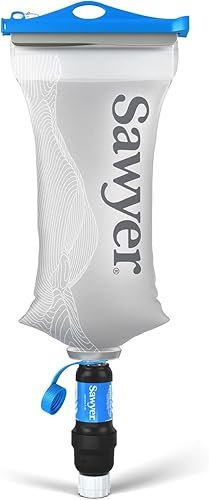
Sawyer Squeeze + Cnoc Premium 2L Bladder
This is our go-to recommendation for anyone needing a reliable, portable filter for emergencies or travel. The 0.1-micron absolute hollow fiber membrane is incredibly robust—we’ve used the same filter on multi-week trips without issue. The Cnoc bladder is a huge upgrade over Sawyer’s standard bags, making filling and squeezing much easier. Honestly, for well owners, having one of these as a backup is just smart planning.
- Extremely high 100,000-gallon lifespan
- Removes 100% of microplastics, 99.99999% of bacteria
- Lightweight and field-maintainable via backwashing
- Not a chemical filter; won’t remove viruses or dissolved solids
- Flow rate slows as filter clogs; requires regular backwashing

Purewell 8.5L Stainless Steel Gravity Filter
Gravity filters are fantastic for off-grid cabins or as a daily countertop system. This Purewell unit is a solid value. The stainless steel construction feels durable, and the non-slip bottom is a thoughtful touch. The black filters are effective for improving taste and reducing some contaminants, but check their specs—they’re not a silver bullet for bacteria or heavy metals without additional elements. It’s a great-looking, functional piece of kit.
- No electricity or water pressure needed
- Large 8.5L capacity suits families
- Stainless steel is durable and doesn’t leach plastics
- Filter specs are vague; verify claims for your needs
- Filtration is slow; requires planning ahead

Sawyer Products One-Gallon Gravity System
This is the Sawyer Squeeze in a more convenient, hands-free gravity-fed format. Fill the one-gallon bag, hang it, and let gravity do the work. It uses the same fantastic 0.1-micron filter. We like this for base camps or as a home backup—just hang it in the shower after a storm knocks out power. The dual-threaded filter lets you attach it directly to standard water bottles too, which is clever.
- Same reliable Sawyer filter technology
- Hands-free operation is convenient for groups
- Compact and lightweight for its capacity
- 1-gallon capacity may be small for larger families
- Bag can be delicate; handle with care when full
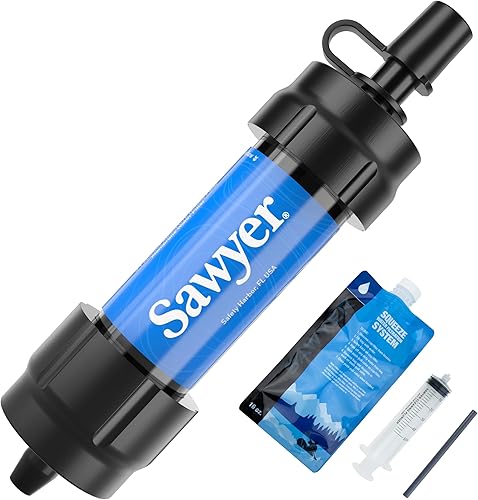
Sawyer Products SP128 Mini
The Sawyer Mini is legendary in hiking circles for a reason. It weighs almost nothing and works. For well water, its role is as a personal emergency filter or for filtering water on the go from a questionable source. You can drink directly from a stream or use the included syringe to push water through. At this price, every household should have a couple tucked away in a emergency kit.
- Absurdly lightweight (2 oz) and compact
- Individually tested three times for quality assurance
- Versatile: drink directly, use inline, or with the included straw
- Very slow flow rate if not using the syringe
- Tiny capacity makes it unsuitable for anything beyond personal use

ALTHY PRE-AUTO2 Automatic Flushing Pre-Filter
This is an interesting budget option for whole-house sediment filtration. The automatic flushing feature is a real perk—it cleans the spin-down filter screen on a timer, reducing manual maintenance. At around $120, it’s a fraction of the cost of name-brand auto-flushing units. However, it’s a pre-filter only. You’ll still need carbon and other stages downstream. For a DIYer on a tight budget, it’s worth considering for that first sediment stage.
- Automatic backflushing saves manual cleaning
- Clear housing lets you see sediment buildup
- Very affordable entry point for whole-house filtration
- 100-micron rating is coarse; only catches large particles
- Long-term reliability and seal quality are unknowns
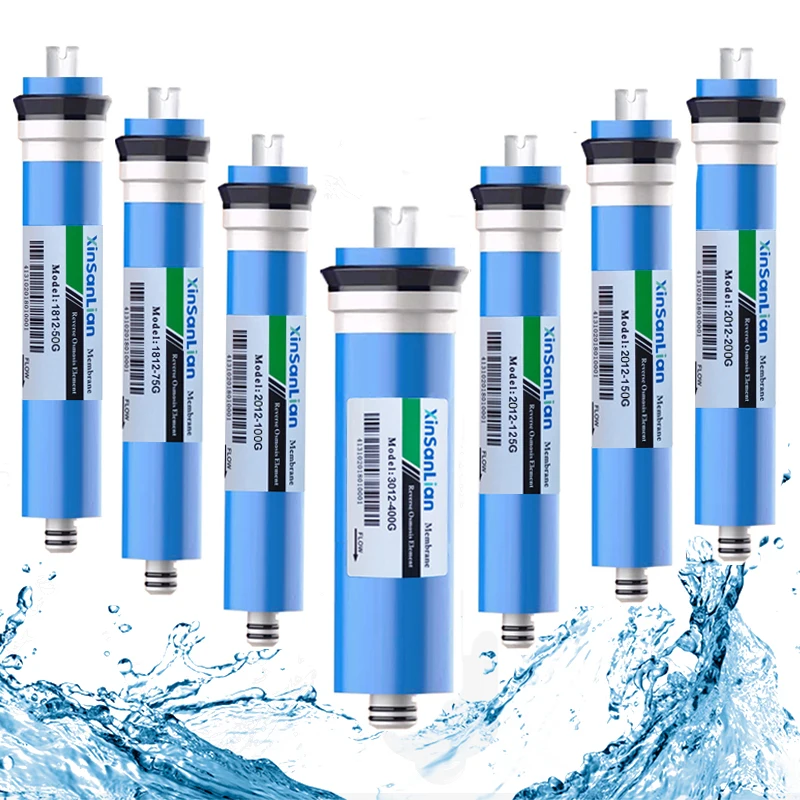
Generic RO Membrane (75/100/150/200 GPD)
If you have an existing under-sink RO system and need a replacement membrane, this is a dirt-cheap option. At under $10, it’s worth trying. Performance can be hit or miss with generics—sometimes they match name-brand output, sometimes they fall short. We’d use it in a pinch but wouldn’t build a new system around it. For a critical well water application, we still lean toward membranes from established brands with proper NSF certification.
- Incredibly low cost for a replacement membrane
- Available in multiple flow rates (GPD)
- Perfect for experimenting or temporary fixes
- Quality control and actual rejection rates are unpredictable
- No third-party certification for performance claims
Frequently Asked Questions
- How often should I replace the filters in my well water system?
- It depends entirely on the filter type and your water quality. Sediment filters: every 3-6 months. Carbon filters: every 6-12 months. RO membranes: every 2-5 years. UV bulbs: annually. Always follow the manufacturer’s schedule and monitor your water pressure and taste as real-world indicators.
- Can I just boil my well water to make it safe?
- Boiling kills bacteria, viruses, and protozoa, making it excellent for microbiological safety. However, it does nothing to remove sediment, heavy metals, chemicals, or nitrates. It also concentrates any dissolved solids. Boiling is a great emergency backup, not a permanent purification solution.
- What’s the most common contaminant in well water?
- Based on widespread testing, bacteria (total coliforms and E. coli) is the most frequent health-related issue. For aesthetic problems, iron and hardness minerals are incredibly common, causing staining, scale, and taste issues. Your local geology dictates your specific risks.
- Is a water softener the same as a purifier?
- No. A softener specifically removes hardness minerals (calcium and magnesium) through ion exchange, replacing them with sodium. It does not remove bacteria, sediment, or chemicals. Many homes need both a softener (for scale) and a separate purifier (for safety and taste).
- Do I need a UV light for my well?
- You need UV if your water test shows (or you suspect) bacterial contamination. UV light inactivates 99.99% of bacteria, viruses, and protozoa without chemicals. It’s the most reliable final barrier for microbiological safety. It’s often paired with a pre-filter to ensure clarity for the UV light to work.
- How much does a whole-house well water system cost?
- A basic system with sediment and carbon filters might cost $500-$800 for equipment. Adding a UV purifier brings it to $1,000-$1,500. A full treatment train including an iron filter or water softener can reach $2,500-$4,000. Professional installation adds $300-$1,000. Always get multiple quotes.
Final Thoughts
Choosing among water purification systems for wells isn’t about buying the most expensive gadget. It’s about targeted defense. Start with that water test—no exceptions. Then build your system layer by layer: sediment, carbon, and a final purifier matched to your specific contaminants. The Sawyer products are unbeatable for portable and emergency use, but for daily home life, invest in a proper installed system.
Your water is your lifeline. Don’t leave its quality to chance. A well-designed purification system protects your health, your home, and gives you one less thing to worry about. It’s worth doing right.
