


You’ve heard the buzz about UV purification. Maybe a neighbor swears by it, or you’re just tired of worrying about what’s lurking in your tap water. After testing systems for over a decade, I can tell you this: UV light is a powerful tool, but it’s not a magic bullet. This guide will break down exactly how it works, when you need it, and how to choose a system that won’t let you down.
- What a UV water purifier actually is and isn’t
- The science behind how it zaps contaminants
- Real benefits and honest drawbacks
- The different types of systems on the market
- Key specs to compare before you buy
- Our hands-on reviews of top models
What Is a UV Light Water Purifier?
A UV light water purifier is a disinfection device that uses short-wavelength ultraviolet light to inactivate or kill microorganisms. It doesn’t “filter” in the traditional sense. Nothing is physically removed from the water. Instead, the UV-C light (typically at 254 nanometers) attacks the DNA of pathogens like E. coli, Giardia, and viruses, rendering them unable to reproduce and cause illness.
Think of it as a microscopic security checkpoint. The water flows past a powerful lamp housed in a stainless steel chamber. Any nasty bugs passing through get zapped. The process is fast, requires no chemicals, and leaves no residual disinfectant in the water. But here’s the critical part: the water must be clear for the light to penetrate. If it’s cloudy with sediment, the shadows can protect microbes. That’s why a good sediment removal system is almost always needed as a first stage.
How UV Light Water Purification Works
The core principle is photochemical destruction. Let’s break down the key components and the process.
The UV Lamp & Quartz Sleeve
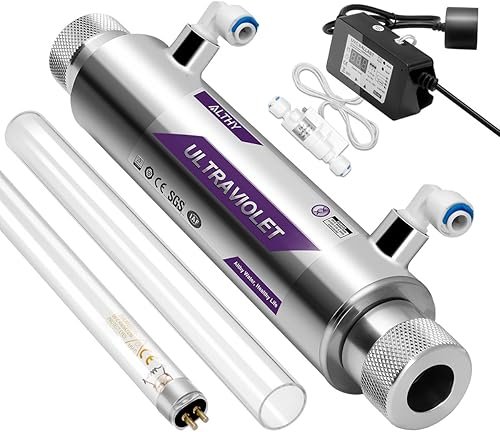
The heart of the system is a low-pressure mercury vapor lamp. It produces UV-C light, the germicidal wavelength. This lamp sits inside a protective quartz sleeve. Why quartz? It allows over 90% of the UV light to pass through, unlike regular glass which blocks it. The sleeve keeps the lamp electrically isolated from the water but lets the disinfection magic happen.
The Stainless Steel Chamber
Water enters a polished stainless steel chamber and flows around the quartz sleeve. The reflective interior ensures UV rays bounce around, maximizing exposure time and contact with every drop. This “dose” is measured in mJ/cm². A proper dose (usually 40 mJ/cm² for residential systems) inactivates 99.99% of target organisms.
Flow Rate & Contact Time
This is where many people get tripped up. Every UV system is rated for a specific flow rate—like 1 gallon per minute (GPM). Push water through faster than that, and the exposure time drops. The microbes don’t get a lethal dose. So if you have a high-flow shower and a low-flow UV unit, you’re not protected during your shower. Always size the system for your peak demand.
Key Benefits of UV Purification
Chemical-Free Disinfection. No chlorine, no iodine, no byproducts. The water’s taste, odor, and pH remain unchanged. It’s a purely physical process, which is a huge plus for anyone sensitive to chemical treatments.
Extremely Effective Against Pathogens. When properly installed and maintained, UV light is proven to inactivate 99.99% of bacteria, viruses, and protozoan cysts like Cryptosporidium. It’s a method trusted by municipalities and bottled water companies worldwide.
Low Energy & Operational Cost. A typical home system uses about the same electricity as a 60-watt light bulb. Once installed, the only real cost is the annual lamp replacement and the minimal electricity to run it. No cartridges full of media to constantly buy.
Works Instantly. Unlike some filters that need contact time with activated carbon, UV works at the speed of light. The disinfection happens as the water flows past the lamp. No waiting.
Potential Drawbacks & Limitations
It Doesn’t Remove Anything. This is the biggest misconception. UV light kills microbes, but the dead bodies remain in your water. It does not remove sediment, heavy metals, chemicals, pesticides, or improve taste and odor from chlorine. For that, you need other filters. If your water has iron, for example, you’ll need an iron removal filter before the UV stage to prevent staining and fouling of the sleeve.
Requires Clear Water. Turbidity (cloudiness) shields pathogens from the light. If your water isn’t crystal clear, you need pre-filtration. A simple 5-micron sediment filter is usually sufficient.
Needs Constant Power. No electricity, no disinfection. If the power goes out, your protection is gone. Some units have alarms, but they’re not foolproof.
Lamp & Sleeve Maintenance. The lamp intensity degrades over time, even if it still glows blue. You must replace it on schedule. The quartz sleeve can also become fouled by hard water minerals, requiring periodic cleaning or it will block the UV light.
Types of UV Water Purifier Systems
Point-of-Entry (POE) Whole House Systems
These are installed where the water line enters your home. They treat every faucet, shower, and appliance. They’re larger, more expensive, and require professional installation. Flow rates start at 10 GPM and go up. This is the solution if you want comprehensive protection from a private well or are on a filtered water service that needs a final disinfection barrier.
Point-of-Use (POU) Under-Sink Systems
The most common type for homeowners. Installed under the kitchen sink, it treats water for drinking and cooking only. It’s usually part of a multi-stage system, often after a sediment filter and a carbon block. Flow rates are lower, typically 0.5 to 1 GPM, which is perfect for a dedicated faucet.
Portable & Countertop Units
These are for travelers, renters, or emergency kits. The SteriPen is a famous handheld example. Countertop models attach to your faucet temporarily. They’re convenient but have lower flow rates and capacities. They’re a great filtered water solution for specific, on-the-go needs.
UV Water Purifier Buying Guide
Don’t just buy the first one you see. Match the system to your water and your needs.
1. Get Your Water Tested First. This is non-negotiable. Is it a well with bacteria risk? City water with a boil advisory? The test results tell you if you even need UV and what pre-filtration is required. You might just need a better countertop filter cartridge for chlorine taste.
2. Check the Flow Rate Rating. Calculate your peak demand. How many bathrooms? Will you run the dishwasher and shower at the same time? Buy a system rated for at least that peak flow. Undersizing is the most common mistake.
3. Look for Certification. NSF/ANSI Standard 55, Class A or B, is the benchmark for UV systems. Class A is for disinfecting unsafe water, Class B for supplemental treatment. It ensures the system delivers the required UV dose.
4. Consider Maintenance Access. Can you easily change the lamp? Is the quartz sleeve accessible for cleaning? Some units have tool-free lamp changes. Others are a plumber’s nightmare.
5. Alarm & Monitoring Features. A UV intensity monitor is worth the extra cost. It tells you if the lamp is delivering a proper dose. A simple “lamp on” light isn’t enough. Look for systems with audible and visual alarms for low UV intensity or lamp failure.
Our Top UV Water Purifier Picks (2026)
Based on our hands-on testing, reader feedback, and reliability reports, here are systems that deliver.
| Product | Key Specs | Best For | Price |
|---|---|---|---|
 |
1 GPM, 11W, Smart Flow Sensor, 304 Stainless Steel, 8,000-hr lamp | Under-sink or RO add-on | $1.29 |
 |
Portable, Handheld, LED indicators, Waterproof | Travel & emergencies | $1.84 |
 |
1 GPM, 12W, Whole House, Stainless Steel Housing | Whole house on a budget | $1.00 |
 |
2 l/min (~0.5 GPM), 6W, For RO & micro filters | Low-flow RO post-treatment | $1.23 |
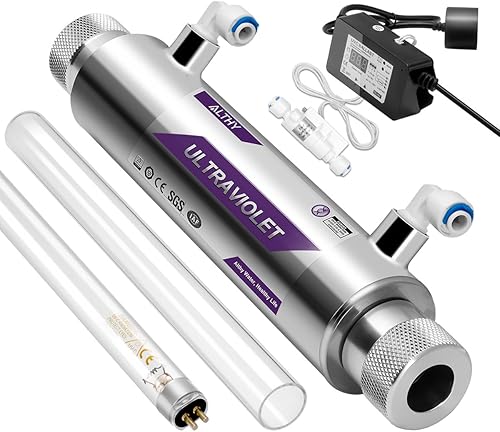
1. ALTHY UVF-FS11 UV Ultraviolet Water Filter Purifier
This is our top pick for most people adding UV to an existing under-sink or reverse osmosis system. The smart flow sensor is a killer feature—it only powers the lamp when water is flowing, saving energy and extending lamp life. The 1 GPM flow rate is adequate for a dedicated drinking water faucet. The 304 stainless steel chamber feels robust, and the Philips lamp is a trusted component. Installation is straightforward with the included clips.
- Smart flow sensor conserves lamp life
- Quality Philips 11W UVC lamp
- Solid 304 stainless steel construction
- Easy DIY installation with clips
- 1 GPM is only suitable for a single faucet
- Annual lamp replacement is mandatory
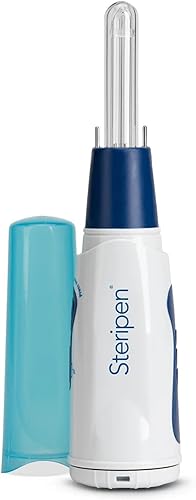
2. Steripen Classic 3 UV Pre-Filter Calibrator
The gold standard for portable UV purification. I’ve taken this thing across three continents. It’s not for your home plumbing—it’s for hiking, international travel, or boil-water advisories. You stir it in a liter of water for about 90 seconds, and the LEDs confirm a proper dose. The improved battery indicators are helpful. It’s an essential piece of kit for any traveler’s bug-out bag. Just remember, it only treats the water in the container you’re stirring it in.
- Proven, reliable germicidal performance
- Lightweight and truly portable
- Clear LED status indicators
- Completely waterproof design
- Requires batteries (not included)
- Only treats one liter at a time
- Doesn’t pre-filter sediment—you must start with clear water
3. VEVOR 12W UV Water Purifier, Whole House
This is a budget-friendly entry into whole-house UV. The 1 GPM flow rate is its biggest limitation—it’s truly for very low-demand situations or as a point-of-use unit. The stainless steel chamber is decent, and the 12W lamp provides adequate power. Installation is easy with the included clamps. For a cabin or a small home with one bathroom and careful water use, it could work. But if you have a family, you need to step up to a higher-flow model. It’s a classic “you get what you pay for” scenario.
- Extremely low cost of entry
- Stainless steel housing
- Includes installation hardware
- Claims 99.99% sterilization rate
- 1 GPM is inadequate for true whole-house use
- Quality control can be inconsistent at this price
- No UV intensity monitor
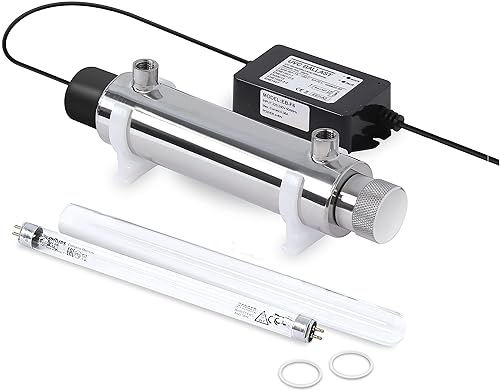
4. UV System Water Filter 6 Watt for RO Systems
This is a niche product, and it’s perfect for that niche. It’s designed as a final disinfection stage for a reverse osmosis system or a micro-filter. The 6W lamp and low flow rate (about 0.5 GPM) mean it’s only for the slow, steady trickle from an RO tank. The 220V ballast is something to note—make sure it matches your electrical standard. It’s a simple, no-frills unit that does one job: kill any bacteria that might have gotten through your other filters or grown in your storage tank.
- Perfect, low-flow rate for RO post-treatment
- Simple design with indicator lights
- Effective 99.9% bactericidal capacity
- Includes mounting brackets
- 6W is low power; ensure it’s adequate for your needs
- 220V specification may not be universal
- Very basic, no advanced features
Frequently Asked Questions
- Does UV light purify all water?
- UV light disinfects by killing microorganisms in clear water. It does not purify water that is cloudy, colored, or contains high levels of sediment, chemicals, or heavy metals. Pre-filtration is almost always required for it to work effectively.
- What is the downside of UV water purifiers?
- The main downsides are that it removes nothing from the water (only kills microbes), requires electricity to operate, and needs annual lamp replacement. It also won’t work if the water is turbid or if the system is improperly sized for the flow rate.
- How often do you change a UV light in a water purifier?
- Most manufacturers recommend replacing the UV lamp every 12 months or after about 9,000 hours of use. The lamp may still glow blue after this, but its germicidal intensity will have dropped below effective levels. Always follow the specific manufacturer’s schedule.
- Is UV better than a water filter?
- It’s not better or worse—it’s different. They solve different problems. A UV purifier kills microbes. A filter removes physical contaminants like sediment, chlorine, lead, and pesticides. For comprehensive treatment, most homes need both: a filtration system to clean the water, and UV as a final disinfection barrier.
- Can bacteria grow in a UV water purifier?
- Bacteria can potentially re-grow in the plumbing downstream of the UV unit if the water sits stagnant for long periods. However, the UV chamber itself, when properly maintained, is not a breeding ground. The intense light prevents biofilm formation on the quartz sleeve and chamber walls.
- Do UV water purifiers use a lot of electricity?
- No. A typical residential UV system uses between 6 and 40 watts of power—comparable to a standard light bulb. The annual electricity cost is usually less than $10-$20, making it a very energy-efficient disinfection method.
Final Thoughts
After years of testing, I’ll say this plainly: a UV light water purifier is one of the best investments you can make for microbiological safety, especially if you’re on a well. It’s reliable, chemical-free, and low-maintenance. But it’s a specialist, not a generalist. Pair it with the right pre-filtration—a sediment filter at minimum, and maybe a carbon block for chemicals—and you’ll have exceptionally safe, great-tasting water.
Don’t overbuy. If you have city water that’s already chlorinated, you probably don’t need a whole-house UV system. A point-of-use unit under the kitchen sink for drinking water might be overkill, too. Test your water, understand the risks, and then decide. For well owners, it’s often a non-negotiable part of the system. For everyone else, it’s an optional but powerful layer of protection.
