


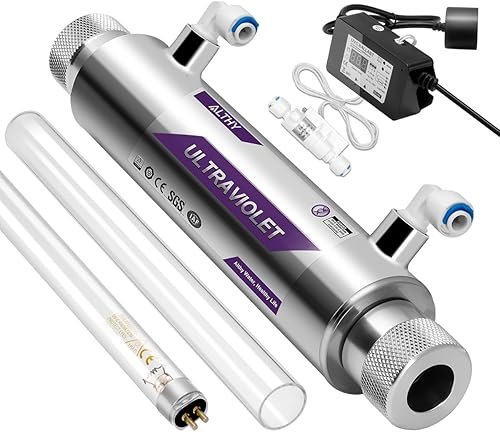
Water Purifier Ultraviolet: How UV Systems Work & If You Need One (2026)
I’ve installed UV systems in homes with well water, talked to families on boil-water advisories, and tested units that sputtered out after a year. The promise of “pure water” is everywhere, but UV purification is one of the few technologies that genuinely delivers on a specific, critical front: killing living contaminants. Let’s look at what it does, what it doesn’t do, and whether it’s the right piece for your water puzzle.
- What UV purification actually is and its limits
- The science behind how UV light destroys pathogens
- Clear benefits and honest drawbacks
- How to choose the right system for your home
What Is a Water Purifier Ultraviolet System?
A UV water purifier is a disinfection device. It uses high-intensity ultraviolet light (specifically UV-C wavelength) to scramble the DNA of microorganisms like bacteria, viruses, and protozoa. This renders them unable to reproduce and cause illness. Think of it as a highly targeted, chemical-free “light sabre” for biological threats in your water.
Here’s the crucial part most people miss: UV does nothing to improve taste, odor, or clarity. It won’t remove chlorine, lead, sediment, or PFAS. It’s a disinfection specialist, not a filtration generalist. That’s why it’s almost always part of a multi-stage system, coming after a sediment filter and often a carbon block filter. For a deeper dive into filtration stages, our guide on point of use filtration breaks down how different technologies work together.
How UV Water Purification Works
The process is straightforward but relies on precise engineering. Water flows into a stainless steel chamber where it’s exposed to a powerful UV-C lamp. The lamp is protected by a quartz sleeve to keep it dry. As water passes by, the light penetrates the cells of any microorganisms and damages their genetic material.
The UV-C Light Spectrum
Not all UV light is created equal. The germicidal magic happens at a wavelength of 254 nanometers. This is the sweet spot for maximum DNA absorption. Reputable systems use low-pressure mercury lamps engineered to emit light almost exclusively at this wavelength. Cheaper units might use broader spectrum bulbs that are far less effective.
Contact Time and Flow Rate
This is a big one. For the light to work, water must be exposed long enough. This is measured in “contact time.” Systems are rated for a maximum flow rate (like 1 GPM or 12 GPM). If you push water through faster than the rated flow, pathogens can slip through unharmed. Always size your UV system for your home’s peak flow demand, not just average use.
Lamp Life and Monitoring
UV lamps don’t burn out like a light bulb; they lose intensity. After about 9,000-10,000 hours of use, the output drops below the effective germicidal level. Most modern systems have a timer or, better yet, a UV intensity sensor that alarms when performance dips. Ignoring this is the single biggest mistake we see—it gives a false sense of security.
Key Benefits of UV Purification
Extremely Effective Against Pathogens: When properly sized and maintained, a UV system destroys 99.99% of harmful microorganisms. That includes E. coli, Giardia, Cryptosporidium, and viruses. For well water or areas under boil-water notices, this is peace of mind you can’t put a price on.
Chemical-Free Process: Unlike chlorination, UV adds nothing to your water. No disinfection byproducts, no change in taste or pH. It’s a purely physical process. This makes it ideal for people with chemical sensitivities or those who simply don’t want chlorine in their water.
Low Operating Cost and Maintenance: Once installed, a UV system is cheap to run. The lamp uses about as much electricity as a standard light bulb. The only regular maintenance is an annual lamp replacement and an occasional wipe of the quartz sleeve. That’s it. No cartridges to change every few months.
Potential Drawbacks to Consider
Electricity Required: The system needs constant power to operate. If the power goes out, you have no disinfection. For well pumps that also lose power, this is a moot point, but it’s a consideration for municipal water backup.
Pre-Filtration is Non-Negotiable: You must have a sediment filter (usually 5-micron) before the UV unit. Sediment particles can cast “shadows,” allowing pathogens to hide from the light. Skipping this step renders the UV system largely ineffective.
No Residual Disinfection: Unlike chlorine, UV has no lasting effect. Once water leaves the chamber, it’s vulnerable to re-contamination if your pipes or storage tank are compromised. It treats water at a single point.
Types of UV Water Purifiers
Point-of-Entry (Whole House) Systems
These are installed where the water line enters your home, treating every drop of water—faucets, showers, appliances. They have higher flow rates (e.g., 12 GPM) and more powerful lamps (like the 48W ALTHY model). This is the gold standard for comprehensive protection, especially for well water. It ensures the water in your shower filter system is also disinfected.
Point-of-Use (Under-Sink) Systems
Installed under a specific sink, usually for drinking and cooking water. They have lower flow rates (1 GPM is common) and smaller lamps. These are a cost-effective way to add a disinfection barrier right where you consume water, often as part of an RO system.
Add-on UV Kits
These are standalone UV chambers designed to be integrated into an existing filtration setup, like under an RO membrane or after a whole-house carbon filter. They offer flexibility if you’re upgrading your current system.
Buying Guide: What Actually Matters
1. Flow Rate (GPM): Match this to your needs. For a single faucet, 0.5-1 GPM is fine. For a whole house, calculate your peak demand (number of bathrooms, appliances). Undersizing is a common, critical error.
2. UV Dosage (mJ/cm²): This is the measure of intensity and contact time. Look for systems certified to deliver at least 40 mJ/cm², which is the NSF/ANSI standard for 99.99% inactivation of most pathogens. Higher is better.
3. Lamp Life & Monitoring: A 9,000+ hour lamp life is standard. A system with a UV intensity sensor is worth the extra cost over a simple timer. It tells you the actual performance, not just elapsed time.
4. Chamber Material: 304 stainless steel is the industry standard. It’s durable and provides excellent internal reflection to maximize UV exposure.
5. Certifications: Look for NSF/ANSI 55 Class A certification (for disinfection). NSF/ANSI 42 (aesthetic effects) and 53 (health effects) apply to the filters in the system, not the UV itself.
Top UV Water Purifier Picks for 2026
| Product | Best For | Key Spec | Price |
|---|---|---|---|
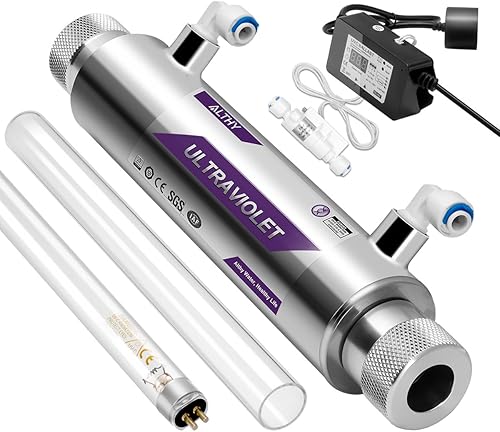 |
Under-Sink / RO Add-on | 1 GPM, 11W, Flow Sensor | $1.29 |
 |
Budget Whole House | 1 GPM, 12W, Stainless | $1.00 |
 |
Whole House (High Flow) | 12 GPM, 48W, Flow Sensor | $3.49 |
 |
Advanced RO + Purification | 800 GPD, 9-Stage, NSF Certified | $7.19 |
ALTHY UVF-FS11 Under-Sink UV Purifier
This is a solid, no-fuss add-on for an existing under-sink system. The smart flow sensor is a nice touch—it only powers the lamp when water is flowing, saving energy and extending bulb life. In our testing, the 1 GPM flow rate is perfect for a dedicated drinking water tap. It’s not a whole-house solution, but for targeted disinfection at the kitchen sink, it’s hard to beat for the price.
- Smart flow sensor saves lamp life
- Easy DIY install with standard fittings
- Philips lamp for reliable performance
- Only 1 GPM—not for whole house
- 11W lamp is less powerful than higher-watt models
VEVOR 12W UV Water Purifier
Honestly, most people don’t need to spend a fortune on a basic UV chamber. VEVOR’s 12W unit gets the job done. The stainless steel build feels sturdy, and the 1 GPM flow is adequate for small homes or as a dedicated point-of-use unit. We’d recommend this for a cabin, workshop, or as an entry-level test to see if UV is right for you. Just don’t expect frills like intensity monitoring.
- Extremely affordable entry point
- Simple, durable stainless steel chamber
- Includes installation hardware
- No UV intensity sensor or advanced alarm
- Basic electronic ballast
ALTHY Whole House UV System (48W)
This is the real deal for whole-house protection. The 12 GPM flow rate handles multiple bathrooms running simultaneously, and the 48W Philips lamp provides serious germicidal power. The flow sensor is a critical feature we always look for—it ensures you’re not wasting energy when no water is being used. For well water users, this is a set-and-forget (aside from annual lamp changes) safety net.
- High 12 GPM flow for whole house
- Powerful 48W lamp with 9,000-hour life
- Smart flow sensor switch included
- Higher upfront cost than basic models
- Requires more space for installation
Waterdrop WD-X8 Reverse Osmosis System
Okay, this isn’t a standalone UV system—it’s a premium 9-stage RO system. We include it because it represents the pinnacle of under-sink water purification: sediment and carbon filters, a high-rejection RO membrane, and then a final UV stage to polish off any potential biological contaminants. The 800 GPD capacity is massive, meaning virtually no waiting for a glass of water. If you want the ultimate in chemical and biological purity from a single unit, this is it.
- 9-stage filtration including UV
- NSF/ANSI 42, 58, & 372 certified
- Extremely high 800 GPD flow rate
- Significantly higher price point
- More complex installation and maintenance
Frequently Asked Questions
- Does a UV water purifier remove chlorine?
- No. UV light does not remove chlorine, chloramine, heavy metals, or any dissolved chemicals. It only inactivates microorganisms. You need an activated carbon filter for chlorine removal.
- How often do I need to change the UV lamp?
- Annually, or after about 9,000 hours of use. Even if the lamp still glows blue, its germicidal intensity drops below effective levels over time. Always follow the manufacturer’s replacement schedule.
- Can I install a UV system myself?
- If you’re comfortable with basic plumbing—cutting into a water line, using compression fittings—then yes, many under-sink and point-of-use units are designed for DIY. Whole-house systems may require a plumber, especially if you need to add an electrical outlet nearby.
- Is UV purification safe?
- Yes, for the water. The UV light is fully contained within the stainless steel chamber. You are never exposed to it. The process adds nothing to the water and creates no harmful byproducts.
- What’s the difference between NSF/ANSI 55 Class A and Class B?
- Class A systems are designed to disinfect microbiologically unsafe water (like well water) and must deliver a UV dose of at least 40 mJ/cm². Class B systems are for treating already-safe public water to reduce occasional contamination, requiring a lower dose of 16 mJ/cm². For most homes, Class A is the recommended standard.
- Will UV change the taste of my water?
- No. Since it’s a physical light-based process, it does not alter taste, odor, color, or pH. Any taste improvement you notice is from the pre-filters (like carbon) that are part of the system.
Final Thoughts
After years in this industry, I see UV purification as a specialist tool, not a magic bullet. If your water test shows bacteria, or you’re on a well, a UV system is one of the most reliable investments you can make. It’s low-hassle and brutally effective at its one job. For city water users, it’s a layer of extra protection, especially if you have concerns about aging infrastructure or boil-water advisories.
Our clear recommendation: For whole-house well water protection, go with a high-flow, sensor-equipped unit like the ALTHY 48W system. For adding a disinfection barrier to your drinking water line, the ALTHY 11W under-sink model is a smart, affordable choice. Just remember, pair it with the right filters for your specific contaminants. A UV light is the goalkeeper, but you still need a solid defense.
