


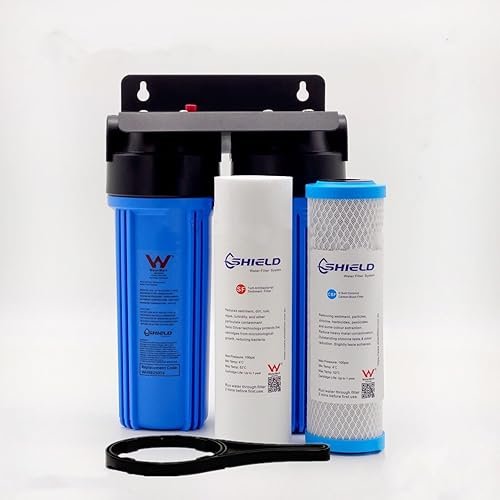
You turn on the shower and get a whiff of chlorine. You fill the kettle and see white scale building up. You worry about what’s in the water your family drinks, cooks with, and bathes in. That’s the itch a full house water purification system is designed to scratch. But they’re not all created equal. After testing dozens of setups and talking to countless plumbers, I’ve learned that picking the wrong system is a costly, frustrating mistake. This guide cuts through the noise. We’ll look at how these systems work, the real benefits (and the drawbacks sellers won’t mention), and which filters actually deliver on their promises in 2026.
What Is a Full House Water Purification System?
Think of it as a gatekeeper for your entire home’s water supply. Installed where the main water line enters your house—usually in the garage, basement, or a utility closet—it treats every single drop before it reaches a faucet, showerhead, or appliance. This is the core difference from point of use treatment, which only cleans water at one specific outlet, like an under-sink filter for your kitchen tap.
The goal isn’t usually to make water sterile for drinking (though it can help). For most homeowners, it’s about improving water quality for bathing, laundry, and protecting plumbing. It tackles the broad, whole-home problems: chlorine that dries out skin and hair, sediment that clogs valves and stains fixtures, and rust that turns water brown. It’s your home’s first line of defense.
How a Whole House System Works
The principle is straightforward, but the execution varies. Water from the municipal supply or your well flows through a pre-plumbed filter housing. Inside, one or more cartridges physically block or chemically absorb contaminants. The filtered water then continues to the rest of your home’s pipes.
The Basic Filtration Stages
Most systems use a multi-stage approach. A typical setup might have a sediment filter first—this is your workhorse that catches sand, silt, and rust particles down to a specific micron rating (5 microns is common). After that, a carbon filter tackles chlorine, volatile organic compounds (VOCs), and bad tastes. Some advanced systems add a third stage, like a finer 1-micron filter for extra sediment or a specialized media for specific contaminants.
It’s Not a One-Size-Fits-All Solution
Here’s what surprises people: a standard carbon and sediment system won’t remove dissolved minerals (that’s what causes hard water scale), fluoride, or heavy metals like lead. For those, you need specialized media like KDF, activated alumina, or a dedicated whole house fluoride filter. Knowing your water report is non-negotiable before you buy.
Key Benefits of Treating All Your Water
Cleaner water for showering and bathing. This is the benefit people notice first. Removing chlorine means less skin dryness and irritation. Your hair feels softer. The water just feels better.
Protection for appliances and plumbing. Sediment is an appliance killer. It gunk’s up water heaters, washing machine valves, and dishwasher pumps. A good pre-filter extends their lifespan significantly. We’ve seen water heaters last years longer in homes with proper filtration.
Reduced scale and spotting. While a standard filter won’t soften water, removing sediment and some dissolved solids can reduce the white scale buildup on shower doors and faucets. For true scale prevention, you’d pair it with a water softener.
Peace of mind from every tap. You’re not just protecting the kitchen sink. The water your kids use to brush their teeth, the water that fills your pet’s bowl, the water in your coffee—it’s all filtered. That consistency matters.
Potential Drawbacks & Honest Limitations
Upfront cost and installation. You’re looking at $100 to $800+ for the unit itself, plus professional installation if you’re not handy with plumbing. This isn’t a simple under-sink swap.
Ongoing maintenance. You have to change those filters. Sediment filters might need swapping every 6-12 months, carbon filters every 12 months. Ignore it, and you’ll have worse water pressure than before you started. Always have a filter housing wrench on hand—it makes the job much easier.
Space requirements. These systems are big, especially the 20-inch “Big Blue” models. You need a dry, accessible spot with enough clearance above and below to change cartridges.
Types of Whole House Filtration
Standard Sediment & Carbon Systems
This is the most common and affordable type. It uses one or two filter housings in sequence. Perfect for municipal water where the main concerns are chlorine, taste, odor, and sediment. The twin system we review below is a classic example.
Large-Format “Big Blue” Systems
These use the larger 20-inch x 4.5-inch cartridges. The bigger filter means more surface area, which translates to higher flow rates and longer filter life. They’re the go-to for larger homes or families with high water usage. The triple-stage models offer excellent filtration depth.
Specialized Contaminant Removal
Need to tackle chloramines, heavy metals, or specific chemicals? You’ll need a system with specialized media like catalytic carbon, KDF-55, or ion-exchange resin. These are more expensive but necessary for certain water reports. A UV filter system is often added as a final stage for microbiological safety on well water.
Buying Guide: What Actually Matters
1. Get Your Water Tested. This is step one. You can’t fix a problem you haven’t identified. A basic test will tell you your sediment level, chlorine content, and hardness.
2. Match the Flow Rate to Your Home. Count your bathrooms. A 1-2 bathroom home is fine with a 50 L/min system. A 3-4 bathroom home needs 75 L/min or more. Undersizing is the most common regret we hear about.
3. Check the Micron Rating. A 5-micron sediment filter is standard. If you have very fine silt or sand, you might need a 1-micron filter. But remember, the finer the filter, the faster it clogs and the more often you’ll change it.
4. Look for Certifications. Look for independent verification. NSF/ANSI Standard 42 covers aesthetic effects like chlorine taste and odor. Standard 53 covers health effects like lead and cyst reduction. WaterMark certification is a key indicator of quality and compliance.
5. Consider Filter Life & Cost. Don’t just look at the unit price. Calculate the annual cost of replacement filters. A cheap system with expensive filters is no bargain.
Our Top Picks for 2026
| Product | Key Specs | Our Take | Price | Links |
|---|---|---|---|---|
| Twin 10″ Whole House Filter | 2-stage, 99.99% Chlorine Removal, Brass Ports | A solid, affordable starter system. Perfect for small homes or apartments on city water. | $99 |
Amazon eBay |
| 20″ Triple Stage Big Blue | 3-stage, 75L/min Flow, WaterMark Certified | The workhorse. High flow and excellent filtration depth for medium to large households. | $6.75 |
Amazon eBay |
| MyWaterClub 3-Stage System | 3-stage, Includes 2 Extra Filter Sets, 3/4″ Port | Great value with the included extra filters. A smart buy if you want to stock up on consumables. | $3.14 |
Amazon eBay |
| Shield 3-Stage w/ Stainless Cover | 3-stage, 75L/min, UV-Resistant Stainless Cover | Premium build. The stainless cover is a huge plus for outdoor or garage installations. | $9.75 |
Amazon eBay |
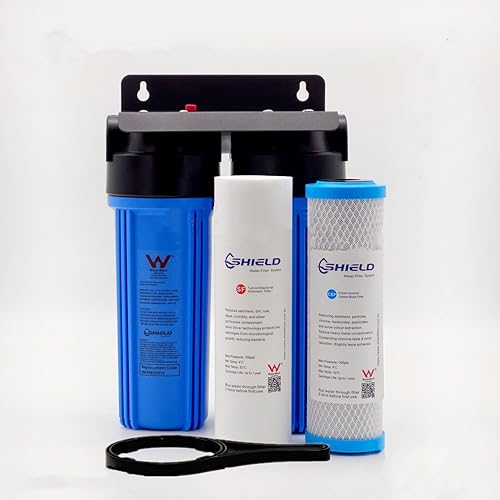
1. Twin 10″ Whole House Water Filter System
This is the no-fuss, entry-level option we recommend for renters or small homes. The twin design lets you run a sediment filter and a carbon filter in series, which is exactly the basic setup most people need. We like the brass ports—they won’t crack like plastic can under pressure. It’s not fancy, but it’s effective for removing chlorine and coarse sediment. The 99.99% chlorine removal claim is solid for a carbon block of this size.
- Very affordable entry point
- Brass ports are durable
- Simple, proven 2-stage design
- Lower flow rate than 20″ systems
- 10″ cartridges have shorter lifespan
- Basic filtration only

2. 20″ Triple Stage Big Blue System
This is our top overall pick for a reason. The triple-stage filtration is genuinely thorough: a 5-micron pleated filter for big stuff, a 1-micron antibacterial filter for finer sediment, and a 0.5-micron carbon block for chlorine and VOCs. That 0.5-micron rating on the carbon is impressive—it catches finer particles than most. The 75 L/min flow rate is honest and sufficient for a family of four with two bathrooms. The WaterMark certification gives us confidence in the build quality.
- Excellent 3-stage filtration depth
- High 75L/min flow rate
- WaterMark certified for quality
- Heavy-duty 1″ brass ports
- Larger physical footprint
- Higher upfront cost than 2-stage
- Three filters to replace

3. MyWaterClub 3-Stage System with Extra Filters
The value proposition here is smart. You get the 3-stage system (sediment, GAC, carbon block) plus two full sets of replacement filters. That’s potentially two years of maintenance covered. The filtration specs are standard—5 micron sediment, GAC for chlorine, and a coconut carbon block for polishing. It’s a great budget-conscious choice if you don’t need the ultra-high flow rate of the 20″ models. Just note the 3/4″ port, which is slightly smaller than the 1″ ports on the others.
- Incredible value with 2 extra filter sets
- Complete 3-stage filtration
- Low initial cost
- 3/4″ ports may limit max flow
- Less robust housing than premium models
- Unknown brand longevity

4. Shield 3-Stage with Stainless Steel Cover
This is the system for tough installations. The UV-resistant stainless steel cover isn’t just for looks—it protects the filter housings from sun degradation, corrosion, and physical damage if installed in a garage or on a shaded side of the house. The filtration is on par with the other top triple-stage models: sediment, carbon, and a fine carbon block. We see this as the premium, set-and-forget option for homeowners who want durability above all else.
- Exceptional durability with stainless cover
- High 75L/min flow rate
- Excellent for outdoor/protected installs
- Highest price point in our list
- Stainless cover adds weight
- Overkill for simple indoor installs
Full House Filter FAQ
- Will a whole house filter soften my water?
- No. Standard sediment and carbon filters do not remove dissolved calcium and magnesium, which cause hard water. You need a water softener (which uses salt or potassium) or a salt-free conditioner for that. They are different systems solving different problems.
- How often do I really need to change the filters?
- It depends on your water quality and usage. For sediment filters, check them every 3 months initially. Change when they look dirty or your water pressure drops. Carbon filters should be replaced every 6-12 months without exception, as the carbon becomes saturated and stops working.
- Can I install this myself?
- If you’re comfortable with basic plumbing—cutting into a main water line, using pipe thread sealant, and mounting a heavy unit—then yes. But if you make a mistake, you risk a major leak. For most people, hiring a plumber for a 2-3 hour job is worth the peace of mind.
- Do I still need a drinking water filter?
- Probably. A whole house system is a first stage. For the best tasting, highest quality water for drinking and cooking, we recommend a separate safe drinking water system at the kitchen sink, like a reverse osmosis unit or a high-quality carbon block filter.
- What’s the difference between a 10″ and 20″ system?
- Size and capacity. 20″ “Big Blue” housings hold larger cartridges with more surface area. This means higher flow rates, less pressure drop, and longer times between filter changes. They cost more upfront but are better for whole-house applications.
- Will it remove bacteria or viruses?
- Not unless it has a specific sub-micron rating (like 0.2 micron absolute) or includes a UV sterilization stage. Standard 5-micron sediment filters and carbon blocks will not remove microbiological contaminants. For well water, always test for bacteria and consider a UV filter system as a final barrier.
Final Thoughts
Choosing a full house water purification system comes down to matching the solution to your specific water problem. Don’t overbuy. If you’re on city water and just hate the chlorine taste and feel, a reliable 2-stage or 3-stage sediment and carbon system will transform your water experience. The 20″ triple-stage models from brands like the ones we’ve highlighted offer the best balance of flow, filtration, and value for most families.
Our clear recommendation for 2026 is the 20″ Triple Stage Big Blue system. It has the flow rate, the filtration depth, and the certifications to back it up. Get your water tested, measure your space, and invest in a system that will protect your home and your family for years to come. It’s one of those upgrades you’ll wish you did sooner.
