


Residential Water Purification: Your No-Nonsense Guide for 2026
You turn on the tap. The water looks clear. But is it really safe? After testing dozens of systems and interviewing plumbers for years, I can tell you the answer is often “it depends.” This guide cuts through the marketing jargon. We’ll look at what actually works, what’s a waste of money, and how to pick the right setup for your home.
- What residential water purification really means
- The science behind how filters clean your water
- Honest pros, cons, and common pitfalls
- A breakdown of system types and our top picks
What Is Residential Water Purification?
It’s the process of treating water at the point it enters your home or at a specific tap to make it safer and better tasting. Think of it as a final, targeted cleanup before you drink, cook, or shower. Municipal treatment plants do a great job overall, but contaminants can still pick up in old pipes. Well water users face an entirely different set of challenges.
The goal isn’t always “pure” H2O—that’s a misleading term. It’s about reducing specific, harmful substances to acceptable levels. This could be chlorine for taste, lead from plumbing, or agricultural runoff. A proper system targets your water’s unique profile. For some households, a simple arsenic filter is the critical piece of the puzzle, especially in regions with natural deposits.
How Residential Water Purification Works
Systems use physical, chemical, or biological processes. Most combine a few for better results. Here’s the basic rundown.
Physical Filtration
This is a barrier method. Water is forced through a material with tiny pores. Sediment, rust, and some bacteria get trapped. The key number here is the micron rating. A 5-micron filter catches visible particles. A 0.2-micron filter can trap most bacteria. It’s simple but effective for pre-filtration.
Adsorption (Carbon Filters)
Activated carbon is a superstar. Its porous surface grabs onto chlorine, volatile organic compounds (VOCs), and bad tastes. It’s in everything from pitcher filters to whole-house systems. But it doesn’t remove everything—heavy metals or salts mostly pass through. For specialized tasks like disinfection without chemicals, a UV filter for water uses light to scramble the DNA of microbes.
Reverse Osmosis (RO)
This is the heavy lifter. Pressure pushes water through a super-fine membrane (0.0001 microns). It blocks dissolved salts, lead, fluoride, and PFAS. The downside? It wastes some water and removes beneficial minerals too. You’ll often see it paired with carbon filters in a multi-stage setup.
Key Benefits of Home Water Purification
Better Taste and Odor. This is the number one reason people buy in. Chlorine, sulfur, or metallic tastes vanish. Your coffee and tea will thank you.
Targeted Contaminant Removal. You can address specific worries. Lead from old pipes? Nitrates from nearby farms? A properly chosen filter handles it. This is where a good water filtration company earns its keep—they’ll test your water first.
Reduced Plastic Waste. A solid under-sink system means you can ditch bottled water for good. That’s money back in your pocket and less plastic in landfills.
Peace of Mind. Knowing your family is drinking cleaner water is valuable. Especially for households with infants, elderly members, or anyone with a compromised immune system.
Potential Drawbacks and Costs
Ongoing Expense. Filters aren’t a one-time buy. Annual replacement costs can range from $50 for a simple faucet filter to $200+ for a multi-stage RO system. Factor this into your budget.
Water Waste (RO Systems). Traditional reverse osmosis systems can send 3-4 gallons down the drain for every gallon of pure water made. Newer models are much better, but it’s still a consideration. If you’re only filtering a garden hose for car washing, a hose pipe water filter is a simpler, waste-free choice.
Complex Installation. Some under-sink or whole-house systems need professional plumbing. That’s an extra cost. Always check if your chosen model is DIY-friendly.
Types of Residential Water Purification Systems
Pitcher & Faucet-Mount Filters
The entry point. Cheap and easy. Great for renters or improving taste on a budget. But their filtration is limited, and flow rates are slow. You’re constantly refilling pitchers.
Under-Sink & Countertop Systems
The sweet spot for most homeowners. An under-sink unit connects to your cold water line and has its own dedicated faucet. It can house carbon blocks, RO membranes, or both. Countertop versions are non-invasive but take up space. For serious travelers, a compact portable water purifier is a lifesaver, but for home use, under-sink is the way to go.
Whole-House Systems
Installed at the main water line. Every tap, shower, and appliance gets filtered water. Ideal for removing sediment or chlorine that affects skin and hair. But they’re not designed to make water “drinkable” safe—pair one with a point-of-use system for the kitchen.
Gravity-Fed Filters
No plumbing needed. These systems use stacked chambers and filters. Popular for emergency preparedness. They can be incredibly effective, especially against bacteria and protozoa. Learn more about how a gravity water filter system works for off-grid scenarios.
Buying Guide: What Actually Matters
Forget the sales pitch. Focus on these criteria.
1. Get Your Water Tested. This is step one. Your municipal water report is a start, but a home test kit reveals what’s in *your* tap. Don’t guess.
2. Check for Real Certifications. Look for NSF/ANSI standards. Standard 42 is for aesthetic effects (taste, chlorine). Standard 53 is for health effects (lead, cysts). Standard 58 is for reverse osmosis systems. These aren’t marketing fluff—they’re independent verification.
3. Calculate Cost Per Gallon. Divide the system cost plus annual filters by the gallons it will treat. A $300 system that filters 5,000 gallons is cheaper long-term than a $100 system that only does 500.
4. Consider Flow Rate. Measured in Gallons Per Day (GPD) for RO systems. A 50 GPD unit is fine for a couple. A family of four needs 75-100 GPD to avoid waiting for the tank to refill.
Top Picks for 2026
| Product | Type | Best For | Price |
|---|---|---|---|
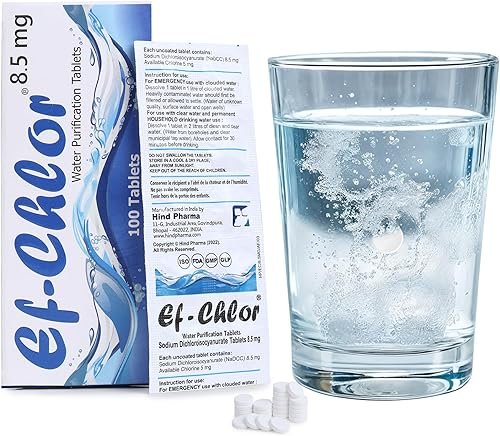
 Ef-Chlor Tablets |
Chemical (Tablet) | Emergency kits & camping | $14 |
 Potable Aqua PA Plus |
Chemical (Tablet) | Travel & disaster prep | $38 |
 Aquatabs |
Chemical (Tablet) | Budget-friendly backup | $12 |
 Waterdrop WD-X8 |
Under-Sink RO | Primary home drinking water | $719 |
 AliExpress Sand Filter |
Whole-House (Pool) | Large sediment removal | $292 |
Ef-Chlor Water Purification Tablets
These are a staple in our emergency kit. Each tiny tablet treats 1-2 liters using NaDCC, a stable chlorine compound. They’re not for daily use, but when the power’s out or you’re on a trail, they’re gold. The taste is mild compared to iodine tablets. Honestly, every household should have a pack.
- Extremely compact and lightweight
- Effective against bacteria and viruses
- Long shelf life
- Not for heavy sediment or chemicals
- Requires 30-minute wait time
- Not a permanent home solution
Potable Aqua with PA Plus
The two-step process here is smart. The first tablet purifies, the second (PA Plus) neutralizes the iodine taste and color. It’s a proven system for travelers. We’ve used these in a pinch and found the aftertreatment makes a real difference. It’s pricier than Ef-Chlor, but the improved flavor is worth it for some.
- Eliminates iodine aftertaste
- Reliable and well-established brand
- Great for international travel
- More expensive per liter treated
- Two-step process is less convenient
- Still doesn’t remove chemicals or heavy metals
Aquatabs 50 Tablets
The budget workhorse. Aquatabs are no-frills and get the job done. They’re popular with aid organizations for a reason: they’re cheap and effective. The taste is slightly more chemical than the others, but it fades. For tossing in a glove box or bug-out bag, they’re hard to beat on price.
- Very affordable
- Ready in 30 minutes
- Can also disinfect surfaces
- Stronger chlorine taste
- Packaging can be hard to open with wet hands
- Limited instructions on package
Waterdrop WD-X8 Reverse Osmosis System
This is our top recommendation for serious home purification. The 9-stage filtration is thorough, and the 800 GPD flow rate means you won’t wait for water. The 2:1 pure-to-waste ratio is excellent for an RO system. It’s NSF/ANSI certified against standards 42, 58, and 372, which is exactly what you want to see. Installation is straightforward for a handy homeowner.
- High capacity and fast flow rate
- Excellent certification (NSF/ANSI 42&58&372)
- Low wastewater ratio
- Reduces PFAS, lead, TDS
- Higher upfront cost
- Requires under-sink space and a dedicated faucet
- Annual filter replacements are necessary
AliExpress Automatic Sand Filter System
Let’s be clear: this is a pool filter. We’re including it because we get asked about cheap whole-house solutions. This will handle large sediment and particulates for your entire home’s water supply. However, it does not make water microbiologically safe or remove chemicals. You’d still need a point-of-use drinking water filter. It’s a niche product for specific sediment issues.
- Filters water for the whole house
- Good for heavy sediment and sand
- Automatic backwashing
- Not for drinking water purification
- Large footprint, requires installation
- No certifications for potable water standards
Frequently Asked Questions
- How often should I change my water filter?
- Follow the manufacturer’s schedule—typically every 6-12 months for carbon filters and 2-3 years for RO membranes. Waiting until water flow slows or taste changes means you’ve been drinking contaminated water. Set a calendar reminder.
- Do I need a whole-house system?
- Maybe. If your water has high sediment, chlorine that dries your skin, or you want to protect appliances, yes. But for drinking water, a point-of-use system at the kitchen sink is more effective and cheaper. A whole-house system alone won’t remove all drinking water contaminants.
- Are expensive filters worth it?
- Sometimes. The price often reflects certifications, build quality, and capacity. A $500 certified RO system is a better value than a $200 uncertified one that doesn’t remove what it claims. Always pay for verified performance, not fancy marketing.
- Can water filters remove PFAS?
- Yes, but not all. Granular activated carbon (GAC) filters can reduce some PFAS, but performance varies. Reverse osmosis systems are consistently effective at removing over 90% of PFAS compounds. Look for specific PFAS reduction claims backed by NSF certification.
- What’s the difference between a water filter and a purifier?
- Generally, a filter reduces chemicals, sediment, and some microbes via physical barriers. A purifier is certified to remove 99.9999% of bacteria and 99.99% of viruses (log 6 and log 4 reduction). For municipal water, a good filter is usually sufficient.
Final Thoughts
After all our testing, the single biggest mistake is buying blind. Don’t get sold by buzzwords. Get your water tested, identify the real issues, and choose a system with the right certifications to tackle them. For most homes, a quality under-sink carbon block or RO system like the Waterdrop WD-X8 provides the best balance of performance, convenience, and cost.
Start simple. A good pitcher filter is better than nothing. Then, when you’re ready, invest in a permanent solution. Your water—and your peace of mind—will be better for it.
