


Water Purification Methods: A Practical Guide for Every Home (2026)
You turn on the tap, fill a glass, and take a sip. It tastes a little like a swimming pool. Or maybe it’s just… flat. You’ve heard about water purification, but the options feel endless and confusing. After testing systems for over a decade, I’m cutting through the noise. This guide covers the real-world methods that work, when to use them, and the common pitfalls to avoid.
- What water purification actually means for your tap.
- How the main technologies work, from simple filters to advanced membranes.
- The honest pros, cons, and costs of each approach.
- Our top product picks for different budgets and needs.
What Is Water Purification?
Water purification is the process of removing unwanted chemicals, biological contaminants, and physical impurities from water. The goal is simple: make it safe and pleasant to drink. But here’s what most people miss. “Purification” is a broad term. It can mean anything from boiling water in a pot to running it through a multi-stage, under-sink system that costs thousands.
In our experience, the conversation starts with your water source. City-treated water already meets safety standards but often contains chlorine, chloramine, and trace pharmaceuticals. Well water is a different beast—it can have sediment, bacteria, sulfur, iron, and heavy metals. The right method tackles your specific contaminants without over-treating or under-treating. It’s not about buying the most expensive filter; it’s about buying the right one.
How Water Purification Works
All purification methods target contaminants based on size, charge, or chemical composition. Think of it like a series of sieves and magnets. Some catch big chunks, others trap tiny molecules.
Physical Filtration
This is the most straightforward method. Water passes through a physical barrier—a mesh, a ceramic screen, or a dense block of material. The barrier’s pore size, measured in microns, determines what gets caught. A sediment pre filter with a 5-micron rating will stop sand and rust but let dissolved minerals pass. For context, a human hair is about 70 microns wide. We’ve seen cheap pitcher filters claim “5-stage filtration” but use a single, low-quality carbon block. Always check the micron rating.
Adsorption (Activated Carbon)
Activated carbon is the workhorse of water purification. It doesn’t just block contaminants; it attracts and binds them. Its porous structure has a massive surface area—one gram can have the surface area of a tennis court. It’s brilliant for chlorine, volatile organic compounds (VOCs), and bad tastes. But it has limits. It won’t remove dissolved minerals, salts, or most heavy metals. A clearly filtered water filter pitcher often uses high-grade carbon for this adsorption step.
Reverse Osmosis (RO)
RO is the heavy artillery. It forces water through a semi-permeable membrane with pores so tiny (around 0.0001 microns) that only water molecules can pass. It strips out up to 99% of dissolved salts, lead, fluoride, PFAS, and bacteria. The downside? It also removes beneficial minerals and creates wastewater—typically 2-3 gallons wasted for every gallon purified. Newer systems are much more efficient.
Chemical Treatment
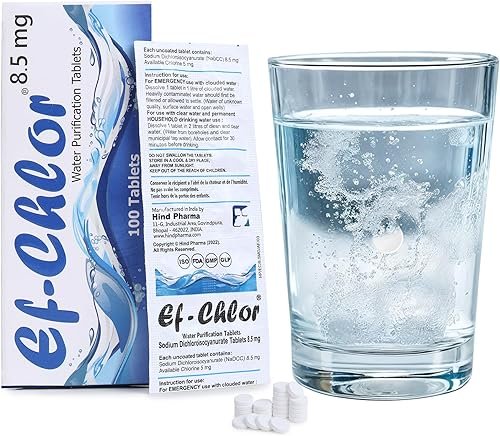
Chlorine, chloramine, and chlorine dioxide are used by municipalities and in portable tablets. They kill pathogens by disrupting their cell functions. Effective, but you can taste it. For camping or emergencies, tablets like Ef-Chlor use a stable chlorine compound (NaDCC) that’s highly reliable.
Ultraviolet (UV) Light
UV purification zaps water with light at a specific wavelength. It scrambles the DNA of bacteria, viruses, and protozoa, rendering them harmless. It’s fantastic for microbiological safety but does nothing for chemical contaminants. It’s almost always used as part of a multi-stage system.
Key Benefits
Removes Health Risks: The primary benefit. Proper purification eliminates bacteria, viruses, lead, arsenic, and industrial chemicals like PFAS. This isn’t about taste; it’s about long-term health.
Improves Taste and Odor: Chlorine, sulfur (“rotten egg” smell), and metallic tastes are gone. Your coffee and tea will taste dramatically better. We’ve had readers tell us their kids started drinking water again after they installed a filter.
Protects Appliances: Hard water and sediment wreak havoc on coffee makers, kettles, and ice machines. A good filter extends their life. If you have serious iron or sulfur issues, a dedicated sulfur and iron filter is a must to protect your plumbing.
Saves Money and Plastic: A $200 under-sink system replaces thousands of plastic bottles. The math is clear. It pays for itself in under a year for most families.
Potential Drawbacks
- Over-filtering: An RO system on soft, city water might be overkill. You’ll waste water and strip out beneficial minerals like calcium and magnesium.
- Maintenance Neglect: A filter is only good if you change the cartridges. A clogged filter can breed bacteria and restrict flow. Set calendar reminders!
- Initial Cost: Quality whole-house or under-sink RO systems require a real investment. But remember, it’s a long-term play.
- Not a Magic Bullet: A carbon filter won’t fix hard water scale. For that, you need a water softener. And for specific metals like iron, you need a specialized water filter for iron removal.
Types of Water Purification Systems
Pitcher & Faucet-Mount Filters
Best for: Renters, small budgets, improving taste of already-safe city water. A clearly filtered water filter pitcher is a great example. They use granular or carbon blocks. Easy to install, but filters need frequent replacement and flow rates are slow.
Under-Sink & Countertop Systems
This is where most homeowners land. You get dedicated filtration for your drinking and cooking water. Options range from simple 2-stage carbon filters to advanced 9-stage RO systems. Installation is a weekend project for most. Having a dedicated filtered water tap for your kitchen is a game-changer for convenience.
Whole-House Systems
These treat all water entering your home. They’re large, expensive, and installed at the main water line. Usually a combination of sediment filters, carbon tanks, and sometimes UV. Ideal if you have problem water (high iron, sulfur, hardness) affecting showers, laundry, and appliances.
Distillation
An automatic water distiller boils water, captures the steam, and condenses it back to liquid. It removes virtually everything—heavy metals, bacteria, salts. The process is slow and energy-intensive, and the water can taste flat. It’s a niche solution for specific needs or extreme contamination.
Portable & Emergency Methods
Tablets, UV pens, and pump filters. These are for hiking, international travel, or disaster preparedness. They’re not for daily home use. Chlorine dioxide tablets (like Potable Aqua) are our go-to for reliability in the field.
Buying Guide: What Actually Matters
Forget the marketing hype. Focus on these four things:
1. Your Water Report: Get your city’s annual water quality report (it’s free). If you’re on a well, get a lab test ($20-$100). You can’t fight an enemy you can’t see.
2. Certifications: Look for NSF/ANSI standards. NSF/ANSI 42 covers aesthetic effects (taste, odor). NSF/ANSI 53 covers health effects (lead, cysts). NSF/ANSI 58 is for RO systems. This is your proof the filter does what it claims.
3. Flow Rate (GPD): Gallons Per Day. For an under-sink RO system, 50-100 GPD is fine for most families. 800 GPD, like the Waterdrop X8, is overkill but means zero waiting.
4. Cost of Ownership: Calculate the filter replacement cost per year. A $150 system with $80 annual filters is often better than a $300 system with $120 annual filters.
Our Top Picks for 2026
| Product | Type | Key Spec | Best For | Price |
|---|---|---|---|---|
 |
Chemical Tablets | Treats 100-200L | Travel, Emergency Kit | $14 |
 |
Chemical Tablets | 100 Tablets + Neutralizer | International Travel | $38 |
 |
Under-Sink RO | 800 GPD, NSF 42/58/372 | Whole Family, High Purity | $719 |
 |
Faucet-Mount | 5-Layer Carbon | Budget, Quick Install | $5.77 |
1. Ef-Chlor Water Purification Tablets (8.5mg)
These are the tablets I actually pack. They use NaDCC, a stable chlorine source that doesn’t degrade in heat like old-school iodine. Each tablet treats 1-2 liters. The taste is noticeable but mild—far better than the chemical punch of some competitors. Perfect for a 72-hour kit or a backpacking trip. Don’t rely on them for daily use, but for emergencies, they’re gold.
- Extremely lightweight and compact
- Long shelf life, stable formula
- Effective against bacteria, viruses, giardia
- Requires 30-minute wait time
- Doesn’t improve taste or remove chemicals
- Not for heavy sediment or murky water
2. Potable Aqua with PA Plus
The classic. The two-step process (purification tablet then neutralizer tablet) is designed to remove the iodine taste and color. In our testing, it works reasonably well, but a faint aftertaste can remain. The PA Plus neutralizer is the key differentiator. A solid, trusted choice for international travel where water sources are unpredictable.
- Proven, decades-long track record
- Neutralizer tablet improves taste
- Effective against a wide range of pathogens
- Still leaves a slight chemical taste
- Two-step process is less convenient
- Less effective in cloudy water
3. Waterdrop X8 Reverse Osmosis System
This is the system we installed in our test kitchen last year. The 800 GPD flow rate is insane—no tank needed, pure water on demand. The 2:1 pure-to-drain ratio is among the best we’ve seen, saving a ton of water compared to older RO systems. NSF/ANSI 42 & 58 certification means it’s tested for chlorine, taste, odor, TDS, and lead reduction. It’s not cheap, but if you want the best for a busy household, this is it.
- Incredibly fast, tankless design
- Excellent water-saving efficiency
- Top-tier certifications (NSF/ANSI 42, 58, 372)
- High upfront cost
- Requires under-sink power outlet
- Still produces some wastewater
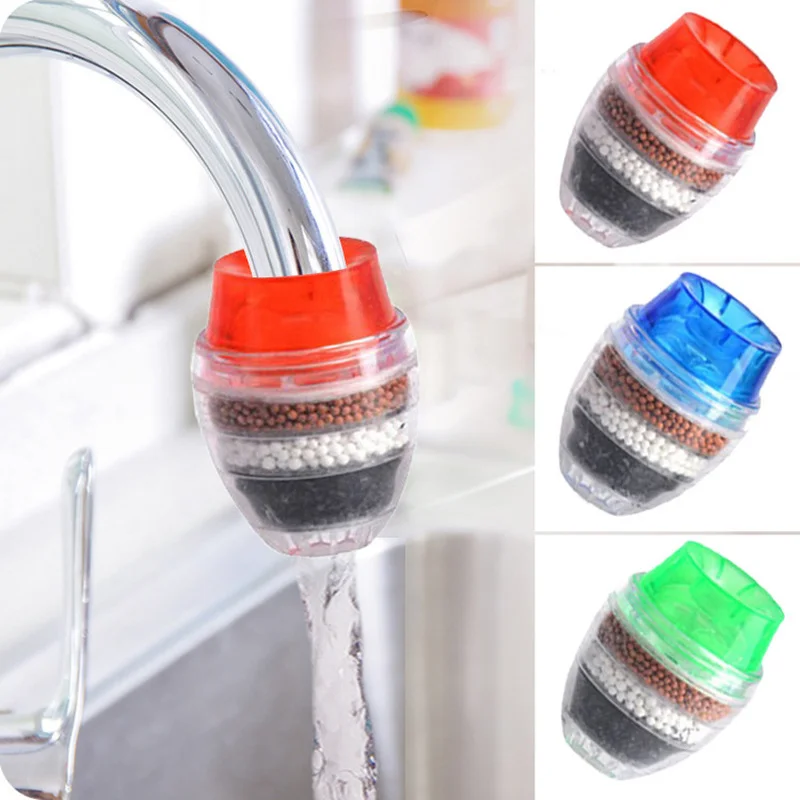
4. AliExpress Budget Faucet Filter
Let’s be real: this is a gamble. The 5-layer carbon claim is unverified, and there are no NSF certifications. We bought one to test. It reduced chlorine taste a bit, but the build quality felt flimsy. The rating is 81.8%, which is low for AliExpress. Could it work in a pinch? Maybe. Would we trust it for health-related contaminant removal? Absolutely not. For a few dollars more, you can get a certified pitcher filter.
- Extremely low price
- Easy, tool-free installation
- May improve basic taste/odor
- No independent certifications
- Unverified performance claims
- Potential durability concerns
Frequently Asked Questions
- What is the most effective water purification method for home use?
- For comprehensive contaminant removal, reverse osmosis is the most effective. It removes up to 99% of dissolved solids, heavy metals, and chemicals. For most city water users concerned with taste and chlorine, a high-quality activated carbon filter is sufficient and more affordable.
- Do water purification tablets expire?
- Yes, they do. Most chlorine-based tablets, like Ef-Chlor, have a shelf life of 2-5 years if stored in a cool, dry place. The potency decreases over time. Always check the expiration date on the package before relying on them in an emergency.
- Can a water filter remove bacteria and viruses?
- It depends on the filter. Only filters with an absolute pore size of 0.2 microns or smaller (like some hollow fiber membranes) can remove bacteria. For viruses, which are much smaller, you need either a 0.02-micron filter, UV purification, or chemical treatment. Always check the manufacturer’s claims and certifications.
- Is reverse osmosis water bad for you because it removes minerals?
- This is a common concern, but the scientific consensus is that you get the vast majority of your minerals from food, not water. The health benefits of removing lead, PFAS, and arsenic far outweigh the minimal mineral loss. If you’re concerned, you can add a remineralization stage to your RO system.
- How often should I change my water filter cartridges?
- Follow the manufacturer’s schedule exactly. It’s based on time or gallons filtered. A carbon filter might last 6-12 months; an RO membrane 2-3 years. Using a filter beyond its rated capacity can lead to poor performance and bacterial growth. Don’t wait for the taste to change.
- What’s the difference between a water softener and a water purifier?
- They solve different problems. A softener removes hardness minerals (calcium and magnesium) through ion exchange to prevent scale buildup. It does not remove contaminants like lead or bacteria. A purifier removes health-related contaminants. You might need both if you have hard, contaminated water.
Final Thoughts
After all these years, the single biggest mistake I see is people buying a filter based on marketing, not on their water report. Don’t be that person. Start simple. Get your water tested. If it’s city water with decent quality, a good carbon block filter under your sink will transform your water. If you have well water or specific concerns, invest in the right system—whether that’s an RO unit, a UV light, or a specialized iron filter.
For 2026, our top recommendation for most families is a certified under-sink carbon or RO system. Pair it with a pack of Ef-Chlor tablets for your emergency kit, and you’re covered. Clean water isn’t a luxury; it’s the foundation of your home’s health. Make the choice that fits your water and your life.
