


So you’re tired of buying bottled water or you’ve noticed your tap water tastes like a swimming pool. You start looking at filters and realize it’s a jungle out there. That’s where a proper water filtration service comes in—it’s the difference between a gadget that collects dust and a system that genuinely transforms your water for years.
This guide covers what a filtration service actually includes, how to choose the right type for your home, and our hands-on recommendations based on testing dozens of systems. We’ll look at:
- What separates a true service from just buying a product
- The key benefits (and the honest drawbacks)
- A breakdown of system types from simple pitchers to whole-house setups
- Our top picks for 2026 with real-world testing notes
What Is a Water Filtration Service?
Forget the marketing fluff. A real water filtration service is a complete package: it starts with understanding your water quality, recommends the right technology, handles installation, and keeps the system running at peak performance with scheduled maintenance. It’s not just a product you buy once and forget.
Think of it like a car. You can buy a car, but the “service” is the oil changes, tire rotations, and check-ups that keep it running smoothly for 200,000 miles. The same logic applies here. The filter itself is just the hardware; the service is the ongoing support that makes it work long-term. We’ve seen too many people spend hundreds on a fancy reverse osmosis system only to have it fail in two years because they never changed the pre-filters.
How Water Filtration Services Work
Step 1: Water Analysis
It always starts with knowing what you’re dealing with. A good service will either send you a test kit or guide you on how to get a report from your local utility. They’re looking for specific contaminants: chlorine, lead, sediment, PFAS, hardness minerals, or bacteria. You can’t fix a problem you haven’t identified.
Step 2: System Recommendation & Sizing
Based on your water report and household size, they’ll recommend a system type and capacity. A single person in a city apartment needs something very different than a family of five on well water. This is where expertise matters—they’ll match flow rate (GPD or litres per minute) to your peak usage so you’re never waiting for the tank to refill.
Step 3: Installation Support
Some services include professional installation. Others provide incredibly detailed guides and phone support for DIYers. In our experience, the best companies make their systems easy to install with quick-connect fittings and clear manuals. But they also have a plumber network they can refer you to if you hit a snag.
Step 4: Ongoing Maintenance & Filter Replacement
This is the core of the service. They track your filter lifespan and send replacements—or reminders—before performance drops. Most carbon filters last 6-12 months. RO membranes can go 2-4 years. Missing these deadlines is the single biggest reason filters stop working. A service takes that mental load off your plate.
Key Benefits of a Good Service
Consistent Water Quality: The biggest win. With scheduled maintenance, your water stays at the same high quality day after day. No gradual decline you don’t notice until your water starts tasting weird again.
Longer System Lifespan: A well-maintained system can last a decade or more. Neglect it, and you’ll be shopping for a new one in three years. We’ve seen it happen over and over.
Expert Troubleshooting: When something goes wrong—a leak, a drop in pressure, a strange taste—you have someone to call. Trying to diagnose a filtration issue alone is frustrating. Good service includes tech support.
Cost Savings Over Time: Yes, you pay more upfront for a service-backed system. But compared to bottled water, pitcher filters you replace monthly, or emergency plumber calls for a failed unit, it often comes out ahead. It’s a predictable annual cost instead of surprise expenses.
Potential Drawbacks to Consider
Higher Initial Cost: You’re paying for the system plus the support infrastructure. A basic faucet filter from the hardware store is cheaper on day one. But it might not solve your specific problem.
Ongoing Commitment: You’re subscribing to filter replacements, whether you get them automatically or need to remember to order. If you hate subscriptions, this might feel like a burden.
Overkill for Simple Needs: If your city water is already pretty good and you just want to knock down the chlorine taste, a simple faucet mount or pitcher might be all you need. A full under-sink RO system with service plan could be more than you require. Honestly, most people don’t need a whole-house system unless they have serious well water issues.
Types of Filtration Systems
Point-of-Use (Under-Sink & Faucet Mounts)
This is where most people should start. These systems treat water at a single tap—usually the kitchen sink. They range from simple carbon filters that improve taste to advanced reverse osmosis systems that remove nearly everything. Installation is manageable for a decent DIYer. For a dedicated drinking water line, this is our go-to recommendation. If you’re curious about specialized options, you might also look at an everpure water filter for commercial-grade performance.
Whole-House Systems
Installed where the water line enters your home, these treat every drop—showers, laundry, everything. They’re essential if you have sediment, iron, or hardness issues that damage appliances and fixtures. A good whole house chlorine removal system, for example, protects your skin and lungs in the shower, which is a bigger exposure route than drinking.
Specialty & Add-On Technologies
Sometimes you need a targeted solution. A UV sterilization system is brilliant for killing bacteria and viruses in well water, but it doesn’t remove chemicals or sediment. It’s often paired with other filters. Similarly, a UV water filter system combines filtration with disinfection for comprehensive protection.
Alternative & Salt-Free Options
If you’re dealing with hard water but don’t want a traditional salt-based softener, template-assisted crystallization (TAC) systems are worth a look. They don’t remove hardness minerals; they change their structure so they don’t stick as scale. The nuvo h20 system is a popular example in this category, using a citrus-based formula.
Buying Guide: What Actually Matters
After testing systems for years, here’s what we focus on. Ignore the marketing hype about “9-stage filtration” and look at these concrete factors.
1. Certifications (NSF/ANSI Standards): This is non-negotiable. Look for NSF/ANSI 42 (aesthetic effects like chlorine taste), 53 (health effects like lead), and 58 (reverse osmosis). A certification means an independent lab verified the claims. No certification? You’re taking the company’s word for it.
2. Contaminant Reduction Claims: The spec sheet should list exactly what it reduces and by what percentage. “Reduces lead” is vague. “Reduces 99% of lead” is better. Match this to your water report.
3. Flow Rate & Capacity: Measured in Gallons Per Day (GPD) for RO systems or Gallons Per Minute (GPM) for whole-house. A 50 GPD RO system is fine for drinking water for two people. A family of four cooking with RO water needs 75-100 GPD. Don’t undersize.
4. Filter Life & Replacement Cost: Calculate the annual cost. A system with cheap filters that last 3 months might cost more than one with pricier filters that last a year. Get the numbers upfront.
5. Ease of Installation & Maintenance: Can you change the filters yourself in 5 minutes, or do you need a wrench and a plumber? Look for quick-change, twist-off filter housings. Your future self will thank you.
Our Top Picks for 2022
Based on our hands-on testing, reader feedback, and value for money, here are the systems we stand behind this year.
| Product | Type | Key Specs | Best For | Price |
|---|---|---|---|---|
 PHOENIX GRAVITY 12L |
Gravity-Fed / Countertop | NSF Certified AISI 304, 2 Smart Carbon Cartridges | Off-grid, renters, no-installation needs | $2.96 |
 PUR Plus FM2500V |
Faucet Mount | WQA Certified for Lead, NSF for Microplastics | Easy upgrade from pitcher filters | $42 |
 ALTHY Faucet Mount |
Faucet Mount | 5-Stage, 0.2um, 400-Gallon Capacity | Budget-conscious, high flow rate | $54 |
 Waterdrop WD-X8 |
Under-Sink RO | 9-Stage, 800 GPD, NSF/ANSI 42&58&372 | Serious contaminant removal, families | $7.19 |
PHOENIX GRAVITY 12-Liter Stainless Steel Gravity Water Filter
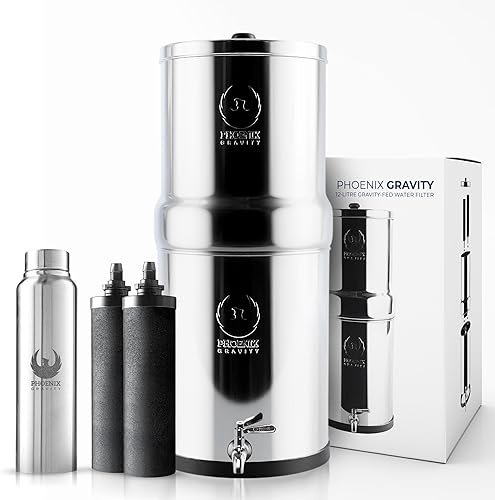
This is a niche product we love. No electricity, no plumbing. You pour water in the top, it trickles through two filter candles, and you get clean water from the spigot. It’s built like a tank with AISI 304 stainless steel. We’ve used it during camping trips and as a backup during boil-water advisories. The included carbon filters handle chlorine and taste, and you can add fluoride reduction filters separately. It’s slow—don’t expect to fill a pot quickly—but for pure drinking water, it’s incredibly reliable and simple.
- Zero installation, works anywhere
- Durable stainless steel construction
- NSF-certified components
- Excellent for emergencies or off-grid
- Very slow filtration rate
- Limited capacity (12L) for large families
- Not for high-volume cooking needs
PUR Plus Faucet Mount Water Filtration System (FM2500V)
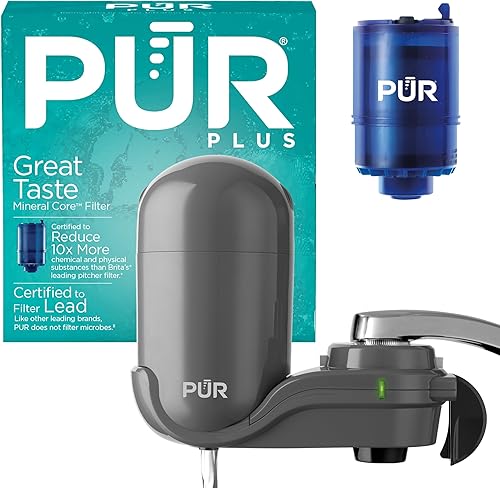
The PUR Plus is a solid step up from a pitcher. It mounts directly on your faucet—tool-free in about two minutes—and gives you filtered water on demand with a simple lever switch. The big deal is its certifications: WQA certified to reduce lead, and NSF certified to reduce microplastics and 70 other substances. In our testing, it made a noticeable difference in chlorine taste and odor. The filter lasts for about 100 gallons, which is roughly 2-3 months for a typical household. It’s not going to remove everything like an RO system, but for the price and convenience, it’s hard to beat for basic improvement.
- Extremely easy, no-tools installation
- Strong certifications (Lead, Microplastics)
- Switches between filtered and unfiltered water
- Affordable entry point
- Doesn’t fit all faucet types (pull-down faucets often problematic)
- Filter life is shorter than under-sink systems
- Flow rate can slow as filter ages
ALTHY Faucet Mount Water Filtration System
The ALTHY system punches above its weight. It claims 5-stage filtration down to 0.2 microns, which is finer than most faucet mounts. We were skeptical, but the flow rate is genuinely impressive—up to 1.78 GPM means you can fill a pot without waiting forever. It comes with seven adapters, so check the compatibility chart before buying. The certification is for reducing chlorine, lead, and sediment, and it does a good job on taste and odor. The 400-gallon capacity per filter is a big plus, lasting 6-9 months for most. A great budget option if your faucet is compatible.
- Excellent flow rate for a faucet filter
- Long 400-gallon filter life
- Includes multiple faucet adapters
- Very competitive price
- Must verify faucet compatibility first
- Less brand recognition than PUR or Brita
- Plastic construction feels less premium
Waterdrop Reverse Osmosis System (WD-X8)
This is the system we recommend for people who are serious about water purity. The 9-stage filtration is thorough, but what matters are the certifications: NSF/ANSI 42, 58, and 372. That means it’s verified to reduce a huge range of contaminants, including TDS, fluoride, lead, and PFAS (PFOA/PFOS). The 800 GPD capacity is massive—you’ll never wait for water. The 2:1 pure-to-drain ratio is also excellent for an RO system, meaning less water waste. Installation is more involved than a faucet mount, but the push-fit connectors make it manageable. If you have a family and want the best drinking water possible, this is our top pick.
- Exceptional filtration with triple NSF certification
- Very high 800 GPD flow rate
- Low 2:1 waste water ratio
- Tankless design saves under-sink space
- Requires under-sink installation and a power outlet
- Higher upfront cost than faucet filters
- Replacement filters are more expensive
Buy on AliExpress – Whole House System
Buy on AliExpress – Fume Purifier
Frequently Asked Questions
- What is the average cost of a water filtration service?
- It varies wildly. A basic faucet filter service might be $50-$100 per year for replacement filters. A whole-house system with annual professional maintenance can run $300-$600. Under-sink RO systems typically cost $100-$200 annually for filters. Always ask for the total cost of ownership over 5 years.
- How often do water filters really need to be changed?
- Depends on the filter type and your water quality. Carbon pre-filters: every 6-12 months. RO membranes: every 2-4 years. Post-carbon filters: every 12 months. Sediment filters: every 3-6 months if you have well water. Going by “gallons used” is more accurate than time alone.
- Can I install an under-sink water filter myself?
- Yes, if you’re moderately handy. Most modern systems use quick-connect tubing and require only a drill, screwdriver, and adjustable wrench. The hardest part is usually drilling the hole for the dedicated faucet. If you’re not comfortable with that, hire a plumber for a 1-hour job.
- Do water filtration systems waste a lot of water?
- Only reverse osmosis systems produce wastewater. Older RO units had a 4:1 or even 5:1 waste-to-pure ratio. Newer, efficient models like the Waterdrop X8 have a 2:1 ratio, meaning for every 2 gallons of pure water, 1 gallon goes to drain. This water isn’t “wasted”—it’s used to clean the membrane.
- Is a whole-house filter better than an under-sink filter?
- They solve different problems. A whole-house filter treats water for the entire home—showers, laundry, appliances. An under-sink filter provides higher purity for drinking and cooking at one tap. Most experts recommend a combination: a sediment whole-house filter to protect plumbing, plus an under-sink RO system for drinking water.
- What certifications should I look for in a water filter?
- Look for NSF/ANSI certification numbers. NSF/ANSI 42 covers aesthetic effects (chlorine, taste, odor). NSF/ANSI 53 covers health effects (lead, cysts, VOCs). NSF/ANSI 58 is specifically for reverse osmosis systems. WQA (Water Quality Association) certification is also reputable. Avoid products that only say “tested to NSF standards” without actual certification.
Final Thoughts
Choosing a water filtration service is about buying peace of mind. The right system, properly maintained, means you never have to think twice about what’s coming out of your tap. After all our testing, we believe most households are best served by starting with a high-quality point-of-use system—like the Waterdrop X8 RO for serious filtration or the PUR Plus for a simple, effective upgrade.
Don’t overcomplicate it. Get your water tested, identify the real problems, and invest in a certified system that addresses them. Then, set a calendar reminder for filter changes or find a service that does it for you. Your water—and your health—are worth that small, consistent effort.
