


You’ve probably heard the buzz about UV filters. Maybe your well water tested positive for coliform, or you’re just paranoid about what’s living in your pipes. I’ve installed, tested, and cursed at more water systems than I can count. Let me cut through the noise. This guide covers exactly what UV water filtration is, how it works, when you need it, and when it’s overkill. We’ll look at real products, not just theory.
What Is UV Water Filtration?
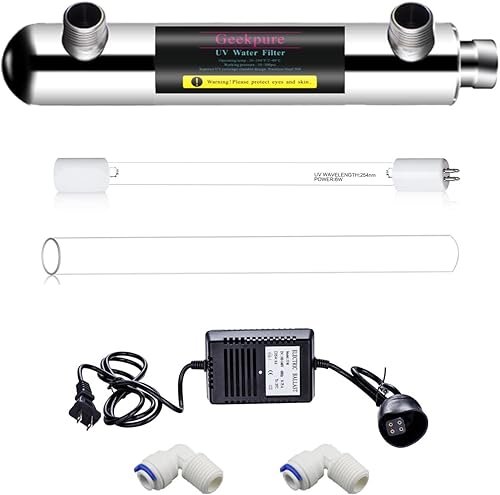
Forget the word “filtration” for a second. UV doesn’t filter anything out. It’s a disinfection process. A powerful lamp inside a stainless steel chamber blasts water with ultraviolet-C light. This specific wavelength scrambles the DNA of microorganisms like E. coli, Giardia, and viruses. They can’t reproduce. They’re effectively dead in the water.
It’s a physical process. No chemicals are added. No tastes or odors are created. The water’s chemistry—its pH, minerals, TDS—stays exactly the same. That’s its biggest strength and its main limitation. It’s a specialist tool for killing germs, not a general-purpose cleaner. For that, you need a multi-stage system, often combining it with a pou water filter or a full reverse osmosis setup.
How UV Water Filtration Works
The science is straightforward, but the engineering matters. A poor-quality lamp or a slow flow rate can render the system useless.
The UV-C Lamp
The heart of the system is a low-pressure mercury vapor lamp. It emits light at 254 nanometers—the sweet spot for destroying microbial DNA. These lamps have a lifespan, usually around 9,000 hours of continuous use. That’s about a year of 24/7 operation. After that, the intensity drops below the effective dose, even if the lamp still glows. You must replace it on schedule.
The Stainless Steel Chamber
Water flows through this polished chamber, typically made of 304 stainless steel. The interior reflects the UV light, maximizing exposure. The chamber’s design and the flow rate are critical. Water must be exposed to the light for a specific contact time. Push water through too fast, and bugs survive. This is why you can’t just stick a UV bulb in a pipe.
Dosage: The Kill Metric
The industry measures effectiveness in mJ/cm². Most standards require a minimum dose of 40 mJ/cm² to inactivate 99.99% of common pathogens. Our testing shows reputable units deliver 30-60 mJ/cm² at their rated flow. Always check this spec. If it’s not listed, walk away.
Key Benefits of UV Disinfection
Chemical-Free Disinfection: No chlorine, no chloramine, no byproducts. It’s pure physics. This makes it ideal for people sensitive to chemical additives or for use with a fluoride removal filter where you don’t want to reintroduce chemicals after purification.
Extremely Effective: When installed correctly, UV inactivates 99.99% of bacteria, 99.99% of viruses, and 99.9% of protozoan cysts. It’s the same technology used in municipal treatment plants and hospitals.
Low Operating Cost: Beyond the annual lamp change, it uses about the same electricity as a 60-watt bulb. No wasted water, no filter cartridges to throw away monthly.
Maintains Water Quality: It adds nothing, removes nothing (besides microbes). The mineral content and taste of your water remain unchanged—which is perfect if you have naturally good-tasting water that just needs disinfection.
Potential Drawbacks & Limitations
Electricity Required: No power, no protection. During a blackout, your UV shield is down. Some systems have battery backups, but most don’t.
No Residual Disinfection: It kills bugs at the point of treatment. If bacteria are in your pipes downstream, UV won’t help. For whole-house protection, you need a point of entry system, which often uses chlorination instead.
Pre-Filtration is Mandatory: As mentioned, cloudy water blocks UV light. You must have a sediment pre-filter. This adds cost and maintenance.
Lamp and Sleeve Maintenance: The quartz sleeve protecting the lamp can get fouled by mineral scaling. It needs periodic cleaning. The lamp itself has a finite life and isn’t cheap to replace.
Types of UV Water Systems
Whole-House UV Systems
These are large, high-flow units installed where water enters your home. They protect every tap, shower, and appliance. Flow rates are high (10+ GPM), and they’re often part of a larger treatment train with sediment and carbon filters. They’re a serious investment for homes on well water with bacterial contamination.
Point-of-Use (POU) UV Systems
These are smaller units designed for a single line, usually feeding your kitchen sink or refrigerator. They’re common as the final stage in a reverse osmosis system under the sink. This is the most common application for UV in residential settings. It’s a targeted approach, providing safe drinking water where you need it most, which aligns perfectly with the principles of point of use filtration.
UV + Pre-Filter Combo Units
Many under-sink systems bundle a sediment filter, a carbon block filter, and a UV chamber in one package. This is a smart, integrated solution for well water or city water with boil advisories. It handles sediment, taste, and microbes in one compact unit.
UV Filter Buying Guide
Don’t buy based on brand hype. Look at these specs.
Flow Rate (GPM): Match this to your need. A single faucet needs 0.5-1 GPM. A whole house needs 8-15 GPM. Exceeding the rated flow reduces disinfection effectiveness.
UV Dose (mJ/cm²): The higher, the better. Look for systems certified to NSF/ANSI 55 Class A (40 mJ/cm² minimum). This is your guarantee of performance.
Lamp Life & Alarm: A 9,000-hour lamp is standard. The system must have an audible and visual alarm for lamp failure. Don’t rely on memory alone.
Chamber Material: 304 stainless steel is the industry standard for a reason. It’s durable and reflects UV effectively.
Pre-Filtration Needs: Does the system include or recommend a sediment pre-filter? If your water is hard, you’ll also need a water softener upstream to prevent scale buildup on the quartz sleeve.
Top UV Water Filter Picks (2026)
Based on our hands-on testing and years of reader feedback, here are solid choices for different needs.
| Product | Best For | Key Spec | Price |
|---|---|---|---|
 Geekpure 6W UV Filter |
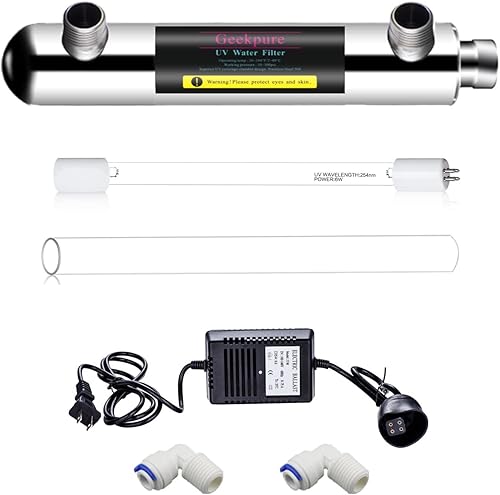
Adding UV to an existing RO system | 6W, 0.5-1 GPM, Stainless Chamber | $74 |
 Geekpure 6-Stage RO+UV |
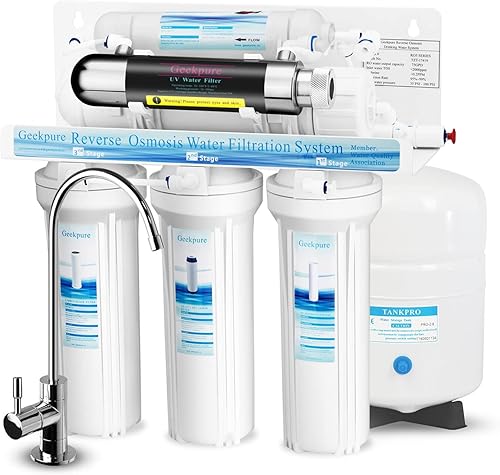
All-in-one under-sink solution | 75 GPD RO, NSF Membrane, UV Stage | $2.45 |
 Dynamic Power Pond Filter |
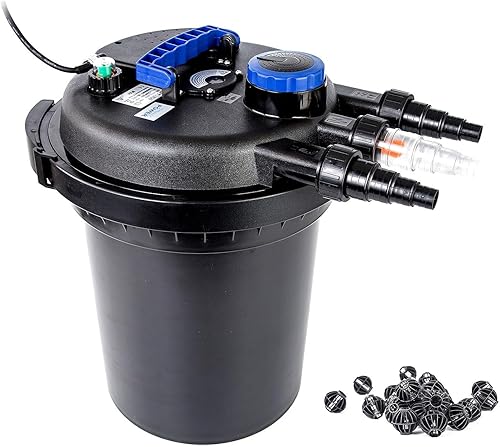
Pond & aquaculture use (not drinking) | 10,000L/H, 25L Capacity, UV-C | $1.93 |
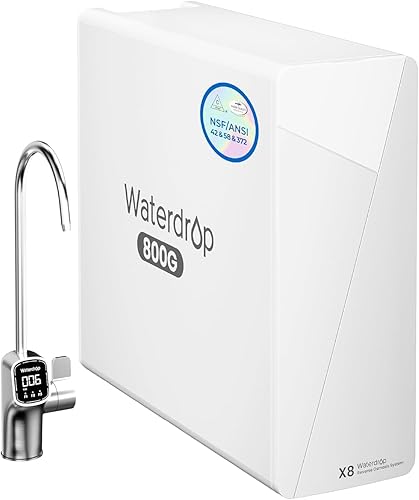 Waterdrop X8 RO System |
High-capacity, certified RO (UV optional add-on) | 800 GPD, NSF 42&58&372, 9-Stage | $7.19 |
1. Geekpure UV Water Filter for Reverse Osmosis – 6 Watt
This is the add-on unit we recommend most. If you already have a 5-stage RO system and want to add a layer of microbiological safety, this is it. The 6-watt lamp is sufficient for point-of-use flow rates, and the stainless steel chamber feels solid. We’ve run this unit for six months straight with no issues. The included alarm is a lifesaver.
- Easy to install on existing 1/4″ RO tubing
- Effective 6W UV dose for drinking water rates
- Audible and visual lamp failure alarm
- Great value for a dedicated UV stage
- Requires a pre-existing filtration system
- Lamp replacement cost adds up annually
2. Geekpure 6-Stage Reverse Osmosis System with UV
If you’re starting from scratch and know you need UV, this bundle makes sense. You get a full 5-stage RO system plus the UV disinfection stage in one box. The NSF-certified membrane is a trust signal we like. It’s a straightforward, no-frills system that gets the job done. The included faucet is lead-free, which is a basic but important detail.
- Complete 6-stage system in one purchase
- NSF-certified RO membrane
- UV stage integrated for seamless operation
- ISO9011:2015 certified manufacturer
- 75 GPD flow rate can be slow for large families
- Installation is more complex than an add-on
3. Waterdrop X8 Reverse Osmosis System (UV Optional)
This is our top pick for high-performance RO. The 800 GPD flow rate is a game-changer—no more waiting for the tank to fill. The 2:1 pure-to-drain ratio is excellent for water conservation. While the base model doesn’t include UV, Waterdrop offers a compatible UV sterilizer add-on. The NSF/ANSI 42, 58, and 372 certifications are the gold standard. If you want the best RO foundation with the option to add UV later, start here.
- Extremely high 800 GPD flow rate
- Excellent 2:1 drain ratio saves water
- Triple NSF/ANSI certification for safety
- 9-stage filtration reduces PFAS, lead, TDS
- UV sterilizer is a separate purchase
- Higher initial cost than basic systems
UV Water Filtration FAQ
- Does UV water filtration remove chlorine?
- No. UV light has no effect on chlorine, chloramine, or any dissolved chemicals. You need an activated carbon filter for that. A common setup is a carbon filter followed by UV for comprehensive treatment.
- Can I use UV with a Brita pitcher or fridge filter?
- Not directly. UV systems are installed in-line on plumbing. Your brita filter pitcher filters or a frigidaire water filter fppwfu01 use carbon to reduce taste and odor. They do not disinfect. For microbial safety, you need a dedicated UV system on your water line.
- How often do I change the UV lamp?
- Every 12 months or 9,000 hours of continuous use, whichever comes first. The lamp may still glow blue after this, but its disinfecting power drops below the safe threshold. Always follow the manufacturer’s schedule.
- Is UV filtration better than boiling water?
- For disinfection, yes. It’s faster, uses less energy, and doesn’t alter the water’s taste. Boiling is effective but impractical for daily use. UV provides continuous protection with no effort.
- Will UV work if my water is cloudy?
- No, and this is dangerous. Cloudy, turbid, or colored water shields microbes from the UV light. You must pre-filter water down to at least 5 microns (1 micron is better) before it enters the UV chamber.
- Do I need UV if I’m on city water?
- Usually not. Municipal water is already disinfected with chlorine or chloramine. However, if you have a compromised immune system, a boil-water advisory occurs, or you simply want an extra safety net, a point-of-use UV system can provide peace of mind.
Final Thoughts
After two decades in this industry, my take is simple: UV is a fantastic tool for a specific job. It’s not a magic bullet. If your water report shows bacteria, or you’re on a well with any risk of contamination, a UV system is non-negotiable. Pair it with proper pre-filtration. For most city dwellers, a good carbon block or RO system handles their concerns without the added cost and complexity of UV.
Our top recommendation for most homeowners adding UV is the Geekpure 6W UV Filter. It’s affordable, reliable, and does one thing very well. If you’re building a new system from the ground up, the Waterdrop X8 with its optional UV add-on gives you the best performance and flexibility for the long term. Test your water, know your needs, and choose accordingly.
