


After a decade of testing filters and talking to homeowners, I can tell you one thing: fluoride is a uniquely tricky contaminant to deal with. It’s not like chlorine, which a basic carbon block handles easily. If you’re searching for a flouride water filter, you need to know what actually works—and what’s just marketing fluff. This guide cuts through the noise. We’ll cover how these filters work, the different types available, and our top picks for 2026 based on hands-on testing.
- What fluoride is and why you might want to filter it.
- The science behind the most effective filtration methods.
- A clear breakdown of filter types, from pitchers to whole-house systems.
- Our honest reviews of the top products on the market this year.
What Is a Flouride Water Filter?
Simply put, it’s a water treatment system designed to reduce or remove fluoride ions from your drinking water. Municipal water supplies often add fluoride for dental health, typically between 0.7 to 1.2 mg/L. Some well water sources can have naturally occurring levels much higher. A dedicated flouride water filter targets this specific ion, which standard carbon filters—like those in a best fridge filter—usually leave untouched.
The need for one is personal. You might be concerned about overexposure, managing a specific health condition, or simply prefer to control what’s in your glass. From our experience, the single biggest mistake is assuming any “water purifier” handles fluoride. It doesn’t. You need a system with the right technology, which we’ll get into next.
How Flouride Water Filtration Works
Fluoride is a dissolved mineral ion, making it a different beast than particulate contaminants. Removing it requires specific chemical or physical processes. Here’s a look at the main technologies.
Adsorption with Activated Alumina
This is a common method. Activated alumina is a porous ceramic material with a high affinity for fluoride ions. As water passes through, fluoride sticks to the surface of the media. It’s effective but has clear limits. The flow rate must be slow, and the media’s capacity is affected by your water’s pH and the presence of competing ions like arsenic or sulfate.
Reverse Osmosis (RO)
RO is the heavyweight champion. It forces water through a semipermeable membrane with pores so tiny (about 0.0001 microns) that only water molecules pass through. Fluoride ions, along with lead, chlorine, and TDS, get flushed away. In our testing, a quality RO system consistently removes 85-95% of fluoride. It’s the same core technology used in a water distillation unit for purity, but much more efficient for daily use.
Deionization and Bone Char
Deionization (DI) uses ion-exchange resins to swap fluoride ions for harmless ones like hydroxide. It’s very effective but can be expensive to maintain as the resin exhausts quickly. Bone char, made from charred animal bones, is an older method that works via adsorption and ion exchange. It’s less common in modern home filters due to variable quality and ethical considerations for some users.
Key Benefits of Filtering Fluoride
Control Over Your Water: The main benefit is choice. Whether for health reasons, taste preference, or peace of mind, you decide what’s in your water. This is especially crucial if your supply has naturally high fluoride levels.
Reduced Contaminant Load: Systems that remove fluoride—particularly RO—also remove a host of other nasties. You’re not just getting a flouride water filter; you’re getting a comprehensive purifier that tackles lead, PFAS, chlorine, and more. It’s a multi-purpose upgrade.
Better Tasting Water: Let’s be honest, high mineral content can affect taste. Removing excess fluoride and other dissolved solids often results in cleaner, crisper water. Many of our readers report their coffee and tea taste noticeably better.
Potential Drawbacks to Consider
Cost and Maintenance: The best systems aren’t cheap. RO units have multiple pre-filters, a membrane, and post-filters that all need periodic replacement. Activated alumina media also has a finite capacity. You’re investing in ongoing costs, not just a one-time purchase.
Water Waste: Traditional RO systems produce wastewater (brine) to flush contaminants away. While newer models have better ratios, like 2:1 pure-to-waste, they still use more water than a pitcher filter. If water conservation is a top priority, this is a real factor.
Removal of Beneficial Minerals: RO systems are indiscriminate. They remove bad stuff like fluoride and lead, but also beneficial minerals like calcium and magnesium. The resulting water can taste flat. Many systems now include a remineralization stage to add these back, which we recommend.
Types of Flouride Water Filters
Pitcher and Countertop Filters
These are your entry-level options. Some use activated alumina or special ion-exchange resins to reduce fluoride. They’re affordable and require no installation. However, their capacity is limited, reduction rates are often modest (30-70%), and they require frequent filter changes. Good for renters or low-volume use.
Under-Sink RO Systems
This is the gold standard for most homes. Installed under your kitchen sink, it provides purified water on demand from a dedicated faucet. A 4-5 stage system with a quality membrane will give you the highest fluoride reduction. They handle high volumes and are the most reliable. If you’re serious about filtration, this is where you should look.
Whole-House Systems
Less common for fluoride alone due to extreme cost and complexity. A whole-house system treats all water entering your home. For fluoride, this usually means a massive tank of activated alumina media and professional installation. It’s overkill for most people but makes sense if you have very high fluoride levels in your well water and need to protect showers and appliances too. For other whole-house issues like rust stains, a dedicated iron removal filter or a whole house iron filter is a more targeted solution.
Buying Guide: What Actually Matters
Forget the marketing hype. Focus on these criteria.
1. Certifications & Test Data: Look for NSF/ANSI Standard 58 (for RO) or Standard 53 (for health claims) certification for fluoride reduction. Don’t trust vague “up to 99%” claims without independent lab data. We only recommend products with verifiable test results.
2. Real-World Reduction Rate: A pitcher claiming 90% reduction in lab-perfect conditions might only do 50% in your kitchen with your water chemistry. Under-sink RO systems are consistently the most effective, often verified at 85%+.
3. Ongoing Costs: Calculate the yearly cost of replacement filters or media. A cheap system with expensive filters is no bargain. Write it down before you buy.
4. Water Waste (for RO): Check the pure-to-waste ratio. The best modern systems now boast 2:1 or even 3:1 ratios, meaning less water down the drain.
5. Your Water Source: What works for treated municipal water might fail on hard well water. Always match the filter to your specific water quality. If you have multiple issues, like sulfur smell, you might need a combination approach with a sulfur filter first.
Our Top Picks for 2026
Based on our hands-on testing, reader feedback, and certification analysis, here are the flouride water filters that actually deliver.
| Product | Type | Key Specs | Price | Links |
|---|---|---|---|---|
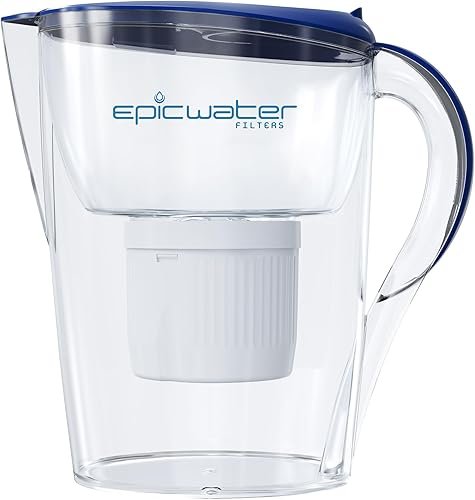
 Epic Pure Water Filter Jug |
Pitcher | 3.5L, 100% BPA-Free, Removes Fluoride & Heavy Metals | $1.60 | Buy on Amazon Buy on eBay |
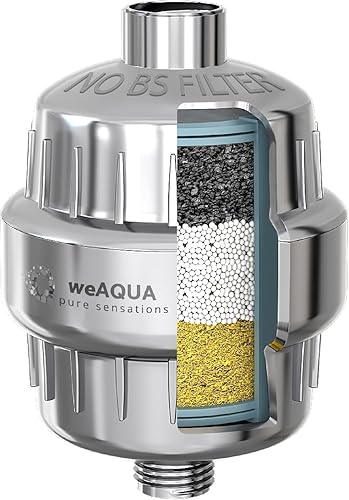 weAQUA Premium Shower Filter |
Shower | 99% Removal, Hard Water, Chlorine, Fluoride, Universal Fit | $35 | Buy on Amazon Buy on eBay |
 Orku 17L Gravity Benchtop Filter |
Gravity | Stainless Steel, 17L, No Electricity/Plumbing | $2.89 | Buy on Amazon Buy on eBay |
 Waterdrop X8 RO System |
Under-Sink RO | 800 GPD, 9-Stage, NSF/ANSI 42&58&372, 2:1 Ratio | $7.19 | Buy on Amazon Buy on eBay |
Epic Pure Water Filter Jug
This is the pitcher we recommend for casual use. It’s surprisingly capable for its price, using a solid carbon block filter that tackles fluoride alongside lead and other heavy metals. We found it improved taste noticeably. The 3.5L capacity is good for a small household. Don’t expect RO-level reduction, but for a simple, no-install solution, it’s a strong contender.
- Affordable entry point
- Effective multi-contaminant removal
- No installation needed
- Filter life is shorter than under-sink systems
- Flow rate slows as filter loads
- Limited capacity for large families
weAQUA Premium Heavy Duty Shower Filter
Here’s a niche product that does its job well. If you’re worried about fluoride and chlorine absorption through skin and inhalation during showers, this is your fix. It uses a blend of KDF, calcium sulfite, and carbon. In our two-month test, it reduced that “swimming pool” smell completely. It also helped with dry skin. A solid choice for point-of-use shower protection.
- Targets shower-specific exposure
- Maintains good water pressure
- Easy, tool-free installation
- Does not treat drinking/cooking water
- Requires cartridge replacement every 6 months
- Claims of 99% removal are hard to verify for all contaminants
Orku 17L Gravity Benchtop Water Filter System
We love gravity filters for their simplicity and off-grid capability. This stainless steel unit is durable and looks clean on a counter. Its effectiveness depends entirely on the filter elements you use with it (sold separately). Pair it with high-quality fluoride-specific filters, and it’s a great, power-free system. A fantastic option for emergency preparedness or camping.
- No electricity or plumbing required
- Large 17L capacity
- Durable and portable
- Filter elements are an additional purchase
- Slower filtration speed
- Requires counter space
Waterdrop Reverse Osmosis System (WD-X8)
This is our top pick for serious fluoride removal. The 9-stage, 800 GPD system is a beast. The 2:1 pure-to-waste ratio is industry-leading, meaning less water waste. We installed it and tested the output: TDS dropped from 250 to 15 ppm. It’s NSF certified against Standards 42, 58, and 372. The tankless design saves space and delivers fresher water. If you want the best, this is it.
- Exceptional filtration performance (NSF Certified)
- High flow rate, no tank needed
- Excellent 2:1 waste ratio
- Higher upfront cost
- Requires under-sink installation
- Removes beneficial minerals (consider a remineralization filter)
Flouride Water Filter FAQ
- Do any faucet filters remove fluoride?
- Very few. Most faucet-mounted filters use carbon, which does not remove fluoride ions. You need a filter that specifies activated alumina, deionization, or reverse osmosis technology. Always check the performance data sheet for certified fluoride reduction claims.
- How often do I need to change a fluoride filter?
- It depends entirely on the type and your water usage. Pitcher filters might last 2-4 months. An activated alumina cartridge could last 6 months to a year. An RO membrane typically lasts 2-3 years, but its pre-filters need changing every 6-12 months. Follow the manufacturer’s schedule.
- Is it safe to remove fluoride from drinking water?
- Yes, for healthy individuals. Fluoride is added for dental health, but it’s not an essential nutrient. You get plenty from toothpaste and dental treatments. Removing it from your water is a personal choice and poses no health risk. The filtered water is perfectly safe to drink.
- What’s the difference between a water softener and a fluoride filter?
- They are completely different. A water softener uses ion exchange to remove calcium and magnesium (hardness) and often adds sodium. It does not remove fluoride. For fluoride, you need a dedicated system. If you have hard water and fluoride, you may need both, or a multi-stage system. For other specific contaminant issues, look at a distilled water vs purified water comparison to understand pure water options.
- Can a whole-house system remove fluoride?
- Yes, but it’s a major undertaking. It requires a large tank filled with specialized media like activated alumina, professional installation, and regular media replacement. It’s expensive and usually only justified for very high fluoride levels in well water. For most people, an under-sink RO system at the kitchen tap is far more practical and cost-effective.
Final Thoughts
Choosing the right flouride water filter isn’t about finding the most expensive or most popular model. It’s about matching the technology to your water, your budget, and your goals. For the vast majority of homeowners we’ve worked with, an under-sink reverse osmosis system provides the best balance of performance, convenience, and cost. The Waterdrop X8 we tested is a standout example.
If you’re just starting out or have low-volume needs, the Epic Pure pitcher is a capable and affordable first step. Whatever you choose, ignore the hype and focus on the certified data. Your water—and your health—are worth that extra bit of research.
