


After testing filters for over a decade, I keep coming back to one truth: the simplest solutions are often the best. Gravity filters are the ultimate proof. No pumps, no plugs, no plumbing. Just pure physics and a good filter element doing the heavy lifting.
This guide will walk you through everything you need to know. We’ll cover what they are, how they work, and their real-world pros and cons. I’ll break down the different types and give you my honest, hands-on picks for 2026.
What Is a Gravity Water Filter?
A gravity water filter is exactly what it sounds like. It uses the weight of water itself—gravity—to push water through a filtration element. You fill an upper chamber with raw water. It drips down, passes through one or more filters, and collects in a clean lower chamber. That’s it.
These systems are the workhorses of off-grid living, camping, and emergency preparedness. But they’re also fantastic for everyday countertop use at home. They require zero installation. No need to call a plumber or mess with your filter for faucet lines. You just fill them up and let them work.
The magic is in the filter elements themselves. They can be ceramic, carbon blocks, hollow fiber membranes, or a combination. Each has its own strengths for removing different contaminants.
How a Gravity Water Filter Works
The Basic Principle
It’s all about pressure—specifically, the lack of it. The height difference between the water in the top tank and the filter creates a small amount of hydrostatic pressure. This pressure forces water molecules through microscopic pores in the filter media. Contaminants larger than those pores get trapped. Clean water passes through.
The Filtration Media
This is where the real action happens. Most quality filters use a multi-stage approach. A sediment pre-filter might catch rust and silt first. Then, a dense carbon block core absorbs chemicals like chlorine, pesticides, and volatile organic compounds. Some, like the Sawyer, use a hollow fiber membrane with pores so small (0.1 microns) that bacteria and protozoa can’t physically pass through. For a deeper dive into membrane tech, our guide on RO systems for well water explains the science in detail.
Key Benefits
Zero Dependency: No electricity, no water pressure needed. They work during power outages, on well water, or in the middle of a forest. This independence is priceless.
Exceptional Filtration: A good 0.1 or 0.2 micron filter physically removes 99.99999% of bacteria (like E. coli) and 99.9999% of protozoa (like Giardia). That’s better than many UV or chemical treatments.
Incredible Cost-Per-Liter: The upfront cost is the main expense. Filter elements can last for thousands of gallons. The Sawyer claims 100,000+ gallons. Your ongoing cost is basically zero.
Set-and-Forget Simplicity: Fill the top. Wait. Drink from the bottom. It’s the most intuitive water treatment method there is. Perfect for kids, grandparents, or anyone who doesn’t want to fuss with gadgets.
Potential Drawbacks
Speed: They are not fast. Filtering a gallon can take 30 minutes to a few hours, depending on the model and how clean the filters are. You need to plan ahead.
Space & Portability: Countertop models are bulky. Portable ones are smaller but still take up pack space. They’re not something you’ll casually carry on a day hike.
Maintenance: Ceramic and carbon filters need periodic cleaning or scrubbing to maintain flow rate. It’s not hard, but it’s a chore you can’t ignore.
Types of Gravity Filters
Countertop Ceramic & Carbon
These are the classic “British Berkefeld” style models. They’re usually stainless steel or plastic, holding 2-8 liters. The filter candles are often ceramic with a carbon core. Excellent for home use, removing bacteria, cysts, chlorine, and improving taste. They look good on a counter.
Portable Hollow Fiber Membrane
Think Sawyer, LifeStraw, or similar. These use bundles of tiny hollow fibers with microscopic pores. They’re incredibly lightweight and packable, making them the top choice for backpacking and emergency kits. They excel at biological contaminant removal but typically don’t improve taste or remove chemicals unless paired with a carbon pre-filter.
Large-Capacity Plastic Systems
Often used for group camping or as a family emergency filter. They can hold several gallons and are made of durable, BPA-free plastic. Filtration technology varies—some use ceramic, others use advanced carbon blocks. If you’re thinking about whole-house solutions, you might want to compare this to a dedicated best whole home filtration system for permanent installation.
Buying Guide: What Actually Matters
1. Filter Pore Size (Microns): This is non-negotiable. For bacteria and protozoa, look for an absolute pore size of 0.2 microns or smaller. 0.1 microns (like Sawyer) is even better. “Nominal” ratings are less reliable.
2. Certifications: Don’t just trust marketing claims. Look for independent testing to NSF/ANSI standards. Standard 42 covers aesthetic effects (taste, chlorine). Standard 53 covers health effects (lead, cysts, VOCs). Standard P231 is for microbiological purifiers.
3. Filter Lifelong & Cost: Calculate the cost per gallon. A $60 filter that lasts 100,000 gallons is cheaper long-term than a $30 filter that lasts 1,000 gallons. Always check replacement filter prices before buying the system.
4. Your Water Source: City water with chlorine? A carbon-focused filter is great. Murky lake water? You need a sediment pre-filter and a robust 0.1-micron element. If your home uses well water, understanding the full picture is key—our article on whole-house water filtration can help you assess broader needs.
5. Build Quality & Materials: For home units, stainless steel is durable and hygienic. For portable use, look for food-grade, BPA-free plastics that can take a beating.
Our Top Picks for 2026
| Product | Best For | Key Feature | Price | Links |
|---|---|---|---|---|
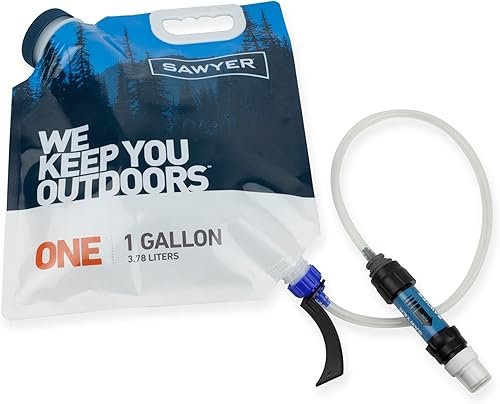
| Sawyer One-Gallon System | Overall / Camping | 0.1 micron, 100k+ gallon life | $61 | Amazon eBay |
| Phoenix Gravity 12L (Stainless) | Home Countertop | NSF Certified, dual carbon filters | $2.96 | Amazon eBay |
| Phoenix Gravity 6L (Stainless) | Smaller Households | Compact, includes SS tap & stand | $2.82 | Amazon eBay |
| Miniwell Outdoor Gravity System | Budget / Travel | Lightweight, good flow rate | $17.21 | AliExpress |

1. Sawyer Products One-Gallon Gravity System
This is my go-to recommendation for anyone starting out. I’ve used this exact system on week-long backcountry trips and as my primary filter during a three-day power outage. The 0.1-micron hollow fiber membrane is the gold standard for portable biological filtration. It removes everything it claims, and the flow rate is surprisingly decent for a membrane this fine. The included one-gallon bag is tough, but I’d suggest buying a second one as a backup. Honestly, for the price and the insane filter lifespan, it’s almost unbeatable for camping and emergency prep.
- Exceptional 0.1-micron filtration
- Filter lasts for 100,000+ gallons
- Extremely lightweight and packable
- Simple backflushing cleaning process
- Does not improve taste or remove chemicals
- 1-gallon bag can be slow when full
- Plastic construction feels less premium

2. Phoenix Gravity 12-Liter Stainless Steel Filter
If you want a permanent countertop solution that looks sharp and works without fuss, this is a fantastic choice. The stainless steel build feels solid and will last for years. It comes with two smart carbon cartridges that do a great job on chlorine, taste, and odors. The 12-liter capacity is perfect for a family of four. What I like is the transparency—it’s NSF certified, so you know the claims are legit. It’s a big step up from generic plastic pitchers. Just remember, carbon filters won’t remove bacteria; they’re for chemical and aesthetic improvement.
- Durable, food-grade AISI 304 stainless steel
- NSF certified for material safety
- Excellent for improving taste and odor
- Large 12L capacity for families
- Does not filter bacteria or viruses
- Carbon filters need regular replacement
- Higher upfront cost than plastic models

3. Phoenix Gravity 6-Liter Stainless Steel Filter
This is the smaller sibling to the 12L model, and it’s ideal for couples or single-person households. You get the same quality stainless steel construction and filtration performance in a more compact package. It even includes a stainless steel stand and tap, which makes dispensing water clean and easy. I appreciate that it doesn’t take over the entire countertop. The 6L capacity is plenty if you’re just using it for drinking water. It’s the same great taste improvement, just in a size that makes more sense for smaller spaces.
- Space-saving design for small kitchens
- Includes convenient SS stand and tap
- Same quality filtration as larger model
- More affordable entry point
- 6L may require more frequent refills for families
- Still only a carbon filter (no pathogen removal)
- Replacement cartridges add ongoing cost

4. Miniwell Outdoor Gravity System (Budget Pick)
For the price, this little system from AliExpress is a solid contender for budget-conscious travelers. I was skeptical, but the 100% positive rating caught my eye. It’s a hollow fiber membrane system similar in concept to the Sawyer, designed for hiking and camping. The flow rate is reportedly good, and it’s very lightweight. The big question is long-term durability and filter consistency—that’s where the more established brands have an edge. But if you need a cheap, effective backup for a trip or to keep in your car emergency kit, it’s worth considering. Manage your expectations on build quality.
- Extremely affordable price point
- Lightweight and compact for travel
- Perfect for a backup or emergency kit
- Unknown long-term filter longevity
- Build quality may not match premium brands
- Limited customer support and warranty
Frequently Asked Questions
- What is the best gravity-fed water filter?
- For most people, the Sawyer One-Gallon system is the best overall. It combines proven 0.1-micron hollow fiber filtration, an incredible 100,000+ gallon filter life, and a very reasonable price. It’s perfect for camping, emergencies, and everyday use if you don’t need chemical removal.
- Do gravity water filters remove bacteria?
- Yes, but only if they use a physical barrier like a ceramic or hollow fiber membrane with an absolute pore size of 0.2 microns or smaller. Carbon-only filters do not remove bacteria. Always check the filter’s specifications and certifications for microbiological claims.
- How often should you clean a gravity filter?
- It depends on your water quality. For ceramic filters, scrub them gently with a soft pad when the flow rate slows noticeably—maybe every few weeks with murky water. Hollow fiber membranes like Sawyer’s are cleaned by backflushing with the included syringe, which you should do after every use or when flow slows.
- Can you use a gravity filter for well water?
- You can, but with caution. Gravity filters with 0.1-0.2 micron membranes will remove bacteria and cysts common in well water. However, they will not remove dissolved minerals, iron, manganese, or heavy metals. You must get your well water tested first. For comprehensive treatment, a dedicated filter system for house use is often necessary.
- Are gravity filters better than pitcher filters?
- In almost every way, yes. Gravity filters have much larger capacities, far superior filter elements that last thousands of times longer, and a lower cost per gallon. The only advantage of a pitcher is its small size and that it’s already in your fridge. For serious filtration, gravity wins.
- Do gravity filters remove chlorine?
- Only if they contain an activated carbon element. Ceramic or hollow fiber membrane-only filters will not remove chlorine. If improving the taste of city tap water is your goal, look for a system with a carbon block or granular activated carbon stage.
Final Thoughts
After all my years testing systems, from complex under-sink RO units to simple pitchers, I have a deep respect for gravity filters. They represent the perfect intersection of effectiveness, simplicity, and value. The single biggest mistake I see is people overcomplicating their water needs. Not everyone needs a $500 reverse osmosis system.
For pure biological safety in the wild, get the Sawyer. For great-tasting water on your countertop without any installation, get the Phoenix stainless steel model. Match the filter to your actual problem, and you’ll have clean water for years without a second thought. If your needs are more complex, involving whole-house treatment or specific contaminants like lead, then it’s time to look at more advanced options. But for most everyday situations, gravity is your best friend.
