


After testing water filters for over a decade, I’ve seen trends come and go. But UV purification? It’s a workhorse technology that’s earned its place. If you’re on well water or just want that extra layer of microbiological safety, a UV system might be your best friend.
- What UV filtration actually does (and what it doesn’t)
- How the light destroys contaminants at a DNA level
- The real benefits and honest drawbacks
- How to choose the right system for your home
What Is a UV Water Filtration System?
A UV water filtration system is a disinfection device. It uses high-output ultraviolet light to kill or inactivate microorganisms in your water. Think bacteria like E. coli, viruses like rotavirus, and nasty parasites like Giardia and Cryptosporidium. It’s a physical disinfection process. No chemicals are added.
Here’s the critical thing most people get wrong: UV is a purifier, not a filter in the traditional sense. It doesn’t remove anything from the water. The dead microbes stay in the water, but they’re harmless. It also won’t touch chlorine, lead, pesticides, or that rusty taste from old pipes. For that, you need other stages. A dedicated ceramic filtration system is great for sediment and bacteria, but UV handles viruses that ceramic might miss.
How UV Water Purification Works
The science is straightforward but effective. Water flows into a chamber where it’s exposed to a powerful UV-C light lamp (typically at a 254nm wavelength). This specific wavelength penetrates the cell walls of microbes and scrambles their DNA.
The Destruction Process
When the UV light hits the microorganism’s genetic material (DNA and RNA), it causes a reaction. Adjacent molecules bond together, forming what are called “dimers.” This physical damage makes it impossible for the microbe to replicate. It can’t reproduce, so it can’t cause an infection. The kill rate for properly sized systems is 99.99%.
Key Components
A basic setup has a stainless steel chamber, the UV lamp, a quartz sleeve that protects the lamp from the water, and a power supply. The quartz sleeve must stay clean for the light to penetrate effectively—this is why pre-filtration isn’t just a good idea, it’s mandatory.
Key Benefits of UV Systems
Chemical-Free Disinfection: This is the big one. You’re not adding chlorine or other chemicals to your water. No byproducts, no taste changes. It’s pure physics at work.
Extremely Effective: When correctly sized and maintained, UV is one of the most reliable ways to kill waterborne pathogens. It’s used by municipalities and bottled water companies worldwide for a reason.
Low Energy & No Water Waste: A typical residential UV lamp uses about the same power as a 60-watt light bulb. And unlike reverse osmosis, it doesn’t send any water down the drain. If you’re looking at a tankless ro filter for space savings but are on a septic system, pairing a simpler sediment/carbon setup with UV might be a more water-efficient choice.
Fast & Continuous: Treatment happens in seconds as water flows through. It works 24/7, providing on-demand safe water.
Potential Drawbacks to Consider
Electricity Required: No power, no UV light. If you have frequent outages, you’ll need a backup plan, like a battery unit or a non-electric backup method.
Lamp & Sleeve Maintenance: The UV lamp degrades over time, even if it still glows. Most need replacement every 9-12 months. The quartz sleeve needs periodic cleaning. Neglect this, and your system becomes a fancy paperweight.
No Residual Protection: The water is only safe at the point of treatment. If bacteria are in your home’s plumbing after the UV unit, they can still grow. For homes with long pipe runs, this can be a concern.
Types of UV Water Filtration Systems
Whole-House UV Systems
Installed where the water line enters your home. They treat every drop—showers, sinks, laundry. These are high-flow units (measured in Gallons Per Minute, GPM) and are the go-to for well water homes. You’ll need to know your home’s peak flow rate to size it correctly.
Point-of-Use (POU) UV Systems
These are smaller units installed under a specific sink or at a single faucet. They’re perfect for treating drinking and cooking water only. Often, they’re the final stage in a multi-stage system, like the 6-stage RO units we’ll look at below. They’re also common in RVs and boats.
UV + Pre-Filter Combo Units
These all-in-one packages bundle a sediment filter and sometimes a carbon filter with the UV chamber. They simplify installation and ensure you have the necessary pre-treatment. It’s a good option if you want a single-box solution.
Buying Guide: What Actually Matters
1. Flow Rate (GPM): This is non-negotiable. For a whole-house system, calculate your peak demand (how many showers, faucets, and appliances might run at once). A 10 GPM unit is common for a 2-3 bathroom home. Undersizing leads to inadequate exposure time and poor disinfection.
2. Certification: Look for NSF/ANSI Standard 55 (Ultraviolet Microbiological Water Treatment Systems) Class A or B. Class A is for disinfecting contaminated water (like well water). Class B is for supplemental treatment of already disinfected water. This certification is your quality guarantee.
3. Pre-Filtration: As we’ve hammered home, you need a sediment filter upstream. A 5-micron filter is standard. If you have other issues like hardness or chlorine, you’ll need additional stages. For complex water issues, a full reverse osmosis system with a UV stage can be the ultimate solution.
4. Monitoring & Alerts: Good systems have a UV intensity monitor and a countdown timer for lamp life. The best ones will audibly alarm if the UV dose drops below a safe level. Don’t buy a unit without these features.
Our Top Picks for 2026
| Product | Key Features | Price | Links |
|---|---|---|---|
 |
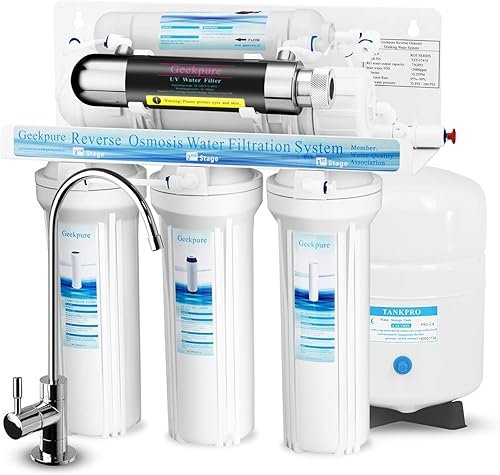
6-stage RO + UV, 75 GPD, NSF-certified RO membrane, 9000-hour UV lamp life, lead-free faucet | $2.45 |
Buy on Amazon Buy on eBay |
|
Similar 6-stage setup, 75 GPD, quick-push fittings for easy install, ISO9001:2015 certified factory | $2.79 |
Buy on Amazon Buy on eBay |
 |
Portable, electric/solar charge, 30,000L capacity, hollow membrane filter, LED light with SOS mode | $1.33 |
Buy on Amazon Buy on eBay |
 |
9-stage filtration, 800 GPD, NSF/ANSI 42&58&372 certified, reduces PFAS, 2:1 drain ratio | $7.19 |
Buy on Amazon Buy on eBay |
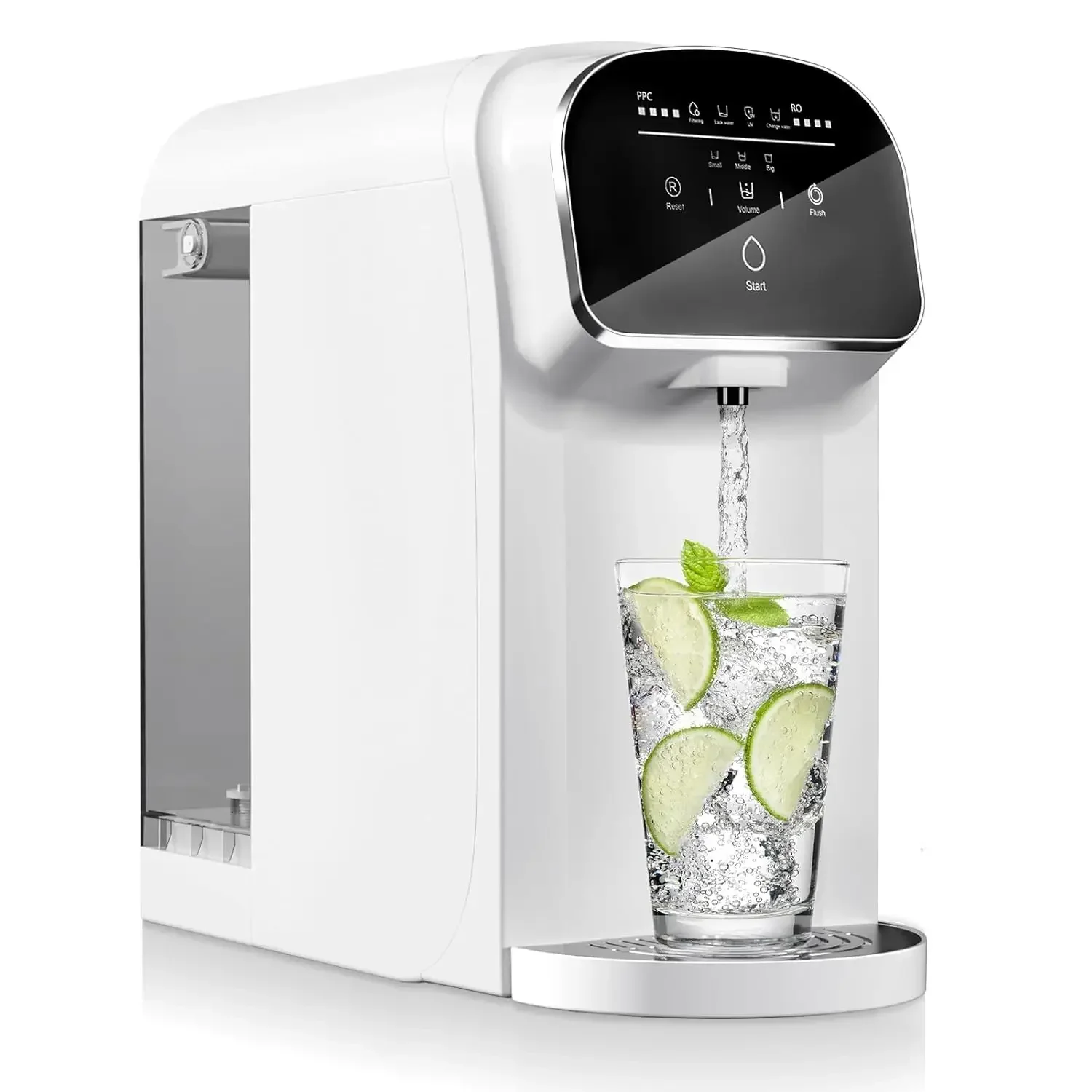 |
Countertop, 5-stage RO + UV, 5:1 pure-to-drain ratio, no installation required | $254.27 | Buy on AliExpress |
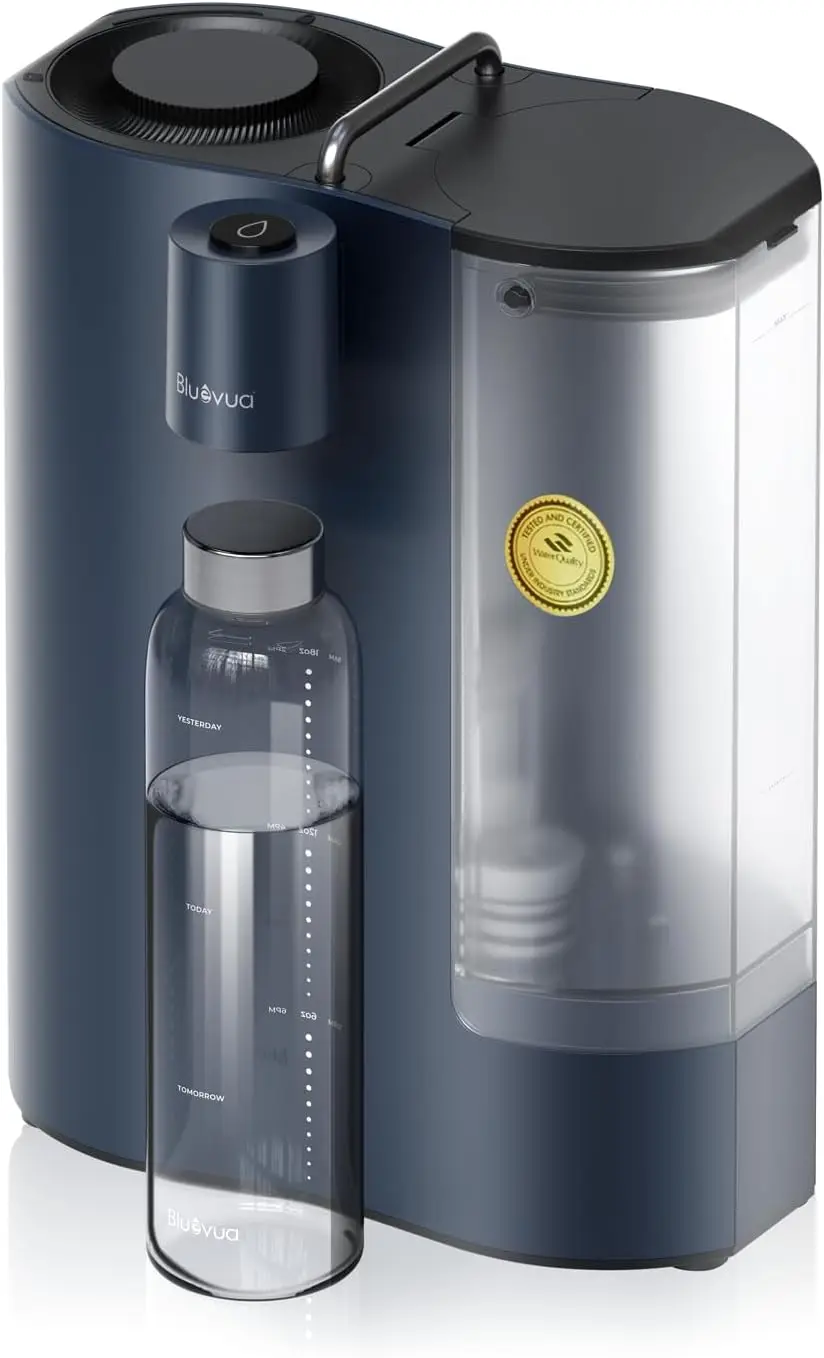 |
Portable, 6-stage filtration, includes glass bottle, for home & travel | $170.41 | Buy on AliExpress |
Geekpure 6-Stage RO with UV (Our Top Amazon Pick)
This is the combo unit we recommend for most homeowners who want both chemical reduction and microbiological safety. The six stages handle sediment, carbon, RO membrane, and then UV as the final guardian. The 75 GPD flow is fine for drinking water. What I like is the NSF-certified RO membrane and the 9,000-hour lamp life—that’s over a year of continuous use. The quick-connect fittings make DIY installation less of a headache.
- Complete 6-stage solution in one box
- NSF-certified RO membrane for trust
- Long-lasting UV lamp
- Lead-free faucet included
- 75 GPD is slow for high-demand households
- Requires under-sink space and drill for faucet
- Wastewater from RO stage (typical ratio)
Waterdrop X8 9-Stage RO System (High-Flow Pick)
If you want speed and certification, the Waterdrop X8 is a beast. It doesn’t have a UV stage built-in, but I’m including it because its 800 GPD flow and NSF/ANSI 42, 58, and 372 certifications are exceptional. You could pair this with a separate whole-house UV system for total protection. The 2:1 drain ratio is excellent for water conservation. Honestly, for city water with chlorine and PFAS concerns, this tankless reverse osmosis system might be all you need—UV is for microbiological threats, which are less common on treated municipal supplies.
- Extremely fast 800 GPD flow
- Top-tier NSF/ANSI certifications
- Excellent 2:1 pure-to-drain ratio
- Tankless design saves space
- No UV stage (sold separately)
- Higher upfront cost
- Still produces some wastewater
AliExpress Budget Pick: Countertop RO + UV
For renters or those who can’t install under-sink systems, this countertop unit is interesting. It combines 5-stage RO with UV in a portable package. The 5:1 drain ratio is decent. The big question is always quality control on these marketplace units. I’d want to see independent test reports before trusting it for well water, but for travel or as a secondary unit, it could work. Sometimes, a simple infused water pitcher with a good filter is a simpler first step if you’re just starting out.
- No installation required
- Combines RO and UV
- Good drain ratio for a countertop unit
- Portable for travel or apartments
- Unknown long-term reliability
- Limited certification details
- May lack advanced monitoring features
Frequently Asked Questions
- Does UV filtration remove chlorine or improve taste?
- No. UV light has zero effect on chlorine, taste, odor, or dissolved chemicals. For that, you need activated carbon filters. A multi-stage system that includes carbon blocks is the way to go for comprehensive water quality.
- How often do I need to change the UV lamp?
- Most manufacturers recommend every 9-12 months, or after about 9,000 hours of use. Even if the lamp still glows blue, its intensity drops over time, reducing disinfection power. Always follow the maker’s schedule.
- Can I use a UV system with hard water?
- Yes, but hard water minerals (calcium and magnesium) can build up on the quartz sleeve, blocking UV light. You must clean the sleeve more frequently. A water softener installed before the UV unit solves this problem entirely.
- Is UV better than chlorination for well water?
- They’re different tools. Chlorination adds a chemical residual that protects water in your pipes, but it can create byproducts and affect taste. UV provides instant, chemical-free disinfection at the point of entry but has no residual effect. Many well owners use both: chlorination at the well head, then UV before the house taps.
- Do UV systems work during a power outage?
- Standard systems do not. If you live in an area with frequent outages, look for a model with a battery backup or have a non-electric backup method like boiling or chemical disinfection tablets on hand.
Final Thoughts
UV water filtration isn’t a magic bullet. It’s a specialist tool for a specific job: killing microbes. If your water test shows bacteria, viruses, or parasites, it’s one of the best solutions available. Pair it with the right pre-filters, and you’ve got a seriously robust setup. For city water users worried mostly about chemicals and taste, your money is better spent on a high-quality carbon or RO system.
Our pick for most homeowners is the Geekpure 6-Stage RO with UV. It gives you everything in one package. If you have high flow needs and separate concerns, consider the Waterdrop X8 for its incredible speed and certifications, and add a whole-house UV unit if your well test demands it. Test your water first, understand your actual contaminants, and then buy the system that matches—not the one with the most impressive-sounding stages.
