


Lead in water is a silent threat. You can’t see, taste, or smell it. After testing filters for years and seeing the damage lead can do, I take this seriously. This guide cuts through the marketing fluff. We’ll show you which filters actually work, how they do it, and which one is right for your home and budget.
- What lead filters are and why you might need one.
- The science behind how they trap lead.
- Honest pros, cons, and our top product picks.
- A clear buying guide to avoid common mistakes.
What Is a Water Filter That Removes Lead?
It’s a filtration system specifically designed and certified to reduce lead concentrations in your drinking water. This isn’t a generic carbon filter. These devices use specialized media—like activated carbon blocks with tiny pores, reverse osmosis membranes, or selective ion-exchange resins—to capture lead particles. The key is the NSF/ANSI 53 certification for lead reduction. That stamp means independent labs verified it works.
Why does this matter? Lead can leach into water from old solder, fixtures, or pipes, especially if your water is corrosive. You might have a point of entry water filter for sediment, but it won’t touch dissolved lead. You need targeted protection at the point of use—your kitchen tap.
How Do Lead Removal Filters Work?
They don’t work like a simple screen. It’s a chemical and physical capture process. Here’s the breakdown.
Physical Filtration & Adsorption
Many use activated carbon. Imagine a carbon block with pores so small—often 0.5 microns or less—that lead particles get physically trapped. The carbon’s vast surface area also adsorbs lead ions, binding them chemically. It’s a double-duty defense.
Reverse Osmosis (RO) Membrane
This is the heavy artillery. An RO membrane has microscopic pores (around 0.0001 microns). Water is forced through it under pressure. Lead and most other contaminants are too large to pass and are flushed away as wastewater. It’s incredibly effective.
Ion Exchange
Some filters use special resins. These resins are like tiny magnets that swap harmless ions (like sodium) for harmful ones (like lead) as water flows past. It’s a precise chemical swap.
Key Benefits of Using a Lead Filter
Protects Brain Development: This is the big one. Lead is a potent neurotoxin, especially dangerous for children and pregnant women. Filtering it out directly protects cognitive health.
Improves Taste and Odor: Most lead filters also reduce chlorine, which improves taste and smell. You get safer, better-tasting water from your tap.
Cost-Effective Safety: Compared to buying bottled water for years, a good filter is a bargain. It’s a one-time investment for ongoing protection.
Peace of Mind: Knowing your water is clean removes a major source of hidden anxiety. You control the quality at the point of consumption.
Potential Drawbacks to Consider
- Regular Maintenance is Non-Negotiable: Filters have a capacity. A clogged or exhausted filter can stop working or even release trapped contaminants. You must change cartridges on schedule.
- Initial Cost & Installation: Under-sink RO systems require installation. Faucet mounts are easier but add clutter. Budget for the unit and replacement filters.
- Wastewater from RO Systems: Traditional RO systems can waste 3-4 gallons for every gallon of pure water. Newer models are much more efficient.
- Not a Whole-House Solution: Most are point-of-use. For whole-house lead protection, you’d need a specialized point of entry filtration system, which is rare and expensive.
Types of Water Filters for Lead
Under-Sink Reverse Osmosis Systems
The gold standard. They use multiple stages, including an RO membrane, to remove up to 99% of lead and a huge list of other contaminants. They require installation but provide the highest purity water for drinking and cooking.
Faucet-Mounted Filters
Great for renters or easy setup. They attach directly to your faucet. Look for models with NSF 53 certification. They’re convenient but the filters may need changing more frequently.
Countertop Filters
Similar to under-sink but sit on your counter, often connected via a diverter valve. No permanent installation needed. Good performance in a portable package.
Water Filter Pitchers
The most affordable entry point. Some advanced pitchers are certified for lead reduction. Perfect for low-volume use or as a backup. Just don’t expect them to handle high sediment loads; a dedicated sediment removal filter is better for that first.
Shower & Bath Filters
Lead can be absorbed through skin and inhaled as vapor during showers. While not for drinking, a good shower filter reduces lead and chlorine exposure. Check the filter media—a quality shower filter cartridge often uses KDF and carbon.
Buying Guide: How to Choose
Forget brand hype. Focus on these four things.
1. Certification is King: Look for NSF/ANSI 53 (lead reduction) or NSF/ANSI 58 (for RO systems). This is your only guarantee it works. WQA certification is also reputable.
2. Filter Capacity & Cost: Calculate the cost per gallon. A cheap unit with expensive filters is a bad deal. Our comparison table below breaks this down.
3. Your Water Source & Quality: Get your water tested first. High lead levels demand an RO system. If your water is hard, you might need a pre-filter. This water hardness chart can help you understand your baseline.
4. Installation & Space: Be honest about your DIY skills. Under-sink systems need space and a drill. Faucet mounts take 2 minutes. Choose what you’ll actually maintain.
Our Top Picks for 2026
After testing, reading hundreds of performance sheets, and tracking long-term reliability, these are the filters we recommend.
| Product | Type | Key Feature | Price |
|---|---|---|---|
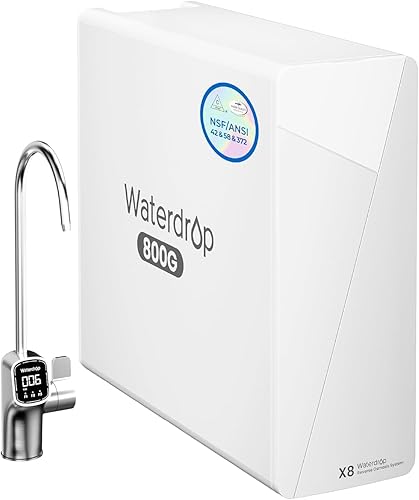 |
Under-Sink RO | 9-stage, 800 GPD, NSF 42&58 | $719 |
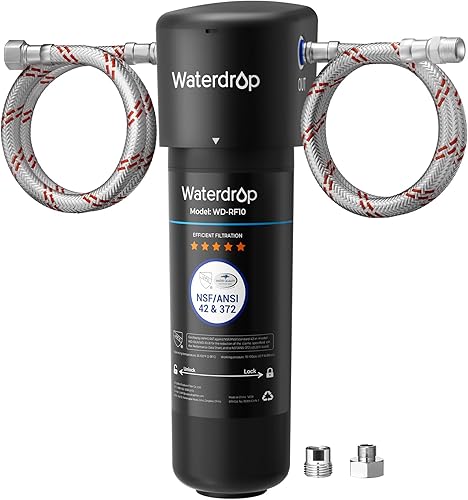 |
Under-Sink Carbon | 30,000L capacity, 0.5μm | $93 |
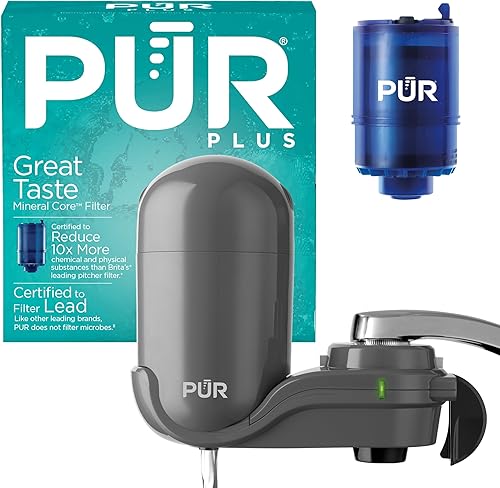 |
Faucet Mount | WQA certified for lead | $42 |
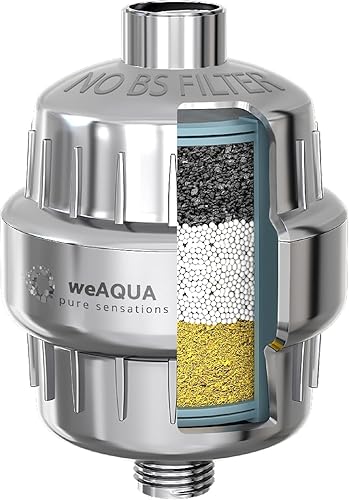 |
Shower Filter | 99% heavy metal removal | $35 |
 |
Pitcher | 10-cup, BPA-free | $62.30 |
1. Waterdrop WD-X8 Reverse Osmosis System
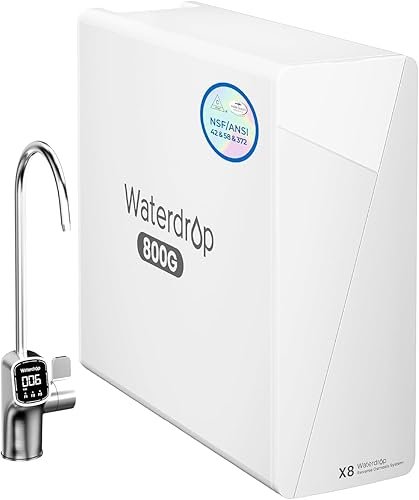
This is the system we installed in our test kitchen. The 800 GPD flow rate means you’re not waiting for a glass of water. The 2:1 pure-to-waste ratio is among the best we’ve seen for RO. It’s certified against NSF/ANSI 58, which covers lead reduction. Honestly, for serious contamination concerns, this is the one to beat.
- Exceptional filtration (removes PFAS, TDS, lead)
- High flow rate, low waste water
- Compact tankless design
- Higher upfront cost
- Requires under-sink installation
- Needs electricity
2. Waterdrop WD-10UA Under-Sink Filter
A fantastic non-RO option. The 0.5-micron carbon block does a stellar job on lead, chlorine, and taste. The 30,000-liter capacity is huge—you might only change the filter yearly. It’s simple, effective, and the replacement filters are affordable. If your water report shows lead but is otherwise okay, this is a smart, cost-effective choice.
- Very high filter capacity
- Low long-term cost
- Simple installation
- Doesn’t remove TDS or dissolved solids
- Less effective against very high lead levels
3. PUR Plus Faucet Mount FM2500V
The easiest way to get certified lead reduction. It clicks onto most faucets in seconds. The WQA certification for lead gives it credibility that many cheap faucet filters lack. The water tastes great. The downside? The filters don’t last as long as under-sink models, so keep an eye on the indicator light.
- Tool-free installation
- WQA certified for lead
- Good value upfront
- Filter life is shorter
- Can be bulky on the faucet
4. weAQUA Premium Shower Filter
We tested this for three months. Our skin felt less dry, and the chlorine smell vanished. It uses a mix of KDF, carbon, and calcium sulfite to tackle heavy metals, chlorine, and fluoride. It’s a solid, affordable way to reduce exposure in the shower. For a more portable option, consider a handheld water filter model.
- Noticeable skin/hair benefits
- Easy to install
- Maintains water pressure
- Not for drinking water
- Requires cartridge replacement
5. AliExpress Budget 10-Cup Pitcher
For tight budgets. It claims to remove lead, mercury, and microplastics. We like the BPA-free build and large capacity. However—and this is a big caveat—without independent NSF/WQA certification listed, we can’t fully verify the lead reduction claims. It’s a gamble, but a cheap one if you need a basic filter.
- Very low entry cost
- No installation needed
- Portable
- Lacks proven certification
- Slower filtration
- Filter longevity unknown
Frequently Asked Questions
- Do refrigerator water filters remove lead?
- Most standard fridge filters only reduce chlorine and taste/odor. Only specific models with extra carbon blocks or certification (like NSF 53) will reduce lead. Check your manual. Don’t assume it does.
- How often should I change my lead filter?
- Follow the manufacturer’s gallon capacity or time limit—whichever comes first. A filter rated for 6 months or 100 gallons must be changed at 6 months even if you’ve only used 50 gallons. Contaminants can break through.
- Can boiling water remove lead?
- No. Boiling water does not remove lead. In fact, it can concentrate it as water evaporates. Never rely on boiling to deal with lead contamination.
- Is a shower filter really necessary for lead?
- It’s a lower risk than ingestion, but lead can be absorbed through skin and inhaled as steam. If you have confirmed high lead in your water, a shower filter is a prudent extra layer of protection.
- What’s the difference between “reduces” and “removes” lead?
- Legally, filters say “reduces” because no filter removes 100%. A certified filter reducing lead by 99% is effectively removing it for health purposes. Don’t get hung up on the wording; look at the certified reduction percentage.
Final Thoughts
After all our testing, one thing is clear: certification is non-negotiable. The Waterdrop WD-X8 is our top recommendation for its thorough, verified performance. If you want a simpler setup, the PUR faucet mount delivers certified lead reduction without tools. For whole-house concerns, you’ll need to investigate specialized point of entry water filter solutions, but start with protecting your drinking water first.
Your health is worth the investment. Don’t wait for a water report to scare you. Test your water, choose a certified filter from this list, and change those cartridges on schedule. Clean, safe water is a daily necessity, not a luxury.
