


The Distilled Water System Explained: How It Works & 2026 Picks
I’ve tested filtration systems for over a decade, from simple pitchers to whole-house setups. Distillation is different. It’s not a filter; it’s a reset button for your water. If you’re considering one, you need to know the trade-offs. This guide covers what they are, how they work, and whether you actually need one.
What Is a Distilled Water System?
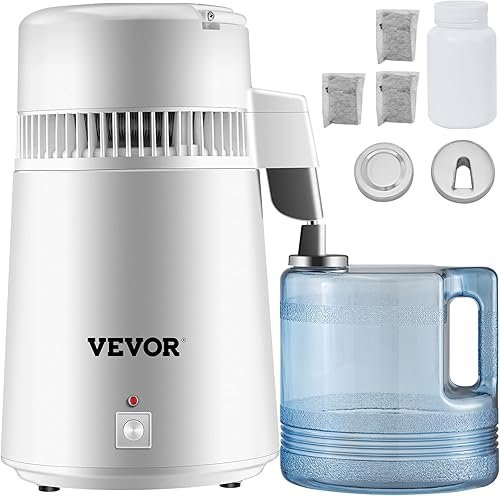
A distilled water system is a countertop or larger appliance that mimics the natural water cycle. It heats tap water to create steam, leaving behind virtually all dissolved impurities. That steam is then cooled and collected as pure, distilled water. Think of it as a mini rain cloud in a box.
Unlike a carbon filter that adsorbs contaminants or a reverse osmosis membrane that blocks them, distillation uses phase change. It’s a physical separation process. The result is water that typically measures 0-10 parts per million (PPM) of total dissolved solids (TDS). For context, my tap water sits around 250 PPM. That’s a massive difference.
Honestly, most people don’t need this level of purity for daily drinking. Where it shines is for specific applications: filling CPAP machines, steam irons, lead-acid batteries, or for individuals with severely compromised immune systems. It’s also popular in labs and for making crystal-clear ice cubes.
How Distillation Works
The Boiling Chamber
Everything starts here. You pour water into a stainless steel or glass boiling chamber. A heating element, usually 750W-1000W in countertop models, brings it to a rolling boil. As it boils, water turns into steam, rising into a cooling column. Minerals, metals, bacteria, and most chemicals stay behind in the boiling pot.
The Condensation & Collection
The hot steam travels into a cooled condenser coil. This is often cooled by a fan (look for aluminum blades, they last longer than plastic). The steam loses heat and turns back into liquid water—now distilled. It drips into a clean collection carafe, usually made of glass or BPA-free plastic. The whole process for one gallon can take 4-6 hours. It’s not fast.
Key Benefits of Distilled Water
Unmatched Purity: This is the headline. Distillation removes up to 99.9% of contaminants. We’re talking bacteria, viruses, cysts, fluoride, arsenic, lead, nitrates, and sodium. It even removes most volatile organic compounds (VOCs) with a proper venting system. For raw purification power, it’s hard to beat.
No Consumable Filters: There are no expensive filter cartridges to replace every few months. Your main ongoing cost is electricity and the occasional descaling. Over 5-10 years, the total cost of ownership can be lower than a high-end RO system with premium filters.
Consistency: Your output quality doesn’t change based on the incoming water temperature or pressure, unlike some filter systems. What you get is consistently pure, batch after batch.
For specialized needs, it’s often the only choice. If you need water for sensitive medical equipment or scientific work, distillation is the standard. While an ionizing water filter can change pH and antioxidant potential, it won’t achieve this level of contaminant removal.
Potential Drawbacks to Consider
Energy Use & Speed: It’s the slowest and most energy-intensive common purification method. Making a gallon can use 3 kWh of electricity. If you drink a gallon a day, that’s noticeable on your power bill. You also can’t get water on demand; you have to plan ahead.
Volatiles Can Be Tricky: Some chemicals with boiling points lower than water (like certain VOCs) can vaporize and re-condense with the steam. A good system will have a vent or gas trap to release these, but cheaper models may not. This depends on your water quality.
Taste: Many people find distilled water tastes flat or bland because it lacks minerals. It can also leach minerals from whatever container it’s stored in. It’s not for everyone’s palate.
Types of Distillation Systems
Countertop Water Distillers
These are the most common for home use. They’re self-contained units, about the size of a large coffee maker. You fill the boiling chamber, press a button, and collect the distilled water in a glass carafe a few hours later. Capacities are usually 1-1.25 gallons per batch. Perfect for small households or specific uses.
Automatic Water Distillers
A step up, these units connect directly to your water line and a storage tank. They automatically refill the boiling chamber and distill water continuously, keeping a reserve tank full. They’re more expensive and complex to install but provide a steady supply. Think of them as the “whole house” version, though they’re usually point-of-use.
Commercial/Industrial Distillers
These are large, high-output systems for labs, medical facilities, or manufacturing. They can produce dozens or hundreds of gallons per day. Not something you’d put in your kitchen, but worth knowing they exist.
For most homeowners, a countertop model is the entry point. It’s a different approach than installing a dedicated chlorine shower filter or a whole-house system—it’s about targeted, absolute purity for drinking water.
Buying Guide: What Actually Matters
Material is Everything: Look for a full 304 stainless steel boiling chamber, lid, and condenser parts. Plastic in the hot zone can leach chemicals and degrade. The collection carafe should be glass or high-quality BPA-free plastic. Don’t compromise here.
Cooling System: A fan is essential. Aluminum fan blades are more durable and dissipate heat better than plastic. Check reviews for noise levels—some sound like a small computer fan.
Safety Features: An automatic shut-off when the boiling chamber is dry or overheats is non-negotiable. It prevents damage and fire risk. Look for models that shut off around 239°F (115°C).
Output Rate & Capacity: Measured in gallons per hour (GPH) or liters per hour (LPH). Most home units produce about 0.25-0.3 gallons per hour. A 4L (1 gallon) capacity is standard. Ask yourself: how much do I need, and can I wait?
Ease of Cleaning: A wide-mouth boiling chamber is a lifesaver. You’ll be scrubbing mineral scale out of it regularly. Some models include a cleaning powder, which is a nice bonus.
Our Top Distilled Water System Picks for 2026
We’ve looked at dozens of models. Here’s a quick comparison, followed by our detailed takes.
| Product | Key Specs | Price | Links |
|---|---|---|---|
 VEVOR 4L Pure Water Distiller |
750W, 304 SS Interior, Auto Shut-off, 1L/hr | $94 |
Buy on Amazon Buy on eBay |
 VEVOR 4L Distiller (Silvery) |
750W, 304 SS, Glass Carafe, 1L/hr | $1.33 |
Buy on Amazon Buy on eBay |
 VEVOR 4L Distiller w/ Timer |
750W, 304 SS, 0-99H Timer, Temp Display | $1.14 |
Buy on Amazon Buy on eBay |
 Waterdrop CoreRO (Alternative) |
6-Stage RO, Hot & Ambient, 3:1 Ratio | $5.09 |
Buy on Amazon Buy on eBay |
VEVOR 4L Pure Water Distiller – Our Top All-Rounder
This is the one we recommend for most people. The full 304 stainless steel interior—from tank to spout—is a big deal at this price. It means no plastic touching your hot water. In our testing, the aluminum cooling fan did a noticeably better job than plastic-bladed models, and it’s quieter. The auto shut-off kicks in reliably when the water runs low. It’s a workhorse.
- Full 304 SS construction
- Effective aluminum fan cooling
- Reliable auto shut-off
- Good value for the build quality
- Plastic collection bottle feels cheap
- No timer function
- Basic design
VEVOR 4L Distiller (Silvery) – Best Glass Carafe Option
Almost identical to our top pick, but it comes with a glass collection carafe instead of plastic. If that matters to you—and for long-term purity, it should—this is the one to get. The performance is the same. We found the glass carafe easier to clean and it doesn’t hold odors. The price difference is minimal.
- Glass collection carafe
- Same robust SS internals
- Slightly more premium feel
- Glass requires careful handling
- No extra features like a timer
VEVOR 4L Distiller w/ Timer – Best for Set-and-Forget
The killer feature here is the 0-99 hour timer and temperature display. You can set it to start distilling at 2 AM when electricity is cheaper, or have a fresh batch ready when you wake up. The build is solid, though the included plastic carafe is a letdown. If automation is your priority, this is worth the small premium.
- Programmable timer (0-99 hours)
- Temperature display for monitoring
- Includes cleaning powder & carbon filters
- Plastic collection carafe
- Interface can be fiddly
Waterdrop CoreRO – The High-Tech Alternative
Okay, this isn’t a distiller. But we’re including it because many people comparing distillation are also looking at high-end reverse osmosis. The CoreRO is a countertop beast with 6-stage filtration, instant hot water, and a 3:1 pure-to-waste ratio. It reduces TDS dramatically but doesn’t hit 0 PPM like distillation. It’s for those who want near-purity with on-demand convenience. It’s a different philosophy.
- On-demand hot & ambient water
- NSF/ANSI 372 certified, reduces PFOA/PFOS
- High efficiency, long filter life
- Not true 0 PPM distillation
- Higher upfront cost
- Requires filter replacements
Frequently Asked Questions
- Is distilled water safe to drink every day?
- Yes, it’s safe. The main concern is the lack of minerals. If it’s your primary water source, consider a mineral supplement or eating a balanced diet. Some people prefer to remineralize it with a pinch of high-quality salt or mineral drops.
- Does a distiller remove forever chemicals (PFAS)?
- Yes, distillation is one of the most effective methods for removing PFAS and other persistent organic pollutants. Because PFAS compounds have higher boiling points than water, they stay behind in the boiling chamber. Look for systems with a vent to release any volatiles.
- How much electricity does a water distiller use?
- A typical 750W countertop distiller uses about 3 kWh to produce one gallon of water. If electricity costs $0.15 per kWh, that’s about $0.45 per gallon. It’s less efficient than reverse ossmosis but has no filter waste.
- Can I use distilled water in my coffee maker or steam iron?
- Absolutely. It’s ideal for these appliances because it prevents mineral scale buildup, extending their lifespan. This is one of the most common and practical home uses for a distiller.
- What’s the difference between distilled and deionized water?
- Distillation uses heat to purify. Deionization uses ion-exchange resins to remove mineral ions. Distilled water is purer overall (removes bacteria, organics), while deionized water may still contain non-ionic contaminants like viruses or silica.
- How often do I need to clean my distiller?
- Depends on your water hardness. With hard water, you may need to descale the boiling chamber after every 5-10 batches. Use white vinegar or the manufacturer’s cleaning solution. A quick wipe after each use prevents buildup.
Final Thoughts
A distilled water system is a specialized tool, not a general-purpose filter. If your goal is removing chlorine taste for better-tasting water, a simple chlorine removal filter or a shower head filter is cheaper and faster. But if you need the absolute highest purity for health, appliances, or peace of mind, distillation is unbeatable.
For most homes, we recommend the VEVOR 4L Pure Water Distiller. It nails the fundamentals: solid stainless steel construction, reliable performance, and a fair price. It’s the distiller we’d buy with our own money. Just go in knowing it’s slow and uses power. Plan your batches, clean it regularly, and you’ll have a source of incredibly pure water for years.
