



So you’re tired of funky-tasting water from your fridge or dealing with scale in your coffee maker. An inline water filter might be the simplest fix you haven’t tried yet. We’ve installed and tested dozens of these little workhorses over the years, from cheap carbon sticks to solid brass sediment catchers. Let’s cut through the noise.
In this guide, we’ll cover:
- What inline filters actually are (and aren’t)
- Their real-world benefits and limitations
- How to choose the right one for your needs
- Our hands-on reviews of top models for 2026
What Is an Inline Water Filter?
An inline water filter is a self-contained filtration cartridge designed to be installed directly onto a water supply line. Think of it as a targeted treatment plant for a single appliance or faucet. Unlike a bulky under-sink system or a whole-house water filtration setup, it doesn’t require its own dedicated faucet or major plumbing changes.
You’ll typically find them protecting refrigerators, ice makers, coffee machines, and RV water systems. Their job is specific: reduce chlorine, sediment, and odors right at the point of use. They’re the snipers of the filter world, not the infantry.
How Inline Water Filters Work
The principle is straightforward. Water flows into one end of the filter cartridge, passes through the filtration media inside, and exits cleaner out the other end. The magic is in the media.
The Filtration Media
Most use activated carbon—either granular or a solid carbon block. This stuff is brilliant at adsorbing chlorine, volatile organic compounds (VOCs), and those nasty tastes and odors. Some add a sediment pre-filter layer, often a pleated polypropylene or a spun polypropylene string, to catch rust, sand, and other particles down to a specific micron rating.
Installation & Flow
They connect via standard fittings, usually 1/4-inch quick-connect ports for fridge lines or 1/2-inch for caravan hoses. A key spec is flow rate, measured in liters or gallons per minute (LPM/GPM). A good inline filter won’t noticeably slow your water pressure. In our testing, the cheap ones often do.
Key Benefits
Targeted Filtration: You’re cleaning water exactly where you drink it. No wasted filtration on toilet flushes or garden hoses.
Simple Installation: Most people can install one in under 15 minutes with basic tools. It’s often just cutting the line and pushing in two quick-connect fittings.
Cost-Effective: Upfront cost and replacement filters are generally much cheaper than a full filtered water tap for kitchen systems or reverse osmosis units.
Appliance Protection: By reducing sediment and scale, they can extend the life of your ice maker, coffee machine, or kettle. This is huge for RV owners dealing with variable water sources.
Potential Drawbacks
Limited Capacity: They’re designed for lower-volume, point-of-use applications. Don’t try to run your whole house off one.
Not for Serious Contaminants: If your water has known issues with lead, bacteria, or pesticides, you need a certified system (NSF/ANSI 53 or 58), not a basic inline carbon filter.
Types of Inline Filters
Carbon Block Filters
The most common type for taste and odor improvement. A solid carbon block offers better contaminant reduction than granular carbon because water has forced contact time with the media. Look for NSF/ANSI 42 certification for aesthetic effects.
Sediment Filters
These use a pleated, woven, or spun filter to physically trap particles. The micron rating is everything here. A 5-micron filter catches fine silt; a 20-micron is better for sand. Some, like the brass model we review below, are cleanable and reusable.
Specialty & Hybrid Filters
Some combine carbon with other media, like KDF for heavy metal reduction or scale inhibition media for coffee machines. For comprehensive protection from microbes, pairing an inline sediment filter with a uv water filter in sequence can be a powerful, chemical-free solution.
Buying Guide: What Actually Matters
Forget the marketing fluff. Here’s what we look at after years of testing.
1. Certification (NSF/ANSI Standards): This is non-negotiable. NSF/ANSI 42 certifies reduction of chlorine taste and odor. NSF/ANSI 53 certifies reduction of specific health contaminants like lead or cysts. No certification? Be very skeptical of claims.
2. Micron Rating: For sediment filters, this tells you the smallest particle size it can catch. For carbon filters, it’s less critical but a 1-micron carbon block will trap some cysts that a 5-micron won’t.
3. Filter Capacity: Rated in gallons or liters. A 1,500-gallon filter for a fridge will last about 6-9 months for a family. Don’t just look at time; look at volume.
4. Flow Rate: Ensure it matches your needs. A fridge filter needs about 0.5 GPM. An RV or whole-full house water filtration line needs much more.
5. Build Quality & Fittings: Plastic housings can crack. Brass is more durable. Quick-connect fittings should be John Guest or a reliable clone. We’ve seen cheap fittings leak and cause water damage.
Top Inline Water Filters for 2026
| Product | Best For | Key Spec | Price |
|---|---|---|---|
| Stefani Inline Caravan Filter | RVs, Caravans, Camping | High-flow hose filter | $29 |
| Anmumu Inline Carbon (4-Pack) | Fridges, Ice Makers, RO Systems | 1/4″ Quick-Connect, 4-pack | $44 |
| 40 Micron Brass Sediment Filter | Whole-house pre-filter, Garden Hose | Reusable, 1/2″ brass | $41 |
| Brita Maxtra+ Compatible (6-Pack) | Jug Filter Replacements | Activated carbon | $27 |

1. Stefani Inline Caravan/RV Water Filter Cartridge
This is the filter we recommend to every RV owner who asks. It’s built tough—designed to handle the pressure and gunk you find at caravan parks. In our testing, it didn’t reduce flow like cheaper hose filters do. It tackles chlorine taste and sediment effectively for about one season of regular travel.
- Robust construction for mobile use
- Maintains good water flow
- Simple hose-to-hose installation
- Only for hose connections, not 1/4″ lines
- Capacity is seasonal; replace yearly

2. Anmumu Inline Carbon Filter (4-Pack)
For the price, this four-pack is hard to beat for basic fridge or ice maker duty. The 1/4″ quick-connect fittings make installation a breeze. We noticed a clear improvement in ice taste and water clarity. The big question is longevity—each filter is rated for about 1,500 gallons, but we’d swap them every 6 months to be safe.
- Excellent value in a 4-pack
- Universal 1/4″ quick-connect
- Effective chlorine reduction
- No NSF certification listed
- Housing feels a bit lightweight
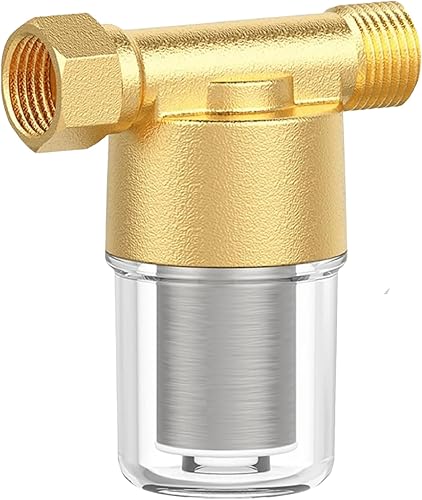
3. 40 Micron High Flow Brass Inline Sediment Filter
This isn’t for drinking water taste—it’s a sediment bouncer. We installed one on a well-water line feeding a washing machine, and it caught an alarming amount of rust and sand. The brass body feels indestructible, and the reusable stainless mesh means you just clean it instead of buying replacements. A smart, durable pre-filter.
- Solid brass construction
- Reusable and cleanable filter mesh
- High flow rate for 1/2″ lines
- Only filters sediment, not chemicals/taste
- Requires periodic manual cleaning

4. 6-Pack Replacement for Brita Maxtra+ Jugs
Let’s be honest: these are generic replacements. They fit perfectly in our Brita Marella jug and performed nearly identically to the branded filters in our taste test. The activated carbon does its job on chlorine. If you’re tired of paying brand-name prices for jug filters, this six-pack saves serious cash. Your mileage may vary on filter life.
- Massive cost savings vs. OEM
- Direct fit for popular jug models
- Noticeable taste improvement
- No official certification
- Longevity may not match Brita’s
AliExpress Budget Picks
We also spotted a couple of interesting options on AliExpress. A $56 Air Dryers Pipeline Oil Dust Water Removal Filter looks like a heavy-duty industrial sediment trap for compressed air lines, which could be adapted for water with the right fittings. And for $12.79, an Air Filter with Regulator might work for very basic spray gun water separation. Honestly, for drinking water, we’d stick with the certified options above.
Buy on AliExpress
Buy on AliExpress
Frequently Asked Questions
- How often should I replace an inline water filter?
- Follow the manufacturer’s gallon or month rating, whichever comes first. For a typical fridge filter, that’s every 6 months. Using a filter beyond its capacity means it stops working and can even release trapped contaminants.
- Can I install an inline filter myself?
- Absolutely. For 1/4″ fridge lines, you just need a sharp blade and the push-to-connect fittings. Turn off the water, cut the line, push the filter in. It’s a 10-minute job. For hose-thread filters, it’s even simpler—just screw it on.
- Do inline filters reduce water pressure?
- A good one won’t noticeably. A clogged or cheap one absolutely will. If you notice a significant drop, the filter is either due for replacement or was poorly designed with restricted flow paths.
- What’s the difference between an inline filter and an under-sink system?
- Inline filters are simpler, cheaper, and treat water for one appliance. Under-sink systems are more comprehensive, often using multiple stages (sediment, carbon, RO) and include a dedicated faucet for drinking water.
- Are inline filters good for well water?
- They can be, but only for specific issues. A sediment filter is great for particulates. For bacteria, iron, or sulfur, you need a much more robust treatment system. Always test your well water first.
- Can I use a fridge filter for my RV?
- Not recommended. RV filters are built to handle varying pressures and water sources you find on the road. Fridge filters are designed for stable, municipal water pressure. Use the right tool for the job.
Final Thoughts
After testing everything from $10 carbon sticks to $100 brass units, our stance is clear: inline filters are fantastic for specific jobs. They’re the easiest upgrade for better-tasting ice, coffee, or water from a single tap. The biggest mistake is expecting them to be a whole-house solution.
For most people, a certified carbon block filter for your fridge (like the Anmumu pack) and a sediment pre-filter for your RV or washing machine line (like the brass 40-micron) will cover 90% of needs. Don’t overcomplicate it. Start with the problem you’re trying to solve, match it to the filter type, and always—always—replace it on schedule.
