


You’ve seen them in campervans, off-grid cabins, and maybe even your neighbor’s kitchen. Gravity-fed filters are having a moment. But are they actually any good, or just a pretty countertop fixture? After testing dozens and talking to the plumbers who install them, here’s the real story.
- What a gravity filter is and how it actually works
- The honest pros and cons you won’t see on the box
- How to pick the right size and filter type for your water
- Our hands-on reviews of systems from $61 to $445
What Is a Gravity Water Filter?
At its core, a gravity water filter is exactly what it sounds like: a system that uses the weight of water to move it through a filter medium. No pumps, no water pressure needed. You pour untreated water into an upper chamber, and it seeps down—pulled by gravity—through one or more filter elements into a clean lower chamber.
We’ve found these systems are often misunderstood. People lump them in with basic ceramic water filtration, but modern versions can be incredibly sophisticated. They’re a go-to for anyone dealing with boil-water advisories, living off the grid, or just wanting a backup that works when the power doesn’t. The simplicity is the real selling point. It just sits there and works.
How a Gravity Water Filter Works
The principle is simple, but the engineering inside the filters can be complex. Let’s break down the two-chamber dance.
The Two-Chamber Setup
Picture two stacked containers, usually stainless steel or BPA-free plastic. The top one holds your raw water. The bottom one collects the purified water, ready to drink. Between them sits the magic: the filter elements. These can be ceramic candles, activated carbon blocks, or hollow-fiber membranes.
The Filtration Process
As water sits in the upper chamber, gravity pulls it downward. It passes through the filter walls, which trap contaminants. Physical barriers catch sediment and bacteria. Adsorptive materials like carbon grab onto chemicals, chlorine, and bad tastes. Some advanced filters, like the hollow-fiber types, have pores so small they physically block pathogens. It’s a slow, deliberate process—which is part of why the water often tastes so clean.
Key Benefits
No Utilities Required. This is the big one. No electricity, no connection to your plumbing. It works during a storm-induced blackout or at a remote campsite. We’ve relied on them during water main breaks.
Exceptional Filtration Quality. A good gravity filter with a 0.1-micron or smaller rating will remove 99.99999% of bacteria and 99.9999% of protozoa. That’s on par with many high-end systems.
Low Long-Term Cost. After the initial purchase, you’re just replacing filters. No energy bills, no wasted water from backwashing. For a household, the cost per liter can be incredibly low over a few years.
Portability and Simplicity. They’re easy to move, set up, and understand. There’s no digital interface to fail. This makes them a fantastic option for emergency preparedness kits.
Potential Drawbacks
Flow Rate is Slow. We can’t stress this enough. You’re at the mercy of gravity and filter density. High-quality filters that remove more contaminants are often slower. Plan ahead.
Filter Maintenance. Ceramic elements need scrubbing to maintain flow. Carbon blocks have a finite lifespan measured in liters. You must track usage and replace them on schedule, or you’re just drinking unfiltered water.
Not for All Contaminants. While excellent for bacteria, cysts, and chemicals, standard gravity filters may not reduce dissolved solids like heavy metals or salts. For that, you’d need a system with specific filter media or consider a water distiller.
Counter Space. These are countertop units. They take up room. A large 12-liter model isn’t ideal for a tiny apartment kitchen.
Types of Gravity Filter Systems
Ceramic Candle Filters
The classic. A porous ceramic shell, often impregnated with silver for antimicrobial properties, filters out sediment and bugs. They’re durable and cleanable, but can be slow. Think of them as a super-fine sediment removal filter.
Activated Carbon Blocks
These are the workhorses for chemical and taste improvement. They adsorb chlorine, volatile organic compounds (VOCs), and pesticides. They’re often paired with a sediment pre-filter. Their life is based on adsorption capacity, not cleanability.
Hollow-Fiber Membrane Filters
Common in portable and survival filters. These use tiny tubes with microscopic pores (often 0.1 or 0.02 microns) to physically exclude pathogens. They’re fast and lightweight but can clog without pre-filtration.
Multi-Stage Combo Systems
The best of all worlds. A typical setup might have a ceramic pre-filter, a carbon block for chemicals, and sometimes a final stage for specific contaminants like fluoride. These offer the most comprehensive protection.
Buying Guide: What Actually Matters
Forget the marketing fluff. Focus on these criteria.
Filter Pore Size & Certifications. Look for NSF/ANSI Standards 42 (aesthetic effects) and 53 (health effects) for claims on cyst and lead reduction. A true 0.2-micron absolute rating is the baseline for bacteria. A price TDS meter can help you track dissolved solids, but it won’t tell you about pathogen removal.
Filter Lifespan & Cost. Calculate the cost per liter. A $50 filter that lasts 3,000 liters is cheaper long-term than a $20 filter that lasts 500 liters. Always note the replacement filter price and availability.
Construction Material. Stainless steel is durable, looks great, and doesn’t leach chemicals. High-grade BPA-free plastic is lighter and cheaper. Avoid thin, flimsy plastic.
Your Water Source. If you’re on a well with high sediment, you need a robust pre-filter. For city water with chlorine, a carbon stage is essential. If you have specific concerns like iron, you might need a dedicated iron and sulfur filter before the gravity system.
Top Gravity Water Filter Picks for 2026
Based on our testing, reader feedback, and conversations with water quality pros, here are the systems worth your money.
| Product | Key Specs | Price | Links |
|---|---|---|---|
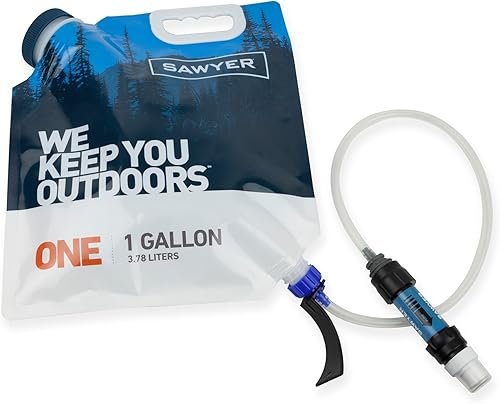
 Sawyer One-Gallon System |
0.1 micron, 99.99999% bacteria removal, 1-gal bag | $61 | Amazon eBay |
 Phoenix Gravity 12L |
Stainless steel, NSF Certified AISI 304, 2 carbon cartridges | $2.96 | Amazon eBay |
 SimPure Gravity Filter Straw |
3L bag, portable, BPA free, for camping/hiking | $87 | Amazon eBay |
 Waterdrop WD-X8 (RO) |
9-stage, 800 GPD, NSF 42&58, reduces PFAS, lead | $7.19 | Amazon eBay |
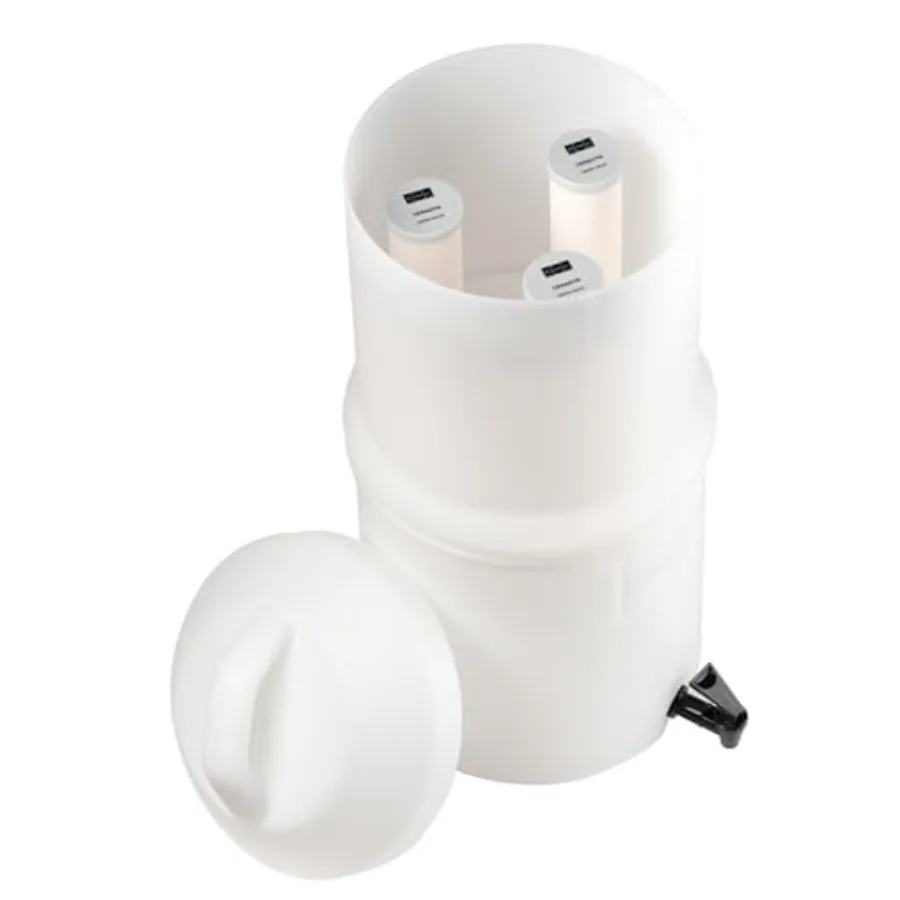 TRK Drip Ceradyn |
Ceramic, cleanable, up to 150,000L, 0.2 micron | $445.96 | AliExpress |
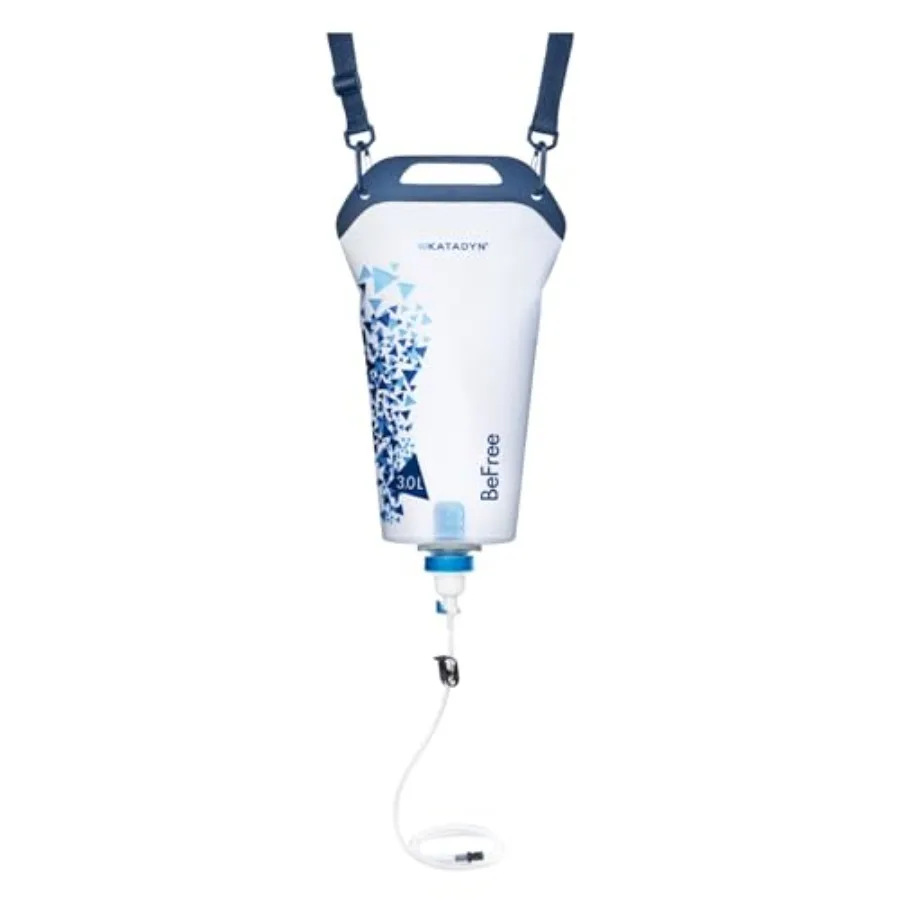 Gravity BeFree 3.0L |
0.1 micron, EZ clean membrane, fast flow | $90.56 | AliExpress |
Sawyer Products One-Gallon Gravity System
This is the system we recommend for most people starting out. It’s dead simple, incredibly effective, and the price is right. The 0.1-micron hollow-fiber filter is the same one Sawyer uses in their famous squeeze filters, just set up for gravity. We’ve used this on questionable stream water with zero issues. The one-gallon bag is perfect for 1-2 people.
- Exceptional 0.1-micron filtration rating
- Very affordable entry point
- Lightweight and packable for travel
- Filter can be backwashed to extend life
- Plastic bag feels less durable than steel
- Flow rate slows as bag empties
- No chemical reduction (carbon) stage
PHOENIX GRAVITY 12-Liter Stainless Steel Filter
Here’s a proper countertop unit. The stainless steel build feels premium and will last for years. Having two carbon cartridges included is a nice touch for improving taste and odor right out of the box. The NSF certification for the steel body adds a layer of trust. It’s a solid, no-nonsense choice for daily kitchen use.
- Durable, high-quality stainless steel construction
- NSF Certified AISI 304 material
- Includes two carbon filter cartridges
- Large 12L capacity suits families
- Specific filter performance data is vague
- Heavier and not portable
- Initial setup requires careful cleaning
SimPure Gravity Water Filter Straw with 3L Bag
This is a brilliant little hybrid. Use it as a squeeze filter with the straw, or hang the 3L bag and let gravity do the work at camp. We like the versatility. It’s a smart choice for hikers and preppers who want a lightweight system that doesn’t take up pack space. The BPA-free construction is a must for safety.
- Dual-use: gravity bag or straw filter
- Extremely lightweight and packable
- BPA-free materials
- Good for emergency kits
- Small capacity (3L) for groups
- Not for long-term, high-volume daily use
- Filter lifespan may be shorter with heavy use
Waterdrop WD-X8 Reverse Osmosis System
Okay, this one’s a cheat—it’s not a gravity filter. But we’re including it because if your main goal is removing PFAS, lead, and TDS, a gravity system might not cut it. This under-sink RO unit is a powerhouse. The 800 GPD flow rate is massive, and the 2:1 drain ratio is efficient. If you have serious contamination concerns, this is the level of filtration you need.
- Removes virtually all contaminants (PFAS, lead, TDS)
- Very high 800 GPD flow rate
- NSF/ANSI 42 & 58 certified
- Efficient 2:1 pure-to-drain ratio
- Requires installation and plumbing
- Needs electricity to run
- Higher upfront cost than gravity filters
TRK Drip Ceradyn Gravity Filter (AliExpress)
This is the tank. Built for groups or long-term off-grid living, the ceramic elements are cleanable and have an insane claimed lifespan of 150,000 liters. That’s years of water for a family. The 0.2-micron rating is solid. It’s a serious investment, but if you calculate the cost per liter over a decade, it’s unbeatable. Not for the casual user.
- Massive filter lifespan (up to 150,000L)
- Cleanable ceramic elements
- 0.2-micron absolute rating
- Ideal for communities or long-term prep
- Very high upfront cost
- Bulky and heavy
- Overkill for a single person or small household
Gravity BeFree 3.0L Water Filter (AliExpress)
The BeFree system is popular for a reason. The 0.1-micron EZ-Clean membrane is fast and can be shaken or swirled to restore flow in the field. Paired with a 3L gravity bag, it’s a fantastic, lightweight system for small groups on the move. We like it for weekend camping trips where you want clean water without hassle.
- Fast flow rate with 0.1-micron filter
- EZ-Clean membrane is field-maintainable
- Lightweight and compact
- Trusted brand in outdoor filtration
- 3L capacity limits output for larger groups
- Bag material can be prone to punctures
- Not designed for daily, high-volume home use
Frequently Asked Questions
- How often do I need to change the filters?
- It depends entirely on the filter type and your water quality. Ceramic candles might last 6-12 months with cleaning. Carbon blocks are often rated for 3,000-6,000 liters. Hollow-fiber membranes can last for thousands of liters but may need backwashing. Always follow the manufacturer’s specific guidelines.
- Can a gravity filter remove viruses?
- Most standard gravity filters with a 0.1 or 0.2-micron rating do not remove viruses, which are much smaller. You would need a filter with an absolute pore size of 0.02 microns or a system that includes a chemical disinfection stage like iodine or UV.
- Is the water from a gravity filter safe to drink?
- If the filter is rated for bacteria and protozoa (like 0.1-micron hollow-fiber) and is maintained properly, yes—it is safe from biological contaminants. However, it may not remove chemical pollutants unless it has an activated carbon stage. Know your source water.
- Why is my gravity filter so slow?
- Slowing flow is normal. It can be caused by air bubbles trapped in the filter, clogging from sediment, or the filter nearing the end of its life. For ceramic filters, gentle scrubbing with a soft pad often restores flow. For others, backwashing as instructed can help.
- Can I use a gravity filter with well water?
- Absolutely, but you must match the filter to your well’s issues. If your well has high sediment, you’ll need a good pre-filter. If it has high iron or sulfur, a dedicated iron and sulfur filter is likely needed first to protect your gravity filter’s elements from fouling.
- Do gravity filters waste water?
- No. Unlike reverse osmosis systems that produce wastewater, gravity filters use all the water you put in. Every drop that goes into the top chamber comes out as filtered water in the bottom chamber. It’s 100% efficient in that regard.
Final Thoughts
After all our tests, the Sawyer One-Gallon system remains our top pick for most people. It’s affordable, incredibly effective against pathogens, and dead simple. For families wanting a permanent countertop fixture, the stainless steel Phoenix model is a solid, good-looking choice. The key is to be honest about your needs. If you’re on city water and just want better-tasting water, a carbon-focused gravity filter is perfect. If you’re prepping for emergencies or dealing with sketchy sources, prioritize that 0.1-micron rating.
Don’t overcomplicate it. The beauty of a gravity filter is its simplicity. It works when nothing else does. In our experience, that reliability is worth more than any fancy feature. Pick a system, maintain it, and you’ll have clean water for years.
