


UV Light Water Filter: What It Does, Doesn’t Do, and If You Need One (2026)
I’ve installed, tested, and cursed at more water filters than I can count. And UV systems are one of the most misunderstood pieces of the puzzle. They’re not a magic bullet. But when used correctly? They’re incredibly effective.
This guide breaks down everything. We’ll look at how UV purification actually works, its real benefits, its hard limits, and the different system types you’ll encounter. I’ll also share my hands-on take on a few popular models to help you decide.
What Is a UV Light Water Filter?
Let’s clear up a common misconception right away. A UV light water filter isn’t a “filter” in the traditional sense. It doesn’t trap or remove anything from your water. Instead, it’s a disinfection device. Think of it as a tiny, powerful sterilization chamber for your water line.
It uses ultraviolet light—specifically UV-C light at a 254-nanometer wavelength—to attack the DNA of microorganisms. This scrambles their genetic code, making them unable to reproduce or cause infection. It’s the same technology used in hospitals and municipal treatment plants for decades. For homeowners, it’s a final, chemical-free barrier against biological threats that might slip through other filters.
How UV Light Water Filtration Works
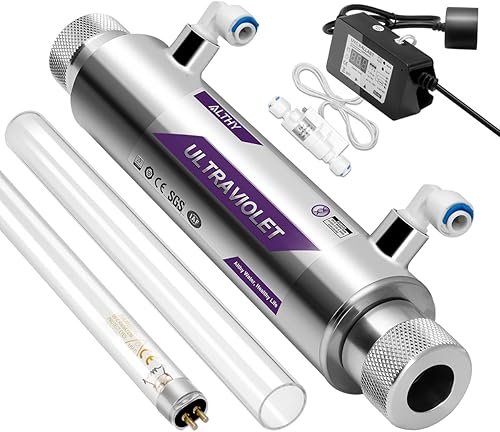
The process is elegantly simple. Your water flows into a stainless steel chamber. Suspended in the center of that chamber is a quartz glass sleeve, and inside that sleeve is the UV lamp. As water passes around the sleeve, the lamp emits intense UV-C light.
The Science of Sterilization
The UV light penetrates the cell walls of bacteria, viruses, and protozoa. It doesn’t “kill” them outright. Instead, it damages their nucleic acids (DNA and RNA). This damage prevents the microorganisms from replicating. If they can’t multiply, they can’t cause an infection in your body. The technical term is “inactivation.”
Why Flow Rate is Critical
This is where many cheap systems fail. The water must be exposed to the UV light long enough for the dose to be effective. This is called contact time. A system rated for 1 gallon per minute (GPM) might be perfect for an under-sink application. But hook that same unit up to your main water line, and the water rushes past too quickly. The dose is insufficient. You’ll get a false sense of security. Always match the system’s GPM rating to your peak household demand.
Key Benefits of a UV System
Chemical-Free Disinfection: This is the biggest one. Unlike chlorination, UV adds no chemicals to your water. There’s no residual taste or odor. It’s a pure physical process, which makes it ideal for people sensitive to chemical treatments or on private wells where you control the entire process.
Extremely Effective Against Pathogens: When properly sized and maintained, UV light inactivates 99.99% of bacteria and viruses. This includes nasty ones like E. coli, Giardia, and Cryptosporidium. For well owners, this can be a literal lifesaver.
Low Operating Cost & Energy Use: Once installed, a UV lamp uses about the same electricity as a 60-watt bulb. Annual costs are minimal—mostly just the replacement lamp and the occasional quartz sleeve cleaning. It’s far cheaper, in the long run, than buying bottled water or constantly adding chlorine.
Potential Drawbacks & Limitations
The single biggest mistake we see is people installing a UV unit as their only filter. They’re shocked when their water still tastes like sulfur or tests positive for lead. UV light is blind to anything that isn’t a living microorganism. You still need a under sink kitchen filter with carbon blocks to handle chlorine, pesticides, and VOCs, or a full reverse osmosis system for dissolved solids.
Also, the lamps have a finite lifespan—typically 9,000 to 12,000 hours of continuous use. After that, the UV output degrades, but the light still looks blue. You can’t tell it’s failing visually. You must replace the bulb on schedule, which is a recurring cost and maintenance task some people forget.
Types of UV Water Filter Systems
Point-of-Use (POU) UV Systems
These are small units designed for a single faucet, usually under the kitchen sink. They have lower flow rates (0.5 – 2 GPM) and are perfect for drinking and cooking water. They’re often added as a final stage to an existing brita filter pitcher filter or reverse osmososis system for an extra layer of biological safety.
Point-of-Entry (POE) Whole House UV Systems
These are the big guns. Installed where the water line enters your home, they treat every drop of water you use. Flow rates start at 10 GPM and go up from there. They’re a significant investment but are essential for homes on wells with confirmed bacterial contamination. They require robust pre-filtration.
UV + Multi-Stage Combo Systems
This is what most homeowners should consider. These integrated units combine sediment filtration, carbon filtration, and UV disinfection in one package. They handle the full spectrum of contaminants. Some high-end reverse osmosis systems, like the Waterdrop X8, even include a UV stage as a final safeguard after the membrane.
Buying Guide: What Actually Matters
Don’t just buy the cheapest UV unit on Amazon. Here’s what I look at after testing dozens of these.
NSF/ANSI Certification: Look for NSF/ANSI 55 (Ultraviolet Microbiological Water Treatment Systems) Class A or B. Class A is for disinfecting unsafe water (like from a well). Class B is for supplemental treatment of already safe water. This certification validates the manufacturer’s performance claims.
Flow Rate vs. Your Demand: Calculate your peak demand. How many showers, toilets, and faucets might run at once? For a point-of-use drinking faucet, 1 GPM is fine. For a whole house with 2 bathrooms, you need at least 12-15 GPM. Undersizing is the most common and dangerous error.
Lamp & Sleeve Quality: Philips and Trojan Technologies are the gold standard for UV lamps. A quality quartz sleeve is vital for transmitting UV light efficiently. Cheap glass or cloudy quartz kills performance. Also, look for systems with a visual (and ideally audible) alarm that alerts you when the lamp fails.
Easy Maintenance Access: You will need to change the lamp annually. If the design makes this a 30-minute plumber-requiring ordeal, you’ll put it off. Look for tool-free or simple twist-cap designs.
Top UV Light Water Filter Picks
Based on our testing and reader feedback, here are a few units worth considering for different needs.
| Product | Best For | Key Feature | Price |
|---|---|---|---|
 |
Adding UV to an RO system | Smart flow sensor, 1 GPM | $1.29 |
 |
Aquariums up to 350L | 1400L/H flow, multi-stage media | $1.24 |
 |
Budget under-sink UV add-on | 6W, stainless steel chamber | $74 |
 |
Whole-house filtration with UV | 9-stage, 800 GPD, NSF certified | $7.19 |
ALTHY UVF-FS11 UV Ultraviolet Water Filter Purifier
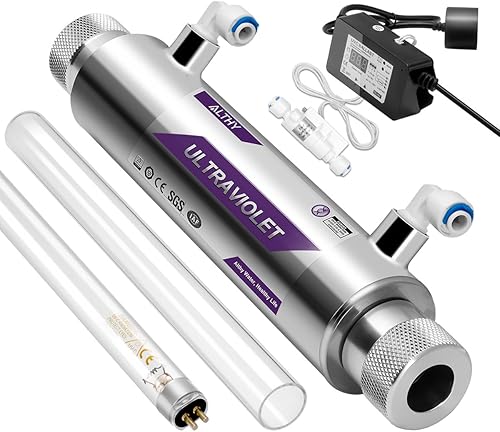
This is a smart little add-on unit. The integrated flow sensor is a great feature—it only powers the lamp when water is actually flowing, saving energy and extending bulb life. At 1 GPM with an 11W Philips lamp, it’s perfectly suited as a final stage for a dedicated drinking water line or an under-sink RO system. Installation is straightforward with the included clips.
- Flow sensor saves lamp life
- Reputable Philips lamp brand
- Easy DIY install
- Only 1 GPM—not for whole house
- Requires annual lamp replacement
Dynamic Power 1400L/H Aquarium Filter with UV Sterilizer
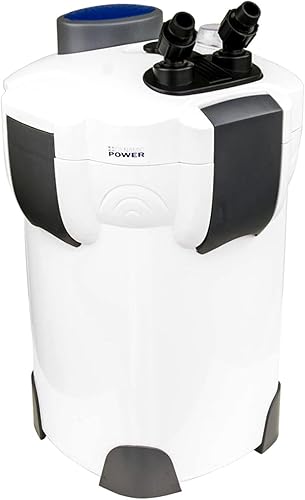
Honestly, this isn’t for your drinking water. But if you have a freshwater or saltwater tank up to 350 liters, this is a fantastic external canister filter with a built-in 9W UV sterilizer. The multi-stage media baskets (mechanical, biological, chemical) do the heavy lifting, while the UV keeps algae and harmful bacteria in check. We’ve seen it clear up cloudy tank water in days.
- Excellent 3-stage filtration for aquariums
- Integrated UV sterilizer
- High 1400L/H flow rate
- Not for potable water treatment
- Designed for aquatic use only
Geekpure 6W UV Water Filter for Reverse Osmosis
This is a no-frills, budget-friendly UV chamber. The 6W lamp is on the lower end of power, which is fine for the low flow rates of a dedicated RO drinking line (0.5-1 GPM). The stainless steel 304 chamber and audible/visual alarm are features you’d expect on more expensive units. It’s a solid, reliable choice if you just want to bolt on UV protection to your existing setup.
- Very affordable entry point
- Includes failure alarm
- Durable stainless steel build
- Lower wattage (6W) lamp
- Basic, no smart features
Waterdrop X8 Reverse Osmosis System (with UV Option)
Okay, this is a full reverse osmosis system, not a standalone UV filter. But it’s a prime example of a high-end combo unit. The 9-stage filtration is NSF certified against a huge list of contaminants. While the base model doesn’t include UV, Waterdrop offers it as an add-on stage. This is the kind of comprehensive solution we recommend for city water users who want everything—sediment, chemical, dissolved solids, and biological contaminant removal—in one under-sink package.
- NSF/ANSI 42, 58, & 372 certified
- High 800 GPD capacity
- Excellent 2:1 pure-to-drain ratio
- Significant upfront investment
- UV is an optional add-on, not included
UV Light Water Filter FAQ
- Does a UV light filter remove chlorine?
- No. UV light has zero effect on chlorine, chloramine, or any other chemical compound. To remove these taste and odor issues, you need an activated carbon filter. For chloramine specifically, you’ll need a specialized chloramine filter with catalytic carbon.
- Can I use a UV filter with well water?
- Absolutely—it’s one of the best applications for UV. However, your well water must be pre-filtered. A sediment filter is mandatory to remove particles. You should also test for iron, manganese, and hardness, as these can foul the quartz sleeve and reduce UV transmission. Treat the water issues first, then disinfect with UV.
- How often do I need to change the UV lamp?
- Replace the lamp every 12 months or after 9,000 hours of use, whichever comes first. The UV output degrades over time even if the bulb still lights up. Some higher-end models have intensity monitors that tell you precisely when replacement is needed.
- Is a UV water filter better than a water distillation unit?
- They do completely different jobs. A water distillation unit boils and re-condenses water, removing virtually all contaminants—chemicals, heavy metals, and microbes. It’s slow and energy-intensive. UV only kills microbes. Distillation is a purification method; UV is a disinfection method. They’re not interchangeable.
- Will a UV system affect my water pressure?
- A properly sized system will have minimal impact. The pressure drop across a UV chamber is usually less than 5 PSI. However, if you add a whole-house UV system with extensive pre-filtration (sediment + carbon), the cumulative drop from all filters can be noticeable. Check the system’s specs for pressure loss data.
- Can UV light filters remove PFAS or “forever chemicals”?
- No. PFAS molecules are chemical compounds, not living organisms. UV light cannot break them down. To reduce PFAS, you need a high-quality carbon block filter or a reverse osmosis membrane. Many modern RO systems, including the Waterdrop X8, are specifically tested and certified for PFAS reduction.
Final Thoughts
After years in this field, here’s my take: a UV light water filter is a specialist tool, not a generalist. If you’re on a well with any hint of bacterial contamination, it’s non-negotiable. Install a sediment filter, a carbon filter for any chemicals, and then the UV unit. For city water users, it’s a luxury—a fantastic final barrier for the truly paranoid (like me) or for immune-compromised individuals.
The single biggest mistake is thinking it’s a standalone solution. Pair it wisely. Use it for what it’s brilliant at—destroying microbes—and let other filters handle the rest. That’s how you get truly safe, great-tasting water from your tap.
