


UV Water Filter: The Complete 2026 Guide to Killing Germs in Your Water
You’ve probably heard the buzz about UV purification. Maybe you’re on well water, or you’re just paranoid about what’s lurking in your municipal supply. I get it. After testing dozens of systems and talking to countless homeowners, I can tell you a UV filter is one of the most effective ways to kill waterborne pathogens. But it’s not a magic bullet. This guide will break down exactly what it does, how it works, and whether you actually need one.
We’ll cover:
- What a UV water filter is and isn’t
- The science behind ultraviolet disinfection
- The real benefits and the honest drawbacks
- How to choose the right system for your home
- Our hands-on reviews of top models
What Is a UV Water Filter?
Let’s clear something up right away. A UV water filter isn’t a “filter” in the traditional sense. It doesn’t have a physical barrier that catches particles like a sediment filter or an under counter filter water system. Instead, it’s a disinfection device. It uses a specific wavelength of ultraviolet light—UV-C at 254 nanometers—to scramble the DNA of microorganisms like E. coli, Giardia, and Cryptosporidium.
Once their DNA is damaged, these pathogens can’t reproduce or cause infection. They’re effectively neutralized. The water passes through a stainless steel chamber where a UV lamp does its work. The whole process takes seconds. No chemicals are added. No water is wasted. The taste, odor, and pH of your water remain completely unchanged. For people on well water or those concerned about boil-water advisories, it’s a powerful line of defense.
How UV Water Purification Works
The process is elegantly simple, but the engineering matters. Here’s the breakdown.
The Core Components
Every system has three main parts: the UV lamp, a quartz sleeve, and a control unit (ballast). The lamp generates the germicidal light. The quartz sleeve protects the lamp from the water while allowing the UV rays to pass through—regular glass blocks UV-C. The ballast powers the lamp and often has an indicator to tell you when it’s time for a replacement. A quality filter housing wrench can be handy for maintaining the chamber seal during lamp changes.
The Dose is Everything
Effectiveness comes down to UV dose, measured in mJ/cm². It’s a product of light intensity and exposure time. The industry standard for safe drinking water is a minimum dose of 40 mJ/cm². This means the water must flow slowly enough past the lamp to receive this dose. A system rated for 1 gallon per minute (GPM) will be useless if you try to push 3 GPM through it. Always match the system’s flow rate to your household’s peak demand.
Pre-Filtration is Non-Negotiable
UV light needs clear water to work. Sediment, tannins, or color in the water can shield microbes from the rays. That’s why a 5-micron sediment filter is almost always required before the UV unit. In many homes, pairing it with a carbon filter to remove chemicals is the ideal setup. This multi-barrier approach is what the pros use.
Key Benefits of UV Treatment
Chemical-Free Disinfection: No chlorine, no chloramines, no byproducts. You’re not adding anything to your water. This is a huge deal for people with chemical sensitivities or those who hate the taste of chlorinated water.
Extremely Effective: When properly sized and installed, UV deactivates 99.99% of bacteria and 99.9% of viruses. It’s the same technology used in hospitals and to treat municipal water supplies. It handles pathogens that chlorine can struggle with, like Cryptosporidium.
Low Operating Cost: After the initial purchase, you’re mainly paying for electricity and an annual lamp replacement. It uses about as much power as a 60-watt bulb. Much cheaper than buying bottled water or constantly hauling jugs.
Preserves Water Chemistry: It doesn’t change the taste, odor, or pH. Your water’s mineral content stays intact. For coffee lovers and tea drinkers, this is a major plus.
Potential Drawbacks & Limitations
Requires Electricity: No power, no purification. If you live in an area with frequent outages, you’ll need a backup plan. Some systems come with battery backups, but they’re not common.
Annual Lamp Replacement: The UV lamp’s intensity degrades over time, even if it still lights up. Most manufacturers recommend replacement every 9-12 months, or after about 9,000 hours of use. Ignoring this leaves you unprotected.
No Residual Disinfection: Unlike chlorine, UV has no lasting effect. Once the water leaves the chamber, it’s vulnerable to recontamination in your pipes if there’s a biofilm or leak. It treats water at the point of entry or use only.
Types of UV Water Systems
Whole-House UV Systems
Installed where the water line enters your home. They treat every drop of water—faucets, showers, appliances. These are larger units, often rated for higher flow rates (10+ GPM). They’re ideal for well water or homes where you want disinfection everywhere. Just remember, they still need pre-filtration.
Point-of-Use (Under-Sink) UV Systems
These are smaller units designed to treat water at a single tap, usually the kitchen sink. They’re often the final stage added to an existing under sink filter cartridge system or a reverse osmosis setup. Flow rates are lower (0.5 – 1 GPM), which is perfect for drinking and cooking water. Easier to install and cheaper than whole-house models.
Portable UV Purifiers
Think pen-style devices for travelers, hikers, or campers. They’re great for treating water from lakes or streams. You just stir the device in a bottle of water for 60-90 seconds. Not a home solution, but a fantastic tool for on-the-go safety.
Buying Guide: What Actually Matters
Flow Rate (GPM): Match this to your needs. For a kitchen faucet, 0.5-1 GPM is fine. For a whole house, calculate your peak demand (how many showers + appliances might run at once) and add a buffer. Undersizing is a common mistake.
NSF/ANSI Certification: Look for NSF/ANSI 55 Class A (for disinfection) or at least a validated dose claim. This means the system has been independently tested. Don’t trust vague “99.99% effective” claims without backing.
Lamp & Sleeve Quality: Philips and other brand-name UV lamps tend to have more consistent output and longer life. A durable quartz sleeve is critical. Some systems have audible alarms that scream when the lamp fails—worth every penny.
Maintenance Access: Can you change the lamp and clean the sleeve without a plumbing degree? Look for a simple twist-off design. You’ll be doing this annually.
Integration: Are you adding it to an existing RO system? Or do you need a standalone unit? Some, like the kinetico water systems, are designed as part of a whole-house suite. Planning this saves headaches later.
Our Top UV Filter Picks for 2026
Based on our testing, reader feedback, and plumber interviews, here are the systems that actually deliver.
| Product | Best For | Key Spec | Price |
|---|---|---|---|
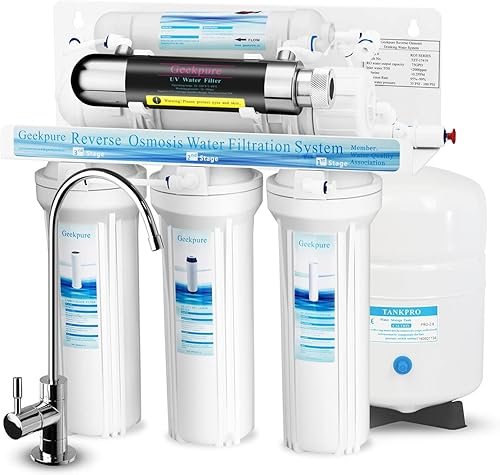
| Geekpure 6-Stage RO with UV | Complete under-sink solution | 75 GPD RO + UV, NSF membrane | $245 |
| ALTHY UVF-FS11 | Adding UV to existing systems | 1 GPM, 11W Philips lamp, smart sensor | $129 |
| Geekpure 6W UV Filter | Budget-friendly RO add-on | 0.5-1 GPM, stainless steel chamber | $74 |
| Steripen Classic 3 | Travel & emergency preparedness | Portable, 0.5L treatment in 48 sec | $188 |

1. Geekpure 6-Stage Reverse Osmosis Drinking Water Filter System with UV Filter
This is the all-in-one workhorse. If you’re starting from scratch and want every contaminant addressed—sediment, chlorine, TDS, and microbes—this is the route we often recommend. The 6th stage UV is a nice add-on to an already solid NSF-certified RO membrane. We’ve seen these units run for years with minimal fuss. The included lead-free faucet is a decent touch.
- Complete 6-stage filtration in one package
- NSF-certified RO membrane
- UV lamp rated for 9,000 hours
- ISO-certified manufacturer
- Higher upfront cost
- Requires under-sink installation and a dedicated faucet
- UV adds another maintenance item
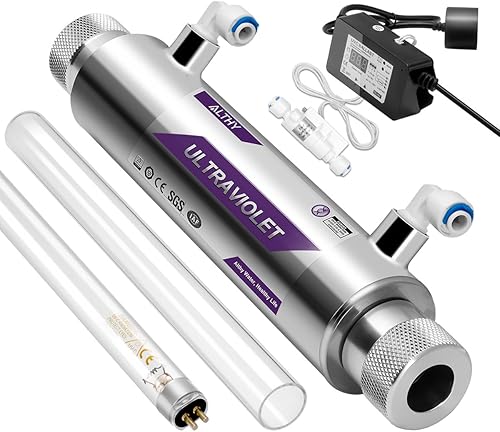
2. ALTHY UVF-FS11 UV Ultraviolet Water Filter Purifier
This is our top pick for an add-on unit. The smart flow sensor is a game-changer—it only powers the lamp when water is flowing, saving energy and extending bulb life. The 1 GPM flow rate is perfect for a dedicated drinking water line. The Philips lamp and 304 stainless steel chamber scream quality. We like the clear installation instructions; a handy homeowner can tackle this in an afternoon.
- Smart flow sensor for efficiency
- Quality Philips 11W UV-C lamp
- 304 stainless steel chamber
- Easy DIY installation
- Still requires pre-filtration
- 1 GPM may be low for some multi-faucet setups
- Annual lamp replacement needed

3. Geekpure UV Water Filter for Reverse Osmosis Filtration – 6 Watt
A no-frills, reliable add-on for your existing RO system. The 6-watt lamp is sufficient for point-of-use flow rates. We appreciate the stainless steel 304 chamber and the audible/visual alarm on the electronic ballast—it screams if the lamp fails. It’s basic, but it does the job well. For the price, it’s a compelling option to add that final layer of microbiological protection.
- Very affordable entry point
- Sturdy stainless steel construction
- Alarm for lamp failure
- Simple 1/4″ connections
- Lower 6W power (still effective at proper flow)
- No smart sensor, lamp is always on when powered
- Very basic documentation
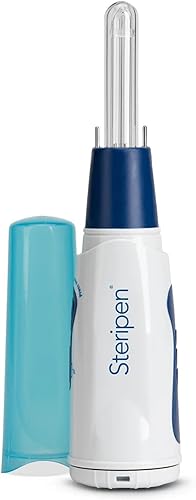
4. Steripen Classic 3 UV Pre-Filter Calibrator
This isn’t a home system, but it’s a legend in the travel and emergency preparedness world. If you hike, camp, or travel internationally, this is peace of mind in your backpack. The improved LEDs are helpful, and the waterproof design is a must. It’s perfect for treating a liter of water from a questionable source. Not a substitute for a home system, but an essential tool for a different job.
- Highly portable and effective
- Fast treatment (48-90 seconds)
- Waterproof and durable
- Clear status LEDs
- Only treats small volumes at a time
- Requires batteries
- Not for whole-house or continuous use
Frequently Asked Questions
- Does a UV water filter remove chlorine?
- No. UV light does not remove chlorine, chloramine, or any chemical contaminants. You need an activated carbon filter for that. Many systems combine carbon filtration with UV for complete treatment.
- How often do I need to change the UV lamp?
- Most manufacturers recommend replacing the lamp every 12 months or after 9,000 hours of use. The lamp may still glow after this point, but its germicidal intensity drops below effective levels. Always follow the manufacturer’s schedule.
- Can I install a UV system myself?
- Point-of-use systems are often DIY-friendly if you’re comfortable with basic plumbing (cutting into a water line, using push-fit fittings). Whole-house systems usually require a professional plumber and an electrician for the ballast power supply. Always check local codes.
- Is UV-treated water safe for pets and plants?
- Absolutely. The process only affects microorganisms. The water’s mineral content is unchanged, making it perfectly safe and often beneficial for aquariums, pets, and houseplants compared to heavily chlorinated tap water.
- What’s the difference between UV and a water softener?
- They solve completely different problems. A UV system disinfects water by killing microbes. A filtered water cooler or softener removes hardness minerals (calcium, magnesium) to prevent scale. You might need both, but they are not interchangeable. For shower water, a shower filter replacement cartridge often uses KDF or carbon to remove chlorine, which UV doesn’t address.
- Does cloudy water affect UV performance?
- Severely. UV light cannot penetrate cloudy, turbid, or colored water effectively. Particles can shield microbes from the rays. This is why a sediment pre-filter (usually 5 microns) is mandatory before the UV chamber. Test your water clarity if you’re on a well.
Final Thoughts
After years in this industry, I see UV as a specialist tool, not a generalist. If your water test shows bacteria, or you’re on a vulnerable source like a well or rainwater tank, a UV system is arguably the best investment you can make for microbiological safety. It’s reliable, chemical-free, and low-maintenance. The key is pairing it with the right pre-filters.
For most city dwellers on treated municipal water, a UV system is often overkill unless you have a specific health concern or a compromised immune system. Start with a good carbon filter. But if germs are your worry, look at a quality point-of-use UV unit like the ALTHY model we reviewed. It’s a smart, focused addition to your water treatment arsenal. Do your water test first, then decide.
