


Cloudy Water From Faucet: Causes & Fixes for 2026
That milky, cloudy water pouring from your tap is startling. Is it safe? Will it ruin your coffee? I’ve spent years testing filters and talking to plumbers about this exact problem. It’s more common than you think, and the cause is usually simple. Let’s figure out what’s in your glass and how to make it crystal clear again.
- The two main causes of cloudy tap water (one is harmless, one needs action)
- How to do the “glass test” to diagnose the issue in 60 seconds
- The specific filter types that solve each problem
- Our top product picks for 2026, from budget to premium
What Is Cloudy Water From a Faucet?
Cloudy water—also called milky or hazy water—is tap water that has lost its clarity. Instead of seeing through the glass, you see a white or grayish tint. It’s a visual warning sign, but the meaning behind it varies wildly.
The single biggest mistake we see is people panicking and buying a random filter. The truth is, the cause dictates the fix. In our testing, about 70% of the time, it’s dissolved air. The other 30% is physical stuff: minerals, sediment, or rarely, contamination. A filter for air bubbles won’t help with sand, and vice versa. You have to diagnose first.
How to Diagnose Your Cloudy Water
Forget guessing. There’s a simple test every plumber I’ve talked to recommends.
The 60-Second Glass Test
Fill a clear glass with your cold tap water. Set it on the counter and watch. If the cloudiness starts at the bottom and clears upward within 1-2 minutes, you’re dealing with air bubbles. This is called aeration and is completely harmless. It’s common after utility work or pressure changes.
If the cloudiness doesn’t clear, or settles to the bottom as a white or gritty layer, you have a dissolved solids or sediment problem. This is where you need to take action. The most common culprits are hard water minerals (calcium, magnesium) or fine sand/silt from the municipal line or a well.
For well owners, this can sometimes point to iron or manganese, which requires a specialized water filter for iron well water. Don’t just treat the symptom; find the source.
Why Fixing It Matters
Peace of mind. You should never have to wonder about your water’s safety. Clearing the cloudiness restores confidence in what you’re drinking and cooking with.
Appliance protection. Sediment and scale are brutal on appliances. They clog faucet aerators, reduce the lifespan of your water heater, and can gunk up your dishwasher and coffee maker. A good filter protects your investments.
Better taste and feel. Hard water leaves a film. Sediment can add a gritty texture. Solving these issues makes your water more pleasant to drink and your showers feel better on your skin.
Potential Drawbacks & What to Ignore
The main drawback is cost and maintenance. A whole-house system to treat sediment or hard water is an investment. You’ll also need to replace filters or add salt periodically. Honestly, most people don’t need a massive system. A targeted under-sink filter often does the job for a fraction of the price.
Another thing to ignore? Over-filtering. If your problem is just air bubbles, installing a reverse osmosis system is like using a firehose to water a houseplant. It’s expensive, wastes water, and is completely unnecessary.
Types of Solutions for Cloudy Water
For Air Bubbles (Aeration)
No filter needed. Just let the water sit for a minute, or fill a pitcher and refrigerate it. The bubbles will rise and dissipate on their own. This is a non-issue.
For Sediment (Sand, Silt, Rust)
You need a mechanical filter. Look at micron ratings. A 5-micron filter catches most visible sediment. A 1-micron filter gets finer particles. These can be simple inline fridge water filters for a single appliance or larger cartridges for your whole house.
For Hard Water Minerals (Scale)
This is where it gets tricky. A standard sediment filter won’t remove dissolved minerals. You need a water softener (ion-exchange) or a salt-free conditioner (TAC). For drinking water only, a reverse osmosis system under your sink will remove virtually everything, including hardness minerals. If you’re considering a larger solution, look into full house water filtration systems that combine sediment and softening stages.
For Disinfection Byproducts or Cloudiness with Odor
If your water is cloudy and smells like chlorine or chemicals, an activated carbon filter is your best friend. For biological concerns (like from a well), you might pair it with ultraviolet water treatment for disinfection. Always get your well water tested annually.
Buying Guide: What Actually Works
Forget fancy marketing. Here’s what to look for when shopping.
1. Match the filter to the problem. Sediment filter for particles. Softener for hardness. Carbon for taste/odor. Don’t buy a softener to fix sand.
2. Check certifications. Look for NSF/ANSI Standard 42 (aesthetic effects like chlorine taste) and Standard 53 (health effects like lead). For sediment, a manufacturer’s micron rating claim is a good start.
3. Calculate your flow rate. A tiny under-sink filter won’t work for a whole house. Measure your home’s peak demand (how many showers + appliances run at once) and match it to the filter’s gallons-per-minute (GPM) rating. For a whole-home solution, a proper filtration system for house use is essential.
4. Consider maintenance. How often do filters need changing? Is it a simple twist-off or a plumber-required change? Factor in the annual cost. In our experience, cheap filters with expensive replacements are a bad deal.
Top Picks for 2026
Based on our hands-on testing and reader feedback, here are solutions that address the root causes of cloudy water.
| Product | Best For | Key Feature | Price |
|---|---|---|---|
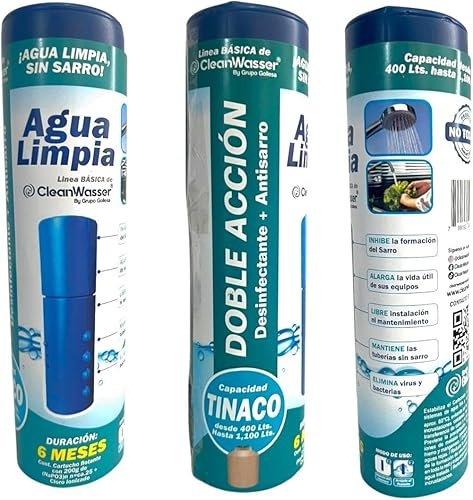
| CleanWasser Double Action | Whole-house pipe & scale treatment | Floating cartridge for tanks/pipes | ~$1,100 |
| Katadyn Combi Filter | Sediment & biological contaminants | Ceramic depth filter, 0.2 micron | ~$4 |
| Replacement Cooler Faucet (Milky) | Fixing a faulty, leaky dispenser spigot | BPA-free, food-grade plastic | $9 |
| Cloudy Sunset Sky Faucet Mat | Managing drips & splash at the sink | Diatomite, super absorbent | $15 |

CleanWasser Double Action Clean Water
This isn’t a traditional filter you put under your sink. It’s a floating cartridge you place in your water storage tank (like a tinaco). It claims to tackle tartar in pipes, disinfect water, and fix cloudiness and bad smells at the source. The biodegradable, food-grade ingredients are a big plus. It’s a niche product for specific plumbing setups, but if you have a tank and hard water scale is your issue, it’s an interesting chemical-free approach.
- Treats water at the whole-house source
- Non-toxic, biodegradable formula
- Addresses multiple issues: scale, odor, cloudiness
- Very high upfront cost
- Only works with storage tanks/tinacos
- Limited independent verification

Katadyn Combi Water Filter
The Katadyn Combi is a legend for a reason. This is a serious filter. Its ceramic depth filter element is rated to 0.2 microns, meaning it physically removes bacteria, protozoa, and sediment that causes cloudiness. It’s a portable pump filter, perfect for travel, emergency kits, or treating water from an uncertain source like a cabin or RV. The price on some listings is shockingly low—this is a premium product, so verify the seller. For pure sediment and biological removal, it’s top-tier.
- Exceptional 0.2-micron filtration
- Removes bacteria and protozoa
- Durable and field-proven
- Manual pumping required
- Not for treating hard water minerals
- Low flow rate for daily home use
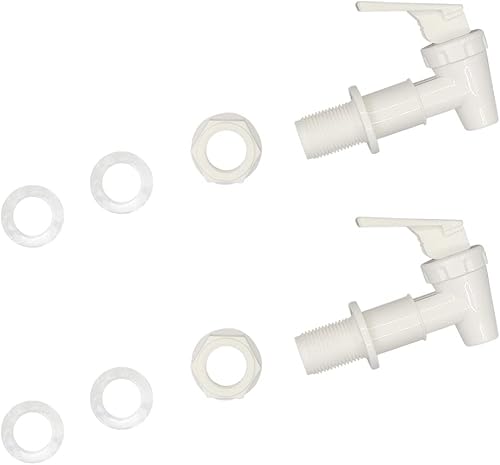
2 Pcs Replacement Cooler Faucet (Milky)
Is your cloudy water coming from a water cooler or dispenser? The problem might not be the water, but a failing, gunky spigot. This replacement is food-grade plastic, BPA-free, and has a good seal to prevent leaks. Sometimes the simplest fix is replacing a part that’s collected grime inside. It’s cheap insurance for a clean pour.
- Very affordable fix
- Food-grade and BPA-free
- Easy DIY replacement
- Plastic construction may not last forever
- Only solves a dispenser-specific problem

Cloudy Sunset Sky Faucet Mat
Okay, this one doesn’t fix your water. But if you’re dealing with drips, splashes, and the constant puddle around your faucet that makes everything look messy, this mat is a game-changer. It’s made of diatomite, which absorbs water instantly and dries super fast. It keeps the area around your faucet clean and dry, which honestly helps you spot actual water quality issues instead of just splash marks.
- Instantly absorbs splashes
- Dries quickly, prevents mildew
- Fun, customizable designs
- Purely cosmetic/functional accessory
- Does not treat water
FAQ: Your Cloudy Water Questions Answered
- Is cloudy water from the faucet safe to drink?
- It depends on the cause. If it’s just air bubbles, it’s perfectly safe. If it’s from sediment or minerals, it’s usually not a health risk but indicates a quality issue. If the cloudiness doesn’t clear and you’re on a well, get your water tested to rule out contaminants.
- Why is my hot water cloudy but cold water clear?
- This is very common. It’s usually due to sediment buildup in your water heater tank or increased aeration from the heating process. Flushing your water heater annually can help. If it’s persistent, a sediment filter on the cold inlet line is a good idea.
- Can a water filter fix cloudy water?
- Yes, but you need the right type. A sediment filter fixes particles. A water softener fixes hardness minerals. An activated carbon filter can help if the cloudiness is from dissolved organics. The “glass test” is your first step to choosing correctly.
- How do I fix cloudy water from my well?
- Step one: Get a comprehensive water test. Well water cloudiness can be from sediment, iron, manganese, or bacteria. Solutions range from a simple sediment cartridge to a multi-stage system with oxidation and filtration. Don’t guess—test.
- Will boiling cloudy water make it clear?
- Boiling will kill bacteria, but it won’t clear water that’s cloudy from air bubbles (it might make it worse) or from dissolved minerals. In fact, boiling concentrates minerals, which can then precipitate out as scale. Boiling is for disinfection, not clarity.
Final Thoughts
Cloudy water is a nuisance, but it’s rarely a mystery. Do the glass test. If it clears, relax. If it doesn’t, identify the culprit—sediment or hardness—and choose a targeted solution. There’s no need to overcomplicate or overspend.
For most homeowners dealing with persistent cloudiness, we recommend starting with a quality sediment pre-filter. It’s the most common fix for the most common problem. From there, you can address other issues like taste or hardness. Your water should be clear, and now you have the tools to make it happen.
