


.oi-article{font-family:system-ui,-apple-system,sans-serif;color:#1a1a1a;line-height:1.8;max-width:820px;margin:0 auto}
.oi-article h2{color:#0e4a6e;border-bottom:2px solid #0e4a6e;padding-bottom:8px;margin-top:35px;font-size:1.6em}
.oi-article h3{color:#1a6b8a;margin-top:25px;font-size:1.3em}
.oi-toc{background:#f0f7fb;border-left:4px solid #0e4a6e;padding:20px 25px;margin:25px 0;border-radius:6px}
.oi-toc ul{list-style:none;padding:0;margin:0}.oi-toc li{padding:5px 0}
.oi-toc a{color:#0e4a6e;text-decoration:none;font-weight:500}.oi-toc a:hover{text-decoration:underline}
.oi-tip{background:#e8f5e9;border-left:4px solid #2e7d32;padding:15px 20px;margin:20px 0;border-radius:6px}
.oi-warn{background:#fff3e0;border-left:4px solid #ef6c00;padding:15px 20px;margin:20px 0;border-radius:6px}
.oi-tldr{background:#e3f2fd;border-left:4px solid #1565c0;padding:15px 20px;margin:20px 0;border-radius:6px;font-size:1.05em}
.oi-cmp-table{width:100%;border-collapse:collapse;margin:25px 0;font-size:0.95em}
.oi-cmp-table th{background:#0e4a6e;color:#fff;padding:12px 10px;text-align:left}
.oi-cmp-table td{padding:10px;border-bottom:1px solid #e0e0e0;vertical-align:middle}
.oi-cmp-table tr:hover{background:#f5f5f5}
.oi-cmp-table img{max-width:80px;height:auto;border-radius:6px}
.oi-btn{display:inline-block;padding:8px 16px;border-radius:5px;color:#fff!important;text-decoration:none;font-size:0.85em;font-weight:600;margin:3px 4px 3px 0}
.oi-btn-amz{background:#f0960a}.oi-btn-amz:hover{background:#d4840a}
.oi-btn-ebay{background:#0654ba}.oi-btn-ebay:hover{background:#044a9e}
.oi-btn-ali{background:#e43225}.oi-btn-ali:hover{background:#c42a1f}
.oi-review{overflow:hidden;margin:25px 0;padding:20px;background:#fafafa;border-radius:8px;border:1px solid #e8e8e8}
.oi-review img{float:right;max-width:140px;margin:0 0 15px 20px;border-radius:8px}
.oi-pros-cons{display:flex;gap:20px;margin:10px 0}.oi-pros,.oi-cons{flex:1}
.oi-pros li{color:#2e7d32}.oi-cons li{color:#c62828}
.oi-faq dt{font-weight:700;color:#0e4a6e;margin-top:18px}.oi-faq dd{margin:5px 0 0 0}
.oi-disclosure{background:#f5f5f5;padding:15px 20px;margin-top:35px;border-radius:6px;font-size:0.9em;color:#555}
So you’ve heard the term “TDS” thrown around in water filter ads and forums. Maybe you bought a cheap meter and got a number, but now you’re wondering what it actually means. Is a low number always good? Does a high number mean your water is unsafe? We’ve tested water from dozens of sources and filters over the years, and the truth is more nuanced than most marketing lets on. This guide breaks down what TDS really is, how to use it, and where it fits in the bigger picture of your water quality.
- What TDS measures and why it matters for your tap water.
- How a TDS meter works and what affects your reading.
- The real benefits and limitations of tracking TDS.
- How to choose and use the right testing tools.
What Is TDS Water?
TDS stands for Total Dissolved Solids. Think of it as everything that’s dissolved in your water that isn’t H2O itself. This includes beneficial minerals like calcium and magnesium, but also things like salts, metals, and even some organic compounds. When someone asks “what is TDS water,” they’re really asking about the concentration of these dissolved particles, measured in parts per million (ppm) or milligrams per liter (mg/L).
Here’s the key: TDS is a sum total. It doesn’t tell you *what* is dissolved, just *how much*. Your tap water might read 150 ppm, which could be mostly harmless minerals from limestone. Or it could be 150 ppm with a concerning amount of lead or nitrates. That’s why TDS alone isn’t a safety report—it’s a purity indicator. For a full picture, you’d need to test for specific contaminants, which is where a comprehensive kitchen drinking water filter with multiple stages comes in.
In our experience, the single biggest mistake people make is treating the TDS number as a definitive “good” or “bad” score. It’s a starting point. A low number (under 50 ppm) usually means very pure water, like from a high-quality reverse osmosis system. A high number (over 500 ppm) means there’s a lot of “stuff” in there, which can affect taste and indicate a need for filtration.
How TDS Measurement Works
Measuring TDS is surprisingly simple, but the science behind it is clever. Most consumer devices don’t weigh the solids directly. Instead, they estimate the TDS by measuring the electrical conductivity (EC) of the water. Pure water is a poor conductor. The more dissolved solids (especially salts and minerals) it contains, the better it conducts electricity.
The Meter’s Job
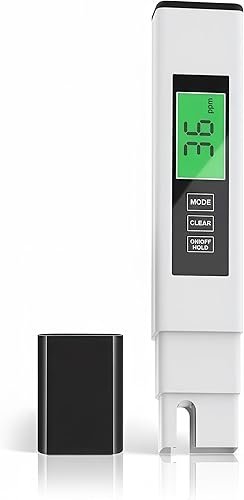
A digital TDS meter sends a small electrical current between two probes. It measures how easily that current flows, then uses a conversion factor to translate that conductivity reading into an estimated ppm value. This is why most meters also show EC and temperature—temperature affects conductivity, so the meter compensates for it to give a stable reading.
What Affects Your Reading?
Your TDS reading isn’t static. It can change based on your water source, the time of year, and even your plumbing. If your home filtered water comes from a municipal supply, the TDS might spike after heavy rain as the treatment plant adjusts. Well water users often see seasonal fluctuations as groundwater levels change. Old copper or galvanized pipes can also leach metals into the water, nudging the TDS upward.
Key Benefits of Knowing Your TDS
Quick Filter Health Check. This is the number one reason we recommend every household own a TDS meter. If you have a reverse osmosis (RO) system, you can test the tap water and the RO water. A significant drop in ppm (e.g., from 250 to 25) confirms the membrane is working. No drop? Time to change the filters.
Taste and Appliance Longevity. Water with very high TDS (over 1000 ppm) often tastes salty, bitter, or metallic. It also leads to limescale buildup in kettles, coffee makers, and steam irons. Knowing your TDS helps you choose the right filter to improve taste and protect your appliances.
A Baseline for Further Testing. A high TDS reading is a red flag to investigate further. It tells you to potentially test for specific contaminants like hardness, lead, or nitrates. It’s the smoke alarm, not the fire inspector. For well water owners, pairing a TDS check with an iron and manganese filter test is a smart move, as those metals contribute to the solid count.
Potential Drawbacks & Misconceptions
The “Minerals Are Bad” Myth. Some filter companies market zero-TDS water as the healthiest option. Honestly, that’s misleading. The World Health Organization suggests water with some mineral content is preferable for taste and nutrition. Demineralized water can be flat-tasting and may even leach minerals from your body over time. A TDS of 30-150 ppm from natural sources isn’t a problem.
It Doesn’t Identify Contaminants. This is the biggest limitation. A reading of 300 ppm could be from harmless calcium or from harmful nitrates. You can’t tell without more specific tests. That’s why TDS should be one tool in your toolbox, not the only one.
Types of Water Filters That Affect TDS
Not all filters are created equal when it comes to reducing TDS. Understanding this helps you set realistic expectations.
Carbon Filters (Pitchers, Faucet, Fridge)
These filters, often found in a simple point of use water filter, are great for improving taste and odor by removing chlorine and some organic compounds. However, they do almost nothing to lower TDS. The dissolved minerals and salts pass right through. If your TDS is high and you want it lower, carbon alone won’t cut it.
Reverse Osmosis (RO) Systems
This is the heavyweight champion of TDS reduction. An RO system uses a semi-permeable membrane to remove 95-99% of dissolved solids. It’s the most effective way to get low-TDS water at home. The downside? It also removes healthy minerals and wastes some water in the process.
Water Distillers
Distillation boils water and re-condenses the steam, leaving virtually all dissolved solids behind. It produces extremely low-TDS water, similar to RO. It’s effective but slow and energy-intensive.
Specialized Filters
Filters designed for specific problems, like the best iron water filter, will reduce the TDS contribution from those specific metals. They target particular contaminants rather than the broad spectrum of solids.
Buying Guide: TDS Meters & Test Kits
You don’t need to spend a fortune. Based on years of use, here’s what actually matters.
Accuracy & Range: Look for a meter with an accuracy of ±2% and a range of 0-9999 ppm. This covers everything from pure RO water to very hard tap water.
EC & Temperature: Get a 3-in-1 or 4-in-1 meter that also measures Electrical Conductivity (EC) and temperature. The EC reading is actually the primary measurement; TDS is derived from it. Temperature compensation is crucial for accuracy.
Build Quality: A waterproof or water-resistant housing is a good idea. You’re using it near sinks. A hold function to freeze the reading is also handy.
For Specific Contaminants: If your TDS test suggests a problem, or you’re on well water, invest in a multi-parameter test strip kit. These can check for hardness, chlorine, nitrates, pH, and metals like lead and copper, giving you a much clearer picture of what’s actually dissolved in your water.
Our Top Picks for 2026
We’ve used countless meters over the years. These offer the best balance of reliability, features, and price for homeowners.
| Product | Key Features | Price | Links |
|---|---|---|---|
| 4 in 1 TDS Meter Digital Water Tester | Measures TDS, EC, Temp (°C/°F). Range 0-9999ppm. Professional-grade accuracy for drinking water, RO systems, aquariums. | $19 |
Buy on Amazon Buy on eBay |
| Water Testing Kits for Drinking Water – 4 in 1 | 4-in-1 TDS, EC, Temp meter. High-precision sensors. Ideal for tap, well, pool, hydroponics, and RO/DI systems. | $12 |
Buy on Amazon Buy on eBay |
| Tds Water Tester | Drinking Water Tester | Portable, accurate PPM measurement. Advanced sensors with smart chip. Compact for home or travel use. | $21 |
Buy on Amazon Buy on eBay |
| 18-in-1 Water Quality Test Strips, 125ct | Tests for hardness, chlorine, lead, copper, nitrates, pH, and more. Results in 60 seconds. Great for comprehensive screening. | $27 |
Buy on Amazon Buy on eBay |

4 in 1 TDS Meter Digital Water Tester
This is our go-to recommendation for most people. It’s the workhorse meter we keep in our own testing kit. The build feels solid, the readings are consistent, and having both TDS and EC is useful. At $19, it’s a steal for the peace of mind it provides. We’ve used it to verify countless RO system installations, and it’s never let us down.
- Excellent accuracy for the price.
- Measures TDS, EC, and temperature.
- Wide 0-9999 ppm range.
- Not waterproof (just water-resistant).
- Battery could last longer.

18-in-1 Water Quality Test Strips
Think of this as the next step after your TDS meter flags a concern. When a reader tells us their TDS is 400 ppm, we suggest these strips to figure out *why*. They won’t give lab-grade precision, but for a quick, affordable screen for lead, hardness, or nitrates, they’re invaluable. We keep a bottle in the office for quick checks on water samples sent in.
- Tests 18 key parameters in one dip.
- Very easy to use—results in 60 seconds.
- 125 strips per bottle is great value.
- Color matching can be subjective.
- Not a substitute for professional lab testing.
Frequently Asked Questions
- What is a good TDS level for drinking water?
- There’s no universal “good” number. The EPA’s secondary standard is 500 ppm for taste and appearance. Many people prefer the taste of water under 300 ppm. RO water often sits between 10-50 ppm. The key is consistency—a sudden change in your TDS reading is more important than the absolute number.
- Does a TDS meter detect bacteria or viruses?
- No, not at all. TDS meters measure dissolved solids. Bacteria and viruses are living organisms that don’t dissolve—they’re suspended. A TDS reading of 0 ppm could still come from a microbiologically unsafe source. You need specific bacterial tests or a filter certified for cyst reduction (like NSF/ANSI 53).
- Why is my TDS reading higher after my filter?
- This usually happens with older carbon filters. As the carbon exhausts, it can start to leach absorbed impurities back into the water, sometimes raising the TDS. It’s a clear sign the filter cartridge is overdue for a change. Always replace filters on schedule.
- Is low TDS water bad for you?
- Very low TDS water (like distilled or RO) isn’t harmful, but it can be flat-tasting and may lack beneficial minerals. Some studies suggest long-term consumption of demineralized water could affect mineral balance, but the evidence isn’t conclusive. If you use RO, consider a remineralization stage.
- How often should I test my water’s TDS?
- For filter owners, test monthly to track performance. Test your incoming tap water quarterly to notice seasonal changes. If you’re on well water, test at least twice a year. Anytime you notice a taste change or have plumbing work done, grab your meter.
- Can I use a TDS meter for my aquarium or hydroponics?
- Absolutely. In fact, that’s where these meters originated. For aquariums, TDS helps track mineral levels sensitive fish need. For hydroponics, it’s essential for monitoring nutrient solution strength. The same meter works perfectly—just rinse it with distilled water between uses.
Final Thoughts
So, what is TDS water? It’s your water’s dissolved solid report card—a single number that tells you how much “stuff” is in there. After testing water for over a decade, we consider a TDS meter a non-negotiable tool for any household, especially if you own a filter. It’s the fastest way to verify your system is working and to spot potential issues early.
But remember its limits. Use it as a first step, not the final word. Pair it with multi-parameter strips for a broader view, and always choose a filter certified for the specific contaminants in your local water supply. Your TDS meter is your trusted scout, not the entire army.
