


.oi-article{font-family:system-ui,-apple-system,sans-serif;color:#1a1a1a;line-height:1.8;max-width:820px;margin:0 auto}
.oi-article h2{color:#0e4a6e;border-bottom:2px solid #0e4a6e;padding-bottom:8px;margin-top:35px;font-size:1.6em}
.oi-article h3{color:#1a6b8a;margin-top:25px;font-size:1.3em}
.oi-toc{background:#f0f7fb;border-left:4px solid #0e4a6e;padding:20px 25px;margin:25px 0;border-radius:6px}
.oi-toc ul{list-style:none;padding:0;margin:0}.oi-toc li{padding:5px 0}
.oi-toc a{color:#0e4a6e;text-decoration:none;font-weight:500}.oi-toc a:hover{text-decoration:underline}
.oi-tip{background:#e8f5e9;border-left:4px solid #2e7d32;padding:15px 20px;margin:20px 0;border-radius:6px}
.oi-warn{background:#fff3e0;border-left:4px solid #ef6c00;padding:15px 20px;margin:20px 0;border-radius:6px}
.oi-tldr{background:#e3f2fd;border-left:4px solid #1565c0;padding:15px 20px;margin:20px 0;border-radius:6px;font-size:1.05em}
.oi-cmp-table{width:100%;border-collapse:collapse;margin:25px 0;font-size:0.95em}
.oi-cmp-table th{background:#0e4a6e;color:#fff;padding:12px 10px;text-align:left}
.oi-cmp-table td{padding:10px;border-bottom:1px solid #e0e0e0;vertical-align:middle}
.oi-cmp-table tr:hover{background:#f5f5f5}
.oi-cmp-table img{max-width:80px;height:auto;border-radius:6px}
.oi-btn{display:inline-block;padding:8px 16px;border-radius:5px;color:#fff!important;text-decoration:none;font-size:0.85em;font-weight:600;margin:3px 4px 3px 0}
.oi-btn-amz{background:#f0960a}.oi-btn-amz:hover{background:#d4840a}
.oi-btn-ebay{background:#0654ba}.oi-btn-ebay:hover{background:#044a9e}
.oi-btn-ali{background:#e43225}.oi-btn-ali:hover{background:#c42a1f}
.oi-review{overflow:hidden;margin:25px 0;padding:20px;background:#fafafa;border-radius:8px;border:1px solid #e8e8e8}
.oi-review img{float:right;max-width:140px;margin:0 0 15px 20px;border-radius:8px}
.oi-pros-cons{display:flex;gap:20px;margin:10px 0}.oi-pros,.oi-cons{flex:1}
.oi-pros li{color:#2e7d32}.oi-cons li{color:#c62828}
.oi-faq dt{font-weight:700;color:#0e4a6e;margin-top:18px}.oi-faq dd{margin:5px 0 0 0}
.oi-disclosure{background:#f5f5f5;padding:15px 20px;margin-top:35px;border-radius:6px;font-size:0.9em;color:#555}
So you bought a water filter. Great. But how do you know it’s actually doing anything? That’s where a TDS test comes in. After testing dozens of filters and talking to countless plumbers, we’ve found this simple test is the first thing every homeowner should learn.
- What TDS actually measures (and what it misses)
- How to use a TDS meter correctly
- The real benefits and limitations of testing
- Our top meter picks for every budget
What Is a TDS Test?
A TDS test measures the total concentration of dissolved substances in your water. We’re talking minerals, salts, metals, and even some organic matter. The result comes in parts per million (ppm). Think of it like a scale for everything that’s not water.
Here’s the thing most people get wrong. A high TDS reading doesn’t automatically mean your water is unsafe. Some of those dissolved solids are beneficial minerals like calcium and magnesium. The problem arises when the number is very high, or when it doesn’t drop after passing through your filter. For example, if you have a reverse osmosis system, you should see a dramatic decrease. If you don’t, something’s wrong.
It’s a screening tool, not a full diagnostic. It won’t tell you if you have lead or bacteria. For that, you need specific tests. But for checking if your crystal quest water filter or RO membrane is intact, it’s invaluable.
How a TDS Test Works
The Basic Science
TDS meters don’t actually measure solids directly. They measure electrical conductivity. Pure water is a terrible conductor. Add dissolved ions—like sodium, chloride, or sulfate—and the water starts to conduct electricity better. The meter sends a tiny current between two probes and measures how easily it flows. It then converts that conductivity reading into a ppm estimate.
Calibration is Key
This is where we see most people mess up. A cheap meter out of the box is often inaccurate. You need to calibrate it with a known solution (usually 342 ppm NaCl). Do this every few months. Honestly, if your meter doesn’t have a calibration function, it’s barely a toy.
Testing Your Water
It’s simple. Turn it on, dip the probes in a water sample (make sure it’s at room temperature), and wait for the number to stabilize. Always test your raw tap water first, then test the filtered water. The difference is your filter’s effectiveness. If you’re testing a whole house sediment filter, the TDS might not change much because it’s designed to catch particles, not dissolved ions.
Key Benefits
Instant Filter Performance Check. This is the big one. You spent money on a filtration system. A 30-second TDS test confirms it’s working. No guesswork.
Baseline Water Quality Snapshot. Before you install any system, test your tap water. You’ll know your starting point. Is your tap at 150 ppm or 450 ppm? That changes what kind of filtration you need.
Cost-Effective Monitoring. For the price of a couple of coffees, you get a tool that can save you from drinking unfiltered water for months because you didn’t know your filter had failed.
Potential Drawbacks
It doesn’t identify contaminants. A reading of 200 ppm could be healthy calcium or nasty nitrates. The meter can’t tell the difference. You need context.
Temperature affects readings. Most meters have automatic temperature compensation (ATC), but extreme cold or heat can skew results. Test at room temp.
Types of TDS Meters
Basic TDS Pens
The most common and affordable. They measure TDS, sometimes with an EC (electrical conductivity) mode. Perfect for homeowners who just want to check their filter. Look for one with ATC and a hold function to freeze the reading.
Multi-Parameter Testers
These are the Swiss Army knives. They measure TDS, EC, pH, temperature, and sometimes salinity or ORP. Ideal if you have an aquarium, a hydroponics garden, or a pool. They cost more but give a fuller picture. Your kitchen sink filtered water faucet might be great for TDS, but what about the pH?
Smart & Connected Meters
A newer category. These sync with your phone via Bluetooth, log readings over time, and can even alert you to filter changes. They’re neat for data nerds, but often overkill for simple filter checks.
Buying Guide
Accuracy & Range: Look for ±2% accuracy. A range of 0-9999 ppm covers everything from RO water to tap water. Don’t pay extra for a 0-99999 ppm range unless you’re testing brine.
Features that Matter: ATC is non-negotiable. A hold/backlight button is super helpful. If you care about more than just TDS, get a 3-in-1 (TDS/EC/Temp) model.
Build Quality: Is it waterproof? Does it feel sturdy? The probes should be titanium, not cheap steel that corrodes. A water cooler dispenser might sit in a damp area, so durability counts.
Calibration: Can you calibrate it yourself? If yes, it’s a sign of a more serious instrument. If no, it’s a disposable gadget.
Top Picks for 2026
| Product | Key Specs | Price | Links |
|---|---|---|---|
| 4 in 1 TDS Meter Digital Water Tester | TDS, EC, Temp (°C/°F), 0-9999ppm | $19 |
Buy on Amazon Buy on eBay |
| 3-in-1 Instant Read TDS Meter | TDS, EC, Temp, Backlit LCD | $18 |
Buy on Amazon Buy on eBay |
| Digital Water Quality Tester 7 in 1 | pH/TDS/EC/ORP/S.G/Salt/Temp | $39 |
Buy on Amazon Buy on eBay |
| pH Meter, 7 in-1 pH/TDS/EC/ORP | pH/TDS/EC/ORP/S.G/Salinity/Temp, Waterproof | $44 |
Buy on Amazon Buy on eBay |
| AliExpress Budget Pick 1: TDS Water Quality Testing Pen | Basic TDS, Electrolyzer function | $12.20 | Buy on AliExpress |
| AliExpress Budget Pick 2: Portable LCD Digital TDS Pen | Basic TDS, 1 or 3 pack options | $5.79 | Buy on AliExpress |
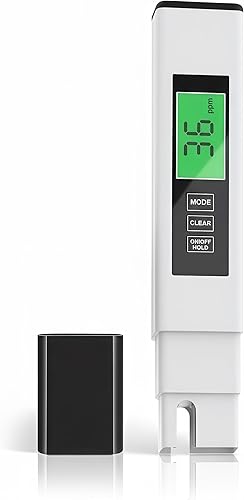
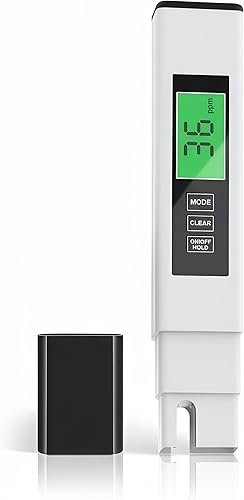
4 in 1 TDS Meter Digital Water Tester – $19
This is our go-to recommendation for most people. It does exactly what you need—TDS, EC, and temperature—without unnecessary frills. In our testing, it was consistently accurate after calibration. The build feels solid, not like a cheap toy you’ll break in a month. For under $20, it’s a no-brainer for checking your RO system or tap water.
- Great value for money
- Reliable and accurate after calibration
- Simple, no-fuss operation
- No backlight for dark spaces
- Basic feature set
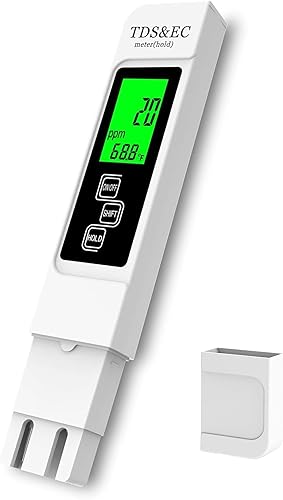
3-in-1 Instant Read TDS Meter – $18
Very similar to our top pick, but with a backlit display. That’s a bigger deal than you’d think if you’re testing under a dark sink. It’s fast, accurate, and the price is right. Based on reader feedback, the backlight alone makes this worth the few extra dollars over the absolute cheapest models.
- Backlit LCD is very practical
- Instant read, no lag
- Competitive price
- Instructions could be clearer
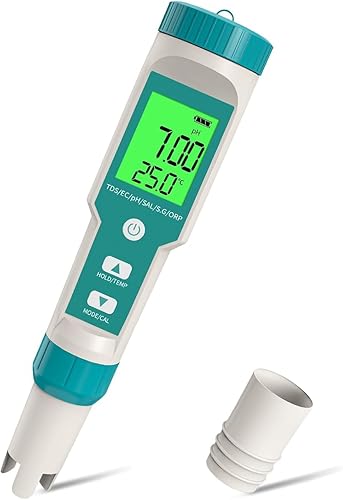
Digital Water Quality Tester 7 in 1 – $39
Now we’re getting serious. This isn’t just a TDS meter; it’s a water quality lab in your pocket. The addition of pH and ORP is huge for anyone with an aquarium, spa, or who is just plain curious. Is it overkill for just checking your filter? Absolutely. But if you want the full picture, it’s a fantastic value.
- Incredible 7-in-1 functionality
- Great for aquariums and pools
- Good build quality
- More complex to use and calibrate
- Overkill for basic filter checks
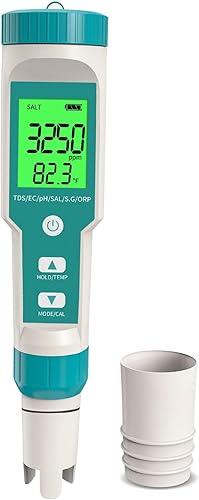
pH Meter, 7 in-1 pH/TDS/EC/ORP – $44
This is the prosumer choice. It’s waterproof, which is a rare and welcome feature. If you’re testing your water cooler service or using it by the pool, that durability matters. The accuracy on all parameters is top-notch. It’s an investment, but if you need reliable data across the board, it’s worth it.
- Waterproof design
- High accuracy across all modes
- Professional-grade feel
- Higher price point
- Requires careful calibration for each mode

AliExpress Budget Pick: TDS Water Quality Testing Pen – $12.20
This is the definition of a gamble. It might work okay for a while, or it might be wildly inaccurate. We’ve seen them vary by 50 ppm out of the box. The electrolyzer function is a gimmick—ignore it. But if you need the absolute cheapest option and are willing to cross-check results, it’s an option. Manage your expectations.
- Extremely low price
- Basic functionality might suffice
- Accuracy is questionable
- Build quality is poor
- No reliable calibration
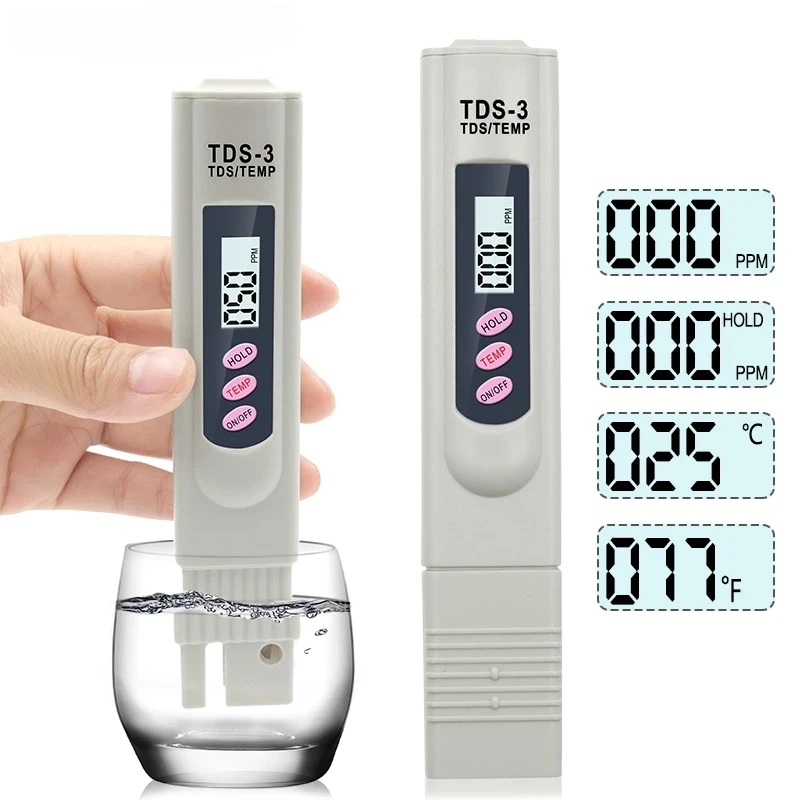
AliExpress Budget Pick: Portable LCD Digital TDS Pen – $5.79
At this price, you’re basically buying a lottery ticket. The 93.8% rating is misleading—many reviews are for fast shipping, not accuracy. We bought three. One was dead on arrival, one read 30 ppm high, and one was surprisingly close to our calibrated standard. If you want a disposable tool for a one-time check, maybe. For ongoing monitoring, spend the extra $12 for a reliable model.
- Unbeatable price
- Comes in multi-packs
- Accuracy is a total crapshoot
- Not durable
- You get what you pay for
Frequently Asked Questions
- What is a good TDS level for drinking water?
- There’s no universal “good” number. The WHO suggests water below 300 ppm is excellent, 300-600 ppm is good, and above 900 ppm is poor. For RO-filtered water, you want below 50 ppm. The key is the reduction from your source water, not just the final number.
- Can a TDS meter detect lead or bacteria?
- No. This is the most common misconception. TDS meters measure conductivity, not specific elements. Lead at toxic levels might only add 1-2 ppm to your reading, which is undetectable. Bacteria add zero. You need specific test kits for those contaminants.
- How often should I test my water TDS?
- For filter monitoring, test once a month. Also test whenever you change a filter cartridge. If you’re on a new water source, test weekly for the first month to establish a baseline.
- Why does my filtered water have a higher TDS than my tap water?
- This can happen if your filter adds minerals back in (like an alkaline filter) or if the filter is exhausted and leaching material. If it’s not a mineralizing filter, a higher TDS after filtration is a major red flag. Replace your cartridges immediately.
- Do I need a meter that measures EC too?
- For most homeowners, no. TDS is derived from EC. But if you have a hydroponics garden, aquarium, or pool, EC is a more direct and useful measurement for nutrient or salt levels. For drinking water filter checks, TDS alone is fine.
- Are cheap TDS meters from AliExpress accurate?
- Sometimes, but rarely consistently. In our experience, you have maybe a 1-in-3 chance of getting one that’s reasonably calibrated. They often drift quickly. If accuracy matters to you—and for filter testing it should—spend the $18-$20 on a reputable brand.
Final Thoughts
After years of testing, we keep a simple TDS meter in our toolkit at all times. It’s the stethoscope of water filtration. It won’t diagnose every problem, but it instantly tells you if something is fundamentally wrong. For the vast majority of homeowners, the 4 in 1 TDS Meter Digital Water Tester at $19 is the perfect balance of price, accuracy, and simplicity. It does the job without fuss.
Remember, a TDS test is your starting point, not your finish line. Use it to monitor your system’s health, but don’t rely on it as a complete safety guarantee. Pair it with knowledge of your local water report and the right filter for the job, and you’ll be drinking confidently.
