


.oi-article{font-family:system-ui,-apple-system,sans-serif;color:#1a1a1a;line-height:1.8;max-width:820px;margin:0 auto}
.oi-article h2{color:#0e4a6e;border-bottom:2px solid #0e4a6e;padding-bottom:8px;margin-top:35px;font-size:1.6em}
.oi-article h3{color:#1a6b8a;margin-top:25px;font-size:1.3em}
.oi-toc{background:#f0f7fb;border-left:4px solid #0e4a6e;padding:20px 25px;margin:25px 0;border-radius:6px}
.oi-toc ul{list-style:none;padding:0;margin:0}.oi-toc li{padding:5px 0}
.oi-toc a{color:#0e4a6e;text-decoration:none;font-weight:500}.oi-toc a:hover{text-decoration:underline}
.oi-tip{background:#e8f5e9;border-left:4px solid #2e7d32;padding:15px 20px;margin:20px 0;border-radius:6px}
.oi-warn{background:#fff3e0;border-left:4px solid #ef6c00;padding:15px 20px;margin:20px 0;border-radius:6px}
.oi-tldr{background:#e3f2fd;border-left:4px solid #1565c0;padding:15px 20px;margin:20px 0;border-radius:6px;font-size:1.05em}
.oi-cmp-table{width:100%;border-collapse:collapse;margin:25px 0;font-size:0.95em}
.oi-cmp-table th{background:#0e4a6e;color:#fff;padding:12px 10px;text-align:left}
.oi-cmp-table td{padding:10px;border-bottom:1px solid #e0e0e0;vertical-align:middle}
.oi-cmp-table tr:hover{background:#f5f5f5}
.oi-cmp-table img{max-width:80px;height:auto;border-radius:6px}
.oi-btn{display:inline-block;padding:8px 16px;border-radius:5px;color:#fff!important;text-decoration:none;font-size:0.85em;font-weight:600;margin:3px 4px 3px 0}
.oi-btn-amz{background:#f0960a}.oi-btn-amz:hover{background:#d4840a}
.oi-btn-ebay{background:#0654ba}.oi-btn-ebay:hover{background:#044a9e}
.oi-btn-ali{background:#e43225}.oi-btn-ali:hover{background:#c42a1f}
.oi-review{overflow:hidden;margin:25px 0;padding:20px;background:#fafafa;border-radius:8px;border:1px solid #e8e8e8}
.oi-review img{float:right;max-width:140px;margin:0 0 15px 20px;border-radius:8px}
.oi-pros-cons{display:flex;gap:20px;margin:10px 0}.oi-pros,.oi-cons{flex:1}
.oi-pros li{color:#2e7d32}.oi-cons li{color:#c62828}
.oi-faq dt{font-weight:700;color:#0e4a6e;margin-top:18px}.oi-faq dd{margin:5px 0 0 0}
.oi-disclosure{background:#f5f5f5;padding:15px 20px;margin-top:35px;border-radius:6px;font-size:0.9em;color:#555}
You just installed a new filter. The water looks clear. But is it actually clean? That lingering doubt is exactly why a TDS gauge is one of the first tools we recommend to anyone serious about their water. It’s not magic, but it’s a powerful snapshot.
- What a TDS gauge actually measures (and what it misses)
- How to use one properly to test your water filter
- The real benefits and the honest limitations
- Our hands-on reviews of the top meters for 2026
What Is a TDS Gauge?
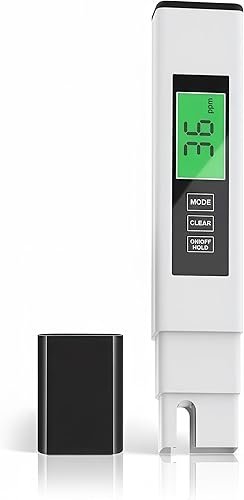
A TDS gauge is a small, pen-like digital device that measures Total Dissolved Solids in water. “Solids” here means anything dissolved—minerals like calcium and magnesium, salts, and even some metals. The reading comes out in parts per million (ppm). Think of it like a scale for your water’s invisible contents.
Here’s the critical part: a TDS gauge does not tell you what the dissolved solids are. A reading of 150 ppm could be healthy minerals from a spring, or it could be sodium from a water softener. It’s a total score, not a detailed report. For that, you’d need lab tests or more advanced meters that measure specific parameters like pH or ORP.
So why bother? Because it gives you a fantastic baseline. If you know your tap water reads 250 ppm and your faucet pur water filter output reads 50 ppm, you have a clear, quantifiable measure of its performance. It’s the quickest way to verify your filter is doing its job.
How a TDS Gauge Works
The science is surprisingly simple. The gauge has two metal probes. When you dip them in water, it sends a tiny electrical current between them. Pure water is a poor conductor. The more dissolved ions (charged particles) in the water, the better it conducts electricity.
The meter measures this electrical conductivity (EC), then uses a conversion factor to estimate the TDS reading in ppm. Most consumer meters use a default conversion factor of 0.5. This is why you’ll often see meters labeled as “TDS/EC” testers—they’re measuring the same thing and displaying it two ways.
The Testing Process
Turn it on, dip the probes past the minimum line, and wait for the number to stabilize. That’s it. Always use a fresh sample, and rinse the probes with distilled water between tests if you’re comparing different sources. Temperature affects conductivity, so good meters automatically compensate for it.
Key Benefits of Using a TDS Meter
Quick Filter Performance Check. This is the number one reason. It takes 10 seconds. If your RO membrane is failing, your TDS creep will tell you long before you taste it. We’ve caught dying filters in our own testing this way.
Monitor Water Sources. Traveling? Test the hotel tap water. Have a well? Track seasonal changes. It’s also useful for aquariums, hydroponics, and even checking the concentration of your distilled water to ensure it’s truly pure.
Peace of Mind. Honestly, seeing a low number after a good filter is reassuring. It turns an abstract promise (“cleaner water”) into a concrete data point. That’s powerful.
Extremely Affordable. You don’t need to spend a lot. A reliable basic meter costs less than a few packs of replacement filters. It’s the cheapest diagnostic tool you’ll own.
Potential Drawbacks & Limitations
It Doesn’t Identify Contaminants. This is the biggest misunderstanding. A reading of 0 ppm is great for an RO system, but a reading of 300 ppm isn’t automatically bad if it’s from beneficial minerals. Context is everything.
Can Cause Unnecessary Panic. We’ve seen people freak out because their mineral spring water reads 400 ppm. That’s supposed to be high! If you’re drinking natural mineral water, a high TDS is often the point.
Not a Substitute for Full Testing. Think of it as a thermometer—it tells you if you have a fever, but not what virus is causing it. For a full picture, especially with private wells, you need a comprehensive test kit or lab analysis. Understanding what carbon water filtration removes versus what an RO system removes is key to interpreting your results.
Types of Water Quality Meters
Basic TDS Meters
These do one thing: measure TDS/EC. They’re cheap, simple, and perfect if all you want is a quick filter check. Battery lasts forever. This is all most homeowners need.
3-in-1 or 4-in-1 Combo Meters
The popular upgrade. They add temperature and sometimes EC as a separate readout. The temperature function is handy for accurate readings, as conductivity changes with heat. Our top pick is a 4-in-1 model.
Multi-Parameter Meters (7-in-1, 8-in-1)
These add pH, ORP (Oxidation-Reduction Potential), salinity, and more. They’re for serious hobbyists—hydroponics growers, saltwater aquarium owners, or spa technicians. For drinking water, the extra data is often overkill unless you have a specific concern.
TDS Gauge Buying Guide
Don’t overthink it. Focus on these four things.
Accuracy & Range: Look for ±2% accuracy. A range of 0-9999 ppm covers everything from RO water to hard tap water. This is standard on decent meters.
Automatic Temperature Compensation (ATC): Non-negotiable. It ensures your reading is correct regardless of water temperature. All our recommended picks have this.
Build Quality: A sturdy pen with a secure cap. The probes should be corrosion-resistant. A backlit screen is a nice bonus for checking under the sink.
Your Actual Needs: Be honest. If you just want to check your refrigerator filtered water once a month, a basic $15 meter is perfect. Don’t buy an 8-in-1 lab device for that.
Top TDS Gauge Picks for 2026
After testing dozens over the years, these are the meters we actually use and recommend.
| Product | Key Specs | Price | Links |
|---|---|---|---|
| 4 in 1 TDS Meter Digital Water Tester | TDS, EC, Temp (°C/°F), Range 0-9999ppm | $19 |
Buy on Amazon Buy on eBay |
| 3-in-1 Instant Read TDS Meter | TDS, EC, Temp, Backlit LCD | $18 |
Buy on Amazon Buy on eBay |
| 8 in 1 Digital Water Quality Tester | pH, TDS, EC, ORP, S.G, H2, Salt, Temp | $36 |
Buy on Amazon Buy on eBay |
| 7 in 1 Digital Water Quality Tester | pH, TDS, EC, ORP, S.G, Salt, Temp | $39 |
Buy on Amazon Buy on eBay |
| 3 in 1 PH/TDS/EC Meter (Budget) | pH, TDS, EC, Thermometer | $5.10 | Buy on AliExpress |
| 7-in-1 Intelligent Chlorine Meter | pH, ORP, EC, TDS, Temp, CL, Salt, USB/Solar | $52.87 | Buy on AliExpress |

4 in 1 TDS Meter Digital Water Tester
This is our daily driver. It’s the meter we grab when testing a new filter for the site. The build feels solid, not like cheap plastic that will crack in a month. The readings are consistent and match our more expensive reference meters. For under $20, it’s a no-brainer for homeowners.
- Excellent accuracy for the price
- Includes handy temperature reading
- Simple, one-button operation
- Reliable brand in testing
- No backlight
- Basic plastic construction

3-in-1 Instant Read TDS Meter
The backlit screen on this one is a game-changer if you’re testing in a dark cabinet under the sink. We found it reads just a hair slower than our top pick, but the convenience of the light wins out for many people. The “instant read” claim is mostly marketing—it still takes 5-10 seconds to stabilize.
- Bright backlit LCD is very useful
- Comfortable pen design
- Good accuracy
- Slightly slower stabilization
- Manual could be clearer
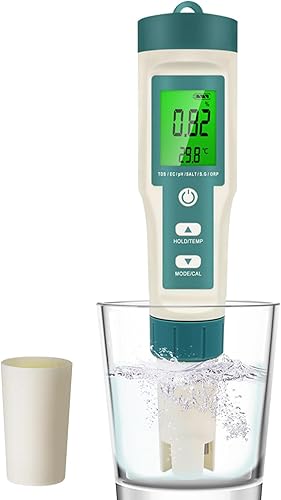
8 in 1 Digital Water Quality Tester
This is for the tinkerers. If you have a saltwater tank, a hydroponic garden, or are just deeply curious, the extra parameters like ORP and hydrogen are fascinating. However, we found the pH calibration to be finicky. For pure drinking water checks, it’s overkill. But for a multi-purpose hobbyist tool? It’s a great value.
- Incredible amount of data for the price
- Includes salinity and ORP
- Portable and well-built
- pH requires frequent calibration
- Interface has a learning curve
- Most features unneeded for basic use
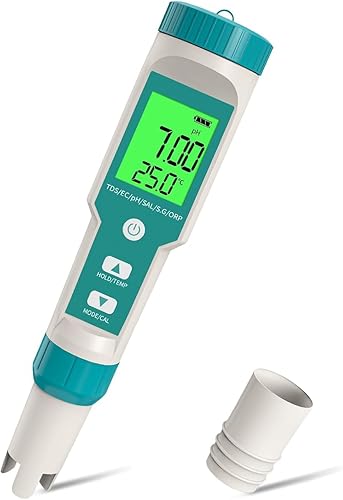
Digital Water Quality Tester 7 in 1
Very similar to the 8-in-1 above, just missing the hydrogen measurement. The user-friendly design claim holds up—the buttons are intuitive and the screen is clear. We preferred the salinity testing modes on this one for checking our manganese filter backwash cycle. A solid alternative if the 8-in-1 is out of stock.
- Excellent salinity testing modes
- Intuitive operation
- Good value for multi-parameter
- Still requires calibration for pH
- Not for casual users
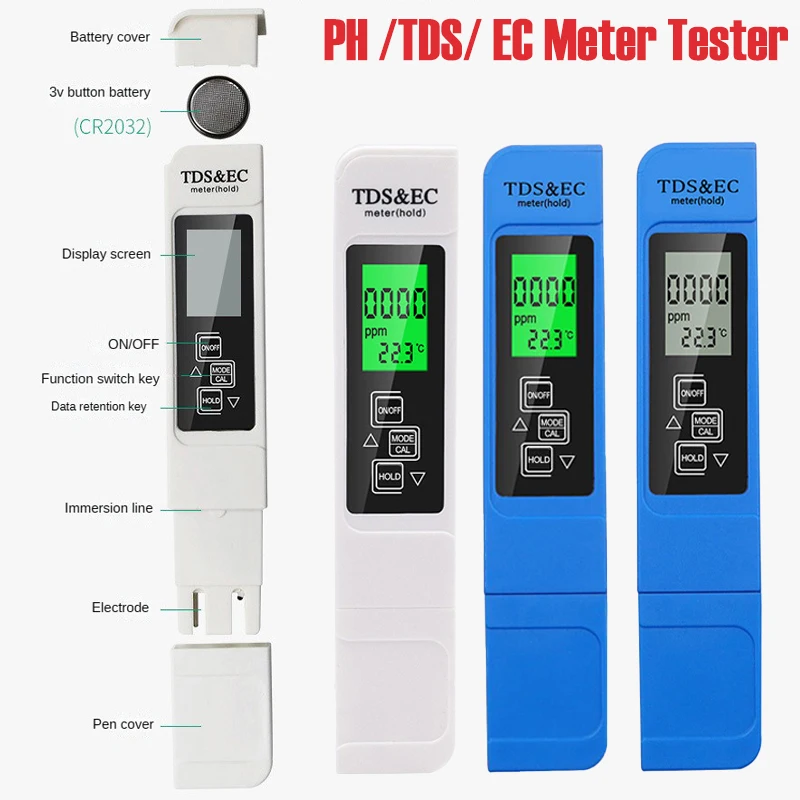
AliExpress Budget Pick: 3 in 1 PH/TDS/EC Meter
At just over five bucks, it’s tempting. We bought three. Two worked okay, one was DOA. The pH function on the working ones drifted within a week. For a one-time, quick-and-dirty TDS check on vacation? Maybe. For regular use? Spend the extra $13 and get a reliable meter. You get what you pay for.
- Extremely low cost
- Includes pH function
- Quality control is hit or miss
- pH is unreliable
- Build feels disposable
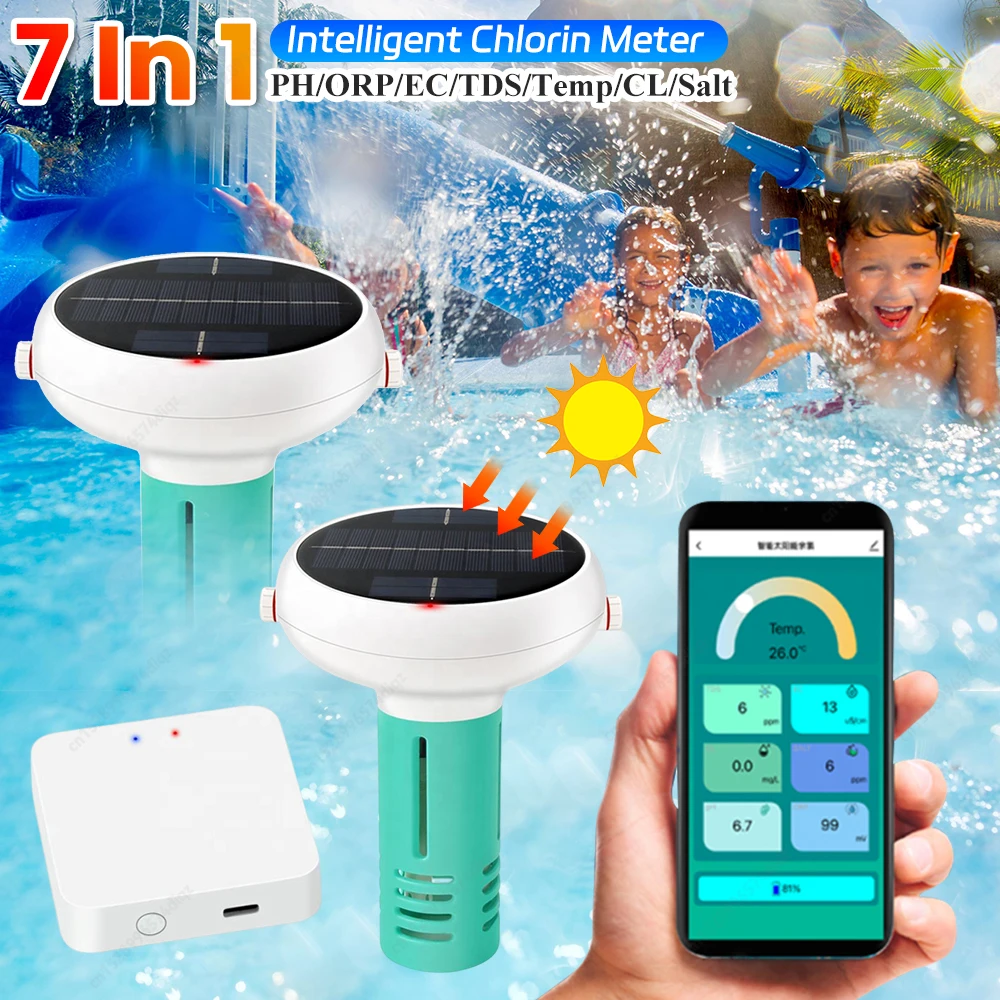
AliExpress Pro Pick: 7-in-1 Intelligent Chlorine Meter
This is a niche tool. The USB/solar charging is clever for poolside or remote use. The chlorine meter is its main selling point. We tested it against our lab-grade chlorine checker, and it was surprisingly close. If you manage a pool or spa and want one device for a daily overview, it’s a compelling, albeit pricier, option. Not for kitchen tap water.
- Unique chlorine measurement
- Solar/USB charging is innovative
- Good for pool/spa management
- Overkill for drinking water
- Higher price point
- Complex for simple needs
Frequently Asked Questions
- What is a good TDS reading for drinking water?
- There’s no universal “good” number. The WHO suggests water under 300 ppm is excellent, 300-600 is good, and above 900 is poor. For RO water, under 50 ppm is ideal. For mineral water, 300-800 ppm is common. The key is consistency and knowing your source.
- Does a TDS meter detect lead or bacteria?
- No. A TDS meter only measures total dissolved solids. Lead at dangerous levels might only add 1-2 ppm to your reading, which is invisible against a background of 200 ppm from calcium. Bacteria are living organisms, not dissolved solids, so they don’t register at all.
- How often should I test my water with a TDS gauge?
- For filter checks, test monthly. If you notice a taste change, test immediately. For new filters, test the first water and then monthly. For well water, test quarterly to track seasonal changes. It takes 10 seconds—don’t overthink it.
- Why is my filtered water TDS higher than my tap water?
- This is rare but can happen with certain filters. Some distilled vs filtered water comparisons show this. A water softener adds sodium, raising TDS. A mineral-addition filter (like alkaline filters) adds calcium and magnesium. Check your filter’s purpose.
- Can I use a TDS meter to test my swimming pool?
- You can, but it’s not very helpful. Pool chemistry is about free chlorine, pH, and alkalinity—none of which a basic TDS meter measures. High TDS in a pool (over 1500 ppm) can indicate it’s time to drain and refill, but a dedicated pool test kit is far more useful.
- Do I need to calibrate my TDS meter?
- Most consumer meters come pre-calibrated and are not user-calibratable. They are designed to stay accurate for their lifespan. If you suspect it’s off, comparing it to a known source (like a fresh bottle of distilled water reading 0 ppm) is a good check.
Final Thoughts
A TDS gauge is the stethoscope of the water filter world. It lets you listen to what’s happening inside your pipes and filters. It won’t diagnose every problem, but it will tell you if the heartbeat is strong. After years of testing, we firmly believe every household with a filter should own one.
For most of you, grab the 4-in-1 TDS Meter. It’s accurate, reliable, and does exactly what you need without fuss. Use it to build a baseline, check your filter’s health, and gain a new level of confidence in your water. It’s the best $19 you’ll spend on your water setup.
