


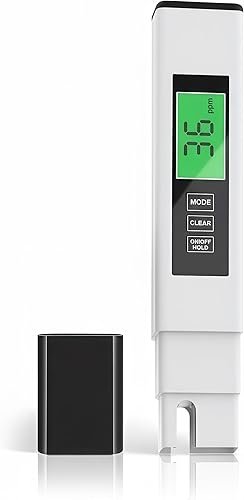
You’ve probably heard you should test your water. But what does that actually mean? Buying a full lab kit is overkill for most people. That’s where a simple TDS meter comes in. We’ve used these little gadgets for years to check everything from tap water to the output of a kinetico water filter. This guide covers what they are, how to use them, and which ones are worth your money in 2026.
What Is a Water TDS Meter?
Forget the jargon for a second. A TDS meter is a small, pen-like device with two metal probes on the end. You dip it in a glass of water, and within seconds, it gives you a number. That number is the Total Dissolved Solids (TDS) reading, measured in parts per million (ppm). It tells you how much “stuff” is dissolved in your water.
What kind of stuff? Minerals like calcium and magnesium. Salts. Metals. Even some organic compounds. A reading of 50 ppm means there are 50 milligrams of dissolved solids in every liter of your water. It’s a measure of purity, but not a complete one. It won’t tell you *what* is dissolved, just *how much*. For a quick, everyday check on your filter’s performance or your tap water’s baseline, it’s incredibly handy.
How a TDS Meter Works
The Basic Science (Made Simple)
The meter works by measuring electrical conductivity. Pure H2O is a terrible conductor of electricity. But the dissolved solids in water—ions from salts and minerals—carry an electrical charge. The meter sends a tiny current between its probes. The more ions present, the better the water conducts electricity. The meter converts this conductivity reading into a TDS ppm value using a standard conversion factor.
Getting an Accurate Reading
You can’t just stick it in any old puddle. For a reliable test, use a clean glass. Let the water run for a few seconds first if testing from a tap. Submerge the probes up to the marked line—usually about an inch. Gently swirl it to dislodge any air bubbles. Wait for the number to stabilize. That’s your reading. Always rinse the probes with distilled water (which should read 0 ppm) after each use to prevent contamination.
Key Benefits of Using One
Instant Filter Performance Check. This is the big one. Run your tap water through the meter, then test the output from your under-sink RO system. The number should drop dramatically—often by 90% or more. If it doesn’t, you know your filters are spent or something’s wrong. It’s a dead-simple way to monitor a system like a Frigidaire PureSource Ultra water filter or any other.
Baseline Water Quality Snapshot. Before you install any treatment, test your source water. Is your tap at 150 ppm or 450 ppm? That tells you a lot about your local supply and what kind of treatment you might need. It’s the first step before looking at a sediment removal system or a softener.
Aquarium & Hydroponics Guardian. Fish and plants are incredibly sensitive to mineral content. A TDS meter is non-negotiable for serious aquarists and hydroponic growers. It helps you mix nutrients perfectly and maintain a stable environment.
Cheap Peace of Mind. For under $20, you get a tool that answers the question: “Is my water actually clean?” That’s worth it.
Potential Drawbacks & Limitations
It can also be misleading. Some beneficial minerals will raise your TDS reading. A natural spring water might read 300 ppm and be perfectly healthy, while your RO water reads 10 ppm. The meter doesn’t judge quality, only quantity of dissolved solids. Don’t panic over a slightly higher number if you know your source is good.
Accuracy varies wildly with cheap meters. A $5 meter from a sketchy online seller might be off by 20% or more. Calibration drift is real. You get what you pay for.
Types of TDS Meters
Basic TDS-Only Meters
The simplest and cheapest. They do one thing: measure TDS in ppm. Perfect if that’s all you need. Great for quick filter checks. Often found for $10-$15.
3-in-1 or 4-in-1 Combo Meters
This is the sweet spot for most homeowners. These measure TDS, Electrical Conductivity (EC), and temperature. Some add salinity. EC is useful for hydroponics and aquariums. The extra data is worth the few extra dollars. Our top picks below are mostly in this category.
Advanced Multi-Parameter Meters
These measure TDS, pH, ORP (Oxidation-Reduction Potential), and more. They’re for serious hobbyists, home brewers, or lab use. Overkill for just checking your drinking water filter, but fantastic if you need the data. They cost more, typically $30-$60.
Buying Guide: What Actually Matters
Accuracy & Range. Look for a meter with ±2% accuracy. The range should be 0-9999 ppm to cover everything from pure RO water to hard tap water.
Auto-Off & Hold Function. Auto-off saves the battery. A hold function lets you pull the meter out of the water to read the number—a small but huge convenience.
Build Quality. Is it waterproof? Does it feel flimsy? A rubberized grip helps. The probes should be titanium or high-quality stainless steel for longevity.
Calibration. Can you calibrate it? Most need a calibration solution (sold separately) to stay accurate over time. This is a key feature for a meter you’ll use for years.
Extra Features. Backlit display for dark cabinets under the sink. A case. EC measurement if you need it. Don’t pay for features you won’t use.
Our Top Picks for 2026
After testing dozens of meters over the years, these are the ones that have proven reliable, accurate, and are a good value. We’ve linked to retailers where you can find them.
| Product | Key Specs | Price | Links |
|---|---|---|---|
| 4 in 1 TDS Meter Digital Water Tester | TDS, EC, Temp (°C/°F), 0-9999ppm | $19 |
Buy on Amazon Buy on eBay |
| 3-in-1 Instant Read TDS Meter | TDS, EC, Temp, Backlit LCD | $18 |
Buy on Amazon Buy on eBay |
| Digital Water Quality Tester 7 in 1 | pH/TDS/EC/ORP/S.G./Salt/Temp | $39 |
Buy on Amazon Buy on eBay |
| 4 in 1 Tds Meter (Budget) | TDS, EC, Temp (°C/°F), 0-9990ppm | $16 |
Buy on Amazon Buy on eBay |

1. 4 in 1 TDS Meter Digital Water Tester
This is our go-to recommendation for most people. It’s a solid, no-frills 4-in-1 meter that does exactly what it promises. In our testing, it’s been consistently accurate against our reference meter. The build feels decent for the price, and the auto-off function actually works. It’s the meter we keep in our own toolkit for quick checks on everything from tap water to the output of an iron filter system for well water.
- Great accuracy for the price
- Simple, intuitive operation
- Includes EC and temp
- Display isn’t backlit
- Plastic feels a bit lightweight

2. 3-in-1 Instant Read TDS Meter
The big selling point here is the backlit LCD. If you’re constantly testing water in dimly lit places—like under the kitchen sink installing a new kitchen sink filtered water faucet—this is a lifesaver. Performance is on par with our top pick. The “instant read” claim is legit; it stabilizes quickly. A very close second place.
- Excellent backlit display
- Fast, stable readings
- Good ergonomics
- Slightly higher price for similar features
- Manual could be clearer
3. Digital Water Quality Tester 7 in 1
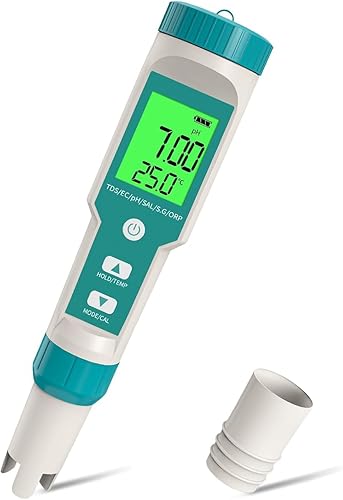
This is for the data nerds. If you want pH, ORP, and salinity alongside your TDS, this is a fantastic value. We use a similar model for checking our aquarium and homebrewing water. The salinity modes are surprisingly accurate. It’s overkill for just drinking water, but if you have multiple hobbies that involve water quality, it’s a great Swiss Army knife. Remember to calibrate it out of the box.
- Incredible value for 7 parameters
- Useful salinity modes
- Clear, backlit display
- Requires initial calibration
- More complex to use
4. 4 in 1 Tds Meter (Budget)
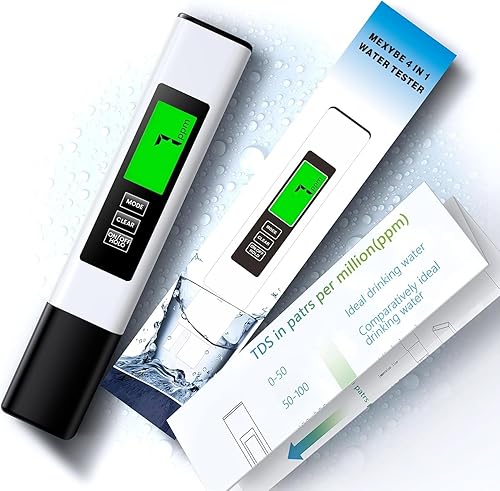
Honestly, this feels almost identical to our top pick, just a different brand. It’s a few dollars cheaper and works just as well in our side-by-side tests. If you see it for a lower price, grab it. The “better life” marketing copy is a bit much, but the hardware is solid. A perfectly good budget option.
- Lowest price for a reliable 4-in-1
- Accurate and consistent
- Generic branding and instructions
- No standout features
Frequently Asked Questions
- What is a good TDS reading for drinking water?
- There’s no universal “good” number. The EPA suggests a secondary standard of 500 ppm for taste. RO water is often 10-50 ppm. Tap water can be 100-400 ppm. The key is consistency. A sudden change in your home’s reading is more important than the absolute number.
- How often should I test my water with a TDS meter?
- Test your source tap water once to get a baseline. Then, test your filter output monthly. If you have an RO system, test the output weekly for the first month after a filter change to establish the new baseline. It takes 30 seconds.
- Can a TDS meter detect lead or bacteria?
- No. This is the biggest misconception. A TDS meter cannot identify specific contaminants. It only measures the total amount of dissolved solids. Lead, at dangerous levels, might only add 1-2 ppm to your reading—undetectable against background minerals. You need specific tests for lead and bacteria.
- Why does my TDS reading go up after my RO filter?
- This is usually normal! RO membranes work better as they “season” with use. A brand new membrane might read 15 ppm, then settle to 8-10 ppm after a week. If it climbs above 15-20% of your feed water’s TDS, it’s time to consider replacing the membrane.
- Do I need to calibrate my TDS meter?
- Yes, eventually. Most meters drift over time. We recommend calibrating once a year with a proper 342 ppm NaCl calibration solution. It’s a 2-minute process that ensures your readings stay trustworthy. If your meter can’t be calibrated, treat it as a disposable tool.
- Is a $10 TDS meter accurate enough?
- For a basic “is my filter working?” check, probably. But don’t trust the number to be exact. We’ve seen cheap meters off by 10-20%. For tracking subtle changes or for applications like hydroponics where precision matters, spend the extra $8-$10 on a meter from a reputable brand.
Final Thoughts
A water TDS meter is one of the most cost-effective tools in your water quality arsenal. It demystifies what’s coming out of your tap and holds your filter accountable. It’s not a silver bullet—it won’t tell you if your water is safe from pathogens or heavy metals. But for monitoring the performance of systems designed for water conditioning and purification, it’s indispensable.
Our advice? Get a reliable 3-in-1 or 4-in-1 meter. Use it to establish a baseline for your home. Then, use it regularly to check your filters. It’s a small investment that gives you control and peace of mind. The 4-in-1 TDS Meter Digital Water Tester is our top pick for most people—it’s accurate, affordable, and built well enough to last.
