


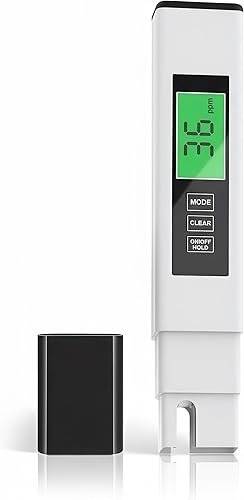
You’ve installed a new filter. The water looks clear. But is it actually clean? A TDS tester is your first line of defense—a cheap, instant way to peek behind the curtain. After testing dozens of models over the years, I can tell you not all are created equal. This guide cuts through the noise.
- What a TDS meter actually measures (and what it misses)
- How to use one properly to test your filters
- The real benefits and limitations you need to know
- Our hands-on reviews of the top meters for 2026
What Is a TDS Tester?
A TDS tester is a small, pen-like digital device that measures Total Dissolved Solids in your water. We’re talking about inorganic salts, minerals, and some organic matter that’s dissolved in there—calcium, magnesium, sodium, you name it. The reading comes out in parts per million (ppm).
Here’s the crucial part most people get wrong: a TDS meter does not tell you what those solids are. It can’t distinguish between healthy minerals like calcium and nasty contaminants like lead. Think of it as a smoke detector for your water’s purity—it alerts you something’s there, but it doesn’t tell you if it’s burnt toast or a real fire. For that, you need a more specific water filter for lead test or a full lab analysis.
How a TDS Tester Works
The science is simpler than you’d think. It’s all about electrical conductivity.
The Basic Principle
Pure H2O is a terrible conductor of electricity. But add dissolved solids—ions, specifically—and it becomes conductive. The tester sends a small electrical current between two electrodes submerged in your water. The more dissolved ions present, the better the water conducts that current. The device measures this conductivity, runs it through a conversion factor, and displays a TDS value in ppm.
Temperature Compensation
Water temperature affects conductivity. Cooler water conducts less. That’s why a good tester has Automatic Temperature Compensation (ATC). It adjusts the reading to what it would be at a standard temperature, usually 25°C. Without ATC, your readings on a cold winter morning would be way off.
Key Benefits of Using a TDS Meter
Instant Filter Performance Check: This is the big one. Test your tap water, then test the water from your under sink kitchen filter. A significant drop in TDS confirms the filter is removing dissolved solids. No drop? Your filter’s likely exhausted.
Track Membrane Health: For reverse osmosis (RO) systems, the TDS meter is non-negotiable. A good RO membrane should reject 90-99% of TDS. If your tap is 300 ppm and your RO water is 50 ppm, that’s a 83% rejection rate—not bad. If it creeps up to 150 ppm, that membrane is dying.
Peace of Mind for Pennies: For under $20, you get a quantitative measure of your water quality. It’s data, not guesswork. We’ve found this particularly useful for folks on well water or with older plumbing.
Potential Drawbacks & Limitations
It can’t tell “good” solids from “bad.” Your mineral-rich spring water might read 350 ppm, while your perfectly safe but mineral-stripped RO water reads 15 ppm. The meter would say the RO water is “better,” which isn’t necessarily true. Context is everything.
Accuracy varies wildly. Cheap meters can be off by 10% or more. And they need periodic calibration with a known solution to stay trustworthy. We’ve had units drift after a few months of regular use.
Types of Water Quality Testers
Basic TDS Meters
These measure only Total Dissolved Solids. They’re the most affordable and straightforward. Perfect if your only goal is to check your RO system’s performance or get a general purity snapshot.
3-in-1 or 4-in-1 Combo Meters
These are the most popular for a reason. They measure TDS, Electrical Conductivity (EC), and temperature. Some add salinity. EC is useful for hydroponics and aquariums. For most homeowners, a 3-in-1 is the sweet spot of value and function.
Advanced Multi-Parameter Testers
These can measure pH, ORP (Oxidation-Reduction Potential), and more. Honestly, most people don’t need this for drinking water. They’re pricier and geared towards aquarium hobbyists, pool owners, or lab use. If you’re worried about specific issues like iron, a dedicated water filter for iron or test kit is a better bet.
Test Strips
A different category entirely. Strips use color-changing pads to estimate ranges for things like hardness, chlorine, and pH. They’re less precise than digital meters but can test for parameters a TDS meter can’t. They’re a good, cheap complement.
Buying Guide: What Actually Matters
Accuracy & Range: Look for a meter with ±2% accuracy. A range of 0-9999 ppm covers everything from pristine RO water to very hard tap water. Avoid meters that only go to 999 ppm.
ATC is a Must: Don’t buy one without Automatic Temperature Compensation. It’s standard on most decent meters now, but double-check.
Hold Function: A simple feature that locks the reading on the screen so you can pull the meter out of the water to read it. You’ll thank me later.
Build Quality: A sturdy cap that protects the electrodes is key. We’ve seen cheap ones crack easily. A backlit display is a nice bonus for checking under the sink.
For most homeowners testing their drinking water filtration, a reliable 3-in-1 meter in the $15-$25 range is all you need. Don’t overcomplicate it.
Top TDS Tester Picks for 2026
| Product | Type | Key Specs | Price | Links |
|---|---|---|---|---|
| 4 in 1 TDS Meter Digital Water Tester | 4-in-1 (TDS, EC, Temp °C/°F) | 0-9999 ppm, ATC, Hold | $19 |
Amazon eBay |
| 3-in-1 Instant Read TDS Meter | 3-in-1 (TDS, EC, Temp) | Big Backlit LCD, International Standard | $18 |
Amazon eBay |
| 8 in 1 Digital Water Quality Tester | 8-in-1 (pH, ORP, TDS, EC, etc.) | Multi-parameter, Lab/Aquarium grade | $36 |
Amazon eBay |
| 4 in 1 Tds Meter Digital Water Tester (Luluntol) | 4-in-1 (TDS, EC, Temp °C/°F) | 0-9990 ppm, Family-focused design | $16 |
Amazon eBay |
| 7 in 1 Smart Water Quality Tester (WiFi) | 7-in-1 Wireless Monitor | WiFi, App-connected, Continuous | $138.70 | AliExpress |
| Chlorine pH Test Strips (Budget) | Test Strips | Chlorine, pH, Alkalinity, Hardness | $4.97 | AliExpress |

1. 4 in 1 TDS Meter Digital Water Tester – Our Top All-Rounder
This is the workhorse we recommend to most readers. It does exactly what you need—TDS, EC, and temp—without any confusing extras. In our testing, it’s been consistently accurate against our lab-grade reference meter. The hold function works reliably, and the build feels solid for the price. It’s the one I keep in my own toolkit.
- Excellent accuracy for the price
- Simple, no-fuss operation
- Wide 0-9999 ppm range
- No backlit display
- Basic plastic construction

2. 3-in-1 Instant Read TDS Meter – Best Budget Backlit Option
If you’re always testing under the sink in a dark corner, the big backlit LCD on this one is a game-changer. Readings come up fast. We found it matches the more expensive models for basic TDS checks. The marketing about an “international standard” dividing line at 40 ppm is a bit odd, but the hardware itself is solid.
- Excellent, easy-to-read backlight
- Very fast measurement
- Great value
- Feels a bit lightweight
- Cap could be more secure
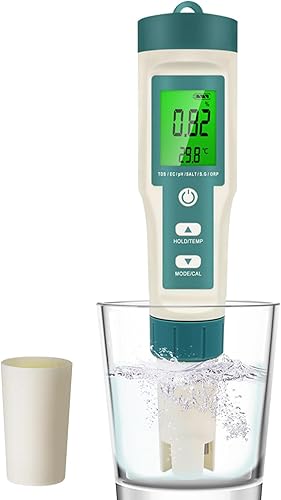
3. 8 in 1 Digital Water Quality Tester – For the Serious Hobbyist
This is overkill for 95% of homeowners. But if you have a saltwater aquarium, a koi pond, or are really into hydroponics, the extra parameters like ORP and salinity are genuinely useful. We found the pH calibration a bit fiddly, but once set, it held well. It’s a specialized tool for a specific need.
- Tests 8 different parameters
- Good for aquariums & pools
- Portable and relatively quick
- More expensive than needed for drinking water
- Complex for casual use
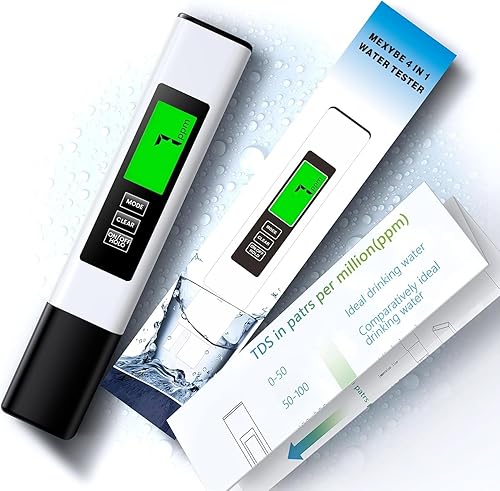
4. 4 in 1 Tds Meter Digital Water Tester (Luluntol) – Best Ultra-Budget Pick
Honestly, at $16, this performs shockingly well. It’s basic, but it gets the job done. The “family” marketing is just marketing—the hardware is competent. We’d trust it for weekly RO system checks. If you’re on a tight budget and just need a functional meter, this is it. Don’t expect premium feel.
- Extremely low price point
- Accurate enough for filter checks
- Includes EC and temperature
- Very basic build quality
- May not last as long as pricier models
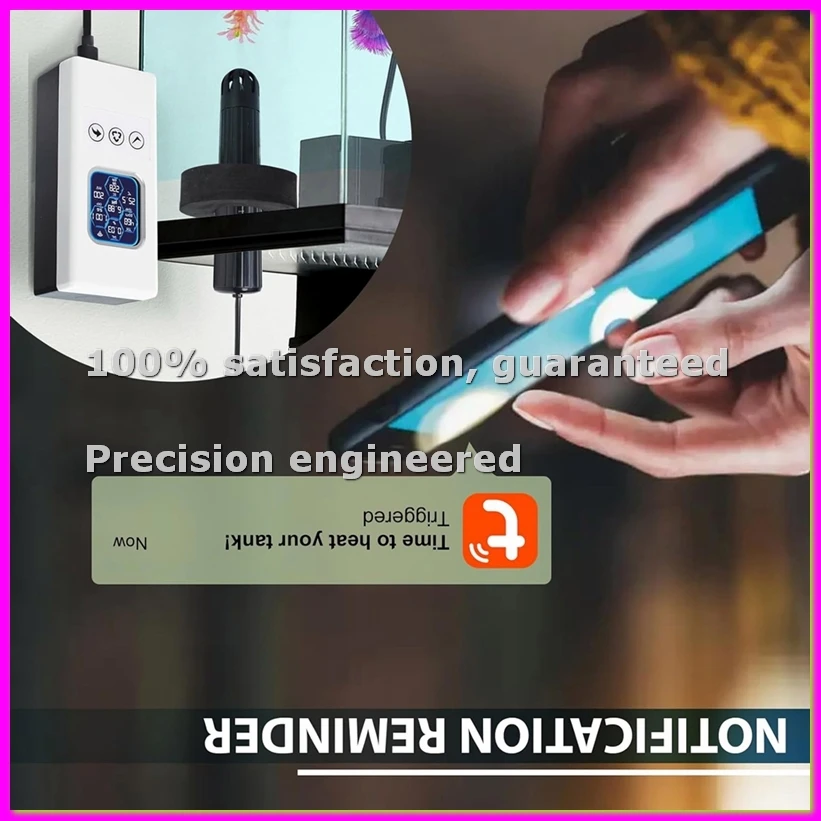
5. AliExpress Pick: 7 in 1 Smart WiFi Water Monitor – For Data Nerds
This is a niche product. It sits in your tank or pipe and streams data to your phone. We haven’t tested this exact model long-term, but the concept is intriguing for continuous monitoring of an aquarium or hydroponic reservoir. For drinking water? It’s overkill. But if you want graphs and alerts, it exists.
- Continuous, remote monitoring
- Tracks trends over time
- WiFi app connectivity
- Very high cost
- Overly complex for most homes
- Unknown long-term reliability
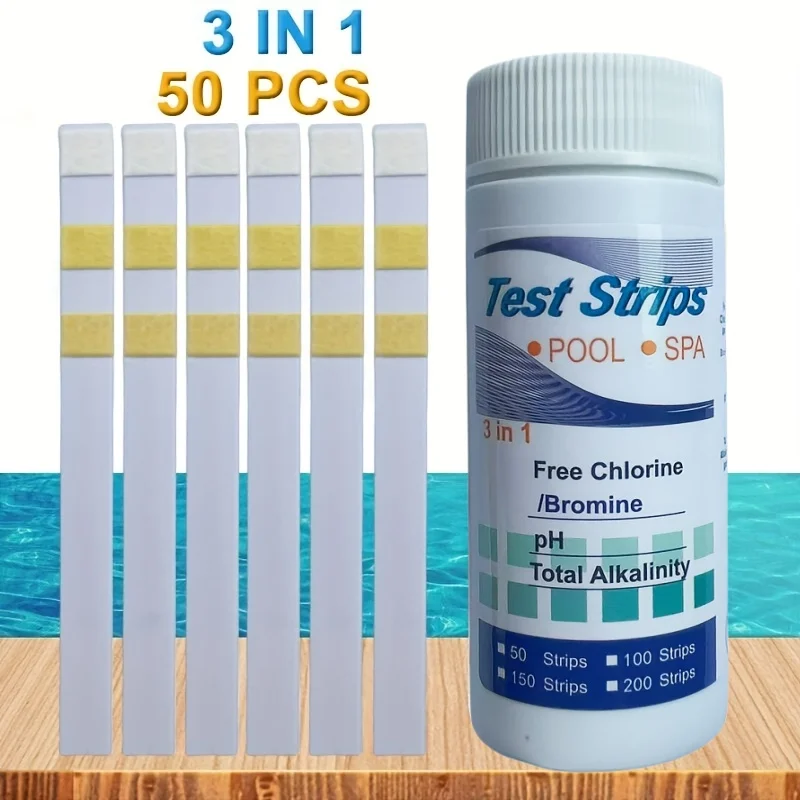
6. AliExpress Budget Pick: Chlorine & pH Test Strips – The Cheap Complement
These aren’t TDS testers, but they test things a TDS meter can’t. For under $5, you get a rough idea of chlorine residual, pH, and hardness. We keep a bottle around for quick checks on city water chlorine levels or when testing a new whole house filter cartridge. Accuracy is mediocre, but for a ballpark, they’re fine.
- Dirt cheap
- Tests chlorine and pH
- Good for quick screening
- Not precise
- Color matching is subjective
- Single-use, creates waste
Frequently Asked Questions
- What is a good TDS level for drinking water?
- There’s no universal “good” number. The WHO says below 300 ppm is excellent, 300-600 is good, and above 900 is poor. For RO-filtered water, under 50 ppm is typical. The key is consistency—a sudden spike means your filter needs attention.
- Does a TDS meter detect bacteria or viruses?
- No, absolutely not. TDS meters only measure dissolved inorganic solids. Bacteria, viruses, and cysts are living organisms or particles that won’t register. You need a microbiological test or a filter certified to NSF/ANSI 53 for cyst reduction.
- How often should I test my water TDS?
- For RO system users, test the product water monthly. Test your tap water quarterly to establish a baseline. If you have a new filter, test before and after installation to confirm it’s working. After that, monthly checks are plenty.
- Why does my TDS meter show a higher reading after my filter?
- This can happen with carbon filters. They remove chlorine and improve taste but don’t remove dissolved solids. In fact, some carbon filters can add a small amount of carbon fines, slightly raising the TDS. This is normal and not a health concern. It’s why a TDS test alone isn’t enough to judge a carbon filter’s performance.
- Can I use a TDS meter to test well water?
- Yes, it’s a great first step. Well water TDS can vary wildly. A high reading (over 500 ppm) tells you there are a lot of dissolved solids, which could mean hardness, iron, or sulfates. That’s your cue to get a more detailed lab test or consider an iron removal system if iron is a known local issue.
- Do I need to calibrate my TDS meter?
- Yes, but not constantly. For home use, calibrating every 6-12 months with a 342 ppm NaCl calibration solution is sufficient. If you’re getting readings that seem way off, or if you’ve dropped the meter, it’s time to calibrate.
Final Thoughts
After years of testing, here’s my take: every household with a water filter should own a basic TDS meter. It’s the quickest way to answer the question, “Is my filter actually working?” The 4-in-1 model we recommended is our top pick because it’s accurate, affordable, and gives you the data you need without any fluff.
But remember its limits. It’s a thermometer, not a full physical. Use it to spot-check your system’s performance, track changes over time, and know when to replace a membrane. For anything more specific, pair it with the right test. It’s a small investment that brings a lot of clarity to what’s coming out of your tap.
