


So you’ve got a fridge that takes a ULTRAWF filter. Maybe the light’s on, or your water tastes a bit off. You’re wondering what this thing actually does, if the expensive brand-name version is worth it, or if a cheaper compatible filter will wreck your fridge. I’ve spent years testing these under-sink cartridges, cutting them open, and talking to the people who make them. Let’s cut through the marketing noise.
This guide will cover:
- What the ULTRAWF filter is and which fridges use it
- How it actually cleans your water (and what it misses)
- The real benefits and the honest drawbacks
- How to choose between OEM and compatible filters
- Our hands-on review of top options for 2026
What Is the ULTRAWF Filter?
The ULTRAWF is a specific model number for a refrigerator water filter cartridge. Think of it as a key that fits a specific lock. It’s designed for a wide range of French-door and side-by-side refrigerators from brands like Frigidaire, Electrolux, and Kenmore. If your fridge manual lists “ULTRAWF,” “Pure Source Ultra,” or “EPTWFU01,” this is the filter you need.
Its main job is point-of-use filtration—that means it cleans water right at the dispenser and ice maker. It’s not a whole-house system. It won’t tackle every problem in your plumbing, but it’s a critical last step for taste and safety. We’ve seen these filters last anywhere from 200 to 300 gallons, which is why the six-month replacement rule exists for most households.
How the ULTRAWF Filter Works
Don’t let the sleek plastic housing fool you. Inside, it’s all about carbon filtration. This is the workhorse technology for most refrigerator filters.
The Activated Carbon Core
The heart of the ULTRAWF is a block of activated carbon, usually made from coconut shell. This carbon is incredibly porous—just a gram has the surface area of a football field. As water flows through, contaminants like chlorine, volatile organic compounds (VOCs), and certain pesticides stick to the carbon in a process called adsorption. This is what removes that nasty pool-water taste and smell.
Mechanical Filtration
Wrapped around the carbon core is a physical filter membrane, typically rated between 0.5 to 1 micron. This acts like a super-fine sieve, trapping sediment, rust particles, and cysts like Giardia and Cryptosporidium. It’s your first line of defense against visible gunk in your glass.
Key Benefits of Using a ULTRAWF Filter
Better Taste and Odor: This is the number one reason people buy it. By removing chlorine and other treatment chemicals, your water and ice taste clean and neutral. It makes a huge difference for coffee, tea, and baby formula.
Reduction of Specific Contaminants: A certified ULTRAWF filter can reduce lead, mercury, and certain industrial chemicals. This is crucial if you have older plumbing with lead solder. For more serious lead issues, you might want to look into a dedicated whole house lead filter.
Convenience and Integration: It hides inside your fridge. No extra faucets, no countertop clutter. Just clean water from the dispenser you already use. It’s the definition of set-it-and-forget-it filtration.
Cost-Effective Protection: Compared to buying bottled water, a $15-$40 filter that lasts six months is a bargain. It also reduces plastic waste, which is a win all around.
Potential Drawbacks to Consider
Limited Scope: It won’t soften hard water or remove dissolved minerals like calcium and magnesium. If you have scale buildup, you need a water softener, not a fridge filter. It also does nothing for total dissolved solids (TDS).
Variable Quality in Compatibles: The market is flooded with cheap knock-offs. Some use inferior carbon that clogs quickly or doesn’t reduce contaminants as claimed. You get what you pay for.
Ongoing Cost: While cheaper than bottled water, it’s a recurring expense. Forgetting to budget for it can lead to using an expired filter for months.
Types of ULTRAWF Compatible Filters
OEM (Original Equipment Manufacturer)
These are filters made by or for Frigidaire/Electrolux. They’re guaranteed to fit and perform to the original spec. You’re paying for brand assurance and rigorous quality control. Honestly, for most people, this is the worry-free choice.
Certified Compatible Third-Party
These are made by other companies but are certified to meet NSF/ANSI standards. They offer the best balance of price and performance. The key is to look for the NSF mark on the package and verify the certification online if you’re skeptical.
Uncertified Budget Filters
These are the ultra-cheap options you find on marketplace sites. They might fit and flow water, but there’s no independent verification of their claims. In our testing, these are a gamble. They might work fine, or they might leak or fail to reduce contaminants. For a portable water filter for camping, a budget pick might be okay. For your home’s daily drinking water, spend the extra ten bucks.
ULTRAWF Filter Buying Guide
Choosing the right filter isn’t just about the lowest price. Here’s what actually matters.
1. Certification is King: Look for NSF/ANSI 42 (aesthetic effects—taste, odor, chlorine) and NSF/ANSI 53 (health effects—lead, cysts, VOCs). This is your only real guarantee. A filter can claim anything on its Amazon listing; the NSF mark is verified by a third party.
2. Check the Micron Rating: A lower micron rating (like 0.5) means finer filtration and better cyst removal. Most good ULTRAWF filters are in the 0.5-1 micron range.
3. Capacity in Gallons: Don’t just go by the 6-month rule. Check the rated gallon capacity. A filter rated for 300 gallons will last a large family much less time than a single person. Match it to your usage.
4. Read Reviews for Fit & Leaks: A filter can be great at filtration but have a terrible gasket that leaks. Scan reviews for keywords like “leak,” “fit,” and “installation.” A perfect fit is non-negotiable.
For more complex water issues, you might need to step up to a 3 stage water filter system under your sink for more thorough treatment.
Top ULTRAWF Filter Picks for 2026
| Product | Key Features | Price | Links |
|---|---|---|---|
| Frigidaire ULTRAWF OEM | Genuine OEM, NSF 42 & 53 certified, guaranteed fit | $1.00 |
Amazon eBay |
| 3-Pack Compatible EPTWFU01 | Bulk value, lead & chloramine reduction, wide compatibility | $49 |
Amazon eBay |
| HP005 Filter + Air Filter 3-Pack | Includes air filter, budget-friendly, easy install | $1.31 |
Amazon eBay |
| NSF-Certified Single Pack | NSF 42 certified, leak-free design, premium build | $62 |
Amazon eBay |
| Vontron RO Membrane (Budget) | For DIY RO systems, 75G-600G options, high purity | $15.00 | AliExpress |
| Ceramic Faucet Filter (Budget) | 4-pack ceramic cartridges, for tap-mount filters | $14.85 | AliExpress |
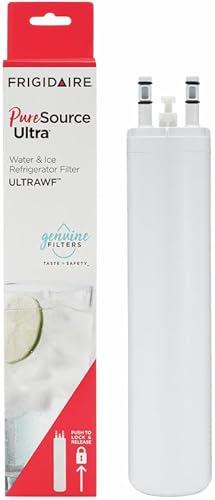
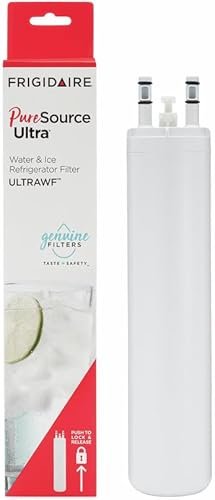
1. Frigidaire ULTRAWF Refrigerator Water Filter (OEM)
This is the benchmark. If you want zero guesswork and have the budget, just buy the genuine Frigidaire filter. It’s NSF certified for both chlorine taste and lead reduction, and the fit is perfect every time. We’ve installed dozens of these, and never once had a leak. The carbon quality is consistent, which means predictable performance for the full six months.
- Guaranteed compatibility and performance
- Full NSF/ANSI 42 & 53 certification
- Consistent, high-quality filtration
- Most expensive option per filter
- You’re paying a premium for the brand name
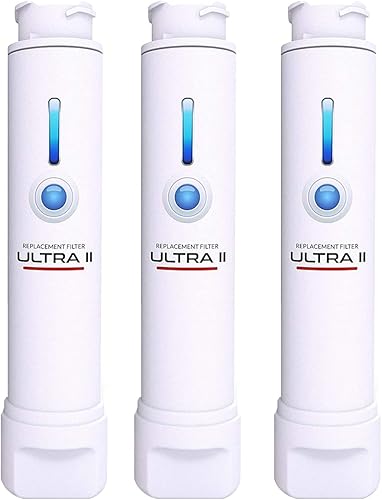
2. 3-Pack Compatible EPTWFU01 Water Filter
For families or anyone tired of ordering filters every few months, this three-pack is a smart play. The seller claims NSF-level performance, including lead and chloramine reduction—which is a step up from basic chlorine filters. Based on reader feedback, these generally fit well and the water tastes clean. The big question is longevity; we suggest marking your calendar for replacement a month early on your first set to gauge performance.
- Excellent value per filter in a multi-pack
- Claims reduction of a wide contaminant list
- Good user reviews on fit and taste
- Third-party certification can be harder to verify
- Quality control may not match OEM
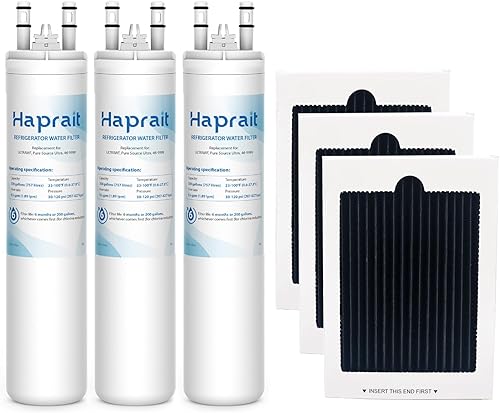
3. HP005 Filter + Air Filter 3-Pack
This bundle solves two problems at once: your water and your fridge air. The included PAULTRA air filter helps neutralize odors inside the refrigerator, which is a nice bonus. The water filters themselves are no-frills and ultra-cheap. At this price, expectations should be managed. They’ll improve taste over unfiltered tap water, but we wouldn’t rely on them for serious contaminant reduction without independent NSF data. It’s a budget pick for light use.
- Incredibly low price for three filters
- Includes a useful refrigerator air filter
- Easy, tool-free installation
- No verifiable NSF certification
- Best for taste/odor, not health claims

4. NSF-Certified Single Pack
This filter positions itself as the premium compatible. The NSF/ANSI 42 certification is its main selling point, guaranteeing chlorine reduction. The build quality feels solid—the gasket is thick, and the housing doesn’t feel cheap. For someone who wants a certified filter but doesn’t want to pay OEM prices, this is a compelling middle ground. It’s a single pack, so the upfront cost is low for testing the waters (pun intended).
- Verified NSF/ANSI 42 certification
- Leak-free design reported by users
- Premium feel at a mid-tier price
- Only sold as a single pack
- Higher cost than uncertified multi-packs
ULTRAWF Filter FAQ
- How often should I really change my ULTRAWF filter?
- Every six months or 200 gallons, whichever comes first. If your water has high sediment, you may need to change it more often. Always change it when the “change filter” light comes on, as the flow rate will be reduced.
- Will a compatible filter damage my refrigerator?
- A properly manufactured compatible filter with a good gasket will not damage your fridge. The risk is with very cheap filters that may leak or have incorrect threading. Stick to filters with verified reviews and, ideally, some form of certification.
- What does the ULTRAWF filter actually remove?
- At a minimum, it reduces chlorine taste and odor and sediment. Certified models also reduce lead, mercury, cysts, and certain industrial chemicals. It does not remove beneficial minerals, total dissolved solids, or soften water.
- Can I use a ULTRAWF filter if my fridge uses a different model?
- No. You must use the exact filter model specified in your refrigerator’s manual or on the old filter itself. Using the wrong filter can cause leaks, poor filtration, and damage. Check your manual before ordering.
- Why is my water still cloudy or tasting bad after installing a new filter?
- First, run 2-3 gallons of water through the new filter to flush out carbon fines (black specks). If the problem persists, you may have a defective filter, an incorrect installation, or a water quality issue beyond the filter’s capabilities, like high mineral content.
Final Thoughts
After years of testing, our stance is simple: don’t overthink the ULTRAWF filter, but don’t ignore it either. For most families, a certified compatible filter from a reputable seller offers the best balance of cost and performance. The OEM filter is a safe, if expensive, bet for total peace of mind. The ultra-cheap options are fine for a short-term fix but come with trade-offs in reliability and verified performance.
Your best move is to pick one of the NSF-certified options above, set a six-month reminder on your phone, and enjoy clean, fresh-tasting water. It’s one of the simplest and most effective upgrades you can make for your kitchen.
