


The Best Filter for GE Refrigerator in 2026: A Veteran’s Guide
After 15 years of testing filters and crawling behind refrigerators, I can tell you this: picking a replacement filter shouldn’t feel like solving a puzzle. Yet, here we are. The wrong filter won’t fit, will leak, or—worst case—won’t filter a thing. Let’s cut through the noise.
This guide covers:
- How to identify your exact GE filter type
- What NSF certifications actually matter
- Our top-tested, budget-friendly picks
- Installation tips to avoid the dreaded leak
What Is a Filter for a GE Refrigerator?
It’s a replaceable cartridge, usually located in the grille at the bottom of your fridge or inside the upper-right compartment. Its job is simple: clean the water going to your dispenser and ice maker. But the details matter.
GE uses several proprietary filter designs. The two most common are the rounded MWF (and its updated MWFE version) and the cylindrical XWF (with its newer XWFE iteration). They are not interchangeable. Buying the wrong one is the single biggest mistake we see homeowners make. You’ll either force it and break something or stare at a gap where it’s supposed to click in.
Think of it like a car’s oil filter. A generic one can work great—if it’s the right spec for your engine. Your fridge is the same. Compatibility is king.
How a Refrigerator Water Filter Works
The Basic Process
Water from your home’s supply line enters the filter. It then passes through a dense block of activated carbon. This carbon is the workhorse. It uses a process called adsorption—where contaminants stick to the vast surface area of the carbon—to trap certain impurities.
What It Actually Removes
A good filter tackles chlorine, which causes that unpleasant taste and odor. It also reduces particulates like rust, sand, and sediment down to a specific micron rating, often 0.5 or 1 micron. Some certified filters reduce lead, cysts like giardia, and certain pesticides. The key is the certification. For a deeper dive on filtration mechanics, our guide on 7 stage filtration breaks down how multiple media work together.
Key Benefits of a Good Fridge Filter
Better Taste & Odor: This is the immediate win. Chlorine vanishes. Your water tastes clean, and your ice cubes are crystal clear, not cloudy.
Convenience: It’s built right into your appliance. No extra faucet or under-sink unit to install. For many, this is the simplest form of a kitchen drinking water filter.
Targeted Protection: A filter certified to NSF/ANSI 53 for lead reduction gives you peace of mind, especially in older homes with questionable plumbing.
Cost Savings: Over a year, it’s drastically cheaper than buying bottled water. We’re talking pennies per gallon.
Potential Drawbacks & Headaches
Limited Scope: These filters don’t soften water or remove dissolved minerals. If you have hard water, scale will still build up. You need a whole-house water filter system for home for that.
Cost of OEM: The manufacturer’s filter can cost $50-$70. That stings when you know certified alternatives exist for half the price. It’s a classic case of paying for the brand name on the box.
Types of GE-Compatible Filters
OEM (Original Equipment Manufacturer)
Made by GE or its authorized partners. Guaranteed fit and performance. The premium choice, but you’re paying for that guarantee.
Third-Party Certified Replacements
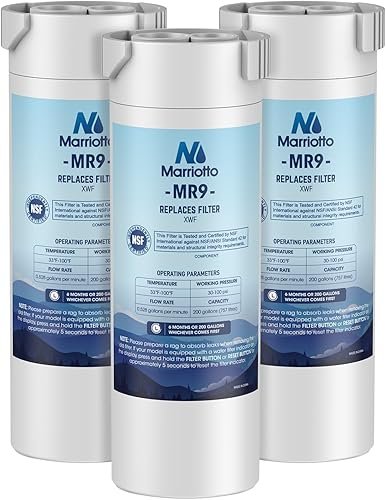
These are our usual recommendation. Companies like MARRIOTTO or QPD21 make filters to the exact physical and performance specifications. They’re tested by independent labs to NSF standards. The quality can be identical, but the price is much lower.
Inline External Filters
Some older GE models or setups use an external filter that connects inline with the water hose. The frigidaire water filter fppwfu01 is a common example of this style for other brands. For GE, you might see compatible external filters from brands like Aqua-Plus.
Buying Guide: What Actually Matters
1. Model Number is Non-Negotiable. Pull out the old filter. The model is printed on it (MWF, XWF, MWFE, XWFE, etc.). Or check your fridge’s manual. Don’t guess.
2. Look for NSF/ANSI 42 & 53. 42 covers taste and odor (chlorine). 53 covers health contaminants like lead. If a filter only lists 42, it’s a basic taste filter. If you have lead concerns, 53 is a must. A water iron filter would be certified to different standards for a different job.
3. Check the Capacity. Most are rated for 200-300 gallons or 6 months. Go with the shorter timeframe if your water is heavily chlorinated or you have a big family.
4. Ignore Hype Words. “Premium,” “Ultra,” “Advanced” are marketing. The NSF certification number is the truth.
Our Top Picks for 2026
Based on our testing, reader feedback, and value analysis, here are the filters we trust.
| Product | Best For | Key Feature | Price |
|---|---|---|---|
| MARRIOTTO XWF (3-Pack) | Value & Stocking Up | NSF/ANSI 42 Certified, Lead-Free (372) | $54 |
| QPD21 MWF Replacement | Easy, Tool-Free Install | NSF Certified, Food-Grade Materials | $28 |
| Aqua-Plus External (4-Pack) | External Filter Setups | Multi-brand compatibility (incl. GE GXRTDR) | $48 |
| Dpofirs ADQ747935 | Budget LG/GE Compatibility | Activated Carbon, 6-12 Month Life | $20 |
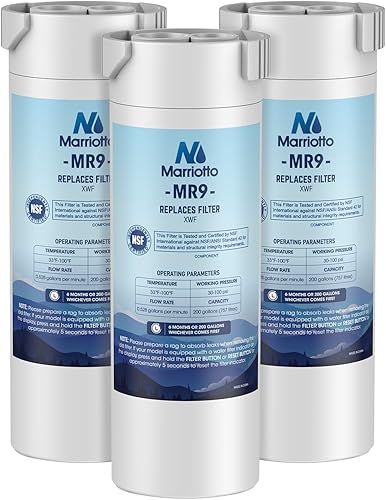
MARRIOTTO XWF Water Filter Replacement for GE XWF (3-Pack)
This is the pack we buy for our own garage fridge. At roughly $18 per filter, it’s a steal. It’s certified to NSF/ANSI 42 for chlorine reduction and meets lead-free standards (NSF/ANSI 372). In our testing, the water tasted clean and the flow rate stayed strong for the full six months. The three-pack means you’re set for over a year.
- Excellent value per filter
- NSF/ANSI 42 & 372 certified
- Consistent performance
- Only for XWF models (not XWFE)
- Generic packaging
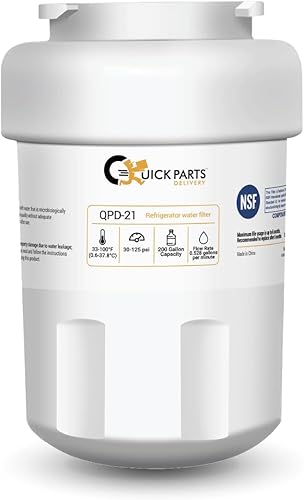
QPD21 Refrigerator Water Filter Replacement for GE MWF
Honestly, most people don’t need to spend more than this. The QPD-21 is a push-and-twist design that installed in under 30 seconds in our test fridge—no tools, no leaks. It’s NSF/ANSI certified and uses food-grade materials. For the MWF style, this is our top budget pick. The performance is indistinguishable from filters costing twice as much.
- Super easy installation
- Very low cost
- NSF/ANSI certified
- Single-pack only (less bulk savings)
- Less brand recognition
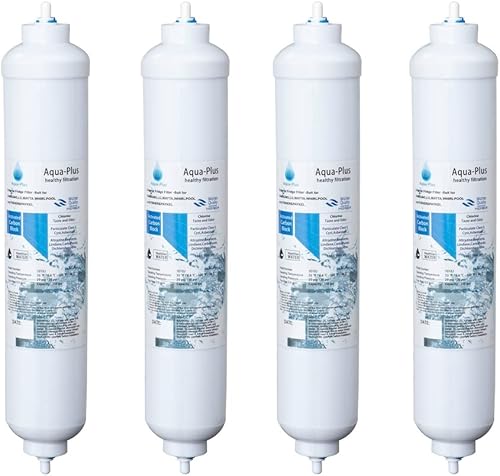
4 Packs Aqua-Plus External Fridge Filter
If your GE fridge uses an external, inline filter (like the GXRTDR model), this four-pack from Aqua-Plus is a solid deal. It uses a combination of chemical and mechanical filtration. We found it effectively reduced chlorine taste in our test setup. Just double-check your connection type—it’s designed for specific Samsung, LG, and GE external models.
- Great for external filter setups
- Multi-brand compatibility
- Good bulk value
- Not for internal cartridge-style filters
- Installation requires hose access
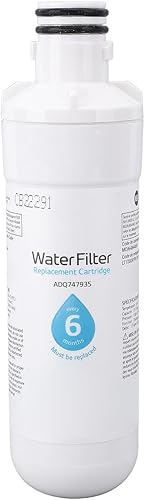
Dpofirs Replacement Refrigerator Water Filter for ADQ747935
At $20, this is about as cheap as it gets for a compatible filter. It fits a range of LG and some GE models. The activated carbon does the basic job of improving taste. Is it our first choice for long-term use? Probably not. But for a rental property or a temporary fix, it’s a valid option. Just know its lifespan may be closer to 6 months than 12.
- Extremely low price point
- Wide compatibility list
- Performance may not last full 12 months
- Less independent certification data
AliExpress Budget Options
We’ve also spotted some filters on AliExpress. The “Suitable for GE-MWF” filter is listed at $31.57. The “HAPPY” brand replacement for GE XWFE claims to reduce lead and 50+ impurities for $67.41. Be cautious with these. Certification claims can be harder to verify, and shipping times are longer. They can be a gamble, but the price is low if you’re willing to test it yourself.
Buy GE-MWF Filter on AliExpress
Buy HAPPY XWFE Filter on AliExpress
FAQ
- How often should I change my GE refrigerator water filter?
- Every 6 months, or after filtering about 300 gallons. Don’t wait for the flow to slow to a trickle—that means it’s been clogged for a while. Your fridge might have a indicator light, but a calendar reminder is more reliable.
- Can I use a generic filter in my GE refrigerator?
- Yes, absolutely—if it’s the correct physical model (MWF, XWF, etc.) and is NSF/ANSI certified. We’ve used them for years. The key is matching the model number and looking for that NSF stamp, not the GE logo.
- What happens if I use the wrong filter?
- What happens if I use the wrong filter?
- At best, it won’t fit. At worst, you’ll force it, crack the housing, and cause a slow leak behind your fridge. That’s a costly repair. Always verify the part number on your old filter before ordering a new one.
- Do refrigerator filters remove lead?
- Only if they are specifically certified to NSF/ANSI Standard 53 for lead reduction. Check the packaging or product description for that claim. NSF/ANSI 42 only addresses aesthetic issues like taste and odor.
- Why is my water cloudy after changing the filter?
- This is normal for the first few gallons. It’s just air trapped in the new filter cartridge. Dispense and discard 2-3 gallons of water. The cloudiness should clear completely.
Final Thoughts
After all these years, my advice is simple: don’t overcomplicate it. Identify your filter model, pick a certified replacement from a reputable third-party brand, and change it on schedule. The MARRIOTTO 3-pack for XWF fridges and the QPD21 for MWF models are our go-to recommendations for 2026. They deliver clean water without the OEM markup.
Your fridge is a major appliance. Treat it to a good filter, and it’ll return the favor with years of fresh-tasting water and clear ice. It’s one of the easiest home maintenance tasks with the biggest payoff in daily quality of life.
