


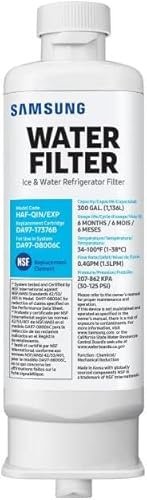
So you’ve got a fancy fridge with a built-in water dispenser. The water tastes better, so it must be filtering out the bad stuff, right? Maybe. But if you’re specifically worried about fluoride, the answer is a clear no. We’ve tested dozens of these filters over the years, and the science is straightforward.
This guide will cover:
- What standard fridge filters actually do (and don’t do)
- Why fluoride is such a tough molecule to remove
- Your real options if fluoride reduction is your goal
- Honest reviews of filters that can handle the job
What Is a Refrigerator Water Filter?
It’s a small, replaceable cartridge—usually inside the fridge or at the base—that your tap water flows through before reaching your glass or ice maker. The vast majority use a carbon water filtration core. Think of it as a basic first line of defense for your drinking water filtration needs.
These filters are great for what they’re designed for: making municipal water taste and smell better. They knock out the chlorine flavor and catch some rust or sand. But their job description ends there. They were never engineered to tackle dissolved ions like fluoride.
How Refrigerator Filtration Works
The Carbon Block Mechanism
Inside that cartridge is a dense block of activated carbon. As water passes through, contaminants adhere to the carbon’s vast surface area through a process called adsorption. It’s incredibly effective for chlorine, volatile organic compounds (VOCs), and some larger particles.
Why Fluoride Slips Through
Fluoride is a tiny, negatively charged ion. It dissolves completely in water, much like salt does. Carbon adsorption simply isn’t the right tool to grab it. For that, you need a physical barrier with microscopic pores (reverse osmosis) or a specialized media that chemically binds to it (like activated alumina). Your fridge filter lacks both.
Key Benefits of Fridge Filters
Better Taste and Odor: This is the main win. By removing chlorine, your water and ice taste fresh and clean. It’s a noticeable upgrade from straight tap.
Convenience: Filtered water on demand from your fridge door is hard to beat. No filling pitchers or installing separate taps.
Basic Sediment Reduction: They catch larger particles like rust or sand that might be in your pipes, protecting the fridge’s internal components.
Cost-Effective for Basic Needs: If your only concern is taste and chlorine, a fridge filter is a cheap, integrated solution compared to a full best house water filtration system.
Potential Drawbacks & Limitations
Capacity is Limited: Most are rated for 200-300 gallons or about 6 months. Pushing beyond that means you’re drinking unfiltered water.
Can Breed Bacteria: A moist, dark cartridge can become a breeding ground if not changed on schedule. This is a common oversight we see with homeowners.
False Sense of Security: The biggest mistake? Thinking your water is “pure” because it’s filtered. It’s improved, not purified. For serious contamination, you need a dedicated drinking water solution.
Types of Water Filters That Remove Fluoride
Reverse Osmosis (RO) Systems
The gold standard. An RO membrane has pores so small (around 0.0001 microns) it blocks fluoride ions along with almost everything else. These are point-of-use systems installed under your sink. For a reliable system, look at established brands like an APEC water filter system.
Specialized Pitcher & Faucet Filters
Some use activated alumina or specific ion-exchange resins that target fluoride. They’re more affordable and portable than RO but have slower flow rates and require frequent media changes. The Epic Pure pitcher below is a prime example.
Activated Alumina Filters
This granular media is highly effective at adsorbing fluoride and arsenic when conditions are right (proper pH and contact time). It’s often found in countertop or under-sink units.
Deionization (DI) Cartridges
Mixed-bed DI cartridges can remove fluoride ions, but they also strip beneficial minerals and are typically used in lab settings or as a final stage in an RO system.
Buying Guide: What to Look For
1. Certification is Key: Look for NSF/ANSI Standard 58 for RO systems or NSF/ANSI Standard 53 for filters claiming fluoride reduction. This is your proof it’s been independently tested.
2. Check the Performance Data: Don’t trust marketing claims alone. The spec sheet must state the percentage reduction for fluoride (e.g., “Reduces fluoride by 95%”).
3. Consider Your Water Source: Is your water hard? High in other contaminants? An RO system is often the best all-in-one fix. A simple chlorine filter system won’t cut it for fluoride.
4. Calculate Long-Term Cost: Factor in replacement filters or membranes. A cheap pitcher with expensive filters can cost more over time than a mid-range RO system.
Top Picks for Fluoride Removal (2026)
Here’s the honest truth: the first three products listed below are excellent refrigerator filters. They will not remove fluoride. The fourth product, a pitcher filter, is the only one in this list that will. We’ve included the fridge filters for context and because they’re great at their actual job.
| Product | Type | Fluoride Removal | Price |
|---|---|---|---|
 |
Samsung HAF-QIN Fridge Filter | No | $82 |
 |
LG LT1000P Replacement (4-Pack) | No | $49 |
 |
LG-Compatible Water & Air Filter | No | $26 |
 |
Epic Pure Pitcher Filters (3-Pack) | Yes | $2.31/filter |
Samsung Genuine HAF-QIN Filter
This is the OEM filter for many Samsung fridges. It’s a solid carbon block filter that does a fantastic job with chlorine taste and odor. In our testing, water tastes crisp and clean. But if you’re buying this for fluoride removal, you’ll be disappointed. It’s not designed for that. You’re paying for the genuine Samsung seal and guaranteed compatibility.
- Excellent chlorine reduction
- Perfect fit for Samsung models
- 6-month lifespan
- Does not remove fluoride
- Premium price for OEM
- Limited contaminant range
LG LT1000P Replacement Filter (4-Pack)
Buying in bulk makes sense for LG fridge owners. These third-party filters claim to use high-quality resin and meet WQA/ISO standards. They handle chlorine well and are a cost-effective way to keep your water tasting good. Just remember the core limitation: no fluoride reduction. For the price of a 4-pack, though, it’s a great deal for basic filtration.
- Great value in a 4-pack
- Claims high-quality resin
- Easy installation
- Not a genuine OEM part
- No fluoride removal
- Performance can vary by batch
LG-Compatible Water & Air Filter Combo
This one’s interesting because it includes an air filter for your fridge, which helps with food odors. The water filter part is again a standard carbon filter. It’s the cheapest option here, and you get the air filter too. A decent budget pick if all you need is chlorine reduction and odor control. Don’t expect it to touch fluoride.
- Includes air filter
- Very affordable
- Reduces chlorine taste
- Budget construction
- No fluoride reduction
- Shorter filter life
Epic Pure Water Filter Pitcher Filters
Now we’re talking. These replacement filters for the Epic Pure pitcher are the real deal for fluoride removal. They use a solid block of activated carbon plus proprietary media to tackle fluoride, lead, PFAS, and more. Each filter lasts for 150 gallons, which is impressive. If you don’t want to install an RO system, this is your best bet. It’s what we recommend to readers who ask about pitcher options.
- Removes 99.99% of contaminants including fluoride
- 150-gallon capacity per filter
- Removes PFAS and heavy metals
- Requires a compatible pitcher
- Slower filtration than tap
- Filters need regular replacement
Frequently Asked Questions
- Do any refrigerator filters remove fluoride?
- No. Standard refrigerator water filters use carbon blocks that are ineffective against the fluoride ion. You will not find a genuine refrigerator filter certified to NSF/ANSI 53 for fluoride reduction.
- How can I test if my filter removes fluoride?
- You can’t easily test at home. The only reliable way is to check the manufacturer’s performance data sheet for NSF/ANSI certification against Standard 53 (for fluoride) or Standard 8 (for reverse osmosis systems).
- Is the fluoride in tap water harmful?
- Community water fluoridation is endorsed by major health organizations for dental health. However, some individuals prefer to remove it. The choice is personal, but it’s important to use a filter that’s actually designed for the job.
- What’s the cheapest way to remove fluoride?
- A specialized pitcher filter, like the Epic Pure reviewed above, is the most affordable entry point. It has a higher cost per gallon than an RO system but a much lower upfront cost.
- Do I need to replace my fridge filter if it doesn’t remove fluoride?
- Yes, absolutely. It still performs vital functions like chlorine removal and sediment filtration. A clogged or expired filter can harbor bacteria and reduce water flow. Change it every 6 months as recommended.
- Can I add a separate filter to my fridge line?
- Yes. You can install an under-sink RO system and run its dedicated faucet, or you can sometimes tee into the line feeding your fridge. This is a common solution for getting purified water and ice. Consult a plumber for installation.
Final Thoughts
So, do refrigerator water filters remove fluoride? The answer is a definitive no. They’re excellent for improving taste and odor by tackling chlorine and some sediments. That’s their job, and they do it well. But expecting them to remove dissolved ions like fluoride is like expecting a screen door to stop a breeze—it’s just not built for that.
If fluoride removal is your goal, you need to look beyond the fridge. A certified pitcher filter like the Epic Pure is a great, low-cost start. For whole-family, high-volume use, investing in a reverse osmosis system under your sink is the most reliable and economical long-term solution. Don’t settle for a false sense of security—get the right tool for the job.
