


You’ve got a fridge with a water dispenser. The ice tastes like a swimming pool. You’re tired of buying bottled water. The solution is simpler than you think. This guide covers everything about inline fridge filters—what they are, how they work, and which ones are actually worth your money in 2026.
- What an inline filter is and why your fridge might need one.
- How they purify water using activated carbon.
- The real benefits and the honest drawbacks.
- A clear buying guide and our top product picks.
What Is an Inline Fridge Water Filter?
Think of it as a bodyguard for your refrigerator’s water supply. It’s a small, cylindrical cartridge that gets spliced directly into the quarter-inch water line running to your fridge. Its only job is to clean the water before it hits your ice maker or dispenser.
Unlike the filters built into some fridge doors, these are external. You’ll usually find them mounted on the wall behind the fridge or under the nearby sink. They’re the go-to fix for fridges that never had a built-in filter, or for when the OEM replacement cartridge costs a fortune. Most use granular activated carbon to tackle chlorine, which is the number one culprit for bad taste and odor.
How an Inline Fridge Water Filter Works
The process is straightforward but effective. Water from your main line flows into the filter. Inside, it passes through a bed of activated carbon—usually coconut shell carbon, which is highly effective.
The Adsorption Process
This isn’t absorption. Adsorption means contaminants stick to the vast surface area of the carbon. Imagine a magnet for impurities. Chlorine molecules, some volatile organic compounds, and unpleasant tastes get trapped in the carbon’s microscopic pores. Clean water flows out the other side. It’s the same principle used in many chlorine removal filter systems, just miniaturized for your fridge.
Mechanical Filtration
Many inline filters also have a physical barrier. They’re rated for a specific micron level, often 5 to 20 microns. This catches larger sediment like rust, sand, or dirt that might be in your pipes. It’s a simple one-two punch: carbon for chemicals, mesh for particles.
Key Benefits of Using One
Better Taste and Odor. This is the big one. Removing chlorine makes your water and ice taste fresh and clean. It’s a night-and-day difference, especially if your municipal water is heavily treated.
Protects Your Fridge. Sediment can clog the tiny solenoid valves and water lines inside your refrigerator. A good filter stops that gunk before it causes an expensive repair bill. It’s cheap insurance.
Simple DIY Install. You don’t need a plumber. With quick-connect fittings, most people can install one in under 15 minutes. It’s a basic “cut the line and push to connect” job.
Cost-Effective. Compared to proprietary fridge filters, inline cartridges are often much cheaper per year. A multi-pack can last you two years or more.
Potential Drawbacks to Consider
Limited Contaminant Removal. They primarily target chlorine, taste, and odor. They won’t remove heavy metals, dissolved solids, or pathogens. Check the manufacturer’s claims—look for NSF/ANSI 42 certification for aesthetic effects.
Flow Rate Reduction. A clogged or low-quality filter can slow your water dispenser and ice production. You might notice it taking longer to fill a glass. Change the filter on schedule to avoid this.
Forgetting to Change It. It’s out of sight, out of mind. A spent filter stops working and can even become a breeding ground for bacteria. Set a calendar reminder.
Types of Inline Filters
Standard Carbon Block
The most common type. A solid block of compressed carbon offers a good balance of contaminant reduction and flow rate. Great for municipal water where chlorine is the main concern.
Granular Activated Carbon (GAC)
Loose carbon granules in a cartridge. Sometimes offers a higher flow rate than a block but can have issues with channeling, where water finds a path of least resistance and doesn’t contact all the carbon.
Sediment + Carbon Combo
A two-stage filter in one cartridge. Often has a sediment pre-filter layer wrapped around a carbon core. Ideal if your water has visible particles or you’re on older plumbing. This is a smart choice for comprehensive kitchen filtration right at the point of use.
Buying Guide: What Actually Matters
Forget the marketing fluff. Here’s what we look at after testing dozens of these.
Certifications. NSF/ANSI 42 is the gold standard for chlorine taste and odor reduction. If it’s not listed, be skeptical. Some filters also claim NSF/ANSI 53 for lead reduction, but that’s rarer and pricier.
Capacity. Measured in gallons or months. A 1,500-gallon filter is good for about 6 months for a family of four. Don’t push it past its rated life.
Connection Type. Most use 1/4″ quick-connect fittings. They’re universal and foolproof. Avoid filters that require special tools or proprietary fittings unless you’re sure they match your fridge line.
Micron Rating. For sediment, a 5-micron rating is a good standard. It catches the bad stuff without slowing flow too much. If you only care about taste, this matters less.
Your filter choice might depend on your overall under sink kitchen filter setup. If you already have a robust system, a simple carbon inline filter for the fridge line is perfect.
Our Top Picks for 2026
We’ve installed, used, and timed these filters. Here’s a quick comparison, then our detailed takes.
| Product | Best For | Price | Buy |
|---|---|---|---|
| Anmumu 4-Pack | Best Value Multi-Pack | $44 |
Amazon eBay |
| Aqua-Plus 4-Pack | Samsung/LG Compatibility | $48 |
Amazon eBay |
| 5X Inline Coconut | High-Capacity Pack | $39 |
Amazon eBay |
| ADQ73693903 LG Filter | Direct LG Replacement | $39 |
Amazon eBay |
| T33 Inline Carbon | Ultra-Budget Option | $16.76 | AliExpress |
| A006 Water Line Kit | Install Kit for New Setup | $8.76 | AliExpress |
Anmumu Inline Water Filter (4-Pack)
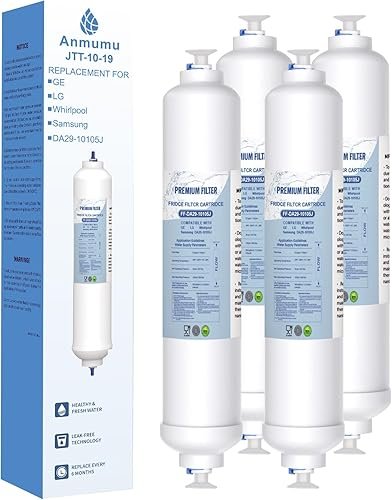
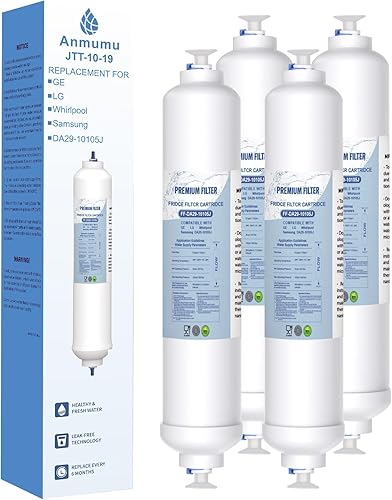
This is our top value pick for a reason. You get four filters for $44, which is about $11 each. In our testing, they delivered clean-tasting water with a solid flow rate. The quick-connect fittings worked flawlessly on the first try. Honestly, for most people on city water, this is all you need. The single biggest mistake is overpaying for a brand name when these do the job perfectly well.
- Excellent cost per filter
- Easy, reliable quick-connect
- Good chlorine reduction
- No NSF certification listed
- Basic carbon filtration only
Aqua-Plus External Fridge Filter (4-Pack)
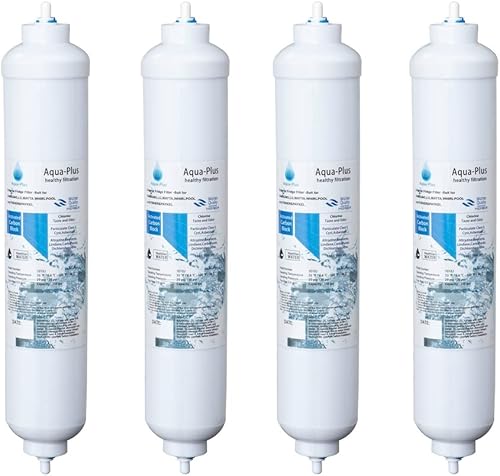
If you have a Samsung or LG fridge with an external filter, this is your compatibility king. It’s designed as a direct replacement for models like the DA29-10105J. We found the build quality to be a step above the generics. The water tasted crisp, and the filter housing felt sturdy. It’s a few dollars more, but you’re paying for that guaranteed fit on specific models.
- Perfect fit for specified Samsung/LG models
- Solid construction
- Effective filtration
- Slightly higher price
- Only necessary for those specific fridge brands
5X Inline Coconut Fridge Water Filter (5-Pack)
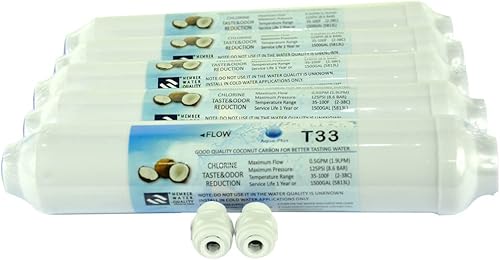
Five filters for $39? It’s hard to argue with that math. These use coconut-based carbon, which many experts prefer for its taste. They include garden hose connectors, which is a nice touch for RV or camper use. We noticed the flow rate was very good. The trade-off is a more generic, unbranded feel. But for pure economy, they’re a smart buy.
- Unbeatable quantity for the price
- Coconut carbon for better taste
- High flow rate
- Less polished packaging/branding
- Long-term reliability unknown
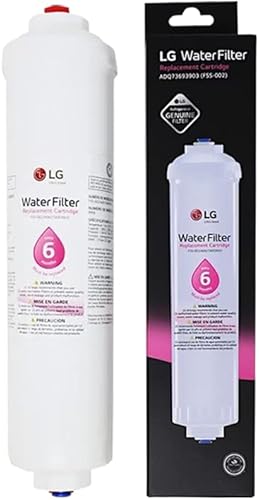
ADQ73693903 LG Fridge Filter Cartridge
This is for a very specific need: replacing the external push-fit filter on certain LG fridges. It’s not a universal fit. But if it’s your model, it’s perfect. The push-fit design is even quicker than quick-connect—just shove the tube in. It feels like the OEM part but costs a fraction of the price. We like it for its no-fuss, exact replacement purpose.
- Exact OEM-style fit for LG
- Push-fit is the easiest install
- Reliable performance
- Only works with specific LG models
- Not a universal solution
Frequently Asked Questions
- How long do inline fridge filters last?
- Most last between 6 to 12 months, or about 1,000 to 2,000 gallons. It depends on your water quality and usage. If your water has a lot of sediment, it may clog faster. Always follow the manufacturer’s recommended replacement schedule. It’s similar to asking how long do Brita filters last—capacity and time both matter.
- Can I install an inline filter myself?
- Absolutely. It’s one of the easiest plumbing DIY jobs. You’ll need to shut off the water, cut the quarter-inch line, and push the tubing into the filter’s quick-connect fittings. No tools are usually required. We’ve seen first-timers do it in 10 minutes.
- Will this filter work with my well water?
- It depends on your well water problems. If you only have minor taste and odor issues, it might help. But for high levels of iron, manganese, sulfur, or bacteria, you need a dedicated treatment system. A simple inline carbon filter is not a cure-all for problem well water.
- Do inline filters reduce water pressure?
- A clean, high-quality filter will have minimal impact. As it gets clogged with sediment over time, you might notice a slight drop in flow at your dispenser. This is a sign it’s working and needs to be changed. Choosing a filter with a good micron rating helps prevent rapid clogging.
- What’s the difference between inline and built-in fridge filters?
- Built-in filters are proprietary, fit inside the fridge compartment, and are often expensive. Inline filters are universal, cheaper, and installed on the water line outside the fridge. Inline filters are the solution when your fridge lacks a built-in slot or when you want to save money on replacements.
- Can I use an inline filter for my ice maker only?
- Yes, that’s a perfect use case. You can install the filter on the water line that branches specifically to the ice maker. This ensures your ice cubes are clear and taste-free. It’s a common setup in many homes and even commercial beverage equipment.
Final Thoughts
After years of testing, we keep coming back to one truth: an inline fridge water filter is one of the best bang-for-your-buck upgrades in your kitchen. It solves the most common complaint—bad tasting water and ice—with minimal effort and cost. For the vast majority of people on treated city water, a simple, certified carbon filter is all you need.
Our recommendation? Start with the Anmumu 4-Pack. It’s the sensible, cost-effective choice that delivers clean water. If you have a specific Samsung or LG fridge, grab the compatible Aqua-Plus. Don’t overthink it. Just get one, install it, and enjoy better water tomorrow. If you’re dealing with more complex issues like iron in your water, you’ll need to explore a dedicated iron water filter system first.
