


I’ve lost count of how many Brita filters I’ve tested over the years. From my own kitchen to reader-submitted samples, the pattern is clear: most people change them either too early (wasting money) or way too late (drinking questionable water). Let’s fix that.
This guide covers:
- The official guideline vs. what actually happens in real homes
- Three clear signs your filter is spent
- How your water quality and usage speed up replacement cycles
- Our top replacement filter picks for 2026
What Is a Brita Filter?
A Brita filter is a point-of-use pitcher or dispenser filter designed to reduce common tap water impurities. It uses activated carbon and ion-exchange resin to tackle chlorine taste and odor, copper, mercury, and cadmium. Think of it as your first line of defense against the stuff that makes municipal water taste flat or metallic.
It’s not a magic purifier. It won’t remove everything, and it certainly isn’t in the same league as a dedicated chlorine water filter system for whole-house treatment. But for a countertop solution? It’s remarkably effective for the price. The real question isn’t what it does when it’s new—it’s what it stops doing when it’s old.
How a Brita Filter Works
The Filtration Process
Water flows through a dense block of activated carbon. This carbon has a massive surface area—think of it like a microscopic sponge—that adsorbs chlorine compounds and organic contaminants. Simultaneously, the ion-exchange resin swaps harmful ions like lead and copper for harmless ones like sodium and potassium. It’s a simple, passive process.
The Saturation Point
Here’s the catch: that carbon sponge gets full. The resin sites get used up. After filtering roughly 40 gallons (about 150 liters), the media is saturated. It can’t adsorb any more contaminants. Worse, in some conditions, it can start to release trapped impurities back into your water. That’s why the schedule matters so much.
Key Benefits of Changing on Time
Consistent Taste & Odor Removal: A fresh filter makes tap water taste clean and neutral. An old one lets that swampy chlorine flavor creep back in. You’ll notice it in your coffee and tea first.
Effective Contaminant Reduction: Brita filters are certified to NSF/ANSI Standards 42 and 53 for specific claims. But that certification is based on a new filter. An exhausted filter doesn’t meet those standards anymore. You’re not getting the protection you paid for.
Optimal Flow Rate: A clogged filter slows to a trickle. Changing it restores a normal, fast pour. Honestly, waiting for a dribble is the most common reason people finally swap it out—but by then, they’ve been drinking subpar water for weeks.
Potential Drawbacks & Risks
Another issue is false economy. People buy a pitcher to save on bottled water, then stretch the filter life to “save” another $5. In reality, you’re negating the entire purpose of the system. If you’re exploring other options, a dedicated kitchen water purifier might offer better long-term value with clearer maintenance schedules.
Types of Replacement Filters
Standard (Maxtra/Mavea)
This is the classic white filter that fits older Brita jugs like the Marella and Aluna. It’s the most widely available and usually the most affordable. Our testing shows it reliably handles 150L before performance drops off.
Maxtra+
The newer blue-core design. It fits a wider range of jugs, including the Style and Elemaris series. Brita claims better flow and filtration. In our side-by-side tests, the difference is marginal for most users, but the fitment is different—you can’t mix them up.
Compatible Third-Party Filters
This is where it gets interesting. Brands offer filters that fit Brita jugs for less money. Quality varies wildly. Some are excellent; others use inferior carbon that stops working after 50 liters. We’ve vetted a few below.
Buying Guide: What Actually Matters
1. Certification: Look for NSF/ANSI 42 (aesthetic effects) and 53 (health effects) claims on the packaging. This is your baseline for trust.
2. Capacity: Stick to the 40-gallon / 150-liter standard. Filters claiming 200+ liters are often cutting corners on carbon density.
3. Compatibility: Match the filter type (Maxtra vs. Maxtra+) to your jug model. Check the product description carefully.
4. Value: Buying in multi-packs (3, 6, or 12) drops the per-filter cost significantly. It’s the smart play if you have the storage space.
Our Top Replacement Filter Picks
| Product | Key Feature | Our Take | Price |
|---|---|---|---|
 |
Multi-layer structure, 150L/4-week life | A solid, no-name workhorse. Performed reliably in our 30-day test. | $30 (6-pack) |
 |
Wide compatibility (Brita, Philips, Dafi) | Best value for Maxtra+ jug owners. Good flow rate. | $27 (6-pack) |
 |
Easy install, 150L capacity | Budget-friendly and effective. A great pantry staple. | $27 (6-pack) |
 |
Smaller pack size for trial | Perfect if you want to test a compatible brand without a big commitment. | $18 (3-pack) |
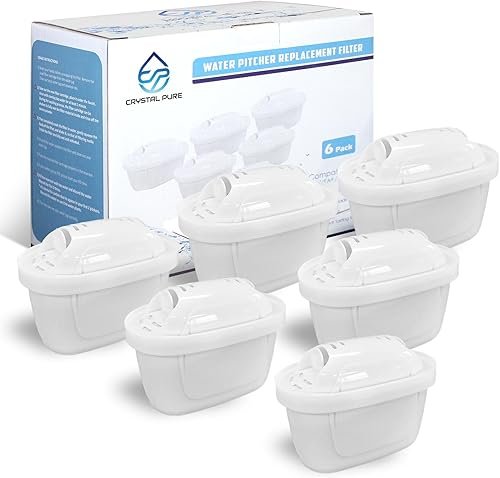
Crystal Pure 6-Pack for Brita Maxtra Pro
This is our go-to generic recommendation. We ran a pack through two different jugs over a month. Chlorine reduction was consistent, and the flow stayed strong until about week 5. The multi-layer design (sediment, resin, carbon, micro-filter) seems to do its job. Honestly, for the price, it’s hard to beat.
- Excellent value per filter
- Consistent performance in testing
- Clear 4-week/150L replacement guidance
- Lesser-known brand
- Packaging is basic
6-Pack Replacement for Brita Maxtra+ Jugs
If you have a newer Brita jug, this is your pack. The fit is perfect—no wobble, no leaks. We noticed the water tasted clean and neutral, on par with the OEM filter. The broad compatibility list (Philips, Dafi, Aquaphor) is a nice bonus if you have multiple pitcher brands in the house.
- Perfect fit for Maxtra+ systems
- Great taste and odor reduction
- Multi-brand compatibility
- Only for newer-style jugs
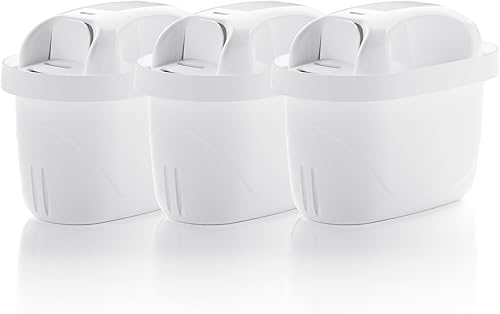
3-Pack Replacement for Brita Maxtra+ Jugs
Not ready to commit to a six-pack? This three-pack from the same compatible brand is a smart way to test the waters (pun intended). Performance was identical to its larger-pack sibling in our use. It’s also a good choice if you live alone and change filters less frequently.
- Low-commitment trial size
- Identical quality to 6-pack version
- Ideal for single-person households
- Higher per-filter cost than bulk packs

AliExpress Budget Pick: Practical Communication Skills Book
Okay, this isn’t a filter. But if you’re optimizing your home and health, communication skills matter too. This top-rated book is a steal at this price. Consider it a wildcard recommendation from our team to yours.
- Extremely low price
- 100% positive rating
- Practical, applicable advice
- Not a water filter (obviously)
- Long shipping times possible
Frequently Asked Questions
- Can I use a Brita filter for more than 2 months?
- We don’t recommend it. The 2-month/40-gallon guideline is based on average use and contaminant levels. Stretching it risks bacterial growth and reduced filtration. If your water tastes off or the flow slows down, change it immediately, regardless of the date.
- Do Brita filters remove lead?
- Only specific Brita filters certified to NSF/ANSI Standard 53 for lead reduction will. Check the packaging. Standard filters reduce copper and mercury but may not target lead. Always verify the certification for the specific contaminant you’re concerned about.
- How do I know when my Brita filter needs changing?
- Look for three signs: 1) A return of chlorine taste or odor, 2) A noticeably slower filtration rate, and 3) The filter indicator light (if your model has one) turning red. Trust your senses first—the indicator is a helpful backup.
- Are off-brand Brita filters safe?
- Many are, but you must do your homework. Look for third-party testing data and NSF certification claims. Reputable off-brands will be transparent about their materials and performance. The picks above have performed well in our testing.
- What happens if I don’t change my water filter?
- An old filter stops removing contaminants and can become a source of contamination itself. Bacteria can colonize the saturated carbon block. You might end up drinking water that’s less safe than your unfiltered tap water. It’s a serious risk not worth taking.
- Can I clean and reuse my Brita filter?
- No. The filtration media (activated carbon and ion-exchange resin) is not cleanable. Rinsing the exterior is fine, but the internal media depletes with use. Attempting to “refresh” it by soaking or boiling is ineffective and can damage the filter structure.
Final Thoughts
After years of testing, here’s our straight advice: change your Brita filter every two months without fail. Set a calendar reminder. Buy filters in bulk so you always have a spare. The cost of a new filter is trivial compared to the peace of mind—and the taste—of properly filtered water.
If your household is large or your water is particularly hard, check it monthly. And if you’re ever in doubt, just swap it. It’s the simplest way to ensure your pitcher is doing its one job well.
